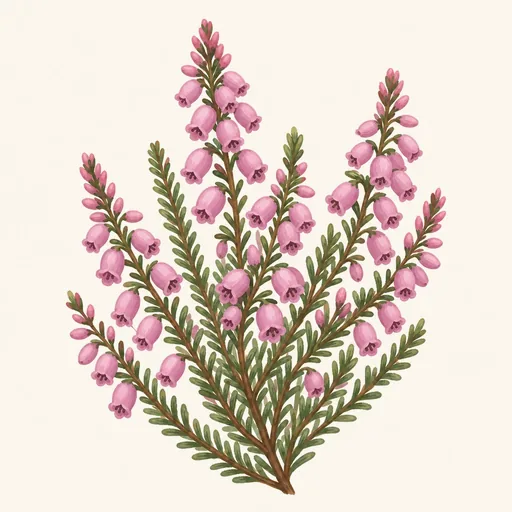
Heath
Erica · Ericaceae
- Plant in autumn6–8 weeks before the first autumn frostAug 30 – Sep 19
- Space30–60 cm (12–24 in) apart
Description
Heath, belonging to the genus Erica, is a group of small, often shrub-like plants commonly found in acidic and well-drained soils, particularly in heathland and moorland environments. There are over 800 species of heath, primarily native to Europe, Africa, and Australia. These plants are characterized by their small, needle-like leaves and bell-shaped flowers, which can vary in color, including pink, purple, white, and crimson.
Heath generally thrives in full sun but can tolerate partial shade. They are favored for their ability to withstand poor soil conditions and drought once established. Heath varieties can be evergreen or deciduous, with evergreen types maintaining their foliage throughout the year, providing year-round interest in the garden.
In terms of cultivation, heaths prefer acidic to neutral pH levels and are often seen in rock gardens, borders, and as ground covers. They attract pollinators, such as bees, making them a beneficial addition to biodiversity in gardens. However, they require good drainage to prevent root rot, so incorporating grit or sand into the potting mix or soil is advisable when planting.
Noteworthy varieties include Erica carnea, or winter-flowering heath, which blooms in early spring, and Erica cinerea, known as bell heather, with its attractive, rounded blooms. Due to their hardiness and low maintenance requirements, heaths are popular among gardeners looking for vibrant, easy-care plants that enhance the aesthetic appeal of their landscapes while supporting local wildlife.
Growing Conditions
15–60 cm (6–24 in) tall, 30–90 cm (1–3 ft) wide
- Smallest
- Largest
Full sun, 4+ hours
Tolerates part sun
Moderate
Keep evenly moist, not soggy.
Ideal 10–24 °C (50–75 °F)
Survives down to −29 °C (−20 °F).
pH 4.5–6 · acidic
Where it Grows
Planting
When to Plant
Heath, belonging to the genus Erica within the Ericaceae family, is a captivating plant characterized by its lovely flowers and evergreen foliage. Understanding the right time to plant heath is essential for its successful establishment and growth.
Ideal Planting Seasons
-
Spring Planting: The best time to plant heath is in the early spring, after the last frost has passed. This timing allows the plant to take advantage of the warming soil and the increase in rainfall, promoting root establishment and new growth as temperatures rise.
-
Fall Planting: Alternatively, planting in mid-fall can also be beneficial. This period allows the plant to establish its root system before winter sets in. It is crucial, however, to ensure that planting is done early enough to allow roots to grow before the ground freezes.
Temperature Considerations
Heath thrives in cooler climates and prefers well-drained, acidic soils. Planting when the soil temperature is moderate—ideally between 60°F and 70°F (15°C to 21°C)—is optimal. Avoid planting during extreme heat or cold, as this can stress the plant and hinder growth.
Soil and Site Preparation
Before planting, conduct a soil test to ensure that it meets the proper pH (typically 5.5 to 6.5 for heath). Prepare your planting site by loosening the soil and amending it with organic matter if necessary. Heath prefers a sunny to partially shaded location that receives plenty of light; this encourages blooming and thriving foliage.
Young Plants and Established Heath
When planting young heath plants, give them the attention they need during their first growing season. Established plants can be more forgiving, but they will still benefit from the right seasonal care.
In summary, the best times to plant heath are in early spring or mid-fall, considering temperature and soil conditions. Proper timing ensures that this beautiful plant can grow strong and flourish in your garden ecosystem.
How to Plant
Planting a heath (Erica spp.) requires careful consideration of soil, location, and timing to ensure a healthy establishment. Heaths prefer well-drained, acidic soils rich in organic matter, often found in sandy or peaty substrates. Begin by selecting a planting site that receives full sun to partial shade, as heaths thrive in bright, direct light but can also tolerate some shelter from harsh midday sun.
The best time to plant is in the spring or fall when temperatures are mild, reducing stress on the plant. To prepare the site, clear it of weeds and debris, then dig a hole that is about twice the size of the root ball. Amend the soil with organic matter, such as compost or peat moss, to enhance drainage and acidity.
Place the heath in the hole, ensuring the top of the root ball is level with the soil surface. Backfill with the amended soil, gently firming it around the roots to eliminate air pockets. Water thoroughly to help settle the soil. Mulching around the base can help retain moisture and suppress weeds. Regular watering is crucial, especially during dry spells, as heaths are susceptible to drought stress. With proper care, your heath will thrive and offer vibrant blooms in the right conditions.
Planting Calendar
- Autumn planting: 6–8 weeks before the first autumn frost
- Autumn planting: Aug 30 – Sep 19
Care
Care Calendar
- Mulch · Mar 13 – Apr 30
Apply a thin layer of organic mulch, keeping it clear of the stems. - Prune · Mar 27 – May 28
After flowering, lightly shear faded flower stems without cutting into old wood.
Watering
Watering a Heath plant (genus Erica) requires a careful approach to ensure it thrives in its acidic, well-drained soil preference. The best strategy involves several key practices:
-
Check Soil Moisture: Before watering, check the top inch of soil; if it feels dry, it’s time to water. Heath plants prefer to be kept slightly moist but not soggy.
-
Watering Technique: Use a watering can with a narrow spout to direct water at the base of the plant. Avoid overhead watering to prevent fungal issues and to ensure that the delicate flowers remain dry.
-
Frequency: During the growing season (spring and summer), water more frequently, approximately once a week, while reducing frequency in fall and winter when growth slows.
-
Water Quality: Use rainwater or distilled water if possible, as Heath plants are sensitive to chlorine and salts found in tap water.
This method will help maintain the health and vigor of your Heath plant throughout the year.
Pruning
Pruning a Heath plant (Erica spp.) is essential to maintain its shape, encourage bushier growth, and promote flowering. The best strategy is to perform light pruning after the blooming period, typically in late spring. Start by removing any dead, damaged, or diseased stems to improve air circulation and overall health.
Next, shape the plant by trimming back the previous year's growth to just above a healthy leaf node or bud. This encourages new growth while preserving the plant's natural form. Be cautious not to cut into older, woody stems, as they may not produce new growth.
For larger specimens, consider a more substantial cut, keeping the overall height in mind. It's important to avoid heavy pruning in late summer or fall, as this can interfere with the plant's winter dormancy. Regular pruning not only fosters vigorous development but ensures that your Heath plant remains vibrant and attractive throughout the gardening season.
Weeding
Weeding around Heath plants (Erica spp.) requires a delicate approach to ensure the health of these acid-loving perennials. The best strategy involves regular observation and targeted removal of weeds. Begin by applying a 2-3 inch layer of organic mulch, such as pine bark or wood chips, around the base of the plants. This suppresses weed growth by blocking sunlight while also retaining soil moisture.
When weeding, use hand tools or your hands to gently pull out weeds, ensuring that you remove the entire root system to prevent regrowth. It's best to weed while the soil is moist, as this makes the task easier. Always avoid disturbing the sensitive roots of the Heath plants when removing weeds. Regular maintenance, including weeding after rainfall and during early spring, will keep the area around your Heath plants healthy, minimizing competition for nutrients and water.
Mulching
Mulching is an essential practice for maintaining the health of Heath plants (Erica spp.), which are known for their vibrant flowers and hardy nature. The best strategy involves several key steps:
-
Timing: Apply mulch in late spring after the soil has warmed but before the summer heat sets in. This helps retain moisture during hot months.
-
Mulch Type: Use organic mulch such as shredded bark, pine needles, or leaf mold. Acidic materials are beneficial, as Heath plants thrive in acidic soils.
-
Depth: Apply a 2-3 inch layer of mulch around the base of the plant. This depth effectively suppresses weeds and retains moisture while preventing stem rot.
-
Distance from Stem: Keep mulch away from direct contact with the stems to avoid fungal diseases.
-
Regular Maintenance: Replenish the mulch annually to maintain its effectiveness and acidity levels in the soil.
Following these guidelines will support healthy growth and flowering in Heath plants.
Fertilizing
When fertilizing a Heath plant (Erica), it's essential to follow a tailored approach due to its specific nutritional needs. Given that Heaths thrive in acidic soils, selecting a fertilizer formulated for acid-loving plants is crucial. A slow-release, balanced fertilizer with an N-P-K ratio of approximately 10-10-10, applied in early spring, can provide the necessary nutrients without overwhelming the plant.
Before fertilizing, ensure the soil is moist to prevent root burn. Apply the fertilizer evenly around the plant’s base, avoiding direct contact with the stems, and water thoroughly afterward to help the nutrients penetrate the root zone. Reapply in mid-summer if necessary, but avoid fertilizing in fall or winter, as this can promote tender growth susceptible to frost damage. Regular mulching with organic matter can also support soil acidity and retain moisture, complementing the fertilization strategy effectively.
Growing in Containers
Grows well in a pot of at least 10 litres (2.6 US gallons), with drainage holes. Best kept outdoors.
Propagation
From cuttings
- Take short, nonflowering stem cuttings in late summer.
- Remove leaves from the lower portion of each stem.
- Insert the cuttings into a moist, free-draining propagation mix.
- Keep them humid and out of direct sun until rooted.
- Pot up rooted cuttings carefully.
By layering
- Choose a low, flexible stem in spring.
- Lightly wound the underside where it will touch the soil.
- Pin that section into acidic, free-draining soil, leaving the tip exposed.
- Keep the soil lightly moist while roots form.
- Sever the rooted stem from the parent and transplant it.
Companion Plants
Good neighbors
- Heather: Heather and heath are commonly planted together because both thrive in sunny, acidic, well-drained soil.
- Azalea: Azaleas share heath’s preference for acidic soil, provided they are spaced so they do not shade it.
- Rhododendron: Rhododendrons suit the same acidic planting beds, provided heath remains in a sunny spot.
Common Problems
- Yellowing leaves
- Wilting
- Stunted growth
- Leaves dropping
Root rot is a general name for the decay of plant roots, not a single disease with one scientific name. It can result…
- Holes in leaves
- Wilting
- Stunted growth
- Leaves dropping
Vine weevil, also called black vine weevil, is a beetle that damages many garden and container plants, including…
- Yellowing leaves
- Brown or crispy leaf edges
- Stunted growth
Iron chlorosis is a nutrient disorder in which a plant cannot obtain enough usable iron to make chlorophyll. It is not…
Varieties
This spreading winter heath bears white flowers from winter into spring.
- white flowers
- low-growing
- winter blooming
This spreading cultivar produces pale pink flowers in winter and early spring.
- pink flowers
- low-growing
- winter blooming
Its dark pink to reddish flowers appear during the winter flowering season.
- deep pink flowers
- compact
- winter blooming
It bears vivid magenta flowers above foliage that takes on bronze tones in cold weather.
- magenta flowers
- bronze foliage
- winter blooming
This vigorous, spreading cultivar flowers pink from winter into spring.
- pink flowers
- vigorous
- winter blooming
It produces masses of white flowers over a long winter-to-spring season.
- white flowers
- winter blooming
More about varieties
Heath plants, scientifically classified under the genus Erica, are evergreen flowering plants that are popular in gardens for their vibrant blooms and ability to thrive in poor soil conditions. They are part of the Ericaceae family and are primarily native to Europe, particularly the heathlands of the British Isles. Below are some of the most common varieties of heath plants that gardeners often cultivate:
1. Erica carnea (Winter Heath) Known for its early spring blooms, Erica carnea features small, pink or purple flowers that appear even while snow is still on the ground. This variety is popular in rock gardens and can tolerate colder temperatures, making it a great choice for northern climates. It typically blooms from late winter to early spring.
2. Erica gracilis (Sea Heath) This low-growing variety sports slender, upright stems and small, tubular flowers ranging from white to pink. Erica gracilis is adaptable and works well in mixed borders and containers. It offers a long blooming season from late summer through fall, providing late-summer color.
3. Erica tetralix (Cross-leaved Heath) Erica tetralix is distinguished by its unique cross-shaped leaves. This variety features delicate pink flowers that bloom in late spring to early summer. It is a native of wetlands and can be an excellent addition to a bog garden or as a ground cover in moist areas.
4. Erica x darleyensis (Darley Heath) A hybrid variety, Erica x darleyensis boasts a robust growth habit and blooms extensively from winter to early spring with bright pink, red, or white flowers. This heath is particularly valued for its prolonged flowering period and resilience in a range of soil types.
5. Erica multiflora (Many Flowered Heath) This species is characterized by its dense clusters of small, tubular flowers that appear in an array of colors, including pink, red, and white. Erica multiflora thrives best in well-drained soil and sunny positions and is often used to attract pollinators to gardens.
Cultivation Tips Heath plants are generally low-maintenance, requiring well-drained, acidic soil and plenty of sunlight. Regular pruning after flowering can promote healthier growth and more robust blooms. Gardeners should be cautious not to overwater these plants, as they thrive in drier conditions once established.
By selecting the right variety of heath for your garden, you can enjoy a beautiful display of color and form throughout the year, making them a fantastic choice for both novice and experienced gardeners alike.
Health Benefits
Heath plants, belonging to the Ericaceae family, are well-known for their health and wellness applications, particularly due to their vibrant flowers and hardiness. Notably, certain species of heath, such as Calluna vulgaris (common heather), are recognized for their traditional uses in herbal medicine.
One prominent health application of heaths is their antioxidant properties. The leaves and flowers of some heath species are rich in flavonoids, which are compounds that can help combat oxidative stress in the body. This oxidative stress is linked to a variety of chronic diseases, making heaths a potential ally in promoting overall health.
Moreover, heaths have been used in herbal remedies for their anti-inflammatory properties. Infusions made from the flowers are sometimes utilized to soothe respiratory issues and reduce symptoms of colds. The astringent qualities of certain heath extracts may also support skin health, potentially applying benefits for minor skin irritations.
Lastly, heaths play a vital role in promoting mental wellness. Their presence in gardens can provide a sense of tranquility and enhance mood, contributing to the psychological benefits of gardening and nature exposure. Overall, while heaths are primarily admired for their aesthetic appeal, their health applications make them a valuable addition to wellness practices.
Fun Facts
-
Diverse Family: Heaths belong to the Ericaceae family, which includes various species of evergreen shrubs and is often found in acidic, sandy soil. They are closely related to heathers, which share some similar characteristics.
-
Biodiversity Hotspot: Heathlands are important ecosystems that support a wide range of biodiversity, including numerous insect species, birds like the nightjar, and mammals such as the European rabbit. They provide critical habitats for wildlife.
-
Habitat Preferences: Heath plants thrive in nutrient-poor and well-draining soil conditions and are often associated with open landscapes, such as heathlands and moorlands. They prefer full sun and are typically resilient in less fertile environments.
-
Seasonal Interest: Many species of heath produce abundant flowers in shades of pink, purple, and white during the late winter to early spring, adding vibrant colors to gardens even when other plants may be dormant, making them a favorite among gardeners.
-
Traditional Uses: Historically, some heaths have been used for medicinal purposes, including herbal remedies for ailments like skin conditions. Additionally, their dried leaves and flowers have been utilized in traditional crafts and as decoration due to their long-lasting nature.
Notice an error or have a question about Heath? Contact us