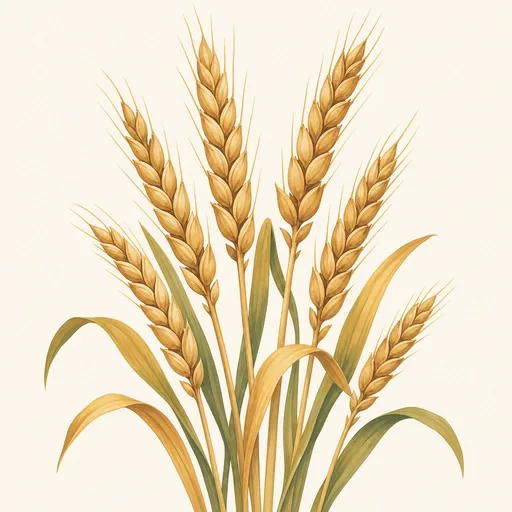
Farro
Triticum dicoccum · Poaceae
- Sow outdoors2–6 weeks before the last frostFeb 27 – Apr 2
- Plant in autumn4–8 weeks before the first autumn frostAug 30 – Oct 3
- Space10–15 cm (4–6 in) apart
- Harvest100–140 days after plantingJun 7 – Sep 10
Description
Farro is the culinary name most often applied to emmer wheat, an ancient domesticated grain, although the label is also used for einkorn and spelt. Emmer is an annual grass with upright, jointed stems, narrow leaves, and compact seed heads called spikes. Each spikelet usually bears two grains enclosed by tough husks. Mature plants turn golden brown as the heads dry. Unlike modern free-threshing wheat, emmer generally retains its hull after threshing, so the harvested grain must be dehulled before use.
The crop grows best in full sun and well-drained soil. It is commonly sown in autumn where winters are mild or in spring in colder areas, then harvested once the grain is dry. Established plants tolerate relatively lean soils and some drought, but waterlogging can damage roots. Yield and harvest timing depend on the variety and local climate. Allow room for air circulation, especially where humid conditions favor fungal diseases. Farro is wind-pollinated; its flowers are small and not grown for display. Saving seed requires keeping sound, fully mature grain dry until the next planting.
In the kitchen, whole farro has a nutty taste and pleasantly chewy texture. It is simmered for grain bowls, soups, and salads, or milled into flour for bread and pasta. Products labeled whole, semi-pearled, or pearled differ in how much outer bran has been removed; more polishing generally shortens cooking time but also removes some fiber. Emmer supplies carbohydrates, protein, fiber, and minerals, though amounts vary with processing and preparation. Because it is wheat, farro contains gluten and is unsuitable for people with celiac disease. When buying seed or grain, check the botanical name on the packet: the word “farro” alone does not reliably identify which wheat is being sold.
Growing Conditions
0.9–1.5 m (3–5 ft) tall, 10–20 cm (4–8 in) wide
- Smallest
- Largest
Full sun, 6+ hours
Moderate
Keep evenly moist, not soggy.
Ideal 15–24 °C (59–75 °F)
pH 6–7.5 · neutral
Where it Grows
Planting
When to Plant
Farro is usually grown from emmer wheat, though the name is sometimes used for other ancient wheats. Check whether your seed is a fall- or spring-sown variety before choosing a planting date. In regions with winters suitable for the variety, sow fall farro in early to mid-autumn, roughly four to eight weeks before the ground normally freezes. This gives seedlings time to establish before winter; they resume growth in spring and are typically harvested in summer. Where winters are too severe for the seed you have, or where a spring variety is recommended, sow as soon as the soil can be worked in spring. Wait until it is no longer waterlogged, but do not delay into hot weather: farro grows best during the cool part of the season. Your seed supplier’s local guidance is more useful than a fixed calendar date, because winter hardiness and the need for winter chilling vary among varieties.
How to Plant
Start with viable seed sold for planting, labeled as emmer or the particular farro wheat you want to grow. Grain sold for eating may be dehulled, heat-treated, or otherwise unable to germinate. Choose a sunny site with well-drained soil; farro does poorly where water stands. Clear weeds, loosen the top few inches of soil, and rake the surface level. If the soil is poor, mix in a modest amount of finished compost. Avoid heavy nitrogen feeding, which can encourage tall, weak stems that fall over.
Sow in rows about 6–8 inches (15–20 cm) apart, placing individual grains roughly 2–3 inches (5–8 cm) apart. Cover them with about 1–1½ inches (2.5–4 cm) of soil, using the shallower end of that range in heavy soil. You can also scatter seed evenly over a prepared bed, then rake it in to a similar depth. Firm the soil gently and water if it is dry. Keep it lightly moist until seedlings emerge, then water during prolonged dry spells rather than keeping the bed wet. Weed while plants are small, when they are easiest to distinguish from unwanted grasses. If birds take newly sown seed, temporarily cover the bed with netting secured above the soil.
Growth Timeline
- Germination 5–14 days
- Growing 100–140 days
- Harvest 1–2 weeks
Planting Calendar
- Sow outdoors: 2–6 weeks before the last frost
- Autumn planting: 4–8 weeks before the first autumn frost
- Germination: 5–14 days
- Sow outdoors: Feb 27 – Apr 2
- Autumn planting: Aug 30 – Oct 3
- Harvest: Jun 7 – Sep 10
Care
Care Calendar
- Feed · Mar 13 – Apr 16
If growth is pale or slow, apply a light nitrogen feeding as plants resume growth. - Protect · Jun 5 – Jul 23
Net ripening seed heads to keep birds from eating the grain. - Protect · Aug 30 – Oct 3
Cover newly sown fall grain with bird netting until seedlings establish.
Watering
Water farro after sowing if the soil is dry, keeping the seedbed evenly moist until seedlings establish. Once growing, it generally needs less irrigation than many garden vegetables. During active growth, aim for about 2.5 cm (1 inch) of water per week from rain and irrigation combined, adjusting for your soil and weather. Water is especially useful during stem elongation, flowering, and early grain filling; prolonged drought at these stages can reduce yield. Let the soil surface dry between waterings rather than keeping it constantly wet. Farro does poorly in waterlogged ground, so use well-drained soil and avoid irrigating after substantial rain. Water at soil level when practical to limit leaf wetness and fungal disease. As heads turn golden and stalks dry before harvest, reduce or stop irrigation. Newly sown winter farro may need little supplemental water where autumn and spring rainfall is reliable.
Weeding
Keep the bed relatively weed-free while farro is germinating and during its first several weeks of growth. Established plants can shade out some competitors, but early weeds take up the moisture, light, and nutrients that young grain needs. Before sowing, clear perennial weeds and consider preparing the bed early, watering it to encourage weed seeds to sprout, then removing those seedlings before planting. Hand-pull or shallowly hoe between rows when weeds are small; work carefully so you do not disturb farro roots or bury young plants. Pull weeds before they set seed, particularly aggressive grasses that can be difficult to separate from the crop later. In small plots, leave enough space between rows to reach weeds without trampling plants. Avoid herbicides unless a product is specifically labeled for the crop and situation. After harvest, clear troublesome weeds before they replenish the soil's seed bank.
Mulching
Mulching is optional for farro and is more practical in a small garden bed than in a field. A thin layer of clean, seed-free straw between established rows can suppress weeds, slow evaporation, and reduce soil splashing onto leaves. Wait until seedlings are clearly up, and keep mulch away from their crowns; covering emerging shoots can smother them. Start with a light layer, roughly 2–5 cm (1–2 inches) deep, rather than the thick mulch often used around vegetables. If rainfall is frequent or the soil drains slowly, skip mulch so the surface can dry more readily. Check beneath it for slugs, especially around young plants, and remove or thin it if they become a problem. Do not use hay or straw containing viable weed or grain seeds. Mulch does not replace watering during a dry spell, and it is not necessary where farro already forms a dense stand.
Fertilizing
Base fertilizing on a soil test if possible. Farro can grow in moderately fertile soil and generally does not need the heavy feeding given to many vegetables. Before sowing, work in modest amounts of well-finished compost if the soil is poor, or apply phosphorus and potassium only where a test indicates a need. Excess nitrogen encourages lush growth that can fall over, known as lodging, and may delay ripening or increase disease pressure. If plants are pale and growth is weak despite adequate moisture, a modest nitrogen application early in spring growth may help a winter-sown crop; follow local soil-test guidance rather than guessing a rate. Avoid late nitrogen applications as heads develop. Spread fertilizer evenly and keep concentrated products from touching seed or leaves. Remember that manure and compost also supply nutrients: account for them when planning additions. Rotating farro with legumes or other crops can help manage soil fertility over time.
Pest Management
Inspect plants regularly, especially during warm, humid weather. Aphids may gather on leaves and heads; encourage lady beetles and other predators, and avoid broad-spectrum insecticides unless damage warrants treatment. Slugs can injure young seedlings, particularly beneath mulch. Remove hiding places, check plants at dusk, and use a crop-appropriate control if needed. Rusts, powdery mildew, and other cereal diseases are more likely when foliage stays damp or susceptible grains are grown repeatedly in the same place. Give plants reasonable airflow, avoid unnecessary overhead watering, rotate away from cereal crops, and start with clean seed suited to your area. Remove badly diseased plant debris after harvest. Some head diseases can produce harmful toxins: do not save or eat visibly moldy, discolored grain. Birds and rodents may feed on ripening heads, so protect a small planting with securely fixed netting if losses are significant. Check netting often to prevent animals becoming trapped.
Harvesting
Harvest when most stalks and heads have turned golden-brown and the kernels feel hard rather than soft or milky. Timing varies with sowing season, climate, and which grain is sold as farro: einkorn, emmer, or spelt. In a small plot, cut stalks with shears or a sickle on a dry day, leaving enough stem to tie into manageable bundles. Let the bundles finish drying under cover with good airflow and protection from rain and rodents. When thoroughly dry, thresh the heads by rubbing or beating them over a clean container, then winnow away loose chaff. Farro kernels remain enclosed in tough hulls, so threshing alone will not produce ready-to-cook grain. Remove the hulls with suitable small-scale dehulling equipment or a grain processor; avoid grinding the kernels if you want whole grain. Dry grain well before storing it in a cool, dry, pest-proof container, and discard any moldy grain.
Growing in Containers
Not well suited to growing in pots.
Propagation
From seed
- Choose viable, untreated farro seed suited to your growing season.
- Sow directly in a prepared, weed-free bed about 2–3 cm deep.
- Cover the seed with soil and water gently.
- Keep the soil lightly moist until seedlings establish.
Companion Plants
Good neighbors
- Field peas: Peas are commonly intercropped with wheat, and their different growth habits can make good use of the same growing space.
- Red clover: Clover can be undersown beneath cereal crops to provide living ground cover and add nitrogen to the soil after the grain is harvested.
Common Problems
- Yellowing leaves
- Sticky residue on leaves
- Black sooty coating
- Curled or cupped leaves
Aphids are small, soft-bodied insects that feed by piercing plants and drawing out sap. The group includes many…
- Holes in leaves
- Stems chewed or cut through
- Flowers or buds dropping
Birds are a class of animals, not a single pest species. In gardens, their effects depend on the species, season, and…
- White powdery coating
- Yellowing leaves
- Curled or cupped leaves
- Distorted new growth
Powdery mildew is a group of fungal diseases, not a single species. Different fungi infect different hosts, including…
- Orange or rust-colored spots
- Spots on leaves
- Yellowing leaves
- Leaves dropping
Rust is a group of plant diseases caused by fungi in the order Pucciniales, not a single species. Different rust fungi…
- Rust and powdery mildew: Fungal diseases can damage leaves, especially in crowded or humid plantings.
- Fusarium head blight: Wet weather during flowering can infect grain heads and reduce grain quality.
- Lodging: Tall stems may bend or fall over after heavy rain or excessive nitrogen fertilization.
- Aphids and birds: Aphids feed on growing plants, while birds may eat ripening grain.
- Waterlogged soil: Poor drainage can weaken roots and reduce growth.
Varieties
- Farro piccolo (einkorn, Triticum monococcum): A small-grained ancient wheat.
- Farro medio (emmer, Triticum dicoccum): The type most commonly meant by “farro,” especially in Italy.
- Farro grande (spelt, Triticum spelta): A larger-grained wheat with a chewy texture when cooked.
Health Benefits
Farro is commonly eaten as a hearty whole grain in soups, salads, and grain bowls. Whole-grain farro provides dietary fiber, which supports regular bowel movements and can help make meals more filling. Replacing refined grains with whole grains is associated with better cardiovascular and metabolic health, although those findings should not be taken as proof of a unique benefit from farro itself.
Farro also supplies plant protein and nutrients including magnesium, iron, zinc, and B vitamins. Its combination of fiber and protein makes it a useful ingredient in a balanced meal, particularly alongside vegetables, legumes, and other protein sources. Nutrient content varies by wheat type and processing: pearled farro cooks faster but has had some or all of its outer bran removed, so it generally contains less fiber than intact grain.
Farro is wheat and contains gluten. It is not safe for people with celiac disease and is generally unsuitable for those with a wheat allergy. It is not a treatment for any medical condition. People managing blood glucose can enjoy it in appropriate portions, but should not assume that every farro product has the same effect.
Fun Facts
- “Farro” can refer to three related ancient wheats: einkorn, emmer, and spelt.
- Emmer was cultivated in the ancient Fertile Crescent and was an important grain in ancient Egypt.
- These wheats are hulled: their grains remain enclosed in a tough husk after threshing.
- Whole, semi-pearled, and pearled farro are sold for cooking; removing more of the outer layers generally shortens cooking time.
- Cooked farro has a chewy texture and is often used in Italian soups and salads.
Notice an error or have a question about Farro? Contact us