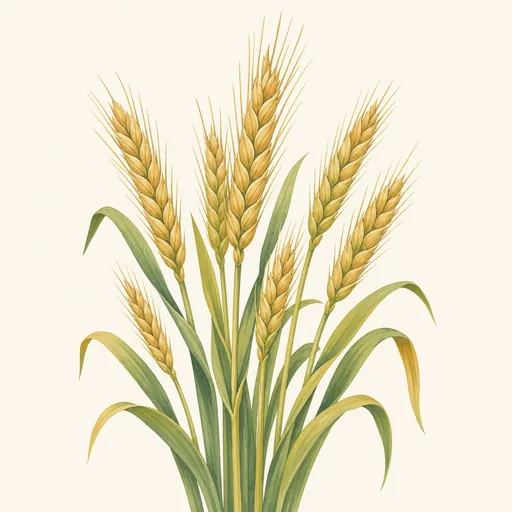
Triticale
× Triticosecale · Poaceae
- Sow outdoors2–6 weeks before the last frostFeb 27 – Apr 2
- Plant in autumn4–8 weeks before the first autumn frostAug 30 – Oct 3
- Space5–10 cm (2–4 in) apart
- Harvest90–300 days after plantingMay 28 – Feb 17
Description
Triticale is a cereal grain created by crossing wheat (Triticum) with rye (Secale). Breeders developed it to combine wheat’s grain yield and feeding value with rye’s ability to grow in cooler conditions and on relatively poor soils. It is a cultivated hybrid rather than a naturally occurring wild grain. Varieties differ in their parentage, height, maturity, and suitability for grain or forage production.
The plant resembles wheat or rye, with narrow leaves, jointed stems, and seed heads called spikes. Its grains are usually elongated and may look somewhat wrinkled. Triticale is grown as both a winter crop, sown in autumn, and a spring crop, sown after winter. It generally performs best in cool to mild growing seasons and well-drained soil. Some varieties tolerate acidic or less fertile soils better than wheat, but performance depends on the variety and local conditions. Like other cereals, it needs adequate moisture while establishing and filling its grain.
Most triticale grain is used in animal feed, especially for pigs and poultry. Farmers also harvest the whole plant as grazing, hay, or silage. The grain can be milled into flour for bread, biscuits, and other foods, often blended with wheat flour because its baking qualities are less dependable than those of bread wheat. Despite its rye ancestry, triticale contains gluten and is not suitable for people with coeliac disease. In fields, it can also serve as a cover crop that protects soil between main crops. Gardeners with enough space can grow it much like other small grains, though it is primarily an agricultural crop. Its practical value lies in offering growers another cereal option where conditions or feed needs make conventional wheat less attractive.
Growing Conditions
0.6–1.5 m (2–5 ft) tall, 10–20 cm (4–8 in) wide
- Smallest
- Largest
Full sun, 6+ hours
Moderate
Keep evenly moist, not soggy.
Ideal 10–25 °C (50–77 °F)
Survives down to −30 °C (−22 °F).
pH 5.5–7.5 · acidic to neutral
Where it Grows
Planting
When to Plant
Choose the planting date according to whether you have winter or spring triticale and what you want to harvest. Sow winter triticale in autumn, early enough for seedlings to establish before the ground freezes, but not so early that plants become lush and overgrown. A useful starting point is about four to six weeks before the ground normally freezes; local grain-growing recommendations can refine the date. For a cover crop or early spring forage, autumn planting also gives the crop time to make roots before winter. Sow spring triticale as soon as the soil is workable in spring and has warmed to roughly 40°F (4°C). Early planting lets it grow during cool weather and mature before summer heat. Dates vary widely with climate and elevation, so use local frost and soil conditions rather than a fixed calendar month. Check the seed label: winter types generally need winter cold to produce grain reliably.
How to Plant
Plant triticale in full sun in a reasonably well-drained seedbed. Remove large weeds, loosen or prepare the topsoil, and break up clods so the seed can make good contact with moist soil. A soil test can guide lime and fertilizer; avoid applying excessive nitrogen, which can encourage weak, lodging stems. Use seed of a variety suited to your climate and purpose, and check that it is labeled winter or spring triticale.
For a small grain planting, sow seed in rows about 6–8 inches (15–20 cm) apart, using a seed drill if available. Place it about 1–1½ inches (2.5–4 cm) deep, a little deeper only if needed to reach moisture. Aim for roughly 30–35 viable seeds per square foot (320–375 per square metre) for a grain crop, adjusting the weight of seed to its size and germination rate. For a garden-sized cover crop, you can broadcast seed evenly instead, then rake it into the soil and firm the surface; use somewhat more seed than for drilled rows to compensate for less even placement. Water if the soil is dry, and keep it moist until seedlings emerge. Where winter triticale is grown for grain, leave it to overwinter rather than cutting it repeatedly.
Growth Timeline
- Germination 5–10 days
- Growing 90–300 days
- Harvest 1–2 weeks
Planting Calendar
- Sow outdoors: 2–6 weeks before the last frost
- Autumn planting: 4–8 weeks before the first autumn frost
- Germination: 5–10 days
- Sow outdoors: Feb 27 – Apr 2
- Autumn planting: Aug 30 – Oct 3
- Harvest: May 28 – Feb 17
Care
Care Calendar
- Feed · Mar 13 – Apr 30
If a soil test indicates a need, apply a modest nitrogen feeding as spring growth begins. - Protect · Jun 5 – Aug 20
Net ripening heads if birds are taking the grain.
Watering
Triticale usually grows on seasonal rainfall, but steady moisture helps it establish and fill grain. Keep the seedbed moist enough for germination, especially after a dry planting. Once established, check soil moisture rather than watering on a fixed schedule: irrigate when the root zone is drying and rainfall is unlikely. Moisture is especially important from stem elongation through flowering and grain filling. Apply water deeply enough to reach the roots, then let the soil drain; frequent shallow watering encourages shallow rooting. Avoid saturated soil, which restricts root growth and can increase disease. Where irrigation is available, adjust it to rainfall, soil type, and the crop’s purpose. A forage crop cut early may need a different schedule from a grain crop. Reduce irrigation as grain approaches maturity so plants dry uniformly for harvest.
Weeding
Start with a clean seedbed: control existing weeds before sowing, then plant at a suitable rate and depth so triticale establishes a dense stand. Scout young fields regularly, since weeds compete most strongly before the crop shades the ground. Identify the weeds before choosing a response. On a small plot, hand-pull isolated weeds while they are young, taking care not to disturb triticale roots. In larger fields, use locally approved herbicides only if their labels include triticale and the crop’s intended use, whether grain, forage, or grazing. Follow application timing and harvest restrictions carefully. Rotate crops and avoid letting troublesome weeds set seed; these measures reduce future infestations. Volunteer cereals and grassy weeds deserve attention because they can also shelter cereal pests and diseases. Once triticale is well established, its canopy often suppresses later weed growth.
Mulching
Triticale is not normally mulched during growth. A thick layer over a newly sown field can prevent seedlings from emerging, while mulch piled around established plants can keep their bases overly damp. If you grow a small garden patch, a light layer of clean straw between rows may help limit weeds and conserve moisture, provided the seedlings remain uncovered. The more common use of triticale as mulch comes after it is cut or terminated as a cover crop. Leave the stems on the soil surface to reduce erosion, moderate soil temperature, and suppress some weeds. For reliable weed suppression, the residue must cover the ground fairly evenly. Check that triticale will not regrow or produce viable seed before leaving it in place. If another crop will follow, plan for the residue to slow soil warming or interfere with small-seeded crops.
Fertilizing
Base fertilizer applications on a soil test and the crop’s purpose. Triticale takes up substantial nutrients when grown for grain or when forage is repeatedly removed, but needs vary with soil fertility, previous crops, and expected yield. Apply phosphorus and potassium where a test shows they are needed, preferably before or at planting according to local recommendations. Nitrogen often gives the strongest growth response. Where substantial nitrogen is needed, splitting it between establishment and spring growth can improve uptake and limit losses. Avoid excessive nitrogen, which can encourage lodging and may increase disease pressure. Manure can supply nutrients, but account for its tested nutrient content and apply it early enough to meet local food-safety and water-protection rules. Watch the stand as it grows: pale, weak plants may indicate a nutrient problem, but drought, waterlogging, and disease can look similar.
Pest Management
Inspect triticale regularly, particularly during establishment and as heads develop. Aphids can weaken plants and transmit barley yellow dwarf virus; cereal leaf beetles, armyworms, and other pests vary by region. Identify the pest and assess the level of damage before treating. Encourage beneficial insects and use locally recommended action thresholds rather than spraying routinely. Rotate away from cereal crops when possible, manage volunteer cereals, and choose seed suited to local disease risks. Watch for rusts, powdery mildew, and Fusarium head blight, especially in humid weather. Good airflow and avoiding unnecessary overhead irrigation can help limit leaf and head diseases. If a pesticide or fungicide is warranted, confirm that it is registered for triticale and for the intended grain, forage, or grazing use. Follow label rates, protective-equipment requirements, and all harvest or grazing intervals.
Harvesting
Harvest timing depends on how you plan to use triticale. For grain, wait until heads and stems have turned straw-colored and kernels are hard. Combine when grain is dry enough for the equipment and intended storage; grain that will be stored without drying generally needs to be around 12–13% moisture or lower. Check local storage guidance and measure moisture rather than judging by appearance alone. For higher-quality forage, cut around the boot to early-heading stage, before stems become very fibrous; waiting until the dough stage usually increases yield but reduces feed quality. Dry cut forage adequately before baling, or ensile it at a suitable moisture level. Test forage intended for livestock if nitrate accumulation is a concern. If growing triticale solely as a cover crop, terminate it before viable seed forms to avoid unwanted volunteer plants.
Growing in Containers
Grows well in a pot of at least 20 litres (5.3 US gallons), with drainage holes. Best kept outdoors.
Propagation
From seed
- Choose a spring or winter variety suited to your planting season.
- Clear weeds and loosen the soil.
- Sow seeds 2–4 cm deep in rows or evenly across the bed.
- Cover the seeds and water gently.
- Keep the soil moist until seedlings emerge.
Companion Plants
Good neighbors
- Field peas: Field peas are commonly grown with triticale for forage; the grain provides support while the peas add nitrogen to the soil.
- Common vetch: Common vetch is grown with triticale in forage mixtures, using its stems for support while fixing nitrogen.
Common Problems
- Yellowing leaves
- Sticky residue on leaves
- Black sooty coating
- Curled or cupped leaves
Aphids are small, soft-bodied insects that feed by piercing plants and drawing out sap. The group includes many…
- Holes in leaves
- Stems chewed or cut through
- Flowers or buds dropping
Birds are a class of animals, not a single pest species. In gardens, their effects depend on the species, season, and…
- White powdery coating
- Yellowing leaves
- Curled or cupped leaves
- Distorted new growth
Powdery mildew is a group of fungal diseases, not a single species. Different fungi infect different hosts, including…
- Orange or rust-colored spots
- Spots on leaves
- Yellowing leaves
- Leaves dropping
Rust is a group of plant diseases caused by fungi in the order Pucciniales, not a single species. Different rust fungi…
- Fungal diseases: Rusts, powdery mildew and Fusarium head blight can reduce growth or contaminate grain, especially in humid conditions.
- Ergot: This fungus replaces developing kernels with dark structures that contain harmful toxins; affected grain must not be eaten.
- Aphids and barley yellow dwarf virus: Aphids feed on plants and can spread the virus, causing yellowing and poor growth.
- Lodging: Tall stems may fall over after heavy rain or wind, particularly where excess nitrogen encourages lush growth.
- Winter injury: Winter-sown plants can be damaged by severe cold, especially without protective snow cover.
Varieties
- ‘AC Ultima’: A spring triticale cultivar grown for grain and sometimes forage.
- ‘Tyndal’: A spring cultivar valued for forage production.
- ‘TriCal 815’: A winter triticale cultivar used primarily for forage.
- ‘Fredro’: A winter cultivar grown for grain in parts of Europe.
Cultivar availability varies considerably by region; growers usually choose one suited to their local climate and intended use.
Health Benefits
Triticale is a food grain, not a medicinal plant. Its best-established wellness use is as part of a varied diet, particularly when eaten as a whole grain. Whole-grain triticale provides carbohydrate for energy, dietary fiber, protein and minerals such as magnesium and iron. Its fiber can support normal digestion, while replacing refined grains with whole grains is generally associated with better long-term heart and metabolic health. These are benefits of whole-grain dietary patterns, not proven effects unique to triticale.
People may eat triticale in breads, breakfast cereals, cooked grain dishes or baked goods. As with other grains, the nutritional value of a product depends on how much of the whole grain it retains and what else is added. A sweetened cereal containing triticale, for example, is not nutritionally equivalent to plain cooked whole grain.
Triticale contains gluten and is not safe for people with celiac disease. Anyone advised to avoid gluten should not assume it is suitable because it is a wheat–rye hybrid rather than ordinary wheat. Grain intended for food must also be properly grown, stored and inspected: mold and ergot contamination are food-safety concerns, not health benefits.
Fun Facts
- Triticale’s name combines Triticum (wheat) and Secale (rye).
- It was created by crossing wheat with rye to combine useful traits of both crops.
- Unlike many hybrids, cultivated triticale can produce fertile seed.
- It is grown for animal forage as well as grain for food and feed.
- Most commercially grown triticale has six sets of chromosomes, known as hexaploid triticale.
Notice an error or have a question about Triticale? Contact us