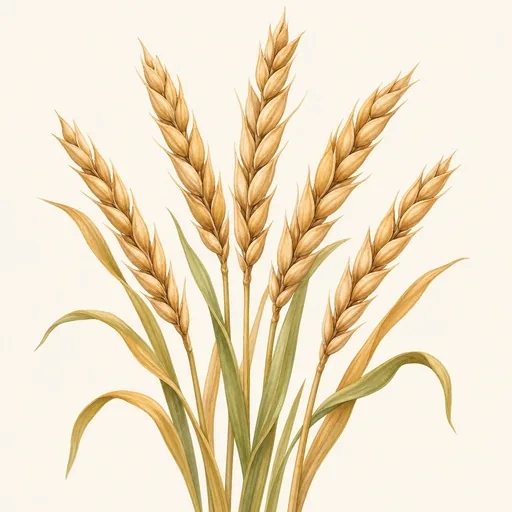
Spelt
Triticum spelta · Poaceae
- Sow outdoors2–6 weeks before the last frostFeb 27 – Apr 2
- Plant in autumn4–8 weeks before the first autumn frostAug 30 – Oct 3
- Space5–10 cm (2–4 in) apart
- Harvest240–300 days after plantingOct 25 – Feb 17
Description
Spelt is a type of hulled wheat grown for its edible grain. It is often treated as a distinct species, although some botanical classifications place it within common wheat. Its tall stems carry narrow heads of grains enclosed in tough husks. Unlike modern free-threshing wheat, the husks remain attached at harvest and must be removed before the grain can be milled or cooked. The whole kernels, often called spelt berries, have a mildly sweet, nutty flavor and are used in porridge, soups, salads, and bread.
Spelt is an annual cereal sown in autumn in many temperate regions, though spring sowing is possible where winters are severe. It grows best in full sun and reasonably well-drained soil. Established plants tolerate cool weather, and spelt can perform on relatively poor soils, but waterlogging and prolonged drought can reduce yields. Sow seed directly in a prepared seedbed. Like other wheats, spelt can be affected by fungal diseases, particularly in damp conditions. Plants typically reach about 90–150 cm (3–5 ft) tall and ripen in summer after forming green, then golden, seed heads. Harvest when the stalks and heads are dry and the kernels are firm.
Spelt flour contains gluten, so it is not safe for people with celiac disease or wheat allergy. Its gluten behaves differently from that of many bread wheats, often producing a softer, less elastic dough; bakers may need to adjust water and mixing. Whole grains take longer to cook unless soaked or cracked. Spelt is cultivated especially in central Europe and is also grown elsewhere as a specialty grain. Its straw can be used for animal bedding or mulch, while the grain can be fed to livestock as well as eaten by people.
Growing Conditions
0.8–1.5 m (2–5 ft) tall, 5–15 cm (2–6 in) wide
- Smallest
- Largest
Full sun, 6+ hours
Moderate
Keep evenly moist, not soggy.
Ideal 10–24 °C (50–75 °F)
Survives down to −34 °C (−29 °F).
pH 6–7.5 · neutral
Where it Grows
Planting
When to Plant
Choose the planting season according to the seed variety, not just the name “spelt.” Winter spelt is usually sown in autumn, around the time local growers plant winter wheat. Aim to sow about four to six weeks before the ground normally freezes, giving seedlings time to establish without becoming excessively lush before winter. In many temperate Northern Hemisphere areas, this means September through November; the right date varies with climate and elevation. Winter varieties generally need a period of cold to flower and produce grain, so planting them in spring may give poor results.
Plant spring spelt as soon as the soil can be worked without clumping or waterlogging, typically in early spring. Its seedlings tolerate cool weather, and an early start helps the crop mature before intense summer heat. In regions with mild winters, autumn sowing is often preferable, but check the seed supplier’s guidance for the variety and your area.
How to Plant
Plant spelt in full sun and well-drained soil. Clear weeds and debris, then loosen the top few inches of soil and rake the surface level. A soil test can guide fertilizer use; avoid excessive nitrogen, which can make grain stalks fall over. Use viable seed sold for planting, preferably a variety suited to your climate. Spelt seed is often sold with its protective hull intact; processed grain sold for eating may not germinate reliably.
For a garden bed, sow in rows about 6–8 inches (15–20 cm) apart, placing seeds roughly 2–3 inches (5–8 cm) apart within each row. Cover with about 1–2 inches (2.5–5 cm) of soil: use the shallower end in heavy or damp soil and the deeper end in lighter, drier soil. Alternatively, scatter seed evenly over a prepared bed, rake it in to the same depth, and gently firm the surface. Water after sowing if the soil is dry, keeping it lightly moist until seedlings emerge. Once established, spelt generally needs little irrigation except during prolonged dry spells. Remove competing weeds while plants are young, and avoid planting where water stands after rain.
Growth Timeline
- Germination 7–14 days
- Growing 240–300 days
- Harvest 1–2 weeks
Planting Calendar
- Sow outdoors: 2–6 weeks before the last frost
- Autumn planting: 4–8 weeks before the first autumn frost
- Germination: 7–14 days
- Sow outdoors: Feb 27 – Apr 2
- Autumn planting: Aug 30 – Oct 3
- Harvest: Oct 25 – Feb 17
Care
Care Calendar
- Feed · Feb 27 – Apr 16
If growth is pale or soil is poor, apply a light nitrogen feed as growth resumes. - Protect · Jun 5 – Aug 6
Net ripening seed heads if birds begin feeding on them. - Protect · Aug 30 – Oct 17
Cover newly sown seed with netting if birds pull it up.
Watering
Spelt needs consistent moisture while it establishes and again from stem elongation through flowering and grain filling. Water newly sown soil gently if it is dry, keeping the seedbed moist but not saturated until seedlings emerge. After establishment, rainfall often supplies much of the crop’s needs, especially for autumn-sown spelt. During dry spells, aim for roughly 25 mm (1 inch) of water per week from rain and irrigation combined, adjusting for your soil and weather. Apply water deeply rather than in frequent light sprinklings, and check moisture a few centimetres below the surface before irrigating. Well-drained soil is important: standing water can damage roots and encourage disease. If possible, water the soil rather than the foliage and irrigate early enough for leaves to dry. Reduce irrigation as the crop ripens; mature heads should be allowed to dry before harvest.
Weeding
Control weeds before sowing by removing established plants and preparing a reasonably clean seedbed. Spelt grows into a dense stand that can suppress some weeds, but young seedlings still compete for light, water, and nutrients. Inspect the planting regularly during establishment. In a small plot, pull weeds while they are small, preferably after rain when roots release easily; take care not to disturb spelt seedlings. Where rows are wide enough, shallow cultivation between them can help, but avoid cutting the crop’s roots or burying young plants. Once spelt has formed a dense canopy, cultivation is less practical. Remove tall weeds before they set seed or interfere with harvesting. Crop rotation and clean seed help prevent troublesome weeds from building up over successive seasons. If weed pressure is severe, address it before planting rather than relying on late-season hand weeding.
Mulching
Mulching is usually unnecessary in a densely sown spelt stand: the crop’s own canopy eventually shades the soil, and a thick mulch can obstruct emergence. In a small garden plot, you can use a light layer of clean, weed-free straw between established rows to reduce evaporation and suppress weeds. Keep it away from seedlings and avoid covering the growing points. Check underneath occasionally, since a persistently damp layer may shelter slugs or slow soil drying in a wet climate. Do not use straw carrying ripe weed seeds or diseased cereal residues. Another option is to leave suitable crop residues on the soil before planting, provided you can sow seed at the proper depth with good soil contact. Mulch does not replace weeding during establishment, and it is less useful where rainfall is ample or drainage is poor.
Fertilizing
Start with a soil test if possible, and use its recommendations for nitrogen, phosphorus, potassium, and soil pH. Spelt can grow in moderately fertile soil, but it still needs nutrients to establish and fill grain. If a test is unavailable, incorporate well-finished compost before sowing rather than applying a heavy dose of fertilizer without knowing what the soil needs. Where nitrogen is needed, apply it conservatively: too much can produce lush, weak stems that lodge, making harvest difficult. For autumn-sown spelt, nitrogen is commonly supplied as growth resumes in spring, with timing and amount guided by local advice and crop condition. Avoid spreading fertilizer onto wet leaves, and water in appropriate products according to their labels. Do not assume poor growth always means a nutrient shortage; check for waterlogging, drought, weeds, and disease as well.
Pest Management
Inspect spelt regularly from seedling emergence through grain filling. Aphids may cluster on leaves and heads; they can weaken plants and transmit viruses. Rusts and other leaf diseases show up as pustules or spotting, while slugs can damage seedlings, particularly in damp, residue-covered plots. Identify the problem before acting: a few insects or marked leaves may not warrant treatment. Rotate spelt with non-cereal crops, use clean seed, and avoid planting cereals repeatedly in the same soil to reduce carryover of some pests and diseases. Choose locally adapted, disease-resistant varieties when available, and avoid excessive nitrogen that produces dense, susceptible growth. Good drainage and adequate spacing help foliage dry. Remove volunteer cereals that may harbor pests. If damage becomes substantial, seek locally relevant guidance and use only a product labelled for the crop and problem.
Harvesting
Harvest when the stems and heads have turned golden and the kernels inside feel firm rather than milky or soft. Choose a dry spell so the heads and straw are not wet. For a small plot, cut stems with a sickle or shears and tie them into loose bundles; let them finish drying in a sheltered, well-ventilated place if needed. Keep harvested grain off damp ground. Thresh the dry heads to separate the spikelets from the straw, then winnow away loose chaff. Unlike free-threshing wheat, spelt generally retains a tough hull after threshing, so grain intended for cooking or milling also needs dehulling. Dry the grain thoroughly before storage; about 12–13% moisture or less is a common target for safe grain storage. Store it in clean, dry, pest-resistant containers and check periodically for moisture or insects.
Growing in Containers
Not well suited to growing in pots.
Propagation
From seed
- Choose seed suited to your climate: winter spelt for autumn sowing or spring spelt for spring sowing.
- Prepare a sunny bed with well-drained soil.
- Sow the grains about 2–4 cm deep in rows.
- Keep the soil lightly moist until seedlings emerge.
Common Problems
- Yellowing leaves
- Sticky residue on leaves
- Black sooty coating
- Curled or cupped leaves
Aphids are small, soft-bodied insects that feed by piercing plants and drawing out sap. The group includes many…
- Holes in leaves
- Stems chewed or cut through
- Flowers or buds dropping
Birds are a class of animals, not a single pest species. In gardens, their effects depend on the species, season, and…
- White powdery coating
- Yellowing leaves
- Curled or cupped leaves
- Distorted new growth
Powdery mildew is a group of fungal diseases, not a single species. Different fungi infect different hosts, including…
- Orange or rust-colored spots
- Spots on leaves
- Yellowing leaves
- Leaves dropping
Rust is a group of plant diseases caused by fungi in the order Pucciniales, not a single species. Different rust fungi…
- Rusts and powdery mildew: Fungal diseases can damage leaves, especially when susceptible varieties are grown in favorable weather.
- Fusarium head blight: Wet conditions around flowering can infect grain heads and may lead to harmful mycotoxins.
- Lodging: Tall stems can fall over after heavy rain or wind, particularly in fertile soil.
- Aphids: These insects feed on plants and can spread cereal viruses.
- Waterlogged soil: Poor drainage can stunt growth and encourage root disease.
Varieties
This commonly sold spelt produces tall plants and hulled grain that must be dehulled after threshing.
- traditional
- tall
- hulled
More about varieties
- Oberkulmer Rotkorn: A traditional Swiss spelt with tall stems and reddish grain; valued for baking.
- Franckenkorn: A German cultivar grown for food grain and bread flour.
- Zollernspelz: A German cultivar bred with shorter straw to help reduce lodging.
- Alkor: A spelt cultivar grown in North America for grain and milling.
Health Benefits
Spelt is eaten as whole kernels, porridge, bread, pasta, and other grain foods. Whole-grain spelt provides fiber, which supports regular bowel movements and can help people meet recommendations to eat more whole grains. It also supplies protein and nutrients including magnesium, manganese, phosphorus, and some B vitamins. As with other whole grains, choosing whole-grain spelt in place of refined grains can be part of a heart-healthy eating pattern. Its nutritional value depends on how it is milled and prepared: refined spelt flour has less fiber than whole-grain flour.
Spelt is sometimes promoted as easier to digest than ordinary wheat, but that is not a reliable health benefit. Spelt contains gluten and is unsafe for people with celiac disease. People with wheat allergy should also avoid it unless advised otherwise by a clinician. Its fructans may cause symptoms for some people with irritable bowel syndrome. Sourdough fermentation can reduce some fermentable carbohydrates, but the amount varies and does not make spelt gluten-free.
For most people who tolerate wheat, spelt is best viewed as another nutritious grain option—not a treatment for illness or a substitute for a varied diet.
Fun Facts
- Spelt is a type of wheat, commonly classified as Triticum spelta or Triticum aestivum subsp. spelta.
- Unlike free-threshing bread wheat, spelt grains usually remain enclosed in tough hulls after threshing and must be dehulled.
- Spelt was cultivated in Europe long before modern bread-wheat varieties became widespread.
- In Germany, immature spelt that is harvested and dried is called Grünkern.
- Spelt flour contains gluten, so it can form bread dough—but it is not suitable for gluten-free baking.
Notice an error or have a question about Spelt? Contact us