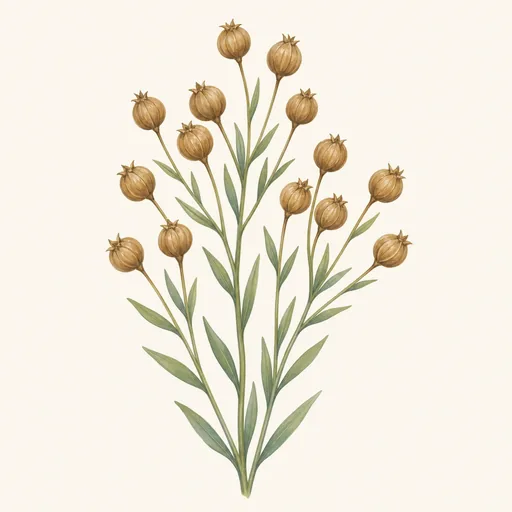
Flax
Linum usitatissimum · Linaceae
- Sow outdoors2–4 weeks before the last frostMar 13 – Apr 2
- Space5–10 cm (2–4 in) apart
- Harvest90–120 days after plantingJun 11 – Aug 21
Description
Flax is an annual flowering plant grown for its oil-rich seeds, called flaxseed or linseed, as well as for the long fibers in its stems. It has slender, upright stems, narrow gray-green leaves, and delicate five-petaled flowers, usually blue but sometimes white. Its rounded seed capsules contain small, flat, glossy seeds that may be brown or golden. Varieties grown for grain are generally shorter and more branched than varieties selected for linen fiber, producing more seed-bearing branches. Plants typically reach about 30 to 90 centimeters in height, depending on the variety and growing conditions.
Flax performs best in full sun and well-drained soil, particularly during cool or moderately warm growing seasons. It is usually sown directly into a prepared seedbed in spring, although planting times vary with local climate. Consistent moisture supports establishment and flowering, while waterlogged ground and prolonged heat can reduce yield. The crop is harvested when the capsules turn brown and the seeds mature. Seed flax grows across temperate regions and in suitable highland areas. Individual flowers last only briefly, but a stand may flower over several weeks.
The seeds are eaten whole or ground and are pressed for edible flaxseed oil. Ground seeds are easier to digest than intact ones and add a mildly nutty flavor to breads, cereals, and smoothies. Flaxseed contains fiber, protein, and alpha-linolenic acid, a plant-based omega-3 fat. Its soluble fiber forms a gel when mixed with water, making ground flax useful as a binder in some egg-free baking. Store ground seed and edible oil away from heat and light to slow rancidity. Linseed oil is also used in paints, wood finishes, and other industrial products; oil intended for those purposes should not be consumed. Flax can self-pollinate, although insects may visit its flowers.
Growing Conditions
40–90 cm (1–3 ft) tall
- Smallest
- Largest
Full sun, 6+ hours
Moderate
Keep evenly moist, not soggy.
Ideal 15–24 °C (59–75 °F)
Survives down to −4 °C (25 °F).
pH 6–7.5 · neutral
Where it Grows
Planting
When to Plant
For common flax (Linum usitatissimum), sow seeds outdoors in early spring, as soon as the soil is workable and no longer waterlogged. Cool weather suits germination and early growth; aim for soil temperatures of at least 45–50°F (7–10°C). In many climates, this is about two to four weeks before the average last spring frost. Young plants tolerate a light frost, but a hard freeze can damage them, so wait if severe cold is forecast. Flax grows best when it can establish roots before hot summer weather, making an early sowing more reliable than a late one. Use local conditions rather than a fixed calendar date: the right time is when you can prepare a crumbly seedbed without the soil sticking to your tools. If spring is unusually wet, wait until the ground drains; seed sown into cold, soggy soil may rot or germinate poorly.
How to Plant
Choose a spot with full sun and well-drained soil. Remove weeds and break up large clods, then rake the surface into a fine, level seedbed. Flax seedlings compete poorly with weeds, so thorough preparation matters. Avoid heavy applications of nitrogen-rich fertilizer: overly lush plants can fall over and may flower or set seed less well. Direct-sow rather than transplanting, since flax develops a taproot and does not appreciate root disturbance.
Scatter seeds evenly or sow them in shallow rows, covering them with about ¼–½ inch (6–12 mm) of soil. Press the soil gently to give the seeds good contact, then water with a fine spray so they are not washed away. Keep the surface consistently moist, but not soggy, until seedlings emerge, usually within one to two weeks under suitable conditions.
Spacing depends on your goal. For flowers or seed, thin seedlings to roughly 4–6 inches (10–15 cm) apart, leaving room for branching. For long, straight fiber stems, sow much more densely, with plants about 1–2 inches (2.5–5 cm) apart. Continue weeding carefully while plants are small, and water during prolonged dry spells, especially as flower buds and seed capsules develop.
Growth Timeline
- Germination 7–14 days
- Growing 90–120 days
- Harvest 1–2 weeks
Planting Calendar
- Sow outdoors: 2–4 weeks before the last frost
- Germination: 7–14 days
- Sow outdoors: Mar 13 – Apr 2
- Harvest: Jun 11 – Aug 21
Care
Care Calendar
- Thin · Mar 27 – Apr 30
Thin seedlings to about 3–4 inches apart if growing for seed. - Protect · Jun 12 – Aug 6
Net plants if birds begin eating the ripening seed capsules.
Watering
Cultivated flax (Linum usitatissimum) needs steady moisture while it establishes and during flowering and seed development. If rain is scarce, water deeply enough to moisten the root zone, then let the soil surface begin to dry before watering again. About 2.5 cm (1 inch) of water per week from rain and irrigation is a useful starting point, adjusted for soil and weather. Young seedlings are especially vulnerable to drying out, while prolonged drought during flowering can reduce seed yield. Use a gentle spray or drip irrigation so you do not wash away seeds or flatten stems. Avoid persistently soggy soil: flax grows poorly in waterlogged ground and is more prone to disease there. As seed capsules turn brown and the crop approaches harvest, reduce or stop irrigation to help the plants dry evenly. Container-grown plants may need more frequent checks than those in garden soil.
Weeding
Keep flax free of weeds, particularly during its first several weeks, when seedlings are small and compete poorly for light, water, and nutrients. Start with a weed-free seedbed, and remove new weeds while they are young. Hand-pull around seedlings or use a hoe very shallowly between rows; deeper cultivation can disturb flax’s roots or damage closely spaced stems. Weed after rain or light watering if the soil is easier to work, but avoid trampling wet beds. Once a dense stand has grown tall enough to shade the soil, it usually suppresses many later weeds. Continue to remove large weeds before they set seed, especially if you plan to harvest flax for fiber: tangled weeds make pulling and processing the stems harder. Avoid broad-spectrum herbicide sprays near garden flax, and check any product label carefully before use on an edible seed crop.
Mulching
Mulch is optional for flax, especially when it is grown as a closely spaced fiber or seed crop. A dense stand shades the ground, and putting mulch over freshly sown seed can block the small seedlings. In a loosely planted garden bed, wait until the flax has emerged, then spread a thin layer of clean straw or other light organic mulch between plants or rows. Keep it clear of stems. Mulch can limit weeds, reduce soil crusting, and slow moisture loss during dry spells. Do not apply a thick, wet layer: it can keep the soil too damp, shelter slugs, and interfere with harvesting or pulling plants for fiber. If you intend to pull and ret flax stems, use only as much mulch as you can easily separate from the harvested crop. Weed-free straw is preferable to material that may introduce new seeds.
Fertilizing
Base fertilizer decisions on a soil test when possible. Flax generally grows best in reasonably fertile, well-drained soil and does not need heavy feeding. Work any recommended fertilizer into the bed before sowing so nutrients are available during early growth. Pay particular attention to phosphorus and potassium if a test shows they are low; do not add them automatically to soil that already has enough. Use nitrogen sparingly. Excess nitrogen encourages lush, weak growth that can fall over, delays maturity, and may reduce seed quality. This matters especially when growing flax for long, straight fiber stems. Avoid placing concentrated fertilizer directly against seed or young roots. If growth is pale or stunted, check first for poor drainage, drought, weeds, or soil pH problems rather than assuming the plants need feeding. Manure should be well composted and incorporated before planting, not piled against growing stems.
Pest Management
Inspect young flax regularly for chewed seedlings and stems, then check older plants for aphids and signs of disease. Flea beetles can damage emerging leaves, while cutworms may sever seedlings at soil level; protective row cover soon after sowing can help exclude insects, provided it is removed if flowering plants need insect access. A strong water spray can dislodge small aphid colonies without coating the crop. Rust, pasmo, and wilt can occur in susceptible flax, particularly where infected plant debris remains or flax is grown repeatedly in the same spot. Use healthy seed, allow good airflow, avoid waterlogged soil, and rotate flax with unrelated crops for several years. Remove badly diseased plants and clean up residues after harvest. Identify a problem before treating it, and use only products labeled for the crop and the specific pest, following local directions and harvest restrictions.
Harvesting
Harvest timing depends on whether you want fiber or seed. For fine fiber, pull whole plants, roots included, when stems begin to yellow and the lowest leaves have fallen, before most seed capsules are fully ripe. Pulling preserves stem length; gather stems into bundles and dry them before retting, which loosens the fiber. Dew-retting on the ground is one option, but follow local rules if considering water retting, which can pollute waterways. For seed, wait until most capsules have turned brown and the plants are dry. Cut or pull the stems in dry weather, finish drying the bundles in an airy, sheltered place, then thresh the capsules and separate the seed from chaff. Store only thoroughly dry seed in a sealed container in a cool, dry place. Check plants often near maturity: waiting too long can lead to lost seed as capsules break or weather damages the crop.
Growing in Containers
Grows well in a pot of at least 15 litres (4.0 US gallons), with drainage holes. Best kept outdoors.
Propagation
From seed
- Sow seeds outdoors in early spring, as soon as the soil is workable.
- Scatter seeds over a prepared, weed-free bed.
- Cover with about 1 cm of soil and firm gently.
- Keep the soil evenly moist until seedlings emerge.
Common Problems
- Yellowing leaves
- Wilting
- Stunted growth
- Leaves dropping
Fusarium wilt is a soilborne fungal disease that affects many garden crops and ornamentals, including tomatoes, beans…
- Orange or rust-colored spots
- Spots on leaves
- Yellowing leaves
- Leaves dropping
Rust is a group of plant diseases caused by fungi in the order Pucciniales, not a single species. Different rust fungi…
- Spots on leaves
- Brown or crispy leaf edges
- Bleached or scorched patches
- Leaves dropping
Anthracnose is a name for several fungal diseases, not a single species. Depending on the plant, the cause may be a…
- Yellowing leaves
- Sticky residue on leaves
- Black sooty coating
- Curled or cupped leaves
Aphids are small, soft-bodied insects that feed by piercing plants and drawing out sap. The group includes many…
- Fusarium wilt: Causes yellowing and wilting; crop rotation and disease-free seed help reduce risk.
- Rust and pasmo: Fungal diseases that can spot leaves and stems, especially in damp conditions.
- Damping-off: Seedlings may collapse in cold, wet soil.
- Aphids: Can cluster on tender growth and weaken plants.
- Lodging: Tall stems may fall over when plants are crowded, shaded, or given too much nitrogen.
Varieties
- Fiber flax: Tall, relatively unbranched types grown for the long fibers used to make linen.
- Oilseed flax (linseed): Shorter, more branched types selected for seed production.
- Brown-seeded flax: A common oilseed type with brown seeds.
- Golden-seeded flax: A yellow-seeded oilseed type; its color does not reliably indicate better nutrition.
- Dual-purpose flax: Types grown to provide both usable fiber and seed, usually with some trade-off in yield or quality.
Health Benefits
Flaxseed is eaten mainly for its fiber, alpha-linolenic acid (ALA)—a plant omega-3 fat—and lignans. Ground flaxseed is easier to digest than whole seed, which may pass through the gut largely intact. Its soluble and insoluble fiber can help relieve constipation when eaten with enough water. Regular consumption may also modestly lower LDL cholesterol, particularly as part of a diet that is otherwise supportive of heart health. Research on blood sugar control and other benefits is less conclusive.
Flaxseed is sometimes promoted for hormone balance or cancer prevention because its lignans act as phytoestrogens. These effects are being studied, but flaxseed is not a proven treatment or preventive measure for cancer. Flaxseed oil supplies ALA but little or none of the fiber and lignans found in the seed. The body converts only a limited amount of ALA to the omega-3 fats EPA and DHA, so flax is not an equivalent substitute for fish or algal sources of those fats.
For everyday use, ground seed can be added to oatmeal or baking. Store it tightly sealed, preferably in the refrigerator, to slow rancidity. Start with small amounts to limit bloating, and ask a clinician about regular use if you take medicines affected by dietary fiber or have a condition requiring dietary restrictions.
Fun Facts
- Flax is one of the oldest cultivated fiber crops; people have made linen from its stems for thousands of years.
- Its delicate blue flowers typically last only a day, though new flowers open in succession.
- Linen fibers come from the stem, while flaxseed and linseed oil come from the seeds.
- Linseed oil is also used in products such as oil paint and some wood finishes.
- Flax is mostly self-pollinating.
Notice an error or have a question about Flax? Contact us