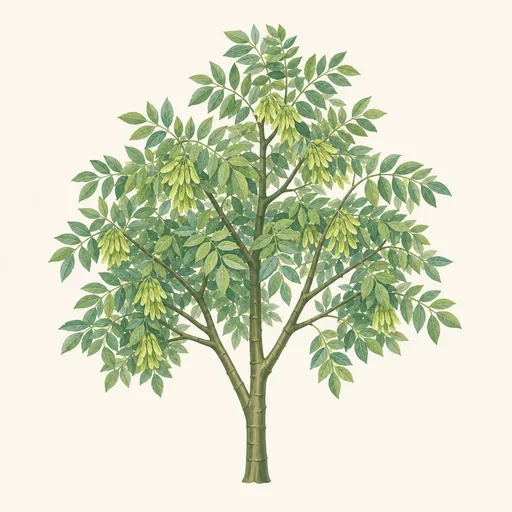
Blue Ash
Fraxinus quadrangulata · Oleaceae
- Plant outFrom 4 weeks before to 2 weeks after the last frostMar 13 – Apr 30
- Plant in autumn4–6 weeks before the first autumn frostSep 13 – Oct 3
- Space9–15 m (30–49 ft) apart
Description
The Blue Ash (Fraxinus quadrangulata) is a deciduous tree native to the central United States, particularly thriving in areas such as the Ohio River Valley. It is known for its distinctive bluish-green foliage, particularly the unique, four-angled twigs that give the tree its name. The Blue Ash can grow to heights of 50 to 80 feet and can live for over a century, making it a long-term addition to any landscape.
This tree flourishes in well-drained soils and is often found in upland areas, as it prefers full sun but can tolerate partial shade. Its leaves are compound, typically consisting of 5 to 9 leaflets, and they turn a vibrant yellow or purple in the fall, adding seasonal interest.
In terms of its ecological role, Blue Ash serves as a food source for various wildlife species. The seeds, contained in samaras, are eaten by birds and small mammals. It also provides essential habitat for various insects and birds.
Blue Ash is relatively resistant to pests and diseases, though it has been impacted by the emerald ash borer, a beetle devastating ash populations across North America. Despite this threat, Blue Ash is often recommended for urban landscaping due to its drought tolerance, adaptability to different soil types, and its impressive shade-giving capabilities.
Cultivating Blue Ash in your garden can add not only beauty but also resilience to your landscape, provided you have the right growing conditions. Always check local regulations and recommendations before planting, especially considering current pest threats.
Growing Conditions
15–21 m (49–69 ft) tall, 9–15 m (30–49 ft) wide
- Smallest
- Largest
Full sun, 6+ hours
Tolerates part sun
Moderate
Keep evenly moist, not soggy.
Survives down to −34 °C (−29 °F)
neutral to alkaline
Where it Grows
Planting
When to Plant
Blue Ash, also known as Fraxinus quadrangulata, is a deciduous tree native to the central and eastern United States. Its attractive foliage, tolerance to drought, and unique blue-tinted twigs make it a popular choice for landscapes. Planting Blue Ash requires attention to timing to ensure optimal growth and establishment. Here are key factors to consider when determining the right time to plant your Blue Ash tree.
1. Understanding Plant Hardiness Zones Blue Ash typically thrives in USDA hardiness zones 5 through 8. Before planting, check your local hardiness zone to understand when temperatures are conducive to planting. Planting should generally occur during periods when the risk of frost has passed but before the onset of extreme heat.
2. Ideal Planting Seasons
- Spring Planting: Early spring, after the last frost date has passed, is considered one of the best times to plant Blue Ash. At this time, the soil is warming up, and the tree can take advantage of the moist conditions to establish its root system before the summer heat arrives.
- Fall Planting: Another suitable time for planting is in the fall, usually between mid-September and early November. This allows the tree to establish roots before the ground freezes. However, ensure to plant early enough so that there is sufficient time for root growth.
3. Soil Temperature Considerations For best results, you should check that the soil temperature is consistently above 50°F (10°C) before planting. Soil that is too cold can impede root growth and establishment. You can use a soil thermometer to gauge the temperature accurately.
4. Weather Conditions Look for a period of mild, rainy weather when planting. This not only reduces transplant shock but also helps keep the soil moist for the new plant. Avoid times of drought or extreme heat, as this can stress the young tree and hinder its establishment.
5. Preparation Prior to Planting Before planting, prepare the planting site by clearing any weeds, grass, or debris. It is essential to dig a hole that is at least two times wider than the root ball of the tree to facilitate root spread and growth. This preparation should ideally be done ahead of the actual planting.
Conclusion Successfully determining when to plant a Blue Ash tree involves considering plant hardiness, seasonal timing, soil temperatures, and prevailing weather conditions. By planting during the ideal seasons of spring or early fall, gardeners can help ensure the successful establishment and health of this versatile tree. Always remember to monitor the local climate and soil conditions to adapt your planting schedule accordingly. Happy gardening!
How to Plant
Planting Blue Ash (Fraxinus quadrangulata)
Blue Ash is a native tree recognized for its distinctive blue-gray bark, glossy dark green leaves, and adaptability to various soil conditions. When planting Blue Ash, timing and method are key for successful establishment.
Timing: The best time to plant Blue Ash is during the early spring or fall when the temperatures are cooler, allowing the tree to establish its root system with less stress.
Site Selection: Choose a location with full sun to partial shade and well-draining soil. Although Blue Ash tolerates various soils, it thrives in rich, loamy soils.
Planting Steps:
-
Preparation: Dig a hole that is at least two to three times wider than the root ball and as deep as the root ball itself. Loosen the soil around the edges to encourage root growth.
-
Planting: Remove the tree from its container gently. Place it in the hole, ensuring that the root collar (where the roots meet the trunk) is level with the surrounding soil. Avoid burying the trunk.
-
Backfilling: Fill the hole with the original soil, gently firming it down to eliminate air pockets. Water thoroughly to help settle the soil.
-
Mulching: Apply a layer of mulch around the base, keeping it away from the trunk, to retain moisture and suppress weeds.
-
Watering: Regularly water the tree, especially during the first year, to promote a healthy establishment.
With proper care, your Blue Ash will thrive, providing beauty and shade for years to come.
Planting Calendar
- Plant outdoors: from 4 weeks before to 2 weeks after the last frost
- Autumn planting: 4–6 weeks before the first autumn frost
- Plant out: Mar 13 – Apr 30
- Autumn planting: Sep 13 – Oct 3
Care
Care Calendar
- Prune · Feb 13 – Apr 2
Remove dead, damaged, or crossing branches while the tree is dormant. - Mulch · Mar 27 – May 14
Spread mulch over the root area, keeping it away from the trunk.
Watering
When watering Blue Ash (Fraxinus quadrangulata), it’s essential to mimic its native habitat while avoiding overwatering. The best strategy involves establishing a deep watering routine, especially during the growing season. Use a soaker hose or drip irrigation system to deliver water slowly and deeply, encouraging root development.
Water the plant when the top 1 to 2 inches of soil feel dry, typically once a week during dry spells. Adjust the frequency based on rainfall and temperature. Ensure that the soil is well-draining; Blue Ash prefers slightly moist but not saturated conditions. In the heat of summer, additional watering may be necessary, while in cooler months, reduce the frequency. Always check for signs of wilting or yellowing leaves, which can indicate water stress. By monitoring moisture levels and maintaining a consistent watering schedule, you can promote healthy growth and vitality in your Blue Ash.
Pruning
Pruning Blue Ash (Fraxinus quadrangulata) is essential for maintaining its health and promoting a strong structure. The best strategy involves timing, technique, and tools. Late winter or early spring, before new growth begins, is ideal for pruning, as this minimizes stress on the tree and allows it to recover quickly.
Begin by assessing the tree, looking for any dead, damaged, or diseased branches. Remove these first, cutting them back to the point of healthy wood. For improved air circulation and sun exposure, thin out crowded branches, ensuring you maintain a balanced canopy. Aim for a central leader to promote vertical growth, and avoid excessive cutting to prevent shock.
Use clean, sharp pruning shears or loppers for cuts, making clean angles to promote healing. Avoid topping, as this can lead to weak growth. Regularly prune in subsequent years to maintain shape and health, ensuring your Blue Ash thrives in its environment.
Weeding
Weeding around a Blue Ash (Fraxinus quadrangulata) plant is crucial for its health and growth. The best strategy involves a few key steps. First, monitor the area regularly, as early detection of weeds prevents them from establishing deep roots. Hand-pulling is often the most effective method, especially for young saplings, as it minimizes soil disturbance and root damage. It is advisable to weed after rain or watering when the soil is moist, making it easier to pull weeds out completely.
Mulching can also be a beneficial strategy; applying a layer of organic mulch around the base of the Blue Ash can suppress weed growth and retain soil moisture. Ensure that the mulch is kept a few inches away from the trunk to prevent rot. In cases of persistent weeds, consider using biodegradable herbicides as a last resort, but always follow label instructions to protect the Blue Ash and surrounding environment.
Mulching
Mulching is an essential practice for the successful growth of Blue Ash (Fraxinus quadrangulata) as it helps retain moisture, suppress weeds, and regulate soil temperature. The best strategy for mulching around a Blue Ash involves the following steps:
-
Timing: Apply mulch in early spring, after the soil has warmed but before the growing season begins. This encourages good moisture retention as the tree establishes.
-
Material Selection: Use organic mulches, such as shredded bark, wood chips, or straw, as they decompose and enrich the soil over time.
-
Depth: Spread mulch to a depth of 2 to 4 inches, keeping it away from the trunk to prevent rot and pest issues. A ring several inches from the base should suffice.
-
Maintenance: Regularly check the mulch for compaction or decomposition, adding more as needed to maintain the recommended depth.
Following these guidelines will promote a healthier Blue Ash and contribute positively to its growth environment.
Fertilizing
Fertilizing Blue Ash (Fraxinus quadrangulata) requires a strategic approach to ensure healthy growth without over-fertilization. The best strategy begins with a soil test to determine nutrient levels and pH. Blue Ash thrives in well-drained, slightly alkaline soils, so if the test shows deficiencies, particularly in nitrogen, phosphorus, or potassium, a balanced, slow-release fertilizer with a ratio like 10-10-10 can be applied.
The ideal timing for fertilization is in early spring, just before the active growing season begins. Use about 1 pound of fertilizer per inch of trunk diameter, distributed evenly within the tree's drip line (the area directly beneath the outer edge of the tree’s canopy). Water the soil well after application to help the nutrients penetrate. Avoid fertilizing late in the growing season, as this can stimulate new growth vulnerable to winter damage. Regular mulching around the base can also support soil health and moisture retention.
Growing in Containers
Not well suited to growing in pots.
Propagation
From seed
- Collect mature winged seeds in autumn.
- Remove the seeds from their clusters.
- Sow them outdoors in a protected seedbed.
- Keep the soil lightly moist through the seasons.
- Watch for seedlings in spring; germination may be delayed.
- Transplant seedlings once they are sturdy enough to handle.
Common Problems
- Wilting
- Stunted growth
- Leaves dropping
- Stems chewed or cut through
Borers are the larvae of various moths, beetles, flies, and other insects that feed inside plant tissue. “Borers” is a…
- Spots on leaves
- Brown or crispy leaf edges
- Bleached or scorched patches
- Leaves dropping
Anthracnose is a name for several fungal diseases, not a single species. Depending on the plant, the cause may be a…
Varieties
Blue Ash is a deciduous tree native to the central and eastern United States. It is appreciated for its distinctive blue-colored foliage, which gives it a unique aesthetic appeal, and its adaptability to various soil types, making it a popular choice for landscaping and reforestation efforts. Below are some common varieties of the Blue Ash:
-
Fraxinus quadrangulata 'Columnaris':
- Description: This cultivar is characterized by its narrow, upright growth habit, making it ideal for tight spaces or as a street tree.
- Features: The 'Columnaris' variety typically has denser foliage and maintains its shape well as it matures.
-
Fraxinus quadrangulata 'Lakewood':
- Description: Known for its exceptional drought tolerance, 'Lakewood' is a selected variety that performs well in urban environments.
- Features: This variety has a robust trunk and is often recognized for its attractive, dark green leaves.
-
Fraxinus quadrangulata 'Blue Forest':
- Description: This selection is known for its striking blue-grey leaves, adding a splash of color to landscapes.
- Features: 'Blue Forest' also offers good resistance to common pests and diseases that affect ash trees.
-
Fraxinus quadrangulata 'Autumn Purple':
- Description: As the name suggests, this variety exhibits vibrant purple hues in the fall, providing brilliant seasonal interest.
- Features: This variety offers the traditional blue ash qualities but is particularly desirable for its autumn color display.
-
Fraxinus quadrangulata 'Fastigiata':
- Description: Often referred to as the upright Blue Ash, this cultivar has a vertical growth pattern that makes it suitable for narrow areas.
- Features: It boasts strong branches and a compact form, making it an ideal choice for urban or constrained landscapes.
Cultivation Considerations
When choosing a Blue Ash variety for your garden or landscape, consider the specific growth habits and aesthetic qualities of each cultivar. Blue Ash prefers full sun and well-draining soil, and it typically thrives in USDA Hardiness Zones 3 to 8. Additionally, it is important to monitor for pests such as the emerald ash borer, which has devastated many ash populations, though some varieties may show increased resilience.
In summary, Blue Ash presents a range of cultivars that cater to different aesthetic preferences and environmental conditions, making it a versatile choice for gardeners and landscape enthusiasts alike.
Health Benefits
The Blue Ash (Fraxinus quadrangulata), a tree native to North America, is notable not only for its ecological contributions but also for its potential health and wellness applications. One of the primary wellness applications stems from its traditional use in herbal medicine. Historically, various parts of the Blue Ash, particularly its bark and leaves, have been utilized by Indigenous peoples for their anti-inflammatory properties. Infusions made from the bark were sometimes employed to alleviate ailments such as rheumatism and to treat fevers.
In addition to its medicinal uses, the Blue Ash contributes to environmental health. Planting Blue Ash in urban areas can improve air quality by absorbing pollutants and providing shade, which can foster mental well-being and reduce stress. The tree’s presence in parks and gardens can enhance beauty and biodiversity, encouraging outdoor activities that promote physical fitness and mental relaxation.
Moreover, as a hardy tree, the Blue Ash plays a role in soil conservation, preventing erosion and supporting local ecosystems. In summary, while the direct health applications of Blue Ash may be limited, its role in enhancing environmental wellness and traditional herbal practices underscores its importance in health-conscious gardening and landscape design.
Fun Facts
-
Unique Bark: Blue Ash is distinguished by its distinctive, furrowed bark that has a unique cross-section due to its square-shaped twigs, which gives the tree a visually interesting appearance throughout the seasons.
-
Drought-Tolerant: Once established, the Blue Ash is remarkably drought-resistant, making it an excellent choice for gardeners looking for a low-maintenance tree that thrives in well-drained soils.
-
Ecological Importance: This tree plays a significant role in its ecosystem by providing habitat and food for various wildlife species. Its seeds are especially sought after by birds and small mammals.
-
Wood Characteristics: The wood of the Blue Ash is highly valued for its strength and elasticity, making it a popular choice for products like sports equipment (e.g., baseball bats) and furniture.
-
Fall Foliage: In autumn, the leaves of the Blue Ash turn vibrant shades of yellow to golden brown, adding a spectacular display of color to the landscape and making it a stunning choice for fall interest in gardens.
These traits make Blue Ash a noteworthy addition to any garden or landscape design.
Notice an error or have a question about Blue Ash? Contact us