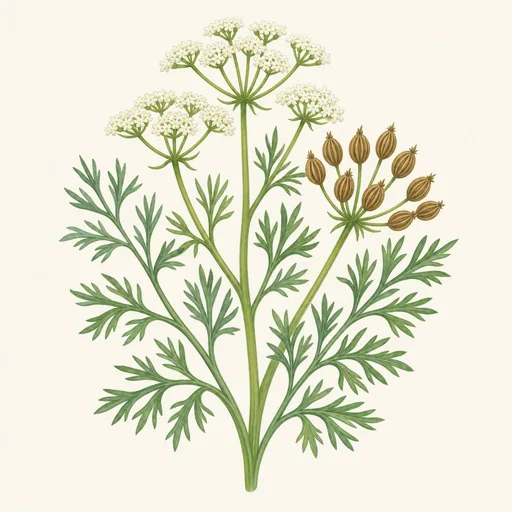
Caraway
Carum carvi · Apiaceae
- Sow outdoorsFrom 4 weeks before the last frost until the last frostMar 13 – Apr 16
- Plant in autumn8–10 weeks before the first autumn frostAug 16 – Sep 5
- Space20–30 cm (8–12 in) apart
- Harvest60–90 days after plantingMay 12 – Aug 5
Description
Caraway is an aromatic herb in the carrot family (Apiaceae), grown chiefly for the small, curved fruits commonly called caraway seeds. It is usually a biennial: in its first year it forms a low rosette of finely divided, feathery leaves and a substantial taproot; after exposure to winter cold, it sends up flowering stems in its second year. Mature plants typically reach 30–80 cm tall. Small white, sometimes pinkish, flowers appear in flat-topped clusters called umbels and attract pollinating insects. The fruits ripen from green to brown and have a warm, slightly sweet flavor with notes of anise and citrus.
Caraway grows best in full sun and fertile, well-drained soil that stays moderately moist. It prefers cool growing conditions and can be sown directly where it will mature, since its taproot makes transplanting difficult. Allow space for the leafy first-year plants, and keep their beds free of weeds while they establish. Plants grown for fruit need to survive a cold season before flowering. Harvest the flower heads when most fruits have turned brown but before they readily fall, then dry them and shake out the fruits. Saving a few flowering plants can provide seed for future sowings.
The dried fruits are used in rye bread, sauerkraut, cheeses, stews, and baked goods. Young leaves can be used sparingly as an herb, and the root is sometimes cooked as a vegetable. Caraway is distinct from cumin, despite the resemblance between their dried fruits. In a garden, its flowers offer nectar to small beneficial insects, while poorly drained soil can encourage root problems. Aphids may gather on tender growth. Because caraway can self-sow, remove unwanted seed heads before the fruits drop if you do not want new plants appearing nearby.
Growing Conditions
30–80 cm (12–31 in) tall, 20–30 cm (8–12 in) wide
- Smallest
- Largest
Full sun, 4+ hours
Tolerates part sun
Moderate
Keep evenly moist, not soggy.
Ideal 15–24 °C (59–75 °F)
Survives down to −40 °C (−40 °F).
pH 6–7.5 · neutral
Where it Grows
Planting
When to Plant
Sow caraway outdoors in early spring, as soon as the soil can be worked. It tolerates cool weather, so you do not need to wait until after the last frost. Another option is to sow in late summer or early autumn, allowing roughly six to eight weeks of growth before the ground freezes. In mild-winter areas, autumn sowing can be especially convenient; where winters are severe, spring sowing is the safer choice.
Caraway is usually a biennial. It grows leaves and a taproot in its first season, then flowers and produces seeds after winter. A spring sowing therefore normally gives you leaves the first year and a seed harvest the next summer. An autumn sowing may also flower the following summer if the plants establish before winter. Choose a time when you can keep the seedbed evenly moist during germination, which generally takes one to three weeks.
How to Plant
Direct-sow caraway where it will grow: its long taproot makes established plants difficult to transplant. Choose a site with full sun and well-drained soil. Some light shade is acceptable, but plants usually flower and set seed best in sun. Loosen the soil, remove weeds and stones, and work in a modest amount of compost if the soil is poor. Avoid heavy applications of fertilizer, particularly nitrogen, which encourage leafy growth at the expense of seeds.
Sow seeds about ¼ inch (6 mm) deep in shallow drills, with rows roughly 18 inches (45 cm) apart. Cover lightly with fine soil and water gently so the seeds stay in place. Keep the surface consistently moist, but not waterlogged, until seedlings appear. Once they are large enough to handle, thin them to about 8–12 inches (20–30 cm) apart. Thinning gives each plant room to develop its leafy rosette and flowering stems.
After establishment, water during prolonged dry spells and keep weeds down, especially while plants are small. If your area has harsh winters, a light mulch after the ground freezes can help protect autumn-sown plants; pull it back in spring. Leave healthy plants in place over winter if you want to harvest their seeds the following year.
Growth Timeline
- Germination 10–21 days
- Growing 60–90 days
- Harvest 1–2 weeks
Planting Calendar
- Sow outdoors: from 4 weeks before the last frost until the last frost
- Autumn planting: 8–10 weeks before the first autumn frost
- Germination: 10–21 days
- Sow outdoors: Mar 13 – Apr 16
- Autumn planting: Aug 16 – Sep 5
- Harvest: May 12 – Aug 5
Care
Care Calendar
- Thin · Apr 24 – May 28
Thin seedlings to 6–8 inches apart once they are large enough to handle. - Mulch · Oct 11 – Nov 14
In areas prone to frost heave, place a light mulch around first-year rosettes.
Watering
Keep the soil evenly moist while caraway seeds germinate and seedlings establish; a gentle watering can helps avoid washing away the shallow-sown seeds. Once plants are growing well, water when the top inch of soil feels dry. During dry spells, aim for roughly an inch of water per week from rain and irrigation combined, adjusting for your soil and weather. Water deeply rather than giving frequent light sprinkles, so moisture reaches the developing taproot. Established plants tolerate some dryness, but prolonged drought during flowering and seed formation can reduce the harvest. Good drainage matters just as much as adequate water: consistently soggy soil encourages root problems. Water at soil level when possible, especially in crowded plantings, and allow the foliage to dry before evening. Container-grown caraway may need more frequent checks because potting mix dries faster than garden soil.
Pruning
Caraway needs little pruning. In its first year, it forms a low rosette of leaves; leave most of that growth in place so the plant can build the reserves needed to flower in its second year. You can pick a few young leaves for cooking, but avoid stripping a small plant. In the flowering year, keep the tall stems and umbels intact if you want a seed crop. Remove broken or diseased stems as needed, using clean scissors and disposing of diseased material rather than composting it. If you do not want caraway to self-seed, cut off the flower heads before their seeds mature. Otherwise, wait until the heads are ready to harvest rather than deadheading them. Once a biennial plant has set seed, it normally finishes its life cycle; cutting it back will not reliably make it produce another crop.
Weeding
Weed caraway regularly, especially during its slow early growth and throughout its first year as a leafy rosette. Weeds compete with young plants for light, moisture, and nutrients and can make the small seedlings hard to find. Hand-pull weeds after rain or watering, when their roots release more easily. If you use a hoe, work only at the soil surface and keep it clear of caraway stems: the plant develops a taproot, and deep cultivation can damage it. Remove perennial weeds, such as bindweed or couch grass, from the bed before sowing. Thin crowded caraway seedlings as recommended for your variety so each plant has room to grow and you can reach between plants to weed. Keep the area reasonably clear in the second year, too, particularly before flowering. Remove weeds before they set seed to reduce future work.
Mulching
Once caraway seedlings are established, spread a thin layer of organic mulch, such as shredded leaves or fine, weed-free straw, between the plants. About 1–2 inches is enough to help retain moisture and suppress new weeds without overwhelming the low first-year rosettes. Keep mulch away from the leaves and crowns so they remain airy and do not stay damp against the soil. Avoid covering freshly sown rows: caraway seeds need to emerge without pushing through a heavy layer. Mulch is most useful where the soil dries quickly or weeds are persistent. In colder areas, a light covering after the ground begins to freeze can help limit freeze–thaw movement around overwintering plants; pull it back from the crowns as growth resumes. On heavy, wet soil, use mulch sparingly and watch that it does not trap excess moisture.
Fertilizing
Caraway grows well in reasonably fertile, well-drained soil and usually needs little supplemental fertilizer. Before sowing, mix a modest amount of finished compost into the bed, particularly if the soil is poor. A soil test is the best guide if you are unsure what nutrients are needed. Avoid generous doses of high-nitrogen fertilizer: they can encourage lush leaves at the expense of flowering and seed production, and tender growth may be more prone to problems. If plants are noticeably pale and growth is weak in otherwise suitable conditions, apply a light dose of a balanced fertilizer according to its label, then water it in. Do not assume fertilizer will fix yellowing caused by waterlogged soil or damaged roots. For container-grown plants, use a modest, label-directed feed if nutrients in the potting mix become depleted; avoid overfeeding.
Pest Management
Check leaves, stems, and developing flower heads regularly so you can respond before damage becomes widespread. Aphids sometimes gather on tender growth; a firm spray of water can dislodge small colonies, while insecticidal soap may help if used according to its label. Slugs and snails can damage young seedlings, so remove hiding places nearby and use suitable barriers or traps if needed. As a member of the carrot family, caraway may also attract carrot-family pests, including leaf miners and carrot rust flies. In areas where these are troublesome, insect netting installed early and secured at the edges can help exclude egg-laying flies. Rotate plantings away from other carrot-family crops where practical. Provide space for airflow, avoid persistently wet soil, and remove badly affected foliage to limit disease. Caterpillars may be butterfly larvae; identify them before deciding whether control is necessary.
Harvesting
For seeds, allow caraway to overwinter: most plants flower and set seed in their second year. Watch the umbels as their seeds change from green to brown. Because heads ripen unevenly and ripe seeds shed readily, cut heads when most seeds on each head are brown, preferably on a dry day. Place the cut heads upside down in a paper bag or spread them on a clean tray in a dry, airy place to finish drying. Rub the dry heads to release the seeds, remove the chaff, and store fully dry seeds in an airtight container away from heat and light. Pick a few tender leaves for use fresh, preferably without heavily defoliating first-year plants. The taproot can also be harvested for cooking in the first autumn, but digging it up sacrifices that plant’s future seed crop.
Growing in Containers
Grows well in a pot of at least 10 litres (2.6 US gallons), with drainage holes. Best kept outdoors.
Propagation
From seed
- Choose a sunny spot with well-drained soil.
- Sow seeds directly outdoors in spring or, in mild climates, late summer.
- Cover the seeds lightly with soil and water gently.
- Keep the soil moist until seedlings emerge.
- Thin seedlings to about 20–30 cm (8–12 inches) apart.
Companion Plants
Good neighbors
- Peas: Caraway is a traditional companion for peas, and its deep taproot occupies a different soil layer from their shallower roots.
- Strawberries: Caraway is traditionally grown near strawberries, where its deep taproot makes limited competition for surface soil.
- Cabbage: Flowering caraway attracts parasitic wasps and hoverflies that can help control cabbage pests.
Common Problems
- Yellowing leaves
- Sticky residue on leaves
- Black sooty coating
- Curled or cupped leaves
Aphids are small, soft-bodied insects that feed by piercing plants and drawing out sap. The group includes many…
- White powdery coating
- Yellowing leaves
- Curled or cupped leaves
- Distorted new growth
Powdery mildew is a group of fungal diseases, not a single species. Different fungi infect different hosts, including…
- Spots on leaves
- Yellowing leaves
- Leaves dropping
Septoria leaf spot is a fungal disease caused by species of Septoria. It affects many garden plants; the species…
- Powdery mildew: White fungal growth on leaves, especially where air circulation is poor.
- Root rot: Waterlogged soil can damage roots and cause plants to wilt.
- Aphids: These sap-feeding insects can cluster on tender growth.
- Carrot fly: Larvae may tunnel into the roots of this carrot-family plant.
- Seed loss: Ripe fruits can fall from the plant if harvest is delayed.
Varieties
- ‘Arterner’: A biennial cultivar grown for its aromatic fruits.
- ‘Sprinter’: An annual cultivar that can produce a crop in its first growing season.
- ‘Konczewicki’: A biennial cultivar developed in Poland for seed production.
Health Benefits
Caraway has a long history of use as a digestive aid. Its aromatic fruits—often called seeds—are used in food and sometimes steeped as a tea for bloating, gas, and mild indigestion. Caraway oil is also found in some digestive products, frequently alongside peppermint oil. Studies of certain peppermint-and-caraway oil preparations suggest they may help some people with indigestion, but those results do not show that caraway tea or ordinary culinary amounts have the same effect.
Caraway contains aromatic compounds, including carvone and limonene, that contribute to its flavor and have been studied for possible effects on the digestive tract. Evidence for other claimed benefits, such as treating infections or improving blood sugar, is insufficient to recommend caraway as a treatment.
Using caraway as a food seasoning is generally different from taking a concentrated extract or essential oil. Essential oils should not be swallowed unless they are in a product intended for that use and taken according to its directions. People with allergies to caraway or related plants in the carrot family should avoid it. If digestive symptoms are persistent, severe, or new, seek medical advice rather than relying on caraway.
Fun Facts
- The “seeds” used in cooking are botanically dry fruits.
- Caraway belongs to the carrot family, along with parsley, dill, and fennel.
- Most caraway plants grow leaves in their first year and flower in their second.
- Caraway flavors foods such as rye bread and is also used in aquavit.
Notice an error or have a question about Caraway? Contact us