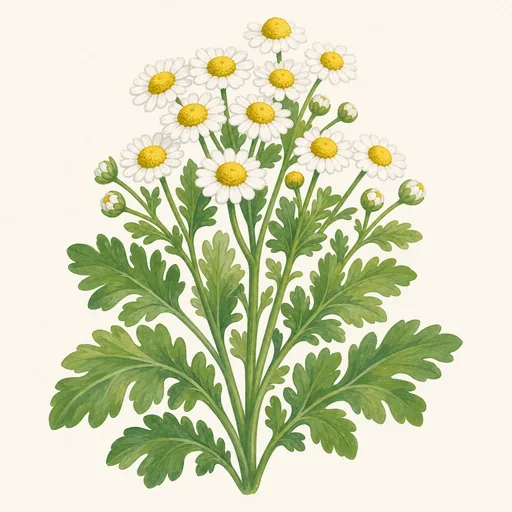
Feverfew
Tanacetum parthenium · Asteraceae
- Start indoors6–8 weeks before the last frostFeb 13 – Mar 5
- Sow outdoorsFrom the last frost until 2 weeks afterApr 10 – Apr 30
- Plant outFrom the last frost until 2 weeks afterApr 10 – Apr 30
- Space30–45 cm (12–18 in) apart
- Harvest90–120 days after plantingJul 9 – Sep 18
Description
Feverfew is an aromatic, short-lived perennial herb in the daisy family, Asteraceae. Originally from southeastern Europe and western Asia, it is now grown in gardens and has escaped cultivation in many temperate regions. Plants typically reach 30–80 cm tall and form bushy clumps of branching stems. Their bright green leaves are deeply lobed, with rounded, toothed segments and a strong, somewhat bitter scent when crushed. From late spring through summer, the stems carry loose clusters of small, daisy-like flower heads. Each has a yellow center surrounded by short white rays; some garden cultivars have fuller, button-like blooms.
Feverfew is often grown in herb beds and cottage gardens. Its flowers attract small bees, hoverflies, and other beneficial insects. It grows best in full sun or light shade in reasonably well-drained soil. Water young plants while they establish, but avoid persistently soggy ground. In mild climates it may remain evergreen; in colder places its top growth may die back in winter. It readily self-seeds, so remove spent flowers if volunteer seedlings are unwelcome. Propagation is usually by seed or by dividing established clumps.
The leaves have a history of use in traditional remedies, particularly for headaches. Some feverfew preparations have been studied for migraine prevention, but results are mixed, and the herb should not replace medical care. Raw leaves may irritate the mouth, and handling the plant can cause skin reactions in sensitive people. Avoid medicinal use during pregnancy, and ask a clinician before taking it alongside medicines, especially blood thinners. Although its flowers resemble chamomile, feverfew has broader, more coarsely divided leaves and a distinctly pungent smell.
Growing Conditions
30–90 cm (1–3 ft) tall, 30–60 cm (12–24 in) wide
- Smallest
- Largest
Full sun, 4+ hours
Tolerates part sun, part shade
Moderate
Keep evenly moist, not soggy.
Ideal 15–25 °C (59–77 °F)
Survives down to −29 °C (−20 °F).
pH 6–7.5 · neutral
Where it Grows
Planting
When to Plant
Start feverfew seeds indoors 6–8 weeks before your area’s average last spring frost. Move the seedlings outside after the danger of hard frost has passed and they have been gradually accustomed to outdoor conditions for about a week. You can also sow seeds directly in the garden in spring, once the soil is workable and severe frost is unlikely. Established feverfew tolerates some cold, but small seedlings are more vulnerable.
If you have mild winters, early fall is another planting window for seeds or nursery plants. Allow several weeks of growing weather before the first hard freeze so young plants can establish roots. In colder regions, spring planting is the safer choice. Use your local frost dates rather than a fixed calendar month: planting time varies considerably by climate. Feverfew readily self-sows, so plants that have already flowered may produce new seedlings without further planting.
How to Plant
Choose a site with well-drained soil and full sun; in hot climates, a little afternoon shade can help. Clear weeds and loosen the top few inches of soil. Feverfew does not need especially rich ground, but compost can improve poor or compacted soil. Avoid a spot that stays waterlogged.
Feverfew seeds are small and germinate best with light. Scatter them thinly over the prepared soil, press them gently into the surface, and do not bury them. Mist or water gently so they stay in place. Keep the surface consistently moist, not soggy, until seedlings appear. Thin the seedlings to roughly 12–18 inches (30–45 cm) apart, allowing room for the plants to branch and for air to circulate.
For nursery plants or indoor-started seedlings, dig a hole about as deep as the root ball and slightly wider. Set each plant at the same depth it grew in its container, firm the soil lightly, and water thoroughly. Water regularly for the first few weeks while roots establish; afterward, let the soil surface dry somewhat between waterings. A light mulch can help retain moisture, but keep it away from the stems. Wear gloves if handling feverfew irritates your skin.
Growth Timeline
- Germination 10–21 days
- Seedlings indoors 3–8 weeks
- Growing in the garden 90–120 days
- Harvest 8–12 weeks
Planting Calendar
- Start seeds indoors: 6–8 weeks before the last frost
- Sow outdoors: from the last frost until 2 weeks after
- Plant outdoors: from the last frost until 2 weeks after
- Germination: 10–21 days
- Start indoors: Feb 13 – Mar 5
- Sow outdoors: Apr 10 – Apr 30
- Plant out: Apr 10 – Apr 30
- Harvest: Jul 9 – Sep 18
Care
Care Calendar
- Thin · Mar 27 – May 14
Thin self-sown seedlings to give each plant room to grow. - Deadhead · May 22 – Aug 20
Remove spent flowers to prolong bloom and limit self-seeding. - Prune · Jun 19 – Aug 6
Cut back plants after their main flush of flowers to encourage fresh growth.
Watering
Water newly planted feverfew regularly during its first growing season, keeping the soil lightly moist while its roots establish. If rainfall is scarce, give it a thorough watering about once a week rather than frequent shallow sprinkles; let the top layer of soil dry between waterings. Established plants tolerate some drought, but water during prolonged hot, dry spells if leaves wilt or flowering slows. Check containers more often: water when the top inch (2.5 cm) of potting mix feels dry, and let excess water drain away. Aim water at the soil rather than the leaves to reduce the risk of fungal disease. Feverfew dislikes persistently wet soil, particularly in winter, so good drainage matters more than maintaining constant moisture. Yellowing leaves and soft stems can signal overwatering; drooping leaves in dry soil suggest it is time to water.
Pruning
Deadhead spent flower clusters if you want a tidier plant, continued blooming, or fewer volunteer seedlings. Feverfew self-seeds readily, so remove fading heads before they set seed when you do not want it to spread. Cut flower stems back to a leafy side shoot rather than leaving bare stalks. If a plant becomes tall, floppy, or ragged after its main flush of flowers, trim it back by about one-third to encourage fresh, compact growth. Avoid cutting all the way into old, leafless stems. Remove damaged or diseased foliage as you notice it, using clean shears and discarding diseased material rather than composting it. In colder areas, leave healthy basal growth in place over winter and clear away dead stems in early spring. For flowers you intend to harvest, let those heads open fully before cutting them.
Weeding
Keep the soil around young feverfew free of weeds until the plants are large enough to shade their immediate surroundings. Pull weeds by hand or use a shallow hoe, taking care not to disturb feverfew's roots. Weeding after rain or watering is easiest because the soil is softer; remove the entire root where possible so perennial weeds do not regrow. Pay particular attention to grasses and fast-growing weeds that compete for light and water. Feverfew also produces its own volunteer seedlings. Learn to recognize their finely divided, aromatic leaves before clearing the bed, then keep the seedlings you want and pull or transplant the rest while they are small. Removing unwanted seedlings early is simpler than managing mature plants. A modest layer of mulch can suppress new weeds, but check around the base of each plant regularly and remove any that break through.
Mulching
Apply a thin layer of organic mulch, such as shredded leaves or fine bark, around feverfew after the soil has warmed in spring. About 1–2 inches (2.5–5 cm) is enough to suppress weeds and slow moisture loss without keeping the soil excessively damp. Leave a clear gap around stems and the crown; mulch piled against them can encourage rot. In rainy climates or heavy soil, use less mulch and prioritize drainage, since feverfew does not thrive with constantly wet roots. Renew the layer as it decomposes rather than adding thick layers each year. Where winters are cold, a light covering of loose leaves after the ground freezes may help protect young plants from repeated freezing and thawing. Pull that covering back in spring so new growth gets light and air. Mulch also helps keep soil from splashing onto the leaves during rain.
Fertilizing
Feverfew usually needs little fertilizer, especially when grown in reasonably fertile garden soil. At planting time, mix a small amount of finished compost into poor soil, or spread a thin layer over the bed in spring. This generally supplies enough nutrients for steady growth. Avoid heavy feeding or high-nitrogen fertilizers: they can produce soft, leafy stems at the expense of flowers and make plants more likely to flop. If growth remains weak despite adequate sunlight and watering, a light application of a balanced fertilizer in spring is reasonable; follow the label rate and do not apply it to dry, stressed roots. Container-grown feverfew may need occasional feeding because nutrients wash out of potting mix. Use a diluted, balanced liquid fertilizer sparingly during active growth. Stop feeding late in the season so plants are not pushed into tender new growth before cold weather.
Pest Management
Check feverfew regularly, particularly the undersides of leaves and tender shoot tips. Aphids may cluster on new growth, while spider mites can cause fine speckling in hot, dry conditions. A firm spray of water can dislodge light aphid infestations; for persistent problems, use insecticidal soap according to its label, covering affected surfaces and avoiding open flowers visited by pollinators. Slugs and snails may damage young plants, so remove hiding places and hand-pick them if needed. Allow space between plants and water at soil level to improve airflow and limit leaf spots or powdery mildew. Remove badly affected leaves, and avoid working among plants when foliage is wet. Healthy plants in well-drained soil generally have few serious pest problems. Identify a pest before treating it, and avoid broad-spectrum insecticides that can kill the beneficial insects helping to keep outbreaks in check.
Harvesting
For cut flowers or drying, harvest feverfew when the daisy-like flower heads are fully open and still fresh. Cut stems on a dry morning after dew has evaporated, using clean scissors or pruners; make each cut above a leafy side shoot to leave the plant able to regrow. Leaves can be picked while healthy and green, preferably before or early in flowering. Take only part of the foliage from any one plant so it can keep growing. To dry flowers or leaves, spread them in a thin layer or hang small bunches in a shaded, well-ventilated place. Store them in a sealed container once thoroughly dry, away from heat and light. Wear gloves if handling feverfew irritates your skin. Feverfew is also used in herbal preparations, but it can cause adverse reactions and interact with medicines; consult a qualified clinician before using it medicinally, especially during pregnancy.
Growing in Containers
Grows well in a pot of at least 5 litres (1.3 US gallons), with drainage holes. Best kept outdoors.
Propagation
From seed
- Sow seeds on the surface of moist seed-starting mix in spring.
- Press them down lightly; do not bury them, as light aids germination.
- Keep the mix moist and place it in bright light.
- Transplant seedlings outdoors after the last frost.
By division
- Lift an established clump in spring or early fall.
- Separate it into sections with both roots and shoots.
- Replant the sections promptly at their original depth.
- Water them well.
From cuttings
- Take nonflowering stem tips in late spring or early summer.
- Remove the lower leaves.
- Insert the stems into moist, well-draining potting mix.
- Keep them in bright, indirect light until rooted.
- Pot up the rooted cuttings.
Companion Plants
Good neighbors
- Roses: Feverfew's flowers attract hoverflies, whose larvae feed on aphids that can infest roses.
Common Problems
- Yellowing leaves
- Sticky residue on leaves
- Black sooty coating
- Curled or cupped leaves
Aphids are small, soft-bodied insects that feed by piercing plants and drawing out sap. The group includes many…
- White powdery coating
- Yellowing leaves
- Curled or cupped leaves
- Distorted new growth
Powdery mildew is a group of fungal diseases, not a single species. Different fungi infect different hosts, including…
- Powdery mildew: White, dusty patches can develop on leaves, especially where air circulation is poor.
- Aphids: These small insects cluster on tender growth and can distort leaves.
- Root rot: Persistently wet soil can damage roots; feverfew grows best in well-drained soil.
- Leggy growth: Plants may become floppy in shade or overly rich soil. Cutting them back can encourage bushier growth.
Varieties
Its yellow-green leaves are the main attraction, especially in spring.
- golden foliage
- white flowers
It bears small, rounded yellow flower heads.
- yellow flowers
- double blooms
Its densely petaled flowers resemble small white pompons.
- white flowers
- double blooms
More about varieties
- ‘Aureum’ (golden feverfew): Grown for its bright yellow-green foliage and small, daisy-like flowers.
- ‘Golden Ball’: Produces compact, double, golden-yellow button flowers.
- ‘Plenum’: A double-flowered form with fuller white blooms.
- ‘White Stars’: Bears double white flowers with a tufted appearance.
Health Benefits
Feverfew is best known for its traditional use in preventing migraines. Some clinical studies suggest that regularly taken feverfew preparations may reduce migraine frequency for some people, but results are mixed and the evidence is not strong enough to guarantee a benefit. It is not an established treatment for stopping a migraine once it starts. Researchers have studied compounds in the plant, particularly parthenolide, although products vary widely in their contents and quality.
Historically, feverfew was also used for fevers, headaches and joint discomfort. These uses are part of its herbal tradition, not proof that it effectively treats those conditions. Despite its name, feverfew should not replace medical care for a fever.
Feverfew can cause side effects, including stomach upset and mouth sores, especially when fresh leaves are chewed. People allergic to plants in the daisy family may react to it. Avoid feverfew during pregnancy; its safety during breastfeeding has not been established. It may also interact with medicines, particularly blood thinners or drugs that affect bleeding. Anyone considering a supplement—especially someone taking medication or managing frequent migraines—should check with a healthcare professional first. Do not abruptly stop regular use without advice, as withdrawal symptoms have been reported.
Fun Facts
- Feverfew belongs to the daisy family, Asteraceae.
- Its botanical name is Tanacetum parthenium; older sources may call it Chrysanthemum parthenium.
- Despite its name, feverfew has not been shown to reliably treat fevers.
- Its crushed leaves have a strong, distinctive scent.
- Plants often self-seed, so new feverfew seedlings may appear near the parent plant.
Notice an error or have a question about Feverfew? Contact us