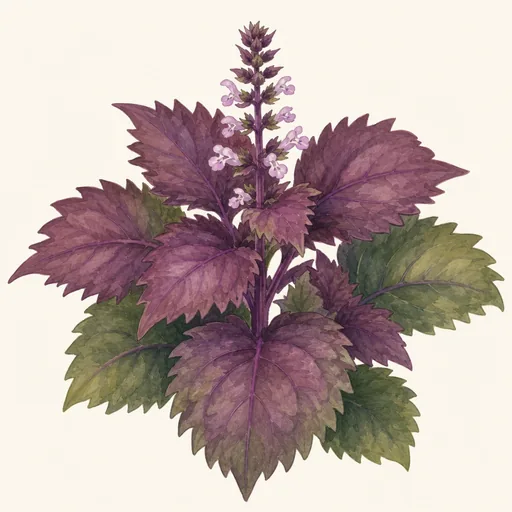
Shiso
Perilla frutescens var. crispa · Lamiaceae
- Start indoors4–6 weeks before the last frostFeb 27 – Mar 19
- Sow outdoors1–3 weeks after the last frostApr 17 – May 7
- Plant out1–3 weeks after the last frostApr 17 – May 7
- Space30–45 cm (12–18 in) apart
- Harvest40–75 days after plantingMay 27 – Aug 11
Description
Shiso is an aromatic annual herb in the mint family, grown for its leaves, seeds, and sometimes its colorful foliage. It has upright, branching, square stems and broad, pointed leaves with toothed edges. Depending on the cultivar, the leaves may be green, deep purple, or green on top and purple underneath. Some have noticeably crinkled or frilled edges. Plants typically reach 30–90 cm (1–3 ft) tall. In late summer or autumn, they produce small white to pinkish flowers in slender spikes, followed by tiny seeds.
The flavor is distinctive: fresh and herbal, with notes often compared to mint, basil, anise, and citrus. Green shiso leaves are used raw as a garnish, wrapped around food, or added to salads, noodles, and sushi. Purple shiso is especially valued for coloring and flavoring pickled plums and other preserves. Young flower spikes can also be eaten. The leaves are most fragrant when picked fresh, since their aroma fades with prolonged cooking or storage.
Shiso grows best in fertile, well-drained soil with regular moisture. It prefers sun in mild climates but benefits from afternoon shade where summers are hot. Seeds need light to germinate, so they should be pressed onto the soil surface rather than buried deeply. Once established, plants can flower and self-seed readily; removing flower spikes limits unwanted seedlings and encourages continued leaf production. Pinching the growing tips helps produce a bushier plant with more harvestable leaves.
Shiso is closely related to the perilla commonly grown for its leaves in Korean cooking, but the culinary types are not always the same variety. Its colorful leaves also make it useful as an ornamental plant in containers or garden borders.
Growing Conditions
45–90 cm (1–3 ft) tall, 30–60 cm (12–24 in) wide
- Smallest
- Largest
Full sun, 4+ hours
Tolerates part sun, part shade
Moderate
Keep evenly moist, not soggy.
Ideal 18–29 °C (64–84 °F)
Survives down to 0 °C (32 °F).
pH 5.5–7 · acidic to neutral
Where it Grows
Planting
When to Plant
Plant shiso outdoors after your area’s last spring frost, once the soil has warmed to at least 60°F (16°C) and nights generally stay above 50°F (10°C). It is a warm-season annual, and frost can kill young plants. In a cool climate, start seeds indoors about four to six weeks before the last expected frost. Give seedlings bright light, then harden them off gradually for about a week before transplanting them outside. If you prefer to sow directly, wait until the ground has warmed; seeds germinate slowly in cold soil. Aim to establish plants in spring or early summer so you have plenty of time to harvest leaves. Shiso often begins flowering as days shorten, which reduces the supply of tender leaves. In warm regions, you can make another sowing in summer, but later plants may flower while still small. Use local frost dates and actual temperatures, rather than a calendar date alone, to decide when to plant.
How to Plant
Choose a spot with full sun to partial shade and fertile, well-drained soil. In hot climates, some afternoon shade can help keep the leaves tender. Work a little compost into the soil before planting. Shiso also grows in a container with drainage holes; choose one at least 10 to 12 inches (25–30 cm) wide for a single plant.
Use fresh seed, since older shiso seed may germinate poorly. Sow it on the soil surface and press it in, or cover it with no more than 1/8 inch (3 mm) of soil: light helps it germinate. Mist gently and keep the surface evenly moist, not waterlogged. Germination commonly takes one to three weeks in warm conditions. Once seedlings have a few true leaves, thin or transplant them to about 12 to 18 inches (30–45 cm) apart. Handle their roots gently, set transplants at the same depth they grew in their pots, and water them in well.
Keep young plants watered while they establish. Once they are growing strongly, pinch out the tips to encourage branching and harvest leaves regularly. Shiso can self-seed readily; remove flower heads before they set seed if you do not want it spreading.
Growth Timeline
- Germination 7–21 days
- Seedlings indoors 2–7 weeks
- Growing in the garden 40–75 days
- Harvest 8–16 weeks
Planting Calendar
- Start seeds indoors: 4–6 weeks before the last frost
- Sow outdoors: 1–3 weeks after the last frost
- Plant outdoors: 1–3 weeks after the last frost
- Germination: 7–21 days
- Start indoors: Feb 27 – Mar 19
- Sow outdoors: Apr 17 – May 7
- Plant out: Apr 17 – May 7
- Harvest: May 27 – Aug 11
Care
Care Calendar
- Thin · Apr 24 – May 21
Thin seedlings to about 12 inches apart once they have several true leaves. - Pinch out · May 8 – Jun 4
Pinch out the growing tips to encourage bushy plants and more leaves. - Deadhead · Aug 2 – Oct 17
Remove flower spikes as they appear to prolong leaf harvest and limit self-seeding.
Watering
Keep shiso’s soil evenly moist while seeds germinate and young plants establish. Water gently so seeds and shallow roots are not displaced. Once established, water deeply when the top inch (2–3 cm) of soil feels dry, rather than giving frequent light sprinkles. Shiso grows best with consistent moisture but does not tolerate waterlogged soil, so use containers with drainage holes and avoid sites where water stands after rain. In hot weather or small pots, check the soil more often; container-grown plants can dry out quickly. Direct water toward the soil instead of routinely wetting the leaves, especially late in the day. Wilted leaves may indicate dry soil, but check before watering: persistently wet soil can also cause trouble. A thin layer of mulch can help keep moisture more consistent.
Pruning
Pinch the growing tip when a young shiso plant has several sets of true leaves to encourage branching and a fuller supply of leaves. Continue harvesting or pinching stem tips through the growing season, cutting just above a pair of leaves so new shoots can develop. Remove damaged or diseased leaves as you notice them. If leaves are your main crop, pinch off flower buds as they appear: flowering generally slows production of tender foliage. You can instead leave some flowers for pollinators or for an intentional seed harvest. Shiso can self-seed readily, however, so remove spent flower clusters before seed ripens if you do not want volunteer plants. Avoid stripping most of the foliage at once; leave enough healthy leaves for the plant to keep growing.
Weeding
Keep the area around young shiso plants free of weeds so they do not have to compete for light, water, and nutrients. Weed particularly carefully while shiso seedlings are small, since fast-growing weeds can overtop them. Pull weeds after rain or watering, when roots release more easily, and work shallowly near shiso to avoid disturbing its roots. In containers, remove stray seedlings and weeds promptly rather than letting them become established. Once plants have filled out, their foliage shades some of the soil, but continue checking around their bases. Learn to recognize shiso seedlings if mature plants have flowered nearby: shiso may self-seed and appear among other crops. Remove unwanted volunteers before they grow large or produce seed, especially where local guidance identifies shiso as a spreading or invasive plant.
Mulching
After shiso seedlings are established and the soil has warmed, spread a modest layer of organic mulch around the plants. Shredded leaves, clean straw, or untreated grass clippings applied thinly can slow evaporation, reduce weeds, and limit soil splashing onto leaves. Keep mulch a little away from the stems rather than piling it against them; constant moisture at the stem base can encourage rot. In wet conditions, use a lighter layer and make sure the soil drains freely. Mulch does not replace watering: check the soil beneath it and water when needed. In pots, a thin mulch can help slow drying, but avoid covering tiny seedlings before they emerge. Remove volunteer shiso seedlings and weeds that grow through the mulch, particularly if you are trying to prevent the plant from spreading.
Fertilizing
Start shiso in reasonably fertile, well-drained soil. Mixing finished compost into a garden bed before planting is often enough to support a season of leaf harvests. If growth is slow and the soil is poor, apply a balanced fertilizer at the label rate; container plants may benefit from occasional light feeding because nutrients wash out with watering. Do not assume every pale leaf means the plant needs fertilizer: first check for dry or waterlogged soil, pests, and insufficient light. Avoid heavy or frequent doses of nitrogen, which can produce soft, lush growth and are usually unnecessary in compost-amended soil. Water after applying granular fertilizer, and keep it off the leaves and stems. If you plan to eat the leaves, use products according to their labels and observe any stated intervals before harvest.
Pest Management
Inspect shiso regularly, especially the undersides of leaves and tender shoot tips. Aphids, spider mites, caterpillars, and slugs or snails may cause problems. For a small infestation, remove affected leaves, pick off caterpillars or slugs, or rinse aphids off with a gentle stream of water. Spider mites are more likely to become troublesome when plants are hot and dry; keep watering consistent and check for fine webbing or stippled leaves. Good spacing and watering at soil level help foliage dry and may reduce disease problems. If a treatment is needed, choose a product labeled for edible herbs and the specific pest, follow its directions, and respect its harvest interval. Avoid spraying flowers visited by pollinators. Clear away badly affected plant material rather than leaving it around the crop.
Harvesting
Begin picking shiso leaves once plants are well established and have enough foliage to keep growing. Harvest individual leaves or snip the tips of stems just above a pair of leaves; this encourages branching and further harvests. Take only a portion of each plant at a time, leaving plenty of healthy foliage. Young, tender leaves are useful fresh and are often at their best before flowering. Harvest during the cooler part of the day, then rinse and dry leaves gently before using them. Use fresh leaves promptly, or refrigerate them briefly in a container or bag that helps prevent drying. Flowering shoots can also be harvested for culinary use. If saving seed, allow selected flower clusters to mature and dry, then collect them before seeds scatter; remove other seedheads to limit unwanted self-seeding.
Growing in Containers
Grows well in a pot of at least 5 litres (1.3 US gallons), with drainage holes. Can be grown indoors as a houseplant.
Propagation
From seed
- Sow seeds after the last frost, or start them indoors several weeks earlier.
- Press seeds onto moist seed-starting mix and cover only lightly.
- Keep the mix moist until seedlings emerge.
- Thin seedlings or transplant them outdoors after frost danger has passed.
From cuttings
- Take a 10–15 cm stem cutting from a healthy plant.
- Remove the leaves from the lower half.
- Place the stem in water or moist potting mix.
- Keep it in bright, indirect light until roots form.
- Pot it up when the roots are established.
Common Problems
- Yellowing leaves
- Sticky residue on leaves
- Black sooty coating
- Curled or cupped leaves
Aphids are small, soft-bodied insects that feed by piercing plants and drawing out sap. The group includes many…
- Pale speckles or stippling
- Yellowing leaves
- Brown or crispy leaf edges
- Fine webbing
Spider mites are tiny, plant-feeding arachnids in the family Tetranychidae, not insects. Several species attack garden…
- Yellowing leaves
- Spots on leaves
- Fuzzy gray mold
- Wilting
Downy mildew is a group of plant diseases caused by several species of oomycetes, or water molds, rather than one…
- Holes in leaves
- Slime trails
- Stems chewed or cut through
Slugs and snails are soft-bodied mollusks that feed on many garden plants. Snails carry a visible shell; most slugs…
- Aphids, whiteflies, and spider mites can damage leaves, especially on crowded or stressed plants.
- Slugs and snails may chew young plants.
- Powdery mildew can develop when airflow is poor, particularly late in the season.
- Waterlogged soil can cause root rot. Use well-draining soil and avoid overwatering.
- Shiso readily self-seeds; remove flower heads before seeds mature if you do not want volunteer plants.
Varieties
The standard green-leaved type is commonly used fresh as a garnish or herb.
- green leaves
- aromatic
Its colorful leaves are used for pickling and to tint foods.
- purple-red leaves
- aromatic
Green leaves with purple undersides make this type useful in both herb and ornamental beds.
- bicolor leaves
- ornamental
More about varieties
- Green shiso (aojiso): Bright green leaves with a fresh, aromatic flavor; commonly used as a culinary herb.
- Red shiso (akajiso): Purple-red leaves valued for coloring and flavoring pickles and umeboshi.
- Bicolor shiso (urajiso): Green leaves with purple undersides.
- Ruffled shiso (chirimen shiso): Deeply crinkled leaves; available in green and red forms.
Health Benefits
Shiso is best known as a culinary herb, not a proven treatment for illness. Its leaves contain aromatic compounds and plant polyphenols, including rosmarinic acid. Laboratory studies have found antioxidant and anti-inflammatory activity in shiso extracts, but these findings do not establish that eating ordinary portions will prevent or treat disease.
In traditional East Asian practices, shiso leaves have been used for digestive discomfort and respiratory symptoms. These uses have a long history, but good-quality human evidence for specific medical benefits remains limited. Small studies of perilla extracts have also explored allergy symptoms; results are not sufficient to recommend shiso in place of established allergy care.
Perilla seeds can be pressed into an oil rich in alpha-linolenic acid (ALA), a plant-based omega-3 fat. That nutritional point applies mainly to the seeds and their oil, not to the small amounts of leaves typically used as a garnish. If you use perilla oil, keep it properly stored because its unsaturated fats can spoil.
For most people, shiso is simply a flavorful way to add variety to meals. Anyone with a suspected allergy to shiso or related foods should avoid it and seek medical advice.
Fun Facts
- Shiso is a member of the mint family, Lamiaceae.
- Red shiso gives some umeboshi (pickled plums) their characteristic pink-red color.
- The leaves are also called ōba in Japanese food markets, especially when sold as a culinary herb.
- Shiso is sensitive to day length and typically flowers as days shorten in late summer.
- Its tiny flowers and immature seed clusters can be used as garnishes.
Notice an error or have a question about Shiso? Contact us