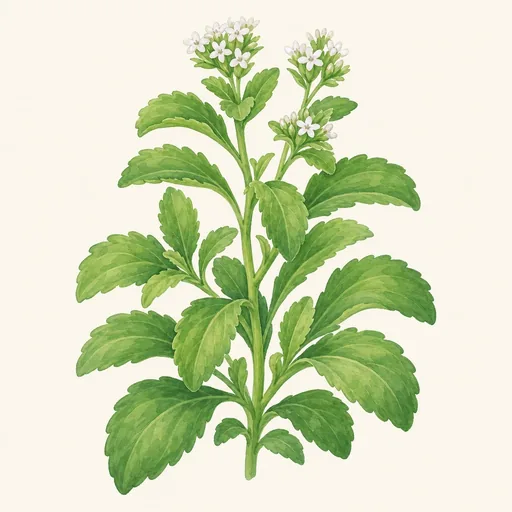
Stevia
Stevia rebaudiana · Asteraceae
- Start indoors8–10 weeks before the last frostJan 30 – Feb 19
- Plant out2–4 weeks after the last frostApr 24 – May 14
- Space30–45 cm (12–18 in) apart
- Harvest60–90 days after plantingJun 23 – Sep 2
Description
Stevia is a tender, leafy herb grown for its intensely sweet leaves. Native to parts of Paraguay and Brazil, it forms a branching, upright plant usually 30–90 cm tall. Its opposite, slightly toothed green leaves contain steviol glycosides, especially stevioside and rebaudioside A. These compounds make the leaves much sweeter than ordinary sugar, although fresh or dried leaves can have a herbal or mildly bitter aftertaste. Small white flowers appear in clusters, often as days shorten. The plant is perennial in frost-free climates but is commonly grown as an annual where winters are cold.
Grow stevia in full sun and fertile, well-drained soil. It appreciates consistent moisture, particularly during hot weather, but soggy soil can damage its roots. A light mulch helps retain moisture, while good air circulation reduces the risk of fungal problems. Once established, plants benefit from occasional pruning or pinching to encourage bushy growth and more harvestable leaves. Stevia dislikes frost, so gardeners in cooler regions can start plants indoors and set them outside after frost danger has passed. Containers make it easier to move plants into shelter when temperatures fall.
Leaves can be picked throughout the growing season, with larger harvests often taken just before flowering. Use them fresh, dry them for storage, or steep them in hot water to sweeten drinks. Crushed dried leaves work in some recipes, but they do not dissolve or behave like sugar in baking. Commercial stevia sweeteners are usually purified extracts rather than ground leaves. Plants can be propagated from soft stem cuttings; seeds are available, but germination can be uneven. Harvest leaves from healthy plants, wash them when needed, and dry them thoroughly before storing. A single plant can supply a home gardener with leaves for many cups of tea, though sweetness varies between plants and growing conditions.
Growing Conditions
30–90 cm (1–3 ft) tall, 30–60 cm (12–24 in) wide
- Smallest
- Largest
Full sun, 6+ hours
Tolerates part sun
Moderate
Keep evenly moist, not soggy.
Ideal 18–29 °C (64–84 °F)
Survives down to −7 °C (19 °F).
pH 6–7.5 · acidic to neutral
Where it Grows
Planting
When to Plant
Plant stevia outdoors in spring, after the last expected frost, when the soil has warmed to at least 60°F (16°C) and nights are consistently above about 50°F (10°C). Stevia is frost-tender, and cold, wet soil can slow growth or damage young plants. In most places, wait to set out nursery plants or rooted cuttings until it is also warm enough for tomatoes. Before planting, gradually introduce indoor-grown plants to outdoor sun and wind over 7–10 days.
If starting from seed, sow indoors about 8–10 weeks before the last expected frost. Keep the seeds warm while they germinate; stevia seed can have poor or uneven germination, so nursery plants or cuttings are often more dependable. In frost-free climates, plant in spring as temperatures begin to rise. Where winters freeze, grow stevia as an annual or bring a potted plant indoors before the first autumn frost.
How to Plant
Choose a spot with full sun and loose, well-drained soil. In very hot climates, a little afternoon shade can help prevent stress. Work some compost into poor soil, but avoid heavy applications of high-nitrogen fertilizer, which encourage leafy growth without necessarily improving sweetness. If the soil stays soggy, use a raised bed or a container with drainage holes.
Plant nursery-grown stevia or rooted cuttings 12–18 inches (30–45 cm) apart so air can circulate around them. Dig a hole about as deep as the root ball and slightly wider. Remove the plant gently, set it at the same depth it grew in its pot, fill around the roots, and water thoroughly. A light layer of mulch can help retain moisture; leave a small gap around the stem. Keep the soil evenly moist while plants establish, then water when the surface begins to dry rather than keeping the roots constantly wet.
For a container, choose one at least 12 inches (30 cm) wide and fill it with well-draining potting mix. Seeds are less reliable than transplants: if sowing them indoors, press them onto moist seed-starting mix and cover only very lightly, as they need light to germinate.
Growth Timeline
- Germination 7–21 days
- Seedlings indoors 7–12 weeks
- Growing in the garden 60–90 days
- Harvest 10–16 weeks
Planting Calendar
- Start seeds indoors: 8–10 weeks before the last frost
- Plant outdoors: 2–4 weeks after the last frost
- Germination: 7–21 days
- Start indoors: Jan 30 – Feb 19
- Plant out: Apr 24 – May 14
- Harvest: Jun 23 – Sep 2
Care
Care Calendar
- Pinch out · May 1 – Jun 25
Pinch stem tips to encourage bushier growth and more leaves. - Prune · Aug 30 – Oct 17
Remove flower buds as they appear to keep the plant producing leaves. - Protect · Oct 11 – Oct 31
Bring potted plants indoors or harvest outdoor plants before frost.
Watering
Keep stevia’s soil evenly moist but never soggy. Water when the top 1 inch (2–3 cm) feels dry, applying enough water to moisten the root zone and letting excess drain away. Newly planted stevia needs more frequent checks while its roots establish; established plants may need watering more often during hot, dry weather, especially in containers. Let the soil surface dry slightly between waterings rather than following a fixed schedule. Water at the base of the plant, preferably in the morning, to keep leaves dry and reduce disease risk. If a pot stays wet for days, check that it has drainage holes and a free-draining potting mix. Wilting can signal either dry soil or damaged roots in waterlogged soil, so feel the soil before adding water. Reduce watering as growth slows in cool weather.
Pruning
Pinch out the growing tips when young plants are about 6–8 inches (15–20 cm) tall. This encourages side shoots and produces a bushier plant with more leaves to harvest. Continue pinching the tips occasionally through the growing season, or harvest short stems regularly for the same effect. Use clean scissors or pruners and cut just above a pair of leaves, where new shoots can develop. Avoid stripping all the foliage at once; leave enough leafy growth for the plant to recover. Remove dead or damaged stems whenever you notice them. If flower buds appear and you want to continue harvesting leaves, pinch them off to encourage leafy growth. Toward the end of the season, make a final harvest before frost rather than expecting this frost-tender plant to regrow outdoors through winter.
Weeding
Keep the area around stevia free of weeds, particularly while plants are small. Weeds compete with it for water, nutrients, and light, and dense growth around the stems can reduce airflow. Pull weeds by hand when the soil is slightly damp, taking care not to disturb stevia’s roots. If using a hoe, cultivate only the surface and keep the blade away from the plant’s base. Remove weeds before they flower and set seed, then check the bed regularly so new seedlings are easy to pull. In containers, remove any volunteer plants promptly rather than letting them share the pot. A light mulch can suppress weed seedlings, but leave a small gap around the stevia stem. Avoid herbicide sprays near plants whose leaves you intend to harvest; drifting spray can damage the plant or contaminate the crop.
Mulching
Apply a thin layer of organic mulch, such as clean straw, shredded leaves, or fine bark, around stevia after the soil has warmed. About 1–2 inches (2–5 cm) is enough to slow evaporation and suppress weeds without burying the plant. Keep mulch a few inches away from the stem so the crown stays dry and is less likely to rot. Check moisture beneath the mulch before watering: the surface may look dry while the soil below remains damp. In a container, use an even thinner layer if the potting mix already holds moisture well. Replenish mulch as it breaks down, and remove any material that becomes moldy or mats tightly against the plant. Mulch helps moderate soil moisture, but it cannot compensate for poorly drained soil or a pot without drainage holes.
Fertilizing
Grow stevia in reasonably fertile, well-drained soil, amended with compost before planting if needed. Feed lightly during active growth rather than trying to force rapid, soft growth with heavy fertilizer. In garden beds, a modest application of compost or a balanced fertilizer at the rate on its label is usually sufficient. Container plants may need occasional feeding with a diluted, balanced liquid fertilizer because nutrients wash out of potting mix; follow the product directions and watch how the plant responds. Avoid excessive nitrogen, which can encourage leafy growth at the expense of a sturdy, well-balanced plant. If growth is healthy and leaves have good color, extra feeding may not be necessary. Water before applying fertilizer to dry soil, and keep fertilizer off the leaves you plan to harvest. Stop routine feeding as growth slows late in the season.
Pest Management
Inspect stevia regularly, including the undersides of leaves and tender shoot tips. Aphids, whiteflies, and spider mites may occasionally feed on it; slugs and snails can damage young plants. Start with the least disruptive response: remove badly affected leaves, dislodge small aphid colonies with a gentle stream of water, and hand-pick slugs after dark. Good spacing and avoiding excessive nitrogen can help make plants less prone to pest problems. If an infestation persists, use an insecticidal soap labeled for edible plants, following its directions and avoiding application in strong sun or when pollinators are visiting flowers. Test a small area first for leaf damage. Check the label for any interval before harvest, and wash harvested leaves. Prevent root rot by using well-drained soil and avoiding prolonged waterlogging; pesticides will not correct poor drainage.
Harvesting
Begin taking small amounts of stevia once plants have enough foliage to keep growing after each cut. Snip individual leaves or cut short leafy stems with clean scissors, leaving several sets of leaves on the plant so it can branch and recover. For a larger harvest, cut stems before the flowers open, when leaves are generally at their sweetest. Make the final outdoor harvest before the first frost, which can damage this tender plant. Pick on a dry day, after dew has evaporated. Use fresh leaves sparingly—their sweetness can be intense and tastes different from sugar—or dry them for storage. Spread leaves in a single layer in a warm, airy place out of direct sunlight, or use a dehydrator on a low setting. When completely dry and crisp, store them in an airtight container away from light and moisture.
Growing in Containers
Grows well in a pot of at least 10 litres (2.6 US gallons), with drainage holes. Can be grown indoors as a houseplant.
Propagation
From seed
- Sow fresh seeds on moist seed-starting mix.
- Press them lightly into the surface without burying them deeply.
- Keep the mix warm and evenly moist in bright light.
- Transplant seedlings after frost danger has passed.
From cuttings
- Take a 4–6-inch cutting from a healthy, nonflowering stem.
- Remove the leaves from the lower half.
- Insert the stem into moist, well-draining potting mix.
- Keep it warm and humid in bright, indirect light.
- Pot it up once roots have formed.
Common Problems
- Yellowing leaves
- Sticky residue on leaves
- Black sooty coating
- Curled or cupped leaves
Aphids are small, soft-bodied insects that feed by piercing plants and drawing out sap. The group includes many…
- Yellowing leaves
- Sticky residue on leaves
- Black sooty coating
- Curled or cupped leaves
Whiteflies are a family of tiny, sap-feeding insects that infest vegetables, ornamentals, and greenhouse plants…
- Pale speckles or stippling
- Yellowing leaves
- Brown or crispy leaf edges
- Fine webbing
Spider mites are tiny, plant-feeding arachnids in the family Tetranychidae, not insects. Several species attack garden…
- Yellowing leaves
- Wilting
- Stunted growth
- Leaves dropping
Root rot is a general name for the decay of plant roots, not a single disease with one scientific name. It can result…
- Brown or crispy leaf edges
- Wilting
- Bleached or scorched patches
- Leaves dropping
Frost damage is an injury caused when plant tissues become cold enough for ice to form or for cells to lose water to…
- Root rot: Waterlogged soil can cause wilting and dark, decaying roots. Use well-draining soil and let the surface dry slightly between waterings.
- Aphids, whiteflies, and spider mites: These pests feed on leaves, especially on stressed or indoor plants. Check leaf undersides regularly.
- Powdery mildew: Humid conditions and poor air circulation can encourage a white, powdery coating on leaves.
- Cold damage: Stevia is frost-sensitive; chilling can slow growth or damage foliage.
- Weak growth or reduced sweetness: Too little sun can limit growth, while leaves may taste less pleasant after flowering.
Varieties
- ‘Morita II’: A named selection grown for its sweet leaves and relatively high rebaudioside A content, which contributes a cleaner-tasting sweetness.
- ‘Criolla’: A traditional seed-grown strain rather than one uniform cultivar; individual plants can differ in vigor and sweetness.
Many plants sold to home gardeners are labeled simply Stevia rebaudiana, without a named variety.
Health Benefits
Stevia is best known as a sweetener. Its leaves contain steviol glycosides, compounds that taste much sweeter than sugar. Highly purified stevia sweeteners add little or no calories and generally do not raise blood glucose when used in place of sugar. This makes them useful to some people who want to reduce added sugar, including people managing diabetes. Stevia does not treat diabetes, however, and a sweetened food may still contain carbohydrates that affect blood glucose.
Replacing sugar with stevia may help reduce calorie intake, but it does not reliably cause weight loss on its own; the overall diet matters. Because steviol glycosides are not fermented by mouth bacteria in the same way as sugar, stevia can also be a tooth-friendly substitute when the rest of a food or drink is not cavity-promoting.
Some studies have explored effects on blood pressure and other measures of health, but evidence is insufficient to recommend stevia as a treatment. Safety guidance generally concerns purified steviol glycosides, not concentrated homemade leaf extracts. Commercial products may contain other sweeteners or bulking ingredients, so check labels if calories or blood glucose are a concern. If you have a medical condition or are pregnant, ask a healthcare professional about using supplements or large amounts.
Fun Facts
- Stevia is native to parts of South America, particularly Paraguay and Brazil.
- Its leaves have traditionally been used to sweeten drinks, including yerba mate.
- Stevia belongs to the daisy family, Asteraceae.
- The plant's intensely sweet compounds are called steviol glycosides; different glycosides can have different aftertastes.
- Fresh or dried leaves can sweeten tea, but they do not behave like sugar in baking: they provide sweetness without sugar's bulk or browning.
Notice an error or have a question about Stevia? Contact us