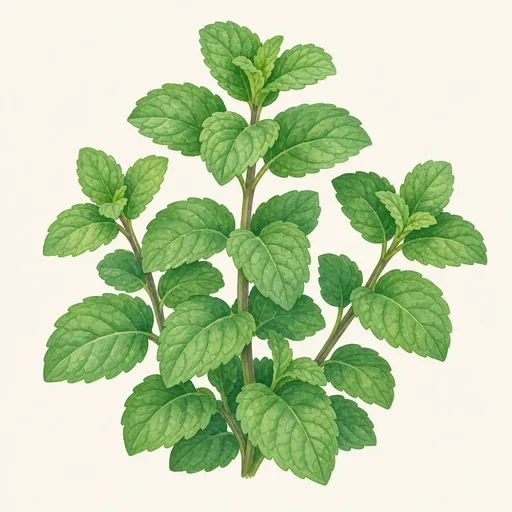
Mint
Mentha · Lamiaceae
- Plant outFrom the last frost until 2 weeks afterApr 10 – Apr 30
- Plant in autumn6–8 weeks before the first autumn frostAug 30 – Sep 19
- Space30–45 cm (12–18 in) apart
- Harvest30–60 days after plantingMay 10 – Jul 20
Description
Mint is a popular herb belonging to the genus Mentha, which encompasses around 25 species, with peppermint (Mentha × piperita) and spearmint (Mentha spicata) being the most common varieties. Known for its aromatic foliage, mint is native to Europe, Asia, and North America, thriving in temperate regions. It is a perennial plant, meaning it can grow back year after year, and is characterized by its square stems, opposite leaves, and tiny, tubular flowers that typically bloom in summer.
Mint grows best in rich, well-draining soil and prefers partial shade to full sun. It has a vigorous growth habit and can spread rapidly, sometimes becoming invasive if not contained. To manage its expansion, many gardeners opt to plant mint in pots or confined areas.
The leaves are the most valued part of the plant, offering a refreshing taste and scent commonly used in culinary dishes, teas, and cocktails. Mint is also widely utilized in traditional medicine and herbal remedies due to its potential digestive health benefits and soothing properties.
Additionally, mint attracts beneficial insects like bees and butterflies, making it a great addition to pollinator-friendly gardens. As a relatively low-maintenance plant, it's an excellent choice for both novice and experienced gardeners. Regular harvesting encourages bushier growth and enhances leaf flavor. Overall, mint is not only a delightful herb for culinary use but also a resilient and versatile addition to any garden.
Growing Conditions
30–60 cm (12–24 in) tall, 60–90 cm (2–3 ft) wide
- Smallest
- Largest
Part sun, 4+ hours
Tolerates full sun, part shade
Moderate
Keep evenly moist, not soggy.
Ideal 15–25 °C (59–77 °F)
Survives down to −40 °C (−40 °F).
pH 6–7.5 · neutral
Where it Grows
Planting
When to Plant
Mint (Mentha spp.) is a versatile and hardy herb that can thrive in various conditions, making it an excellent choice for both novice and experienced gardeners. Timing your mint planting is crucial for achieving a healthy and productive plant. Here’s what you need to know about the optimal planting time for mint.
Temperature Considerations
Mint is a cool-weather herb that grows best in temperatures ranging from 60°F to 70°F (15°C to 21°C). Below are key factors to consider regarding temperature:
-
Spring Planting: In many regions, the best time to plant mint is in the spring after the last frost date. Depending on your location, this can range from late March to late May. Start monitoring the local frost dates as winter approaches, and aim to plant mint when the ground is thawed and temperatures consistently stay above freezing.
-
Fall Planting: In milder climates, some gardeners choose to plant mint in the fall (September to October) since mint can establish its root system in cooler temperatures. However, ensure that the plant will have enough time to settle in before winter arrives.
Propagation Methods
Mint can be propagated through seeds, cuttings, or divisions, each influencing your planting times:
-
Seeds: If you’re growing mint from seeds, start them indoors 6 to 8 weeks before your last expected frost for an early garden start. Seedlings can be transplanted outdoors once the frost has passed.
-
Cuttings or Divisions: If you are propagating mint from cuttings or dividing an existing plant, you can do this in spring or early summer. These methods typically yield faster results compared to starting from seeds.
Soil and Sunlight
Selecting the right time to plant is also about ensuring the best conditions for growth. Mint prefers:
-
Soil Preparation: Ensure that the soil is well-drained and rich in organic material. Soil should be moist but not waterlogged at the time of planting.
-
Sunlight: Mint grows well in partial to full sunlight. When planting, consider the exposure of your garden space; if it’s in full sun, you might want to wait for cooler months if you're in a hot climate.
Conclusion
Ultimately, the best time to plant mint will depend on your local climate, the method of propagation, and soil conditions. By paying attention to the temperature, frost dates, and using proper planting techniques, you can enjoy a lush mint crop ready for harvest. Happy gardening!
How to Plant
Planting mint (Mentha spp.) is a straightforward process that can lead to a bountiful supply of this fragrant herb. Here are some essential steps to ensure successful growth.
1. Choosing the Right Location: Mint thrives in partial shade to full sun, though it prefers a spot with afternoon shade in hot climates. It requires well-drained soil rich in organic matter, so consider amending your garden bed with compost.
2. Selecting Mint Plants: You can start mint from seeds, cuttings, or small plants. However, cuttings or transplants are often easier for beginners due to mint's vigorous growth.
3. Planting: If you're planting seeds, sow them in the spring, about 1/4 inch deep, and keep the soil moist. For cuttings or transplants, dig a hole large enough to accommodate the root ball, place the plant in, and cover with soil, firming it around the base.
4. Watering: Mint prefers consistently moist soil. Water the plants regularly, especially during dry spells, but avoid waterlogging.
5. Containment: Mint can spread rapidly, so consider planting it in containers or using garden barriers to manage its growth and prevent it from overtaking other plants.
With proper care, your mint will flourish, providing a delightful addition to teas, salads, and culinary dishes.
Growth Timeline
- Growing in the garden 30–60 days
- Harvest 16–24 weeks
Planting Calendar
- Plant outdoors: from the last frost until 2 weeks after
- Autumn planting: 6–8 weeks before the first autumn frost
- Plant out: Apr 10 – Apr 30
- Autumn planting: Aug 30 – Sep 19
- Harvest: May 10 – Jul 20
Care
Care Calendar
- Divide · Mar 27 – May 14
Every two to three years, divide crowded clumps and remove spreading roots. - Repot · Mar 27 – May 14
Refresh container soil and trim crowded roots as needed. - Pinch out · Apr 24 – Jun 11
Pinch young shoot tips to encourage bushy growth. - Prune · May 22 – Aug 20
Cut back flowering or leggy stems to encourage fresh leaves.
Watering
Proper watering is essential for a thriving mint plant. The key strategy involves maintaining consistent moisture without waterlogging the roots. Mint prefers well-draining soil, so it's vital to choose a pot that has drainage holes if you're growing it indoors.
Water the plant when the top inch of soil feels dry to the touch, typically once every few days during warm weather. During hotter months, daily watering may be required, especially if the plant is in full sun. Adjust the frequency if you notice the leaves beginning to wilt or turn yellow, which can indicate either overwatering or underwatering.
Using room-temperature water is beneficial, as cold water can shock the plant’s roots. A good practice is to soak the soil thoroughly until water drains from the bottom, then allowing the topsoil to dry slightly before the next watering. This balance encourages healthy growth and flavorful foliage.
Pruning
Pruning a Mint plant is essential for maintaining its health and vigor. The best strategy involves regular trimming throughout the growing season, particularly in spring and early summer. Begin by removing any dead or yellowing leaves to encourage new growth. Aim to cut back about one-third of the plant at a time, focusing on the stems just above a leaf node to promote bushier growth and prevent legginess. This method also helps to prevent the plant from flowering too early, which can diminish flavor intensity. Prune after the first flush of growth and continue to remove spent flowers as they appear. Additionally, frequent harvesting of leaves for culinary use naturally aids in keeping the plant well-shaped. Remember to use clean, sharp scissors or pruning shears to avoid damaging the plant and to minimize the risk of disease transmission. Regular maintenance will keep your Mint plant productive and flavorful.
Weeding
To effectively weed a mint plant, it's crucial to adopt a careful and consistent approach. Start by regularly inspecting the plant for any unwanted weeds that can compete for nutrients and water. Weeds should be removed when they are small and manageable, as this reduces their chances of reseeding. It's best to remove weeds by hand, pulling them out gently to avoid disturbing the mint’s shallow roots. Wearing gardening gloves is recommended, especially when dealing with stubborn or thorny weeds.
Mulching around the base of the mint can help suppress weed growth while retaining soil moisture. Ensure that the mulch is applied to a depth of 2-3 inches, avoiding contact with the mint stems to prevent rot. Additionally, regular watering and fertilization can strengthen the mint, allowing it to compete more effectively against any weeds that may try to encroach upon its space. Ultimately, creating a routine weeding schedule will promote a healthier mint plant overall.
Mulching
Mulching mint plants is an effective way to maintain moisture, suppress weeds, and regulate soil temperature. To begin, select an organic mulch material such as straw, shredded bark, or grass clippings, which will enrich the soil as it decomposes. Before applying, ensure the soil around the mint is well-watered and free of weeds to prevent competition for resources. Spread the mulch evenly around the base of the mint, maintaining a thickness of about 2 to 3 inches while keeping it a few inches away from the stems to avoid rot. This barrier will help retain moisture during dry spells and protect the root system. Regularly inspect the mulch, replenishing it as necessary throughout the growing season to maintain its effectiveness. By adopting this strategy, gardeners can promote healthy growth and vibrant foliage in their mint plants.
Fertilizing
Fertilizing mint plants is crucial for promoting robust growth and lush foliage. The best strategy involves using a balanced fertilizer that contains equal parts of nitrogen, phosphorus, and potassium (NPK). Begin by applying a slow-release granular fertilizer at the start of the growing season, typically in early spring, to provide sustained nutrients throughout the growing period. This method encourages healthy root development and vigorous growth.
Additionally, consider supplementing with a liquid fertilizer diluted to half strength every four to six weeks during the active growing season. This approach allows the mint to access nutrients quickly, particularly if growth appears sluggish. Be cautious not to over-fertilize, as excessive nutrients can lead to a loss of flavor and aroma in the leaves, which are the prized qualities of mint. Always ensure the soil has proper drainage, as mint does not thrive in overly wet conditions. Regularly monitoring your plant's growth will guide you in adjusting your fertilization plan as necessary.
Thinning
- Thin seedlings to encourage airflow and reduce competition.
- Remove weak plants to allow stronger ones to flourish.
Pest Management
- Watch for aphids, spider mites, and whiteflies.
- Use insecticidal soap or neem oil for treatment if necessary.
Harvesting
- Harvest leaves once plants are established, but avoid removing more than one-third of the plant at a time.
- The best time to harvest is just before flowering for maximum flavor.
Growing in Containers
Grows well in a pot of at least 10 litres (2.6 US gallons), with drainage holes. Can be grown indoors as a houseplant.
Propagation
From cuttings
- Cut a healthy, nonflowering stem just below a leaf node.
- Remove the leaves from its lower half.
- Place the stem in water or moist potting mix.
- Pot it up when roots develop.
By division
- Lift an established mint clump in spring or autumn.
- Separate it into sections with roots and shoots.
- Replant the sections at their original depth.
- Water them well.
From seed
- Choose a seed-grown mint variety; seedlings may differ from the parent plant.
- Sow seeds shallowly in moist seed-starting mix.
- Keep the mix moist until seedlings emerge.
- Transplant seedlings after they develop several true leaves.
Companion Plants
Good neighbors
- Cabbage: Gardeners traditionally grow aromatic mint near cabbage to help discourage cabbage moths, though results vary; keep the mint contained.
Keep apart from
- Rosemary: Rosemary prefers drier soil than mint and can be crowded out by mint's spreading roots.
- Lavender: Lavender needs sharper drainage and less water than mint and can be crowded out by its spreading roots.
Common Problems
- Yellowing leaves
- Sticky residue on leaves
- Black sooty coating
- Curled or cupped leaves
Aphids are small, soft-bodied insects that feed by piercing plants and drawing out sap. The group includes many…
- White powdery coating
- Yellowing leaves
- Curled or cupped leaves
- Distorted new growth
Powdery mildew is a group of fungal diseases, not a single species. Different fungi infect different hosts, including…
- Orange or rust-colored spots
- Spots on leaves
- Yellowing leaves
- Leaves dropping
Rust is a group of plant diseases caused by fungi in the order Pucciniales, not a single species. Different rust fungi…
- Pale speckles or stippling
- Yellowing leaves
- Brown or crispy leaf edges
- Fine webbing
Spider mites are tiny, plant-feeding arachnids in the family Tetranychidae, not insects. Several species attack garden…
- Yellowing leaves
- Brown or crispy leaf edges
- Wilting
- Stunted growth
Verticillium wilt is a soilborne disease caused mainly by the fungi Verticillium dahliae and V. albo-atrum. The fungi…
- Powdery Mildew: Occurs in humid conditions; avoid overhead watering and increase airflow.
- Root Rot: Prevent by ensuring good drainage and avoiding waterlogged soil.
Nutrition
Nutritional Benefits
- High in antioxidants.
- Provides anti-inflammatory properties.
- Aids in digestion.
Nutritional Composition (per 100g)
| Nutrient | Amount | % Daily Value |
|---|---|---|
| Calories | 44 kcal | 2% |
| Total Fat | 0.7 g | 1% |
| Saturated Fat | 0 g | 0% |
| Sodium | 4 mg | 0% |
| Total Carbohydrates | 8 g | 2% |
| Dietary Fiber | 5 g | 20% |
| Sugars | 0.7 g | - |
| Protein | 3.8 g | 8% |
| Vitamin A | 1,188 IU | 24% |
| Vitamin C | 31.8 mg | 53% |
| Calcium | 20 mg | 2% |
| Iron | 1.5 mg | 8% |
| Magnesium | 54 mg | 14% |
Varieties
A classic mint for tea that spreads readily.
- strong menthol flavor
- vigorous
Its milder leaves suit drinks and savory dishes.
- sweet flavor
- vigorous
Its leaves have a peppermint scent with a chocolate note.
- mint-chocolate aroma
- dark stems
Its soft leaves have a gentle, fruity mint flavor.
- fuzzy leaves
- mild flavor
This variegated apple mint is attractive but needs room to spread.
- variegated leaves
- ornamental
A spearmint selection commonly used for mint tea.
- sweet flavor
- tea mint
More about varieties
Mint is a diverse and versatile plant that belongs to the Lamiaceae family, with numerous species and varieties cultivated for various uses ranging from culinary to medicinal. Some of the most common varieties of mint include:
Peppermint (Mentha × piperita) is a hybrid mint variety known for its strong flavor and aroma, often used in teas, candies, and desserts. It has dark green leaves with a slightly purple stem and is recognized for its high menthol content.
Spearmint (Mentha spicata) is another well-known variety, characterized by its sweet, mild flavor. It typically has bright green leaves with serrated edges and is commonly used in cooking, cocktails like mojitos, and fresh salads.
Apple Mint (Mentha suaveolens) is a fragrant variety that offers a fruity, apple-like aroma. Its fuzzy leaves are bright green with silvery edges, making it visually appealing in gardens. This mint is often used in fruit salads and herbal teas.
Pennyroyal (Mentha pulegium) has a strong aroma and is often found in traditional herbal remedies. It has small, round leaves and is more often used in infusions or poultices rather than culinary applications due to its potent effects.
Orange Mint (Mentha × citrata), as the name suggests, offers a citrusy aroma and flavor, making it popular for flavoring desserts and teas. Its leaves are typically dark green with a distinctive orange scent.
Chocolate Mint (Mentha × piperita 'Chocolate') features a unique blend of mint and chocolate flavors, making it a delightful addition to desserts and teas. The leaves have a hint of brown in them, distinguishing them from other varieties.
Lemon Mint (Monarda citriodora) is not a true mint but shares similar aromatic properties. It has a citrusy scent and is used in herbal teas and salads. The flowers are also quite attractive, adding ornamental value to gardens.
These varieties of mint can be grown in containers, garden beds, or even as ground cover, but they all have the tendency to spread vigorously if not contained. Each type offers unique flavors and aromas, contributing significantly to both culinary innovations and herbal remedies in home gardens.
Health Benefits
Mint, particularly Peppermint (Mentha × piperita) and Spearmint (Mentha spicata), has long been celebrated not only for its culinary uses but also for its numerous health benefits. One of the most popular applications of mint is its ability to aid digestion. Sipping peppermint tea can alleviate symptoms of indigestion, bloating, and gas, as the menthol in the leaves has a relaxing effect on the gastrointestinal tract.
Mint is also known for its cooling properties, making it a soothing option for headaches and migraines. The scent of mint has been scientifically shown to enhance alertness, memory, and even mood, serving as a natural pick-me-up. Aromatherapy often utilizes peppermint oil for its invigorating fragrance.
In skincare, mint's anti-inflammatory and antibacterial properties can help treat acne and soothe irritated skin. Additionally, mint can freshen breath and is commonly found in dental care products due to its antimicrobial effects. Overall, mint offers a variety of health and wellness applications that make it a valuable addition to any home herbal remedy collection. Its versatility extends beyond the kitchen, contributing to holistic well-being.
Fun Facts
- Mint belongs to the Lamiaceae family, which also includes other popular herbs like basil, rosemary, and oregano, and there are over 25 species of mint, with spearmint and peppermint being the most common.
- This plant has a distinctive, fresh aroma due to the presence of menthol, a compound that is responsible for its cooling sensation and is widely used in candies, gum, and personal care products.
- Mint is known for its invasive growth habit; it can spread rapidly through its underground rhizomes, which is why many gardeners recommend planting it in containers to contain its expansion.
- Mint can be grown year-round in many climates, and it thrives in both full sun and partial shade, making it a versatile choice for gardens and containers alike.
- The leaves of the mint plant can be used fresh, dried, or infused and are popular in a variety of culinary applications, including teas, salads, and sauces, as well as in natural remedies for digestive issues and headaches.
Notice an error or have a question about Mint? Contact us