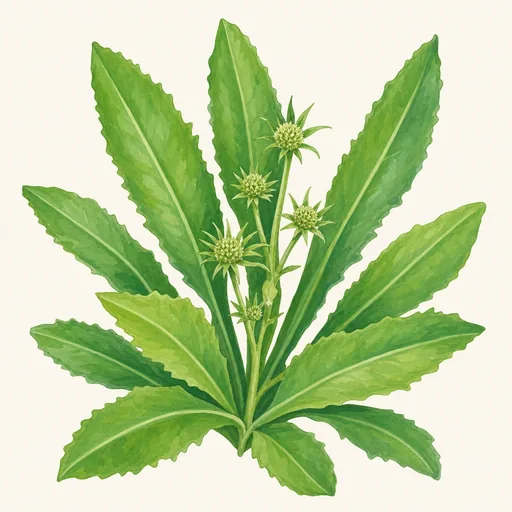
Culantro
Eryngium foetidum · Apiaceae
- Start indoors6–8 weeks before the last frostFeb 13 – Mar 5
- Sow outdoors2–4 weeks after the last frostApr 24 – May 14
- Plant out2–4 weeks after the last frostApr 24 – May 14
- Space15–30 cm (6–12 in) apart
- Harvest60–90 days after plantingJun 23 – Sep 2
Description
Culantro is a strongly scented leafy herb in the carrot family. Despite its similar flavor and common names, it is a different plant from cilantro (Coriandrum sativum). It forms a low rosette of long, narrow, glossy green leaves with noticeably toothed edges. The leaves have a concentrated, coriander-like aroma that holds up well in cooking. Culantro is also called sawtooth coriander, recao, and ngò gai.
The plant is native to tropical parts of the Americas and is widely grown in the Caribbean, Latin America, and Southeast Asia. It prefers warm, humid conditions, fertile soil that drains well, and consistent moisture. Partial shade often produces tender leaves and delays flowering, although plants can tolerate some sun when kept watered. Culantro does not tolerate frost. In cool climates, gardeners usually grow it as a warm-season annual or in a container that can be brought indoors.
Leaves can be picked individually from established plants, leaving the center of the rosette to keep growing. Their flavor is more intense than cilantro’s, so a little may be enough. They are commonly added to soups, stews, rice dishes, marinades, and sauces, including Caribbean sofrito and Vietnamese noodle soups. Culantro can be eaten raw, but its sturdy leaves are especially useful in dishes that simmer for a while.
As the plant matures, it sends up branching flower stalks bearing small, spiny-looking flower heads. Flowering can reduce the production and tenderness of leaves; removing stalks early encourages further leaf growth. Gardeners can start new plants from seed, though germination may be slow or uneven. Keeping the seed-starting mix moist, rather than waterlogged, helps seedlings establish. Mulch can help retain moisture and reduce weeds around shallow young plants.
Growing Conditions
15–30 cm (6–12 in) tall, 20–30 cm (8–12 in) wide
- Smallest
- Largest
Part shade, 2+ hours
Tolerates part sun
Moderate
Keep evenly moist, not soggy.
Ideal 20–30 °C (68–86 °F)
Survives down to 0 °C (32 °F).
pH 6–7 · acidic to neutral
Where it Grows
Planting
When to Plant
Plant culantro when the weather is warm and frost is no longer a risk. For outdoor sowing or transplanting, wait until after the last spring frost, when the soil has warmed and nighttime temperatures generally stay above 50°F (10°C). Culantro is a tropical herb: cold soil slows germination, and frost can kill young plants. In a short growing season, start seeds indoors about 6–8 weeks before the last expected frost, then move the seedlings outside once conditions are suitable. In frost-free climates, you can plant during warm parts of the year, provided you can keep the soil moist and protect the plants from harsh afternoon sun. Watch the site as well as the calendar: a spot with morning sun or filtered shade is usually better than one exposed to intense, all-day sun. If summer heat is severe, establish plants in a sheltered position rather than planting directly into a hot, dry bed.
How to Plant
Choose a spot with partial shade and fertile, well-draining soil that holds some moisture. Mix compost into the top few inches of soil before planting. Culantro also grows in a container with drainage holes; use potting mix rather than garden soil. Keep containers where they receive morning sun or bright, filtered light, especially in hot climates.
Sow the small seeds on the surface of moist soil and press them gently into place so they make good contact; avoid burying them deeply. Mist or water carefully so they do not wash away. Keep the soil consistently moist, not waterlogged, while you wait for germination, which can take several weeks. If you started seeds indoors, transplant seedlings gently after they have developed a few true leaves, taking care not to disturb their roots.
Thin or set plants about 8–12 inches (20–30 cm) apart so their leaf rosettes have room to spread. Water regularly, particularly while plants establish and during dry spells. A light layer of mulch helps retain moisture, but keep it clear of the crowns. If the site gets strong afternoon sun, provide shade; excess heat and drying out can encourage flowering instead of steady leaf production.
Growth Timeline
- Germination 14–30 days
- Seedlings indoors 4–9 weeks
- Growing in the garden 60–90 days
- Harvest 8–20 weeks
Planting Calendar
- Start seeds indoors: 6–8 weeks before the last frost
- Sow outdoors: 2–4 weeks after the last frost
- Plant outdoors: 2–4 weeks after the last frost
- Germination: 14–30 days
- Start indoors: Feb 13 – Mar 5
- Sow outdoors: Apr 24 – May 14
- Plant out: Apr 24 – May 14
- Harvest: Jun 23 – Sep 2
Care
Care Calendar
- Protect · Apr 10 – Aug 6
Provide afternoon shade where summer sun is strong. - Protect · Oct 11 – Oct 31
Cover plants during cold nights or bring containers indoors. - Thin · Apr 24 – May 21
Thin seedlings to about 6 inches apart. - Mulch · Apr 24 – May 28
Apply a thin layer of mulch to keep the soil moist. - Prune · May 22 – Aug 20
Cut off emerging flower stalks to prolong leaf production.
Watering
Keep culantro’s soil consistently moist but not waterlogged. Check the top inch of soil with a finger; water when it begins to feel dry, soaking the root zone thoroughly rather than giving frequent light sprinkles. Plants in containers may need water more often than those in garden beds, especially in warm weather. Water at the soil surface when possible to keep leaves dry and reduce disease risk. A layer of mulch helps slow evaporation, but leave a little space around the plant’s crown. Culantro grows best in partial shade, where the soil stays cooler and dries more slowly. If leaves wilt during the hottest part of the day, check the soil before watering: heat can cause temporary wilting even when moisture is adequate. Good drainage matters as much as regular watering, because roots can suffer in persistently soggy soil.
Pruning
Remove yellow, damaged, or diseased leaves as you notice them, cutting each leaf near its base with clean scissors. For a steady supply of leaves, harvest the older outer leaves while leaving the younger leaves in the center to grow. Culantro often sends up a tall flowering stalk, particularly as conditions become hot or days grow longer. If leaves are your main crop, cut off the stalk when it first appears. This can redirect growth toward the foliage and delay the decline in leaf quality, though it will not prevent flowering indefinitely. Avoid cutting into the central growing point or stripping the plant bare; it needs healthy leaves to keep producing. If you want seeds or wish to encourage self-sowing, leave a few flower stalks to mature instead. Remove spent plants once they stop producing useful leaves.
Weeding
Keep the area around culantro free of weeds, especially while plants are small. Weeds compete for water, nutrients, and light, and crowded growth can reduce airflow around the leaves. Pull weeds by hand when the soil is slightly damp, taking care not to tug on culantro’s roots. For larger patches, loosen only the soil surface with a small hand tool rather than cultivating deeply close to the plants. Check regularly: removing young weeds is easier than dealing with established ones, and it prevents many from setting seed. Mulch can suppress new weeds, but inspect the planting area for weeds that emerge through it. In containers, remove volunteer seedlings unless you want them to grow alongside the culantro. If you plan to let culantro self-sow, learn to recognize its seedlings before weeding the bed so you do not pull them accidentally.
Mulching
Spread a 1–2-inch layer of clean organic mulch, such as shredded leaves, fine bark, or straw, around culantro after the plants are established. Mulch helps the soil retain moisture, keeps the root zone cooler, and limits weed growth—useful benefits for a plant that prefers steady moisture and some protection from intense sun. Keep the mulch slightly back from the central crown and leaf bases so they do not remain wet and rot. Add mulch in thin layers rather than piling it against the plant. In rainy conditions, check beneath it for slugs and snails, which may shelter there and feed on leaves at night. Replace mulch as it breaks down, and pull any weeds that grow through it. In a container, use a light covering that does not interfere with watering or bury the crown.
Fertilizing
Culantro generally needs only moderate feeding when grown in soil enriched with compost. Before planting, mix in a modest amount of finished compost or use a balanced fertilizer according to its label; avoid adding so much that the soil becomes overly rich. If plants are growing slowly and their older leaves are pale despite adequate water and suitable light, a diluted liquid fertilizer or a light application of balanced fertilizer can help. Follow the product’s directions, and water after applying a granular fertilizer. Because culantro is grown mainly for its leaves, it benefits from enough nitrogen for leafy growth, but excessive fertilizer can encourage soft growth and contribute to salt buildup in containers. Container plants may need occasional feeding because nutrients wash out with watering. If plants look healthy and are producing new leaves, there is usually no need to fertilize more often.
Pest Management
Inspect culantro regularly, including the undersides of leaves and the plant’s center. Slugs and snails can chew holes in leaves, especially in damp, shaded beds; remove them by hand, clear away hiding places near the plants, and use an edible-crop-labeled bait if needed. Aphids may cluster on tender growth. A firm spray of water can dislodge them, while heavily infested leaves can be removed. Good spacing and watering at the soil surface help limit problems associated with persistently wet foliage. Avoid broad-spectrum insecticides when possible, since they can harm beneficial insects. If treatment is necessary, choose a product labeled for the pest and for use on edible leafy crops, and observe its harvest waiting period. Check plants before bringing leaves indoors, and discard badly damaged or diseased foliage rather than adding it to the harvest.
Harvesting
Harvest culantro by cutting the larger outer leaves close to their bases, leaving the small central leaves and growing point intact. Take a few leaves from each plant at a time rather than removing all the foliage; this lets the plant continue producing. Leaves are often most tender and flavorful before flowering, so pick regularly once plants are well established. Use clean scissors or a knife, and handle the leaves carefully because their edges can be prickly. Wash harvested leaves just before use and dry them well. For short-term storage, refrigerate them in a loosely closed bag or container with a slightly damp paper towel. If you want to save seed, let selected flower stalks mature and collect the seed heads as they dry, before the seeds scatter. Once a plant flowers heavily, expect leaf production to slow.
Growing in Containers
Grows well in a pot of at least 4 litres (1.1 US gallons), with drainage holes. Can be grown indoors as a houseplant.
Propagation
From seed
- Sow seeds in moist seed-starting mix in spring or whenever temperatures are warm.
- Press seeds onto the surface and cover them only lightly.
- Keep the mix consistently moist and warm until seedlings emerge.
- Move seedlings into partial shade once they are established.
- Thin or transplant seedlings to give each rosette room to grow.
Common Problems
- Yellowing leaves
- Sticky residue on leaves
- Black sooty coating
- Curled or cupped leaves
Aphids are small, soft-bodied insects that feed by piercing plants and drawing out sap. The group includes many…
- Flowering too early (bolting)
Bolting is the premature switch from leafy or root growth to producing a flower stalk and seeds. It is a normal part…
- Yellowing leaves
- Wilting
- Stunted growth
- Leaves dropping
Root rot is a general name for the decay of plant roots, not a single disease with one scientific name. It can result…
- Spots on leaves
- Yellowing leaves
- Leaves dropping
Fungal leaf spot is a general name for diseases caused by many different fungi, not a single species. These fungi…
- Premature flowering: Long days and strong sun can prompt flower stalks, reducing the supply of tender leaves.
- Root rot: Waterlogged soil can damage roots; use well-draining soil and avoid overwatering.
- Leaf spots: Fungal or bacterial spots are more likely when foliage stays wet and air circulation is poor.
- Slugs, snails, and aphids: Check leaves regularly, especially on plants grown in damp, sheltered spots.
Health Benefits
Culantro is best known as a culinary herb, not a proven medicine. Its strongly flavored leaves can make soups, stews, beans, and sauces appealing without relying entirely on salt for flavor. The leaves contain vitamins and plant compounds, including antioxidant compounds, but the small amounts typically used in cooking are unlikely to provide a major source of nutrients on their own.
In traditional practices in parts of the Caribbean, Central America, and Asia, culantro has been used in teas or other preparations for digestive complaints, colds, and fever. These are traditional uses, not established treatments. Laboratory studies have investigated extracts for antioxidant, antimicrobial, and anti-inflammatory activity, but results from a test tube or animal study do not show that eating culantro will prevent or treat illness in people. Human clinical evidence remains limited.
For most people, using culantro in ordinary food amounts is a practical way to enjoy it. Concentrated extracts and medicinal doses are different from culinary use: their safety and effectiveness are not well established, particularly during pregnancy or while taking medication. Seek medical advice for persistent symptoms rather than substituting the herb for treatment. Wash fresh leaves before eating them.
Fun Facts
- Culantro and cilantro belong to the same plant family, but they are different species in different genera.
- Its leaves have sawtoothed, sometimes prickly edges—hence the name sawtooth coriander.
- In Puerto Rican cooking, culantro is often called recao and is a familiar ingredient in sofrito.
- In Vietnam it is called ngò gai; in Thailand, pak chi farang.
- Unlike cilantro’s delicate leaves, culantro’s sturdy leaves are often added to dishes that simmer for a while.
Notice an error or have a question about Culantro? Contact us