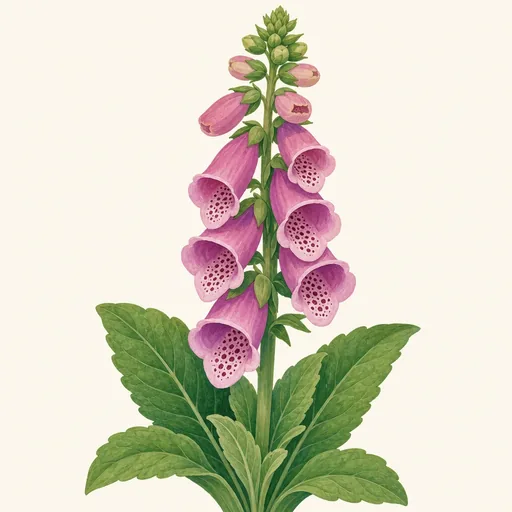
Foxglove
Digitalis purpurea · Plantaginaceae
- Start indoors8–10 weeks before the last frostJan 30 – Feb 19
- Sow outdoorsFrom the last frost until 8 weeks afterApr 10 – Jun 11
- Plant outFrom the last frost until 4 weeks afterApr 10 – May 14
- Plant in autumn6–8 weeks before the first autumn frostAug 30 – Sep 19
- Space30–45 cm (12–18 in) apart
- BloomAfter 2 years
Description
Common foxglove is a striking flowering plant with tall, upright spikes of tubular, bell-shaped blooms. The flowers are usually purple or pink, but garden varieties may be white, cream, or other shades. Their pale, spotted throats help guide pollinating bees inside. A flowering stem typically rises above a rosette of large, soft, slightly hairy leaves, reaching about 0.6–1.8 m (2–6 ft) tall. Foxglove is usually a biennial: it grows leaves in its first year, flowers and sets seed in its second, then dies. Some plants persist longer as short-lived perennials.
Native to much of western Europe, foxglove grows in woodland clearings, hedgerows, roadsides, and disturbed ground. It is also widely grown in gardens and has become established in parts of North America, Australia, and New Zealand. It prefers partial shade and moist but well-drained soil, especially soil that is slightly acidic. Plants can tolerate more sun where summers are cool and the soil stays moist. Flowering generally occurs from late spring into summer, depending on the climate. The blooms attract bees, particularly bumblebees; in areas where hummingbirds occur, they may visit the flowers too.
Foxglove often self-seeds readily, creating new plants nearby. For a continuing display, gardeners can let some flower spikes produce seed while removing others after flowering. Because seedlings can spread beyond beds, check local guidance before planting it near natural areas. All parts of the plant are highly poisonous if eaten, including its leaves, flowers, and seeds. Foxglove contains cardiac glycosides that affect the heart. Although related compounds have been used in carefully controlled medicines, the plant itself must never be used as a home remedy. Wear gloves if handling it irritates your skin, and keep it away from children and pets likely to taste plants.
Growing Conditions
0.9–1.8 m (3–6 ft) tall, 30–60 cm (12–24 in) wide
- Smallest
- Largest
Part shade, 2+ hours
Tolerates full sun, part sun
Moderate
Keep evenly moist, not soggy.
Ideal 15–24 °C (59–75 °F)
Survives down to −34 °C (−29 °F).
pH 5.5–7 · acidic to neutral
Where it Grows
Planting
When to Plant
For common foxglove (Digitalis purpurea), choose a planting time based on whether you have seeds or young plants. Sow seeds outdoors in late spring or early summer, after the last frost, when the soil is beginning to warm. The resulting plants usually form a leafy rosette that year and flower the following year: common foxglove is typically a biennial. You can also start seeds indoors about 8–10 weeks before the last expected spring frost, then move the seedlings outside once frost danger has passed. Plant nursery-grown foxgloves in spring after the last frost, or in early autumn where winters are not severe. For autumn planting, leave at least six weeks before the ground is likely to freeze so roots can establish. First-year-flowering cultivars may bloom from an early indoor sowing, but check the seed packet rather than assuming all foxgloves will flower in their first year.
How to Plant
Choose a site with partial shade and fertile, well-drained soil that stays moderately moist. Foxgloves also tolerate more sun in cool climates if the soil does not dry out. Clear weeds and loosen the soil, mixing in compost if it is poor or compacted. For transplants, dig a hole about as deep as the root ball and slightly wider. Gently loosen circling roots, set the plant at the same depth it grew in its pot, and firm soil around it without burying the crown. Space plants about 12–18 inches (30–45 cm) apart, or follow the spacing on the cultivar label. Water thoroughly, then keep the soil evenly moist while plants establish.
For seeds, scatter them thinly onto prepared soil and press them gently into the surface. Do not cover them with soil: foxglove seeds need light to germinate. Mist carefully so they do not wash away, and keep the surface moist until seedlings appear, usually within two to three weeks. Thin crowded seedlings to their final spacing. A light layer of mulch around established plants helps conserve moisture, but keep it off their crowns. All parts of foxglove are poisonous if eaten; wear gloves when handling plants and keep them away from children and pets.
Growth Timeline
- Establishing 2 years
Planting Calendar
- Start seeds indoors: 8–10 weeks before the last frost
- Sow outdoors: from the last frost until 8 weeks after
- Plant outdoors: from the last frost until 4 weeks after
- Autumn planting: 6–8 weeks before the first autumn frost
- Germination: 14–21 days
- Start indoors: Jan 30 – Feb 19
- Sow outdoors: Apr 10 – Jun 11
- Plant out: Apr 10 – May 14
- Autumn planting: Aug 30 – Sep 19
Care
Care Calendar
- Mulch · Apr 10 – May 14
Spread a thin layer of compost around plants, leaving the crowns uncovered. - Stake · Apr 24 – Jun 11
Support tall flower spikes if the site is windy or exposed. - Deadhead · May 22 – Jul 23
Cut spent spikes to encourage side shoots, but leave a few to set seed. - Thin · Aug 30 – Oct 17
Thin self-sown rosettes so the remaining plants have room to grow.
Watering
Keep the soil evenly moist while foxglove seeds germinate and young plants establish. Water gently so seeds are not washed away, and check seedlings regularly during dry weather. Once established, foxgloves usually need supplemental water mainly during prolonged dry spells, especially while flowering. Water at the base of the plant and soak the root zone rather than giving frequent, shallow sprinkles. Let the soil surface begin to dry between waterings; constantly soggy soil can lead to crown and root rot. Plants in containers dry out faster and may need more frequent attention. A layer of mulch can help retain moisture, but keep it clear of the crown. If leaves wilt in hot afternoon sun, check the soil before watering: temporary wilting does not always mean the roots are dry.
Pruning
Remove spent flower spikes if you want a tidier plant, to encourage any smaller side spikes to develop, or to limit self-seeding. Cut the spike back to a healthy set of leaves or a side shoot. If you want foxgloves to reseed, leave some spikes standing until their seed capsules mature instead. Many common foxgloves are biennial: they make a leafy rosette in their first year, flower in their second, then die. Cutting back cannot make these plants reliably flower again the following year. Keep healthy rosette leaves in place because they support the plant’s growth. Remove yellowed, damaged, or diseased leaves as needed, and clear dead plants after flowering and seed collection. Wear gloves when handling foxglove, and wash your hands afterward; all parts of the plant are poisonous.
Weeding
Keep the area around young foxglove rosettes free of weeds so they do not have to compete for light, water, and nutrients. Pull weeds when the soil is slightly moist, grasping them low to remove as much root as possible. Work carefully around foxglove plants: deep hoeing can damage their roots, and small first-year rosettes can be mistaken for weeds. Identify and mark rosettes before clearing a bed, especially where foxgloves have self-seeded. A thin mulch layer can suppress new weeds after the seedlings you want to keep are established. Remove weeds before they set seed to reduce future work. If foxgloves are spreading beyond their allotted space, thin or remove unwanted seedlings while they are small. Wear gloves when handling foxglove or soil mixed with its plant debris, and keep removed material away from children and pets.
Mulching
Apply a loose layer of organic mulch, such as shredded leaves or fine bark, around established foxgloves to help conserve moisture and suppress weeds. About 2–5 cm (1–2 inches) is usually enough. Leave a gap around the leafy crown and stems: mulch piled against the plant can trap moisture and encourage rot, especially in wet weather. Mulch is particularly useful around young plants during dry spells, but it is not a substitute for watering them while they establish. If you hope to grow new plants from self-sown seed, leave some bare or lightly covered soil nearby; a thick mulch layer can prevent the tiny seeds from reaching soil and germinating. In winter, avoid covering the rosettes with heavy, wet material. Check the mulch occasionally and pull back any that has shifted against the crowns.
Fertilizing
Foxgloves generally need little fertilizer in reasonably fertile garden soil. Before planting, incorporate a modest amount of finished compost if the soil is poor; this improves its structure as well as supplying nutrients. For established plants in lean soil, a light application of a balanced, slow-release fertilizer in spring may help growth. Follow the product label and keep granules off the leaves and crown, then water as directed. Avoid heavy feeding, particularly with high-nitrogen fertilizer: it can encourage leafy growth at the expense of flowers and may produce soft growth. Plants growing in containers have a limited supply of nutrients and may benefit from occasional feeding with a balanced fertilizer during active growth, according to its label. If plants are growing and flowering well, skip extra fertilizer. Good drainage and appropriate watering matter more than frequent feeding.
Pest Management
Inspect leaves and flower spikes regularly, especially on young plants. Slugs and snails may chew seedlings and rosettes; hand-pick them after dusk, reduce damp hiding places, or use a bait labeled for the pest, following its directions and keeping children and pets in mind. Aphids sometimes gather on tender growth. A firm spray of water can dislodge them, or you can use an insecticidal soap labeled for the plant and pest if needed. Avoid spraying open flowers or active pollinators. Give plants room for airflow, remove badly affected leaves, and water the soil rather than the foliage to help limit leaf spots and powdery mildew. Poor drainage can cause crown or root rot; remove severely affected plants and correct the drainage before replanting. Wear gloves when removing foxglove debris because the plant is poisonous.
Harvesting
Foxglove is poisonous in all its parts. Do not harvest its leaves or flowers for food, tea, home remedies, or homemade medicine. If you want seed for ornamental planting, leave a few flower spikes in place until the capsules turn brown and begin to dry. On a dry day, cut the spikes or tip the capsules into a paper bag before they scatter. Let collected seed dry fully, then store it in a clearly labeled envelope in a cool, dry place out of the reach of children and pets. Wear gloves while collecting and cleaning seed, and wash your hands afterward. Sow only where you can safely manage the plants; foxglove can self-seed readily. If you do not want seedlings, remove spent spikes before the capsules open and dispose of them where they cannot spread.
Growing in Containers
Grows well in a pot of at least 10 litres (2.6 US gallons), with drainage holes. Best kept outdoors.
Propagation
From seed
- Collect seeds from dry pods in late summer, wearing gloves.
- Scatter seeds on the surface of moist seed-starting mix.
- Press them lightly into the surface without covering them; they need light to germinate.
- Keep the mix moist in a bright spot out of direct sun.
- Transplant seedlings when large enough to handle, then plant them out in autumn.
Companion Plants
Good neighbors
- Ferns: Ferns and foxgloves are commonly paired in woodland-style gardens because both grow well in dappled shade.
- Hostas: Hostas provide broad foliage beneath the tall flower spikes of foxgloves and share their preference for partial shade.
Common Problems
- Yellowing leaves
- Sticky residue on leaves
- Black sooty coating
- Curled or cupped leaves
Aphids are small, soft-bodied insects that feed by piercing plants and drawing out sap. The group includes many…
- White powdery coating
- Yellowing leaves
- Curled or cupped leaves
- Distorted new growth
Powdery mildew is a group of fungal diseases, not a single species. Different fungi infect different hosts, including…
- Spots on leaves
- Yellowing leaves
- Leaves dropping
Fungal leaf spot is a general name for diseases caused by many different fungi, not a single species. These fungi…
- Holes in leaves
- Slime trails
- Stems chewed or cut through
Slugs and snails are soft-bodied mollusks that feed on many garden plants. Snails carry a visible shell; most slugs…
- Slugs and snails may eat young leaves and seedlings.
- Aphids can cluster on new growth and flower stalks.
- Powdery mildew and leaf spots can develop, especially where air circulation is poor.
- Crown and root rot can occur in waterlogged soil.
- Many common foxgloves are biennial: they grow leaves in their first year, flower in their second, and then die. This is normal, not a disease.
Varieties
Produces classic, densely packed spikes in a range of colors.
- tall
- mixed colors
Can flower in its first year when started early indoors.
- compact
- first-year flowering
Bears rose-pink, spotted flowers and can bloom in its first year.
- pink
- first-year flowering
Produces peach-pink flowers on relatively compact spikes.
- peach
- first-year flowering
Its white bells have distinctive deep-maroon markings inside.
- white
- spotted
Produces soft apricot-pink flowers on tall spikes.
- apricot
- tall
Its upward-facing blooms show their spotted interiors clearly.
- pink
- upward-facing
More about varieties
- Common foxglove (Digitalis purpurea): The familiar tall species with purple-pink, spotted flower bells.
- ‘Alba’: A white-flowered form of common foxglove.
- ‘Excelsior’ mix: Tall plants with flowers held around the stem in a range of colors.
- ‘Dalmatian’ series: Compact, early-flowering cultivars suited to smaller gardens.
- Yellow foxglove (Digitalis grandiflora): A perennial species with soft yellow flowers.
Health Benefits
Foxgloves are the source of cardiac glycosides, a group of compounds that affect how the heart beats. The prescription medicine digoxin is derived primarily from woolly foxglove (Digitalis lanata). Under medical supervision, digoxin may be used to help control heart rate in atrial fibrillation and, in selected people, to reduce symptoms of heart failure. Its use depends on the person’s condition and other treatments; it is not a general heart-health supplement.
The medical history of foxglove is well known. In the 18th century, physician William Withering documented its effects in people with “dropsy,” a condition that often involved fluid buildup associated with heart disease. That discovery helped lead to modern cardiac medicines, but it does not make the garden plant safe to use at home.
All parts of foxglove are poisonous if swallowed. The amount of active compounds varies between plants and plant parts, so teas, extracts, or homemade remedies cannot be dosed safely. Poisoning can cause nausea, vomiting, dizziness, confusion, visual changes, and dangerous heart-rhythm problems. Keep foxglove away from children and pets, and seek urgent medical or poison-control advice if ingestion is suspected. Even prescription digoxin requires careful dosing and, sometimes, blood tests.
Fun Facts
- The name Digitalis comes from the Latin word for “finger,” a reference to the finger-sized flowers.
- Spots inside many foxglove flowers act as visual guides for visiting bees.
- Common foxglove often self-seeds, allowing it to reappear after the original plant dies.
- A flower spike opens gradually from the bottom upward, extending its display.
Notice an error or have a question about Foxglove? Contact us