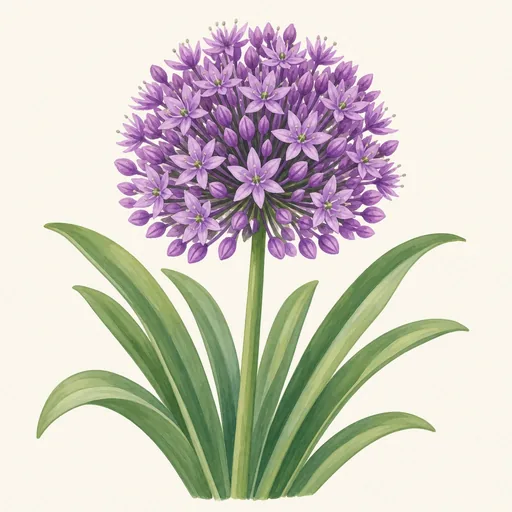
Allium
Allium · Amaryllidaceae
- Plant in autumn2–6 weeks before the first autumn frostSep 13 – Oct 17
- Space15–30 cm (6–12 in) apart
- Bloom180–270 days after planting
Description
Allium is a genus of bulb-forming and rhizomatous plants that includes ornamental flowering alliums as well as onions, garlic, leeks, and chives. Gardeners often grow ornamental kinds for their rounded flower heads, which rise on upright stalks above narrow, straplike leaves. Each head contains many small, star-shaped flowers. Depending on the species or cultivar, the blooms may be purple, pink, white, yellow, or blue, and the heads can range from small clusters to globes wider than a hand.
Most ornamental alliums flower in late spring or early summer, although timing varies by species and climate. Their flowers attract bees and other pollinators. After blooming, the seed heads often remain attractive as they dry. The foliage commonly starts to yellow around flowering time; planting alliums among later-emerging perennials can help conceal the fading leaves. Heights vary widely, from low-growing plants suited to rock gardens to tall varieties that stand well above neighboring flowers.
Most bulb-grown ornamental alliums do best in full sun and well-drained soil. Plant their bulbs in autumn, generally at a depth about two to three times the bulb’s height, and avoid sites that stay waterlogged. Established plants often tolerate dry summer conditions. Leave the foliage in place until it dies back naturally so the bulb can store energy for the following year. Some alliums multiply by offsets or self-seed; remove spent heads if unwanted seedlings are a concern. Many are perennial where winters provide suitable cold conditions, but their performance depends on the species and local climate. Like other members of the genus, they can be harmful to dogs and cats if eaten. Choose a named species or cultivar when planning a planting, since flower size, hardiness, and growth habit differ substantially across the genus.
Growing Conditions
0.3–1.2 m (1–4 ft) tall, 15–45 cm (6–18 in) wide
- Smallest
- Largest
Full sun, 6+ hours
Tolerates part sun
Moderate
Keep evenly moist, not soggy.
Ideal 10–25 °C (50–77 °F)
Survives down to −34 °C (−29 °F).
pH 6–8 · neutral to alkaline
Where it Grows
Planting
When to Plant
For ornamental alliums grown from bulbs, fall is the usual planting season. Plant after the weather cools but before the ground freezes, giving roots several weeks to develop. A useful cue is soil temperature near or below 60°F (15°C); in many temperate areas, this means September through November. If your soil stays warm well into fall, wait until it cools. If winters are severe, plant early enough that bulbs can root before a hard freeze. Most familiar spring- and early-summer-flowering ornamental alliums need a winter chill to bloom well, so fall planting is more reliable than planting stored bulbs in spring. You can plant nursery-grown, actively growing alliums in spring once the soil is workable, taking care not to disturb their roots. Check the species or variety before deciding: Allium includes many ornamentals as well as onions, garlic, and chives, whose planting times differ.
How to Plant
Choose a spot with full sun and well-drained soil. Allium bulbs are prone to rotting in ground that stays wet, especially over winter. If your soil is heavy clay, improve drainage with a raised bed or plant in a container with drainage holes. Loosen the soil and mix in a modest amount of compost; avoid fresh manure. Dig a hole about two to three times as deep as the bulb is tall. Set the bulb with its pointed end up and its root end down, then cover it with soil. If the point is hard to identify, lay the bulb on its side; the shoot can find its way up. Space small bulbs a few inches apart and large ornamental bulbs farther apart, following the spacing on the package so their leaves have room to grow. Water after planting to settle the soil. Thereafter, water only if the soil is unusually dry; do not keep it soggy. A light mulch can help moderate winter temperatures, but keep it from trapping moisture against the bulbs. In spring, leave the foliage in place after flowering until it yellows naturally, allowing the bulb to store energy for next year. These directions apply to ornamental bulbs; edible alliums and seed-grown species may need different treatment.
Growth Timeline
- Growing in the garden 180–270 days
- In bloom 2–4 weeks
Planting Calendar
- Autumn planting: 2–6 weeks before the first autumn frost
- Autumn planting: Sep 13 – Oct 17
Care
Care Calendar
- Feed · Mar 13 – Apr 30
Top-dress lightly with compost as growth emerges. - Deadhead · May 22 – Aug 20
Remove spent heads if you want to prevent self-seeding; otherwise leave them for display. - Divide · Jun 19 – Aug 20
Every few years, separate crowded bulbs after the foliage has yellowed.
Watering
Water newly planted Allium bulbs, divisions, or transplants to settle the soil and help roots establish. During active growth, provide roughly 1 inch (2.5 cm) of water per week from rain or irrigation, adjusting for heat, soil type, and the needs of the species. Water deeply at soil level, then let the surface dry somewhat before watering again. Edible onions need especially consistent moisture while their bulbs enlarge; prolonged dry spells can reduce their size. Established ornamental alliums often tolerate some drought, but they still benefit from water during a dry spring. Good drainage matters more than frequent watering: bulbs left in soggy soil can rot. Reduce watering as foliage naturally yellows and the plants enter dormancy. For onions or garlic intended for storage, stop irrigating as harvest approaches so the bulbs can mature and their skins can dry.
Pruning
Alliums need little pruning. On ornamental types, you may remove spent flower stalks after blooming for a tidier appearance, or leave the seed heads standing for their shape and interest. If you do not want seedlings, cut off flower heads before seeds mature. Let the leaves remain until they turn yellow and dry naturally: while green, they replenish the bulb for next year’s growth. Remove dead foliage gently rather than pulling hard enough to loosen the bulb. For edible alliums, harvest chive leaves regularly to encourage fresh growth, but leave enough foliage for the plant to recover. Cut chive flower stems after blooming if you want to limit self-seeding. Avoid cutting back the green tops of bulb onions or garlic simply to tidy them; those leaves are needed to develop good-sized bulbs.
Weeding
Keep the planting area weed-free, especially while alliums are young. Onions, garlic, and other edible alliums have relatively shallow roots and narrow leaves, so vigorous weeds can quickly compete with them for light, water, and nutrients. Pull small weeds by hand or cultivate only the top layer of soil; deep hoeing close to plants can damage roots or nick developing bulbs. Weed when the soil is slightly moist so roots release more easily, taking care not to disturb emerging shoots. Clear perennial weeds before planting bulbs, since removing them later is more difficult. Check beds regularly through spring and early summer rather than waiting for weeds to become established. A light mulch can suppress new weeds, but leave space around allium stems and bulb necks. Remove weeds before they set seed to reduce work in future seasons.
Mulching
A light mulch helps suppress weeds and can keep moisture more even during active growth. After shoots emerge, spread about 1–2 inches (2.5–5 cm) of shredded leaves, compost, or another loose organic mulch over the soil, keeping it away from stems and bulb necks. Avoid a thick, wet layer that traps moisture against bulbs, particularly in heavy soil. In cold regions, a loose winter mulch may help newly planted garlic or ornamental bulbs cope with repeated freezing and thawing; pull it back if it mats down over spring shoots. Where drainage is marginal, prioritize improving the soil or planting site over adding mulch. Many ornamental alliums prefer relatively dry conditions during summer dormancy, so avoid watering a heavily mulched bed just to keep it moist. Remove any mulch that stays soggy or shelters slugs.
Fertilizing
Fertilizer needs depend on whether you are growing ornamental flowers or an edible crop. Before planting onions, garlic, or other edible alliums, work compost into the soil and use a soil test to guide any additional fertilizer. These crops benefit from adequate nutrients while their leaves are growing; if growth is pale or weak, apply a modest, balanced fertilizer or a nitrogen-rich side-dressing in spring. Follow the product label, and avoid piling fertilizer against stems. Stop heavy nitrogen feeding once bulb formation is well underway, because late lush growth can delay maturity and reduce storage quality. Ornamental alliums in reasonably fertile soil generally need little supplemental feeding. If the soil is poor, a modest application of compost or balanced fertilizer as growth begins is usually enough. Excess fertilizer will not compensate for shade or poor drainage.
Pest Management
Start with healthy bulbs or transplants, well-drained soil, and adequate spacing for air circulation. Rotate edible alliums to a different bed for at least three to four years when possible; this helps limit soil-borne diseases and pests. Inspect leaves for thrips, which can cause silvery streaking, and for tunnels or distortion caused by allium leaf miners where they occur. Fine insect netting placed before egg-laying can protect susceptible edible crops, provided its edges are secured. Remove badly infested leaves or plants, and do not compost diseased material unless your composting process reliably destroys pathogens. Avoid overhead watering when downy mildew is a concern, and do not leave bulbs in waterlogged soil where they may rot. Identify the pest before treating it, follow local guidance and pesticide labels, and avoid spraying open flowers visited by pollinators.
Harvesting
Harvest according to the allium you are growing. Snip chive leaves above the base as needed, leaving enough growth for the plant to regrow. Pick scallions while their stems are tender. Harvest garlic when several lower leaves have browned but some upper leaves remain green; lift it carefully with a garden fork rather than pulling on the stem. Storage onions are generally ready when their tops fall over and begin to dry. Lift bulbs in dry weather if possible, then cure suitable storage onions and garlic in a shaded, airy place before trimming and storing them. Avoid bruising bulbs, and use damaged ones first. For ornamental alliums, cut flower stems when the blooms are open for arrangements, or leave seed heads to dry before collecting them. Do not eat an ornamental or unidentified allium unless you have confirmed it is suitable for consumption.
Growing in Containers
Grows well in a pot of at least 10 litres (2.6 US gallons), with drainage holes. Best kept outdoors.
Propagation
From offsets
- Wait until the foliage has died back.
- Lift the bulb clump carefully.
- Separate the small bulbs from the parent bulbs.
- Replant them in well-drained soil at the appropriate depth.
- Allow several seasons for small offsets to reach flowering size.
From seed
- Collect seed when the heads have dried.
- Sow it in a pot of free-draining compost in autumn.
- Keep the pot outdoors to receive winter cold.
- Keep the compost lightly moist as seedlings grow.
- Transplant the young bulbs after their foliage dies back.
Companion Plants
Good neighbors
- Peonies: Their full foliage helps conceal ornamental alliums’ yellowing leaves after bloom.
- Catmint: Its low, spreading growth helps hide fading allium foliage while providing contrasting flowers.
- Hardy geraniums: Their mounding foliage covers the bare stems and declining leaves of taller ornamental alliums.
Common Problems
- Orange or rust-colored spots
- Spots on leaves
- Yellowing leaves
- Leaves dropping
Rust is a group of plant diseases caused by fungi in the order Pucciniales, not a single species. Different rust fungi…
- Yellowing leaves
- Spots on leaves
- Fuzzy gray mold
- Wilting
Downy mildew is a group of plant diseases caused by several species of oomycetes, or water molds, rather than one…
- Yellowing leaves
- Wilting
- Stunted growth
- Leaves dropping
Root rot is a general name for the decay of plant roots, not a single disease with one scientific name. It can result…
- Yellowing leaves
- Wilting
- Stunted growth
- Seedlings collapse at soil level
Onion fly is a small gray fly whose larvae, often called onion maggots, feed on onions and related alliums, including…
- Thrips: Tiny insects that leave silvery streaks on leaves and can weaken plants.
- Onion maggots: Larvae feed on roots and bulbs, causing stunting or collapse.
- Downy mildew and rust: Fungal-like or fungal diseases that discolor foliage, especially in damp conditions.
- White rot: A persistent soil-borne disease that rots roots and bulbs; avoid moving affected soil or bulbs to new beds.
- Bulb rot: Often associated with poorly drained soil or bulbs stored while damp.
Varieties
Its rounded violet-purple flower heads rise above the fading spring foliage.
- purple flowers
- early summer
- pollinator friendly
Its exceptionally large violet globes make a strong late-spring display.
- large flower heads
- purple flowers
- long-lasting
Dense, deep-purple globes stand on tall, sturdy stems.
- tall
- purple flowers
- long-lasting
Large white globes provide a pale counterpart to purple-flowered alliums.
- white flowers
- tall
- pollinator friendly
Leafy clumps produce rosy-purple flower heads in midsummer.
- summer flowering
- compact
- pollinator friendly
Its lavender-pink flowers appear above tidy, grassy foliage.
- summer flowering
- pollinator friendly
- long-lasting
More about varieties
- Onion (Allium cepa): Grown for its edible bulb; includes red, yellow, and white onions.
- Shallot (Allium cepa Aggregatum Group): Produces clusters of small, mild-flavored bulbs.
- Garlic (Allium sativum): Grown for its cloves; common types include hardneck and softneck garlic.
- Leek (Allium ampeloprasum): Grown for its long, mild-flavored leaf sheaths.
- Chives (Allium schoenoprasum): A perennial herb with edible, slender leaves and purple flowers.
- Giant allium (Allium giganteum): An ornamental species with tall stems and large, spherical flower heads.
Health Benefits
Edible alliums—including onions, garlic, leeks, shallots, and chives—add flavor to meals and provide nutrients. Depending on the species and portion size, they supply fiber, vitamin C, vitamin B6, folate, or potassium. Using them for flavor may also help people cook with less salt.
Garlic is widely used in traditional wellness practices. Studies of garlic preparations suggest they may modestly lower blood pressure or cholesterol in some people, but results vary with the product and dose. Eating garlic is not a substitute for prescribed treatment. Claims that alliums prevent cancer or cure infections have not been established well enough to recommend them for those purposes.
The pungent compounds formed when garlic is chopped or crushed are a major focus of research. Onions and other alliums also contain plant compounds, including flavonoids, but laboratory findings do not necessarily translate into proven health effects in people.
Food amounts are generally safe for most people, although alliums can trigger heartburn or digestive discomfort. Their fructans may cause symptoms in people sensitive to FODMAPs. Garlic supplements can increase bleeding risk, particularly alongside blood-thinning medicines; ask a clinician before taking them. Applying raw garlic directly to skin can cause burns.
Fun Facts
- Allium is the genus that includes both kitchen staples such as garlic and showy garden flowers.
- Cutting an onion releases an airborne sulfur compound that makes many people’s eyes water.
- Crushing garlic brings together substances that react to form allicin, a contributor to its characteristic smell.
- Many ornamental alliums produce round flower heads made up of numerous small blossoms.
- Allium flowers can provide nectar and pollen for visiting insects.
Notice an error or have a question about Allium? Contact us