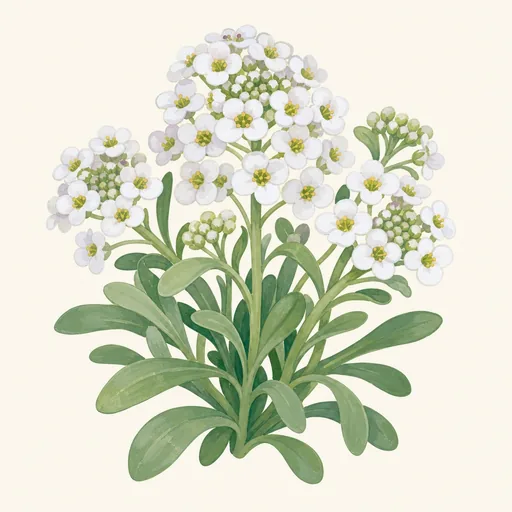
Sweet Alyssum
Lobularia maritima · Brassicaceae
- Start indoors4–6 weeks before the last frostFeb 27 – Mar 19
- Sow outdoorsFrom 2 weeks before to 2 weeks after the last frostMar 27 – Apr 30
- Plant outFrom the last frost until 2 weeks afterApr 10 – Apr 30
- Space15–25 cm (6–10 in) apart
- Bloom40–60 days after plantingMay 20 – Jul 20
Description
Sweet alyssum is a low-growing flowering plant in the mustard family, Brassicaceae. It forms a spreading mound of slender stems and small, narrow, gray-green leaves. Its tiny, four-petaled flowers appear in dense clusters that can nearly cover the foliage. White is the most familiar color, but garden varieties also bloom in pink, lavender, and purple. The flowers have a gentle, honey-like fragrance, especially noticeable when many plants are grown together. A mature plant typically reaches about 10–30 cm (4–12 in) tall and may spread 30 cm (12 in) or more.
Native to the Mediterranean region, sweet alyssum grows as a short-lived perennial where winters are mild. Gardeners in colder climates usually grow it as an annual. It flowers best in full sun, although it tolerates partial shade, particularly during hot weather. Well-drained soil is important: established plants handle modest dryness better than waterlogged roots. Regular watering helps young plants settle in and keeps container-grown plants blooming. Flowering is often strongest in the cooler weather of spring and autumn; plants may slow down or become leggy during prolonged summer heat. Light trimming after a flush of flowers can encourage fresh growth and more blooms.
Gardeners use sweet alyssum along path edges, at the front of borders, in rock gardens, and spilling over the sides of pots or hanging baskets. Its small flowers attract bees and other pollinating insects, as well as beneficial insects such as hoverflies. Plants can self-seed where conditions suit them, sometimes returning the following year. Seeds may be sown directly outdoors after the danger of hard frost has passed, or started indoors for earlier flowers. Scatter them thinly and press them onto the soil surface, because they need light to germinate. Sweet alyssum is generally easy to grow, but good air circulation and avoiding overly wet soil help keep it healthy.
Growing Conditions
10–20 cm (4–8 in) tall, 15–30 cm (6–12 in) wide
- Smallest
- Largest
Full sun, 6+ hours
Tolerates part sun, part shade
Moderate
Keep evenly moist, not soggy.
Ideal 15–24 °C (59–75 °F)
Survives down to −7 °C (19 °F).
pH 6–7.5 · neutral to alkaline
Where it Grows
Planting
When to Plant
Sweet alyssum grows and flowers best in cool, mild weather, so use your local frost dates and summer temperatures to choose a planting time. In spring, sow seeds outdoors as soon as the soil can be worked, about one to two weeks before the last expected frost. Established plants tolerate light frost, but protect young seedlings if a hard freeze is forecast. For an earlier start, sow indoors four to six weeks before the last frost and move the seedlings outside after hardening them off.
Where summers are hot, plant early enough for a spring display: flowering often slows during prolonged heat and resumes when temperatures cool. You can also sow in late summer, roughly six to eight weeks before the first expected fall frost, for autumn flowers. In mild, frost-free climates, fall planting can provide blooms through winter. Wait until the worst heat has passed before sowing a fall crop.
How to Plant
Choose a spot with well-drained soil and full sun. In places with hot summers, some afternoon shade can help plants keep flowering. Loosen the top few inches of soil and remove weeds. You can mix in a little compost if the soil is poor, but avoid heavy fertilizer: lush leaves can come at the expense of flowers.
For direct sowing, scatter the tiny seeds thinly over the prepared soil and press them gently into the surface. Leave them uncovered or add only a very fine dusting of soil; light helps them germinate. Mist carefully so the seeds do not wash away, and keep the surface consistently moist until seedlings appear, usually within one to two weeks. Once they are large enough to handle, thin them to about 6–9 inches (15–23 cm) apart, or follow the seed packet for your variety.
If planting nursery starts or indoor-grown seedlings, harden them off by gradually increasing their outdoor exposure over about a week. Set them at the same depth they grew in their containers, space them appropriately, and water thoroughly. Keep the soil lightly moist while plants establish, then water when the surface begins to dry. A thin layer of mulch can help retain moisture without covering the small plants.
Growth Timeline
- Germination 7–14 days
- Seedlings indoors 2–7 weeks
- Growing in the garden 40–60 days
- In bloom 16–24 weeks
Planting Calendar
- Start seeds indoors: 4–6 weeks before the last frost
- Sow outdoors: from 2 weeks before to 2 weeks after the last frost
- Plant outdoors: from the last frost until 2 weeks after
- Germination: 7–14 days
- Start indoors: Feb 27 – Mar 19
- Sow outdoors: Mar 27 – Apr 30
- Plant out: Apr 10 – Apr 30
- Bloom: May 20 – Jul 20
Care
Care Calendar
- Thin · Apr 17 – May 14
Thin direct-sown seedlings to about 6 inches apart. - Prune · Jun 5 – Aug 6
Shear plants lightly when flowering slows to encourage fresh growth and blooms.
Watering
Keep the soil evenly moist while sweet alyssum seeds germinate and young plants establish. Water gently so you do not wash away the tiny seeds. Once established, plants tolerate short dry spells, but regular moisture supports steadier flowering, especially in containers and during hot weather. Check the soil before watering: if the top inch feels dry, water thoroughly at the base of the plant. Let excess water drain rather than keeping the soil soggy. Containers can dry out much faster than garden beds and may need checking daily in warm, windy weather. Water in the morning when possible, and aim for the soil rather than the foliage. Yellowing leaves or a persistently wet surface can signal overwatering; wilting and dry soil suggest the plant needs a drink. Good drainage is as important as the amount of water you give.
Pruning
Remove faded flower clusters if you want to keep the plant tidy, although sweet alyssum does not require regular deadheading to bloom. If flowering slows or the stems become long and straggly, shear the plant back by about one-third to one-half. This is especially useful after its first strong flush of flowers. Water after trimming and give the plant time to produce fresh growth. In places with hot summers, sweet alyssum may flower less despite good care; a trim can help it look neater until cooler weather encourages more blooms. Use clean shears, and avoid cutting so far back that little leafy growth remains. You can also pinch young plants lightly to encourage a fuller shape. Remove dead or diseased stems whenever you notice them. If you want the plant to self-sow, leave some spent flowers in place so their seed pods can mature.
Weeding
Keep the area around young sweet alyssum free of weeds, which compete for light, water, and nutrients before the plants spread. Pull weeds when the soil is slightly moist, holding the ground near the alyssum so you do not disturb its shallow roots. Work carefully with a hand tool rather than hoeing deeply beside the plants. Once established, sweet alyssum's low, spreading growth can shade the soil and suppress some weed seedlings, but check for weeds that grow through or above it. Remove these before they flower and set seed. In containers, inspect the surface occasionally for volunteer plants that could crowd the alyssum. If sweet alyssum self-sows where you do not want it, pull the seedlings while they are small. A thin layer of mulch can reduce weeding, but keep it clear of the plant's crown.
Mulching
A light layer of mulch can help the soil stay evenly moist and limit weeds around sweet alyssum, particularly while young plants are filling in. Apply roughly 1–2 inches of fine mulch to bare soil, leaving a little space around each plant's crown and stems. Do not bury the small plants: mulch piled against them can hold excess moisture and encourage rot. In containers or already dense plantings, mulch may not be necessary because the foliage shades much of the soil. Choose a material that will not overwhelm the plant; finely shredded leaves or a modest layer of compost can be easier to manage than coarse bark. In poorly drained soil, address drainage before adding moisture-retaining mulch. Check beneath the mulch when deciding whether to water, since a dry-looking surface does not always mean the soil below is dry.
Fertilizing
Sweet alyssum is a light feeder and usually flowers well without added fertilizer in reasonably fertile garden soil. Too much nitrogen can encourage leafy growth at the expense of blooms. If the soil is poor, work a modest amount of compost into the bed before planting, or use a balanced fertilizer according to its label rather than feeding heavily. Container plants have a limited supply of nutrients and may benefit from an occasional diluted liquid fertilizer during active growth, particularly if flowering weakens despite suitable light and watering. Avoid fertilizing a plant that is struggling because of heat, drought, or waterlogged roots; correct those conditions first. If growth is healthy and flowers are plentiful, there is no need to feed. Follow the product's rate and frequency, and water as directed so fertilizer does not contact dry, stressed roots.
Pest Management
Inspect sweet alyssum regularly, especially the undersides of leaves and the tender tips. Aphids can gather on new growth; a firm spray of water often removes small colonies. Slugs and snails may damage seedlings, so check at dusk and remove them by hand or use a suitable control if damage persists. In hot, dry conditions, look for fine webbing or stippled leaves that may indicate spider mites. Good airflow and appropriate watering help keep plants vigorous. Avoid routine broad-spectrum insecticide sprays: sweet alyssum attracts pollinators and beneficial insects, and these products can harm them. If treatment is necessary, identify the pest first, choose a product labeled for it, and follow the directions carefully. Spacing plants appropriately and avoiding soggy soil also reduce the risk of disease. Remove badly affected foliage and dispose of it rather than leaving it around the plants.
Harvesting
Sweet alyssum is grown mainly for its flowers, not for a crop, but you can cut small flowering stems for short-lived arrangements. Snip them when several tiny flowers on the stem are open, preferably in the cool of the morning. Place cut stems in water promptly and leave plenty of growth on the plant so it can keep flowering. To save seed, allow some flower clusters to fade and their small pods to dry on the plant. Before the pods split and shed their seeds, clip the stems into a paper bag. Let them dry thoroughly in an airy place, then gently shake out the seeds and store them somewhere cool and dry in a labeled envelope. Plants grown from saved seed may differ from the parent, especially if the original plant was a hybrid. Leave seed heads in place instead if you welcome self-sown seedlings.
Growing in Containers
Grows well in a pot of at least 2 litres (0.5 US gallons), with drainage holes. Best kept outdoors.
Propagation
From seed
- Sow seeds outdoors after the last frost, or start them indoors several weeks earlier.
- Press seeds onto moist seed-starting mix or prepared soil without burying them deeply.
- Keep the soil evenly moist until seedlings emerge.
- Thin or transplant seedlings to give them room to spread.
From cuttings
- Take short, nonflowering stem cuttings from healthy plants.
- Remove the leaves from the lower half of each cutting.
- Insert the stems into moist, well-draining potting mix.
- Keep them in bright, indirect light until rooted, then transplant them.
Companion Plants
Good neighbors
- Broccoli: Sweet alyssum attracts hoverflies and other beneficial insects that prey on broccoli pests, including aphids.
- Lettuce: Flowering sweet alyssum supports hoverflies whose larvae feed on lettuce aphids.
- Cabbage: Sweet alyssum attracts beneficial insects that help suppress aphids in cabbage plantings.
Common Problems
- Yellowing leaves
- Sticky residue on leaves
- Black sooty coating
- Curled or cupped leaves
Aphids are small, soft-bodied insects that feed by piercing plants and drawing out sap. The group includes many…
- Seedlings collapse at soil level
- Soft or rotting stems
- Brown, mushy roots
- Wilting
Damping off is a disease of seeds and young seedlings, not a single organism with one scientific name. It can be…
- White powdery coating
- Yellowing leaves
- Curled or cupped leaves
- Distorted new growth
Powdery mildew is a group of fungal diseases, not a single species. Different fungi infect different hosts, including…
- Yellowing leaves
- Wilting
- Stunted growth
- Leaves dropping
Root rot is a general name for the decay of plant roots, not a single disease with one scientific name. It can result…
- Heat-related decline: Flowering often slows in hot weather; lightly shear plants to encourage fresh growth when temperatures cool.
- Root rot: Soggy, poorly drained soil can damage roots. Let the soil surface dry slightly between waterings.
- Powdery mildew: A white coating may develop on leaves, especially where airflow is poor.
- Aphids: These sap-feeding insects may cluster on tender shoots and flower stems.
- Slugs and snails: They can chew leaves and damage young plants.
Varieties
A classic white variety suited to edging and containers.
- white flowers
- low-growing
- fragrant
It forms a low carpet of violet-purple flowers.
- purple flowers
- low-growing
- fragrant
Its white blooms are relatively large for sweet alyssum.
- white flowers
- large flowers
- vigorous
This compact variety adds deep rose-pink color to borders and pots.
- rose-pink flowers
- compact
- fragrant
Its very short growth suits narrow edging and small containers.
- white flowers
- dwarf
- fragrant
This spreading hybrid flowers heavily and handles summer heat better than many seed-grown varieties.
- white flowers
- vigorous
- heat tolerant
More about varieties
- ‘Carpet of Snow’: A compact, white-flowered variety often used as edging.
- ‘Royal Carpet’: A low-growing variety with violet-purple flowers.
- ‘Snow Crystals’: Produces relatively large white flower clusters and a strong sweet scent.
- ‘Easter Bonnet Deep Pink’: A compact choice with rosy-pink blooms.
- ‘Snow Princess’: A vigorous, trailing hybrid with abundant white flowers; well suited to hanging baskets.
Fun Facts
- Sweet alyssum’s current botanical name is Lobularia maritima; it was formerly called Alyssum maritimum.
- Despite its delicate appearance, it belongs to the mustard family, Brassicaceae.
- Its tiny flowers have a honey-like scent.
- The flowers attract pollinators and beneficial insects such as hoverflies.
- It grows naturally around the Mediterranean and may self-seed in gardens.
Notice an error or have a question about Sweet Alyssum? Contact us