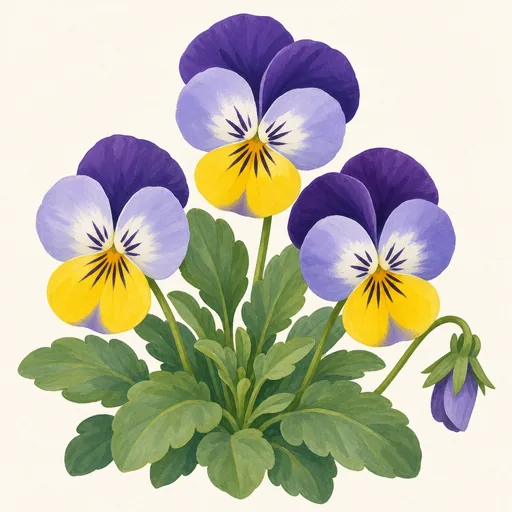
Pansy
Viola tricolor var. hortensis · Violaceae
- Start indoors10–12 weeks before the last frostJan 16 – Feb 5
- Plant out2–4 weeks before the last frostMar 13 – Apr 2
- Plant in autumn6–8 weeks before the first autumn frostAug 30 – Sep 19
- Space15–25 cm (6–10 in) apart
- Bloom21–42 days after plantingApr 3 – Jun 4
Description
Pansies (Viola tricolor var. hortensis) are popular flowering plants known for their vibrant colors and distinct "face-like" markings on the petals. These annuals or short-lived perennials belong to the Viola genus and thrive in cooler weather, making them popular choices for early spring and fall gardens. Pansies are particularly valued for their wide array of colors, ranging from deep purples and blues to bright yellows and whites, often featuring intricate patterns.
Typically growing to about 6 to 12 inches in height, pansies have heart-shaped leaves and produce blooms that can be up to 4 inches across. They are well-suited for a variety of settings, including garden beds, pots, and hanging baskets, and can tolerate light frosts, which makes them a favored option for extending the gardening season.
Pansies prefer well-draining, fertile soil and thrive in full sun to partial shade. Regular watering is essential, especially during dry spells, but care should be taken not to overwater, as this can lead to root rot. Fertilization every few weeks with a balanced fertilizer can help encourage robust growth and abundant blooming.
In addition to their ornamental appeal, pansies are edible, often used in salads, desserts, and as decorative garnishes due to their mild, slightly sweet flavor. As versatile, hardy, and cheerful plants, pansies are an excellent choice for both novice and experienced gardeners looking to brighten up their outdoor spaces.
Growing Conditions
15–25 cm (6–10 in) tall, 15–30 cm (6–12 in) wide
- Smallest
- Largest
Full sun, 4+ hours
Tolerates part sun, part shade
Moderate
Keep evenly moist, not soggy.
Ideal 7–18 °C (45–64 °F)
Survives down to −23 °C (−9 °F).
pH 5.5–6.5 · acidic to neutral
Where it Grows
Planting
When to Plant
Pansies (Viola tricolor var. hortensis) are beloved for their vibrant colors and delicate flowers, making them a popular choice in gardens and landscape displays. Timing your planting is crucial for successful blooms and a healthy flowering period.
Understanding Climate Zones
One of the first steps in determining when to plant pansies is to consider your local climate zone. Pansies are cool-season annuals, thriving in cooler weather but struggling in heat. They are best suited for USDA hardiness zones 6 to 10.
Ideal Planting Times
-
Spring Planting:
- Timing: Aim to plant pansies in early spring, a few weeks before the last expected frost. In many regions, this is typically between mid-March and early April.
- Indicators: Check local frost dates; when nighttime temperatures consistently stay above 28°F (-2°C), it's a good indication that you can start planting.
-
Fall Planting:
- Timing: Pansies can also be planted in early fall to provide a burst of color as summer blooms fade. Plant them about 6 to 8 weeks before the first expected frost.
- Benefits: Fall-planted pansies may establish roots and bloom again in early spring, extending the growing season.
Soil Temperature
- Optimal Conditions: Pansies prefer soil temperatures between 45°F to 65°F (7°C to 18°C). Ensure the soil has warmed sufficiently in spring, or cool enough in fall, to promote healthy root growth.
Signs of the Season
-
Weather Patterns: Watch for seasonal changes in your area, such as blooming crocuses or daffodils in spring, and the onset of cooler temperatures in late summer for fall planting.
-
Local Advice: Consult local gardening centers or your regional agricultural extension office for specific planting dates tailored to your area.
Conclusion
Timing is essential for the successful planting of pansies. By taking into account your climate zone, local frost dates, and soil temperatures, you can ensure that your pansy flowers thrive, providing vibrant color and joy to your garden for months to come. Always remember to consider local environmental factors and seasonal changes when making your planting plan.
How to Plant
Planting pansies (Viola tricolor var. hortensis) can significantly enhance your garden's aesthetic, given their vibrant colors and charming faces. The best way to plant pansies involves several important steps:
-
Timing: Pansies thrive in cool weather, making early spring or fall the ideal planting seasons. They can tolerate light frost, which helps to establish strong plants.
-
Location and Soil: Choose a location that receives full sun to partial shade. Pansies prefer well-draining, nutrient-rich soil with a pH between 6.0 and 7.0. Incorporating organic matter, such as compost, can improve soil quality.
-
Spacing: When planting, space pansies about 6 to 8 inches apart to ensure proper air circulation and room for growth.
-
Planting Technique: Dig a hole slightly larger than the root ball, and gently remove the pansy from its pot. Place it in the hole, ensuring the crown is level with the soil surface. Backfill with soil and gently firm it around the base.
-
Watering and Maintenance: Immediately water after planting to help settle the soil. Maintain consistent moisture but avoid waterlogging. Fertilizing every few weeks with a balanced fertilizer can promote blooming.
By following these steps, you can enjoy a delightful display of pansies throughout their blooming season.
Growth Timeline
- Germination 10–21 days
- Seedlings indoors 3–8 weeks
- Growing in the garden 21–42 days
- In bloom 8–16 weeks
Planting Calendar
- Start seeds indoors: 10–12 weeks before the last frost
- Plant outdoors: 2–4 weeks before the last frost
- Autumn planting: 6–8 weeks before the first autumn frost
- Germination: 10–21 days
- Start indoors: Jan 16 – Feb 5
- Plant out: Mar 13 – Apr 2
- Autumn planting: Aug 30 – Sep 19
- Bloom: Apr 3 – Jun 4
Care
Care Calendar
- Feed · Mar 13 – Jun 11
Feed lightly every few weeks while plants are growing and blooming. - Feed · Aug 30 – Oct 17
Feed fall-planted pansies lightly while they are actively growing. - Deadhead · Mar 13 – Jul 9
Remove faded flowers to encourage more blooms. - Mulch · Oct 25 – Nov 28
Where plants overwinter, add a light mulch after the ground begins to freeze.
Watering
Pansies thrive in well-drained soil and prefer consistent moisture without becoming waterlogged. The best strategy for watering Pansy plants involves checking the top inch of soil for dryness before watering. When watering, aim to apply water directly at the base of the plant to avoid wetting the leaves, which can lead to fungal diseases. It's best to water in the early morning or late afternoon to minimize evaporation and allow the foliage to dry before nightfall.
During warmer months, Pansies may require more frequent watering, especially if grown in containers, as these can dry out faster. A deep watering approach is beneficial; soak the soil until water drains out of the bottom of the pot or bedding area. Mulching can also help retain moisture while suppressing weeds. Always ensure that your Pansies are not sitting in standing water to prevent root rot.
Pruning
Pruning pansies is essential for promoting healthy growth and prolonging their blooming period. The best strategy involves a combination of deadheading and shaping.
Begin by removing any spent flowers, or blooms that have wilted, using clean, sharp scissors or garden shears. This not only enhances the plant's appearance but also encourages new growth by redirecting energy away from seed production.
Next, if the plant becomes leggy or overgrown, trim back stems to shape the plant. Aim to cut just above a leaf node or a healthy set of leaves, ensuring you maintain a bushy habit.
Finally, regular pruning encourages airflow and reduces the risk of disease. Performing this maintenance every few weeks, especially in the height of blooming season, will keep your pansies lush and vibrant throughout their growing period. Remember, consistent care leads to a healthier and more abundant display of these beautiful flowers.
Weeding
Weeding around Pansy plants requires a careful strategy to preserve the delicate roots and ensure healthy growth. Begin by assessing the area for weeds, ideally when the soil is moist, as this makes removal easier. Use a hand weeder or similar tool to gently uproot weeds, avoiding damage to the Pansy’s shallow roots. Focus on the base of the weeds, pulling them out completely to prevent regrowth.
Mulching can be an effective preemptive strategy; applying a 1-2 inch layer of organic mulch, such as shredded bark or straw, can suppress weed growth while retaining soil moisture. Regular inspection and maintenance are also crucial—check your garden weekly to catch weeds early. Remember to be gentle and aim to disturb the soil as little as possible, protecting your Pansies and promoting a vibrant, healthy garden.
Mulching
Mulching pansy plants is an effective strategy to enhance their growth and maintain soil health. The best approach involves applying a layer of organic mulch, such as shredded bark, straw, or compost, around the base of the plants. This layer should be approximately 2 to 3 inches thick, allowing for adequate airflow and moisture retention while suppressing weeds.
Mulch should be applied after the soil has warmed, usually in spring, but can also be added in late fall to protect winter blooms. Ensure the mulch is kept a few inches away from the stems to prevent rot. Regular monitoring of moisture levels beneath the mulch is essential, as it can affect watering needs. This technique not only conserves soil moisture and stabilizes temperature but also improves soil fertility as the organic material breaks down, benefiting pansies and encouraging vibrant blooms.
Fertilizing
Fertilizing pansies (Viola tricolor var. hortensis) effectively enhances their growth and promotes vibrant blooms. The best strategy involves using a balanced, slow-release fertilizer with an N-P-K ratio of approximately 10-10-10. Begin fertilizing when planting in spring; incorporate the granules into the soil to ensure the nutrients are readily available as the plants establish.
For ongoing nutrition, consider applying a diluted liquid fertilizer every 4-6 weeks during the growing season. This provides a readily available nutrient source that encourages healthy foliage and flower production. Avoid over-fertilizing, as excessive nutrients can lead to leggy growth and diminished flowering. Additionally, a layer of organic mulch helps retain soil moisture and can also contribute to nutrient cycling as it decomposes. Monitoring and adjusting fertilization based on the environmental conditions and plant performance are key to maintaining healthy, blooming pansies.
Growing in Containers
Grows well in a pot of at least 2 litres (0.5 US gallons), with drainage holes. Best kept outdoors.
Propagation
From seed
- Sow seeds in trays of moist seed-starting mix in late summer for fall or spring flowers.
- Cover the seeds lightly and keep the mix moist.
- Keep the trays cool and out of direct sun until the seeds germinate.
- Move seedlings into individual pots when they have several true leaves.
- Harden off the plants before setting them outdoors.
From cuttings
- Take a healthy, nonflowering stem cutting from an established plant.
- Remove the lower leaves and any flower buds.
- Insert the stem into moist, free-draining potting mix.
- Keep it in bright, indirect light and maintain moisture until roots form.
- Pot up the rooted cutting.
Companion Plants
Good neighbors
- Tulips: Pansies are commonly planted beneath tulips to provide color at ground level while the bulbs flower.
- Daffodils: Pansies are often planted around daffodils for a layered spring display.
Common Problems
- Yellowing leaves
- Sticky residue on leaves
- Black sooty coating
- Curled or cupped leaves
Aphids are small, soft-bodied insects that feed by piercing plants and drawing out sap. The group includes many…
- Holes in leaves
- Slime trails
- Stems chewed or cut through
Slugs and snails are soft-bodied mollusks that feed on many garden plants. Snails carry a visible shell; most slugs…
- Spots on leaves
- Yellowing leaves
- Leaves dropping
Fungal leaf spot is a general name for diseases caused by many different fungi, not a single species. These fungi…
- Yellowing leaves
- Spots on leaves
- Fuzzy gray mold
- Wilting
Downy mildew is a group of plant diseases caused by several species of oomycetes, or water molds, rather than one…
- Fuzzy gray mold
- Spots on leaves
- Wilting
- Soft or rotting stems
Gray mold, also called Botrytis blight, is a fungal disease caused most commonly by Botrytis cinerea. It affects many…
Varieties
A widely sold series with sturdy plants and a broad range of colors.
- uniform
- large flowers
A compact bedding series that flowers reliably in cool weather.
- compact
- early
Its oversized blooms often have the dark central markings typical of pansies.
- large flowers
- blotched
Its spreading habit suits hanging baskets and the edges of containers.
- spreading
- good for containers
The frilled petals are most pronounced in cool weather.
- ruffled flowers
- compact
This traditional strain is commonly sold as a colorful seed mix.
- large flowers
- seed-grown
More about varieties
Pansies (Viola tricolor var. hortensis) are popular garden plants known for their vibrant colors and unique "face-like" markings on the petals. They are a favorite among gardeners due to their versatility, resilience, and ability to bloom in various conditions. Here is a list of some common varieties of pansies that hobbyists might consider for their gardens:
-
Bedding Pansies This group is characterized by their large flowers and rich colors. They are often used in bedding displays or containers and are known for their ability to withstand cool weather. Common types include:
- Majestic Giants: These pansies feature large blooms in a wide array of colors, making them ideal for showy displays.
- Panola: A series that combines the characteristics of pansies and violas, offering smaller flowers with a more compact growth habit.
-
Frills and Spikes Known for their ruffled petals and distinctive shapes, these pansies add a unique texture to any garden. They come in different color combinations and patterns, including:
- Frizzle Sizzle: This variety has fringed edges that create a frilly appearance, available in various colors.
- Dynamite: This mix features vibrant "spiked" petals that stand out in both gardens and containers.
-
Matrix Series The Matrix series pansies are particularly popular for their uniform growth and hardiness. They are known for their consistent flower size and come in a broad range of colors, making them a favorite for gardeners seeking versatility.
-
Cool Wave Pansies This trailing variety is perfect for cascading over the edges of containers or hanging baskets. They bloom profusely and are excellent for cooler climates, offering vibrant colors throughout the fall and spring months.
-
Heidi Pansies These smaller, more compact pansies are well-suited for containers and gardens requiring a shorter height. They have a wide variety of colors, making them perfect for mixed plantings.
-
Maxi Series Maxi pansies are known for their particularly large flowers that can be admired from a distance. These bright and striking varieties are often used in larger garden displays or as focal plants.
-
Sorbet Pansies Sorbet pansies are known for their unique color blend and are often smaller than traditional pansies, making them suitable for borders and rock gardens. They are particularly tolerant of colder temperatures.
Conclusion
When selecting pansy varieties for your garden, it's essential to consider factors such as climate, flower size, and growth habit. Each of these varieties adds its own charm and beauty, ensuring that there is a pansy for every garden design. By mixing and matching different types, you can create a stunning display that fills your garden with color and life during cooler seasons. Happy gardening!
Health Benefits
Pansies (Viola tricolor var. hortensis) are not only celebrated for their vibrant colors and aesthetic appeal in gardens but also possess certain health and wellness applications. Traditionally, these flowers have been used in herbal medicine, particularly in Europe, due to their rich composition of vitamins A and C, flavonoids, and antioxidants.
One prominent application is their use in skincare. Pansy extracts and oils are known for their anti-inflammatory properties, making them beneficial in soothing skin irritations such as eczema and psoriasis. They can be found in natural skincare formulations aimed at calming inflamed skin.
Moreover, pansies are often consumed as edible flowers. They can be used in salads, teas, and desserts, not only enhancing the visual appeal of dishes but also contributing nutrients. The vitamins and antioxidants in pansies may support a healthy immune system and promote skin health.
Additionally, their potential diuretic properties may aid in detoxification and relieve urinary tract discomfort. Overall, while more research is needed to fully validate these health claims, the pansy remains a beautiful and multifunctional addition to both gardens and herbal wellness practices.
Fun Facts
-
Variety of Colors: Pansies come in a wide range of vibrant colors, including blue, purple, yellow, orange, and white, often displaying a unique combination of these hues. This diverse color palette makes them a favorite for gardens and floral arrangements.
-
Heart-Shaped Faces: The distinctive, "face-like" pattern on the petals of pansies gives them an endearing appearance. This trait has contributed to the popularity of pansies as they resemble cheerful little faces in the garden.
-
Cool-Weather Favorites: Pansies are known for their ability to thrive in cooler temperatures, making them perfect for early spring and fall gardens. They can even tolerate light frosts, which helps extend their blooming period in various climates.
-
Edible Blooms: Beyond their ornamental value, pansy flowers are completely edible and can be used to decorate salads, desserts, and beverages. Their mild, slightly sweet flavor adds a lovely touch to culinary creations.
-
Symbolism of Thoughtfulness: Pansies are often associated with remembrance and thoughtfulness. The name "pansy" is derived from the French word "pensée," which means "thought," reflecting their deep-rooted symbolism in various cultures, often used in sentimental gifts and arrangements.
Notice an error or have a question about Pansy? Contact us