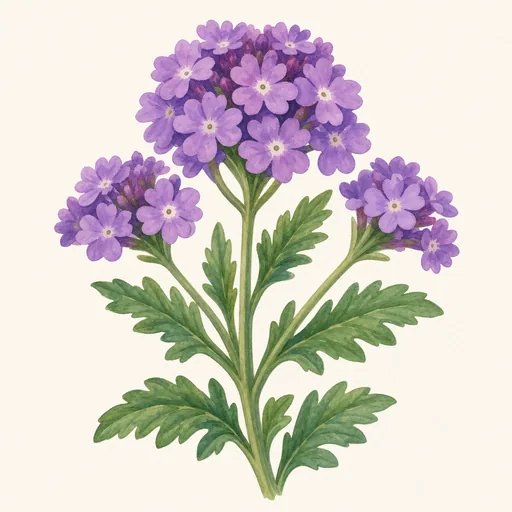
Verbena
Verbena · Verbenaceae
- Start indoors10–12 weeks before the last frostJan 16 – Feb 5
- Plant out1–2 weeks after the last frostApr 17 – Apr 30
- Space20–30 cm (8–12 in) apart
- Bloom30–60 days after plantingMay 17 – Jul 20
Description
Verbena is a genus of flowering plants that includes upright wildflowers and low-growing ornamentals. The name is also used for closely related garden hybrids, so plants sold as verbena vary considerably in height, spread, and winter hardiness. Most have branching stems and opposite leaves that are often toothed or lobed. Their small, five-lobed flowers appear in clusters that may be rounded, flattened, or spike-like. Depending on the species or cultivar, flowers can be purple, blue, pink, red, white, or bicolored.
Garden verbenas are valued for their long flowering season. Trailing forms spill over the edges of containers and hanging baskets, while more upright forms work well in borders. Many bloom from late spring into autumn when conditions are favorable. The flowers attract bees and butterflies, making verbena a useful addition to pollinator-friendly plantings.
For abundant blooms, grow verbena in full sun and soil or potting mix that drains well. Water newly planted specimens regularly, then allow the soil surface to dry somewhat between waterings. Established plants vary in drought tolerance, but persistently wet soil can encourage root problems. Removing spent flower clusters can keep plants tidy and may encourage further flowering, although some newer cultivars flower freely without deadheading. If stems become long and sparse, a light trim can promote bushier growth. Avoid heavy feeding, which may favor leaves over flowers.
Whether a verbena survives winter depends on the plant and the climate. Some species are hardy perennials; others are grown as annuals where winters are cold. Garden plants can also be propagated from stem cuttings. Give them space for air to circulate, since crowded, humid conditions can favor powdery mildew. Check the label when buying a plant: its mature size and care needs may differ from those of another verbena.
Growing Conditions
15–30 cm (6–12 in) tall, 30–60 cm (12–24 in) wide
- Smallest
- Largest
Full sun, 6+ hours
Tolerates part sun
Moderate
Keep evenly moist, not soggy.
Ideal 18–27 °C (64–81 °F)
Survives down to −7 °C (19 °F).
pH 6–7.5 · acidic to neutral
Where it Grows
Planting
When to Plant
Plant most garden verbenas outdoors in spring, after the last frost, when the soil has warmed and nights are reliably mild. Tender bedding verbenas can be damaged by frost, so check your local frost dates rather than planting by the calendar alone. If a cold spell is forecast after planting, cover young plants overnight or bring containers indoors. Start seeds indoors about 8–10 weeks before your expected last frost if you want flowers earlier; germination can be slow or uneven, so follow the seed packet’s instructions. Harden off indoor-grown seedlings over 7–10 days before transplanting, gradually exposing them to outdoor sun and temperatures. Established hardy perennial species can also be planted in early autumn where winters are not severe, allowing several weeks for roots to settle before the ground freezes. In hot climates, spring planting gives plants time to establish before peak summer heat. Wait to transplant until soil is workable, not soggy.
How to Plant
Choose a spot with at least six hours of direct sun and soil that drains freely. Verbena dislikes sitting in wet ground, especially over winter. If your soil is heavy clay, improve drainage by planting in a raised bed or a container with drainage holes. Mix a little compost into poor soil, but avoid heavy applications of fertilizer: lush, soft growth may flower less well.
Water nursery plants before removing them from their pots. Dig holes about as deep as the root balls and slightly wider. Gently loosen any circling roots, set each plant at the same depth it grew in its pot, and firm soil around it. Check the label for spacing: compact bedding verbenas often need about 12–18 inches (30–45 cm) between plants, while tall species such as Verbena bonariensis need more room. Water thoroughly after planting, then water when the upper soil begins to dry while roots establish. Keep mulch a little away from stems and avoid constantly wet leaves and soil, which can encourage disease.
If sowing directly, prepare a fine, weed-free seedbed and follow the packet’s directions for sowing depth; light requirements vary among verbenas. Keep the seedbed evenly moist until seedlings establish, then thin them to the recommended spacing.
Growth Timeline
- Germination 14–28 days
- Seedlings indoors 7–11 weeks
- Growing in the garden 30–60 days
- In bloom 12–20 weeks
Planting Calendar
- Start seeds indoors: 10–12 weeks before the last frost
- Plant outdoors: 1–2 weeks after the last frost
- Germination: 14–28 days
- Start indoors: Jan 16 – Feb 5
- Plant out: Apr 17 – Apr 30
- Bloom: May 17 – Jul 20
Care
Care Calendar
- Pinch out · Apr 10 – May 7
Pinch the tips of young plants to encourage branching. - Feed · May 1 – Aug 6
Feed container plants lightly every four to six weeks. - Deadhead · May 8 – Sep 3
Remove spent flower clusters unless the variety is self-cleaning. - Prune · Jun 5 – Jul 23
Lightly shear leggy plants after a flush of bloom to encourage new growth.
Watering
Water verbena deeply after planting to help its roots establish, keeping the soil lightly moist but never soggy. Once established, garden-grown plants tolerate some dryness; water when the top 1–2 inches (2.5–5 cm) of soil feel dry. Give enough water to moisten the root zone, then let the surface dry before watering again. Containers dry out faster and may need watering every day during hot, windy weather. Check the soil rather than following a fixed schedule. Aim water at the soil instead of wetting the leaves, and water early in the day so any splashes dry quickly. Good drainage is essential: persistently wet soil can lead to root rot and weak growth. If a plant wilts despite damp soil, check drainage and root health before adding more water. Reduce watering as growth slows in cool weather.
Pruning
Remove spent flower clusters to keep verbena tidy and encourage further blooming, although some modern varieties shed old flowers well without deadheading. If stems become long and sparse in midsummer, trim them back by roughly one-quarter to one-third, making cuts above healthy leaves or branching points. Water afterward and allow time for fresh growth. Pinching the tips of young plants can encourage a fuller shape. Remove dead, damaged, or diseased stems whenever you notice them, and clean your tools after cutting diseased growth. For perennial verbenas, wait until new growth appears in spring before removing winter-damaged stems; avoid cutting deeply into old, leafless wood unless you can see healthy buds below. Leave some flower heads in place if you want to collect seed. Pruning needs vary by species and cultivar, so favor light, regular shaping over severe cutting.
Weeding
Keep the area around young verbena plants free of weeds, which compete for water, nutrients, and light while the plants establish. Pull weeds when they are small, preferably after rain or watering, when roots release more easily. Grasp each weed near the soil surface and remove its roots without tugging on verbena stems. If using a hand hoe, work shallowly to avoid damaging the plant’s roots. Check beneath spreading stems, where weeds can be hard to see until they become large. A thin layer of mulch helps suppress new seedlings, but remove established weeds before laying it down. Avoid herbicide sprays near verbena; drift can injure its foliage and flowers. Once the plants fill out, their growth may shade the soil and reduce weeding, but continue to remove persistent weeds before they flower and set seed.
Mulching
Spread a 1–2 inch (2.5–5 cm) layer of fine bark, shredded leaves, or other loose organic mulch around garden-grown verbena after planting and weeding. Mulch helps limit weeds and slows evaporation during hot weather. Keep it a few inches away from the stems so the crowns stay dry and air can circulate. Verbena needs well-drained soil, so avoid piling on thick, water-holding mulch, especially in damp climates or during cool weather. Check the soil beneath the mulch before watering; its surface may look dry while the root zone remains moist. Refresh the layer as it breaks down rather than adding more each time. In containers, mulch is optional and should never cover the stem bases or block drainage. For perennial plants in cold areas, any winter mulch should be light and applied only after the ground cools.
Fertilizing
Verbena generally blooms best with modest feeding. Before planting in garden soil, mix in a small amount of compost if the soil is poor; rich soil or heavy fertilizing can produce leafy growth at the expense of flowers. If growth is weak during the growing season, apply a balanced fertilizer at the label rate, then water it in. Container plants lose nutrients more quickly through watering and may benefit from a dilute, balanced liquid fertilizer every two to four weeks while actively growing. Follow the product directions, and reduce feeding if stems become lush but flowering slows. Do not fertilize a drought-stressed plant until it has been watered and recovered. Stop routine feeding as growth slows in autumn, particularly for perennial verbena preparing for winter. If plants look healthy and flower steadily, additional fertilizer is usually unnecessary.
Pest Management
Inspect new growth and leaf undersides regularly for aphids, whiteflies, thrips, and spider mites. A firm spray of water can dislodge light infestations of aphids; repeat checks because pests can return. For persistent problems, use an insecticidal soap labeled for the pest and plant, following its directions and testing a small area first. Spray when pollinators are not visiting flowers, and avoid treating plants during extreme heat. Good spacing and watering at soil level help reduce powdery mildew and other foliage diseases. Remove badly affected leaves and dispose of them rather than leaving them around the plant. Yellowing or sudden collapse can indicate overly wet soil and root rot, which sprays will not fix; improve drainage and adjust watering instead. Avoid broad-spectrum insecticides when possible, since they can harm beneficial insects that help control pests.
Harvesting
Verbena is usually grown for its flowers rather than for a food harvest. To enjoy blooms indoors, cut healthy flower stems in the cool of the morning, just as their small flowers begin to open. Use clean scissors, place the stems promptly in water, and remove any leaves that would sit below the waterline. Cutting stems also encourages branching, but leave enough foliage for the plant to keep growing. To save seed, leave selected flower clusters on the plant until their seed heads turn dry and brown. Collect them on a dry day and finish drying them indoors before storing the seed in a labeled paper envelope in a cool, dry place. Seeds from hybrid verbena may not grow into plants resembling the parent. Do not harvest verbena for food or tea unless you have positively identified the species and confirmed it is suitable for that use.
Growing in Containers
Grows well in a pot of at least 5 litres (1.3 US gallons), with drainage holes. Best kept outdoors.
Propagation
From seed
- Sow seeds indoors 8–10 weeks before the last frost.
- Cover lightly with seed-starting mix.
- Keep the mix evenly moist and warm until seedlings emerge.
- Harden off the seedlings and plant them outdoors after frost danger passes.
From cuttings
- Take a short, nonflowering stem cutting in spring or summer.
- Remove the leaves from its lower half.
- Insert the stem into moist, free-draining potting mix.
- Keep it humid and out of direct sun until roots form.
- Pot it up once new growth appears.
Companion Plants
Good neighbors
- Petunias: They are commonly paired with trailing verbena in sunny containers and have similar growing needs.
- Salvia: They are often planted together in sunny pollinator beds, where their flowers attract bees and butterflies.
Common Problems
- White powdery coating
- Yellowing leaves
- Curled or cupped leaves
- Distorted new growth
Powdery mildew is a group of fungal diseases, not a single species. Different fungi infect different hosts, including…
- Yellowing leaves
- Sticky residue on leaves
- Black sooty coating
- Curled or cupped leaves
Aphids are small, soft-bodied insects that feed by piercing plants and drawing out sap. The group includes many…
- Pale speckles or stippling
- Yellowing leaves
- Brown or crispy leaf edges
- Fine webbing
Spider mites are tiny, plant-feeding arachnids in the family Tetranychidae, not insects. Several species attack garden…
- Yellowing leaves
- Wilting
- Stunted growth
- Leaves dropping
Root rot is a general name for the decay of plant roots, not a single disease with one scientific name. It can result…
- Powdery mildew: A white coating on leaves, especially where air circulation is poor. Space plants well and avoid crowding.
- Root rot: Soggy soil can cause wilting and stem collapse. Grow verbena in well-drained soil and avoid overwatering.
- Aphids and spider mites: These sap-feeding pests can distort leaves or cause stippling. Check new growth and leaf undersides regularly.
- Botrytis (gray mold): Flowers and stems may rot during prolonged damp weather. Remove affected material and improve airflow.
Varieties
Its low, spreading stems suit borders and hanging baskets.
- purple flowers
- spreading
- heat tolerant
Its violet-and-white flowers bloom freely in containers.
- bicolor flowers
- vigorous
- trailing
It spreads quickly and tolerates cooler weather than many bedding verbenas.
- red flowers
- heat tolerant
- cold tolerant
Its patterned flower clusters add color to baskets and containers.
- pink bicolor flowers
- trailing
- compact
This shorter form of Verbena bonariensis bears airy flower clusters above upright stems.
- compact
- purple flowers
- pollinator friendly
More about varieties
- Garden verbena (Verbena × hybrida): Low-growing hybrids grown for colorful, long-lasting flower clusters; often sold simply as “verbena.”
- Purpletop vervain (Verbena bonariensis): Tall, airy stems carry small purple flower clusters that attract pollinators.
- Slender vervain (Verbena rigida): A spreading, relatively drought-tolerant species with vivid purple flowers.
- Common vervain (Verbena officinalis): An upright species with small lilac flowers and a long history of traditional herbal use.
- Blue vervain (Verbena hastata): A North American species with slender spikes of blue-violet flowers that favors moist soil.
Health Benefits
Common vervain (Verbena officinalis) has a long history of use as an herbal tea for relaxation, mild digestive discomfort, and cold symptoms. Blue vervain (V. hastata) has also been used in traditional herbal practices. These are traditional uses, not proven treatments: laboratory studies have examined compounds in vervain, but good-quality human research is too limited to establish that it treats anxiety, digestive disorders, infections, or other medical conditions.
When people prepare vervain tea, they typically use the above-ground parts of the correctly identified plant. Garden verbena hybrids are grown as ornamentals and should not be assumed to have the same traditional uses or safety profile. Lemon verbena is a different plant, Aloysia citrodora, so information about its tea or fragrance should not be applied to Verbena species.
Avoid medicinal use of vervain during pregnancy or breastfeeding because safety information is insufficient. Herbal products can cause unwanted effects or interact with medicines; ask a healthcare professional before using vervain regularly, especially if you have a medical condition or take prescription drugs. Do not use it in place of medical care for persistent or serious symptoms. For most gardeners, verbena’s clearest wellness contribution is simply the enjoyment of its flowers and visiting pollinators.
Fun Facts
- Tall Verbena bonariensis has such sparse foliage that gardeners can see through a planting of it.
- Many verbenas attract butterflies and other pollinators.
- Verbena bonariensis is named for Buenos Aires, reflecting its South American origins.
- Some verbenas readily self-seed; V. bonariensis can spread aggressively in suitable climates.
- Despite the shared common name, lemon verbena belongs to the separate genus Aloysia.
Notice an error or have a question about Verbena? Contact us