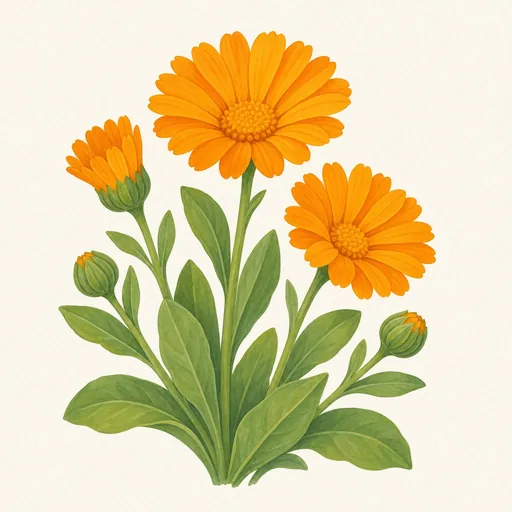
Calendula
Calendula officinalis · Asteraceae
- Start indoors4–6 weeks before the last frostFeb 27 – Mar 19
- Sow outdoorsFrom 2 weeks before to 2 weeks after the last frostMar 27 – Apr 30
- Plant outFrom the last frost until 2 weeks afterApr 10 – Apr 30
- Plant in autumn6–8 weeks before the first autumn frostAug 30 – Sep 19
- Space20–30 cm (8–12 in) apart
- Bloom45–60 days after plantingMay 25 – Jul 20
Description
Calendula officinalis, commonly called calendula or pot marigold, is a flowering plant in the daisy family. It is usually grown as an annual, though it may survive as a short-lived perennial where winters are mild. Bushy plants typically reach 30–60 cm tall. Their slightly sticky, branching stems carry soft, oblong green leaves, and their daisy-like flower heads are usually yellow or orange. Some cultivated varieties have cream, apricot, or unusually dark-centered blooms. Each flower head consists of many narrow ray florets surrounding a central disc.
Calendula is widely grown in gardens and containers for its long flowering season. In cool conditions, plants can bloom from spring into autumn; in hot climates, flowering may slow during the height of summer. Give plants full sun, or light afternoon shade where summers are intense, and well-drained soil. Water during dry spells, but avoid keeping the roots constantly wet. Removing spent flower heads encourages further blooms, while leaving a few to mature provides seeds for the following season. Calendula often self-sows readily.
Sow seeds directly outdoors after the risk of hard frost has passed, or start them indoors for earlier flowers. In regions with mild winters, autumn sowing can produce spring blooms. Seedlings are easy to thin or transplant while small. Aphids and powdery mildew can occasionally affect plants, particularly when growth is crowded or air circulation is poor. Bees and other pollinators visit the flowers.
The brightly colored ray florets are sometimes used as an edible garnish or to color foods, provided the flowers have not been treated with unsuitable pesticides. Calendula also has a long history of use in skin preparations, but such products should not replace medical treatment. Despite its common name, pot marigold is not the same plant as the marigolds in the genus Tagetes.
Growing Conditions
30–60 cm (12–24 in) tall, 30–45 cm (12–18 in) wide
- Smallest
- Largest
Full sun, 4+ hours
Tolerates part sun
Moderate
Keep evenly moist, not soggy.
Ideal 10–24 °C (50–75 °F)
Survives down to −5 °C (23 °F).
pH 6–7.5 · neutral
Where it Grows
Planting
When to Plant
Calendula is a cool-season annual, so plant it when the weather is mild rather than at the height of summer. In most climates, sow seeds outdoors in early spring, as soon as the soil is workable, around the average last frost date. Established seedlings can handle a light frost, but protect young plants if a hard freeze is forecast. If you want to start seeds indoors, sow them about four to six weeks before the last frost and move the plants outside once severe freezes are unlikely.
In regions with hot summers, an early spring sowing gives calendula time to flower before heat slows it down. You can sow again in late summer for autumn blooms, allowing roughly six to eight weeks before the first expected frost. Where winters are mild, autumn sowing often produces flowers through winter or early spring. Seeds germinate best in cool to moderate soil, roughly 60–70°F (16–21°C).
How to Plant
Direct sowing is usually the simplest way to grow calendula. Choose a spot with full sun, or afternoon shade where summers are hot. Loosen the top few inches of soil and remove weeds. The soil should drain well; mix in a little compost if it is poor, but avoid heavy feeding, which can encourage leaves at the expense of flowers.
Sow seeds about ¼ inch (6 mm) deep and 2–3 inches (5–8 cm) apart. Cover them lightly with soil and water gently so they stay in place. Keep the soil evenly moist, not soggy, while the seeds germinate, usually within one to two weeks. Once seedlings have several true leaves, thin them to about 8–12 inches (20–30 cm) apart to give each plant room and airflow. Water at the base when the soil begins to dry; established plants usually need less attention than new seedlings.
If starting indoors, use individual pots or cells filled with seed-starting mix. Harden off seedlings by gradually exposing them to outdoor conditions for about a week before transplanting. Set them at the same depth they grew in their pots, and water them in. Calendula also grows in containers with drainage holes; use potting mix and keep it watered consistently.
Growth Timeline
- Germination 5–14 days
- Seedlings indoors 2–7 weeks
- Growing in the garden 45–60 days
- In bloom 12–20 weeks
Planting Calendar
- Start seeds indoors: 4–6 weeks before the last frost
- Sow outdoors: from 2 weeks before to 2 weeks after the last frost
- Plant outdoors: from the last frost until 2 weeks after
- Autumn planting: 6–8 weeks before the first autumn frost
- Germination: 5–14 days
- Start indoors: Feb 27 – Mar 19
- Sow outdoors: Mar 27 – Apr 30
- Plant out: Apr 10 – Apr 30
- Autumn planting: Aug 30 – Sep 19
- Bloom: May 25 – Jul 20
Care
Care Calendar
- Thin · Mar 20 – Apr 30
Thin seedlings to about 8–12 inches apart once they have true leaves. - Deadhead · Apr 24 – Oct 1
Remove spent flowers regularly to encourage more blooms.
Watering
Water calendula when the top inch (2–3 cm) of soil feels dry. Give the soil a thorough soak rather than frequent light sprinkles, then let excess water drain away. Established plants in the ground often need about 1 inch (2.5 cm) of water per week from rain and irrigation combined, but adjust for heat, soil type, and rainfall. Container plants dry out faster and may need checking daily in warm weather. Water at the base of the plants if possible: keeping leaves dry helps limit fungal diseases. Morning watering gives any splashed foliage time to dry. Avoid consistently soggy soil, which can damage roots, but do not let young seedlings dry out while they become established. Calendula often grows best in cool weather; during hot spells, steady moisture can reduce stress, though watering alone may not prevent flowering from slowing.
Pruning
Remove spent flower heads regularly to encourage calendula to keep producing blooms instead of putting its energy into seeds. Pinch or snip each fading flower just above a leaf or side shoot; harvesting fresh flowers serves the same purpose. Check plants every few days during peak flowering, since blooms can fade quickly. If stems become long and untidy, trim them back modestly to healthy leafy growth to encourage a bushier shape. Remove yellowing, diseased, or damaged leaves as you find them, and discard visibly diseased material rather than leaving it beneath the plants. Use clean scissors when cutting stems, especially if disease is present. Toward the end of the season, stop deadheading a few healthy blooms if you want the plant to set seed for collection or self-sowing. Heavy pruning is unnecessary for this annual, and severely cutting back a stressed plant may slow its recovery.
Weeding
Keep the area around young calendula plants free of weeds, which compete for light, water, and nutrients while seedlings are getting established. Hand-pull weeds when the soil is slightly moist so their roots come out more easily. Work gently near calendula stems to avoid disturbing their roots, and use a shallow hoe only where you can clearly see the plant bases. Remove weeds before they flower and set seed; a short, regular check is usually easier than clearing a crowded bed later. As calendula fills out, its foliage shades some of the soil, but continue removing vigorous weeds that grow through it. Do not leave pulled weeds bearing mature seeds on the bed. In containers, remove volunteer seedlings that crowd the calendula unless you intend to keep them. A light layer of mulch can reduce new weed growth after the soil has been cleared.
Mulching
Apply a thin layer of organic mulch, such as shredded leaves, fine bark, or clean straw, around calendula once seedlings are established. About 1–2 inches (2.5–5 cm) is usually enough to slow weeds and help the soil retain moisture. Leave a small gap around each stem rather than piling mulch against it, which can hold moisture at the plant base. Keep the layer loose so water can reach the soil. In hot weather, mulch can help moderate soil temperatures, but calendula still needs well-drained ground; do not use a thick, wet layer where soil is already slow to dry. For direct-sown seed, wait until seedlings are visible and large enough not to be buried. Refresh mulch only as it breaks down or becomes patchy. In pots, a very thin layer is sufficient, and it should not make it harder to judge when the potting mix needs water.
Fertilizing
Calendula generally flowers well without much fertilizer, especially in reasonably fertile garden soil. Before planting, mixing in a modest amount of finished compost can improve soil structure and provide nutrients. Avoid generous applications of high-nitrogen fertilizer: these can encourage leafy growth at the expense of flowers. If plants are growing steadily and blooming, there is no need to feed them on a schedule. In nutrient-poor soil or containers, use a balanced fertilizer at the label rate if growth becomes weak or leaves turn pale, after first checking that watering and drainage are suitable. Container plants may need occasional feeding because nutrients wash out during regular watering. Apply fertilizer to moist soil, following the product instructions, and avoid getting concentrated fertilizer on leaves or stems. More fertilizer will not necessarily revive calendula that has slowed flowering in summer heat; cooler conditions often help more.
Pest Management
Inspect calendula regularly, especially the undersides of leaves and tender new growth. Aphids may gather on stems and buds; a firm spray of water can dislodge small colonies, while repeated hand removal can help keep them under control. Slugs and snails may chew young plants, so check around seedlings and remove hiding places or use a control product labeled for the site if damage is persistent. Good spacing and watering at soil level improve airflow and help reduce powdery mildew and other leaf problems. Remove heavily affected leaves, but avoid stripping a plant bare. Calendula flowers attract pollinators and other beneficial insects, so tolerate minor cosmetic damage and avoid broad-spectrum sprays when possible. If treatment is needed, identify the pest first, choose a product labeled for it, and follow the directions. For flowers intended for eating, check that any treatment is approved for edible crops.
Harvesting
Pick calendula flowers when they are fully open and fresh, before their petals begin to fade or the centers start forming seed. Harvest on a dry morning after dew has evaporated, using clean fingers or scissors to remove the flower heads or cut stems for a vase. Check plants every few days during active flowering: frequent picking encourages more blooms. For culinary use, take flowers only from plants you know have not been treated with products unsuitable for edible crops. Rinse if needed and dry them gently; the petals can be used fresh or dried. To dry flower heads or petals, spread them in a single layer in a shaded, well-ventilated place until thoroughly dry, then store them in an airtight container away from light and moisture. If you want seeds, leave some blooms unpicked until the seed heads dry on the plant.
Growing in Containers
Grows well in a pot of at least 5 litres (1.3 US gallons), with drainage holes. Best kept outdoors.
Propagation
From seed
- Sow seeds outdoors after the last frost, or start them indoors about six weeks earlier.
- Cover seeds with about 6 mm (¼ inch) of soil.
- Keep the soil evenly moist until seedlings emerge.
- Thin or transplant seedlings to about 20–30 cm (8–12 inches) apart.
Companion Plants
Good neighbors
- Tomato: Calendula flowers attract hoverflies and other beneficial insects that help control aphids around tomato plants.
- Cabbage: Calendula attracts beneficial insects that prey on aphids and other cabbage pests.
- Cucumber: Calendula flowers attract bees that can help pollinate nearby cucumber flowers.
Common Problems
- Yellowing leaves
- Sticky residue on leaves
- Black sooty coating
- Curled or cupped leaves
Aphids are small, soft-bodied insects that feed by piercing plants and drawing out sap. The group includes many…
- White powdery coating
- Yellowing leaves
- Curled or cupped leaves
- Distorted new growth
Powdery mildew is a group of fungal diseases, not a single species. Different fungi infect different hosts, including…
- Holes in leaves
- Slime trails
- Stems chewed or cut through
Slugs and snails are soft-bodied mollusks that feed on many garden plants. Snails carry a visible shell; most slugs…
- Spots on leaves
- Yellowing leaves
- Leaves dropping
Fungal leaf spot is a general name for diseases caused by many different fungi, not a single species. These fungi…
- Powdery mildew: White, powdery growth on leaves, especially when plants are crowded. Improve airflow and avoid wetting the foliage.
- Aphids: Clusters of small insects can distort tender shoots and buds. Wash them off with a firm spray of water.
- Slugs and snails: These may eat young plants, particularly in damp weather.
- Root rot: Soggy soil can cause yellowing and wilting. Grow calendula in well-drained soil and avoid overwatering.
- Reduced flowering in heat: Calendula is a cool-season flower and may bloom less during hot weather. Deadheading helps prolong flowering when conditions are suitable.
Varieties
This mix produces large flowers in shades of yellow, orange, and apricot.
- mixed colors
- long stems
Its full, vivid orange flowers are a classic garden choice.
- bright orange
- double flowers
Narrow, rolled petals give its flowers a distinctive spiky look.
- orange
- quilled petals
Its orange flowers show contrasting dark reddish-brown petal undersides.
- orange
- dark petal backs
Its softly colored blooms often have darker pink petal backs.
- apricot-pink
- double flowers
This variety is commonly grown for harvesting calendula flowers.
- resin-rich
- yellow-orange
Pale buff flowers reveal red on the undersides of their petals.
- buff-colored
- red petal backs
More about varieties
- ‘Orange King’: A classic cultivar with large, bright orange blooms.
- ‘Pacific Beauty’: A commonly sold mix with large flowers in shades of yellow and orange.
- ‘Bon Bon’: A compact series with double flowers, suited to containers and borders.
- ‘Radio’: Noted for its narrow, quilled orange petals.
- ‘Indian Prince’: Orange petals with darker undersides give the flowers a two-toned look.
Health Benefits
Calendula (Calendula officinalis) has a long history of use in skin-care preparations. Its flower heads are infused into oils or used in creams and ointments for dry, irritated skin. Some small studies suggest calendula preparations may help soothe inflammation or support healing of minor skin injuries, but the evidence is limited and depends on the product and condition. It should not replace proper cleaning, dressings, or medical care for a wound.
Calendula is also found in lip balms and other moisturizers. Flower petals are sometimes brewed as tea or added to food for color, but claims that drinking calendula tea improves immunity, digestion, or other health conditions are not well established.
Use only products intended for the relevant purpose: a cosmetic cream is not necessarily safe to eat, and home-infused oils can spoil if prepared or stored improperly. Calendula may cause a reaction in people sensitive to plants in the daisy family (Asteraceae), including ragweed and chamomile. Try a small amount on intact skin first and stop using it if irritation develops. Seek medical advice for deep, infected, or slow-healing wounds. Because safety information is limited, pregnant or breastfeeding people should ask a healthcare professional before using calendula medicinally.
Fun Facts
- Calendula is often called pot marigold, but it is not a true marigold of the genus Tagetes.
- Its petals are edible and have traditionally been used to add color to dishes, earning it the nickname “poor man’s saffron.”
- The flowers tend to open in sunlight and close in dim light.
- Calendula readily self-seeds when spent flower heads are left on the plant.
- Its name is linked to the Latin calendae, the first day of the month, reflecting its long flowering season in suitable climates.
Notice an error or have a question about Calendula? Contact us