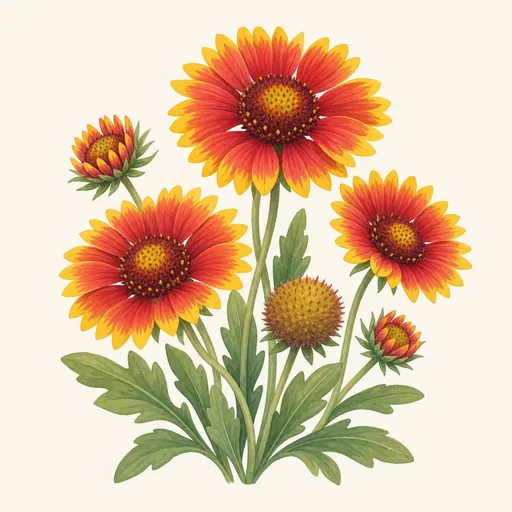
Blanket Flower
Gaillardia · Asteraceae
- Start indoors6–8 weeks before the last frostFeb 13 – Mar 5
- Sow outdoorsFrom the last frost until 2 weeks afterApr 10 – Apr 30
- Plant outFrom the last frost until 2 weeks afterApr 10 – Apr 30
- Plant in autumn6–8 weeks before the first autumn frostAug 30 – Sep 19
- Space30–45 cm (12–18 in) apart
- Bloom90–120 days after plantingJul 9 – Sep 18
Description
Blanket flower is the common name for Gaillardia, a genus of cheerful, daisy-like flowers in the sunflower family. Garden plants include annual species, short-lived perennials, and hybrids. Their blooms typically have a raised central disk surrounded by petals in shades of yellow, orange, red, or burgundy. Many varieties have two-toned petals, with red near the center and yellow at the tips. The vivid pattern gives the flower its common name.
Plants form leafy clumps with upright stems that hold the flowers above the foliage. Depending on the species and variety, they may grow from about 20 to 90 cm tall. Leaves are usually green, slightly hairy, and lance-shaped or lobed. Flowers appear mainly from late spring or early summer into autumn, often continuing for months if spent blooms are removed. Bees, butterflies, and other pollinators visit them, and mature seed heads may attract birds.
Blanket flowers grow best in full sun and well-drained soil. Once established, many tolerate heat, dry spells, and relatively poor soil better than they tolerate consistently wet ground. Water new plants regularly while their roots develop, then let the soil dry somewhat between waterings. Heavy feeding is generally unnecessary and can encourage leafy growth at the expense of flowers. Removing faded blooms keeps plants tidy and can prolong flowering; leaving a few seed heads allows seeds to develop.
These flowers suit borders, meadow-style plantings, containers, and sunny areas where their long flowering season adds color. Gardeners can start them from seed or buy young plants. Perennial types may be short-lived, particularly in damp winter soil, but some varieties self-seed. Their precise size, flower colors, and cold tolerance depend on the species or cultivar.
Growing Conditions
30–90 cm (1–3 ft) tall, 30–60 cm (12–24 in) wide
- Smallest
- Largest
Full sun, 6+ hours
Low
Let the soil dry out between waterings.
Ideal 18–27 °C (64–81 °F)
Survives down to −40 °C (−40 °F).
pH 6–7.5 · acidic to neutral to alkaline
Where it Grows
Planting
When to Plant
Plant blanket flower (Gaillardia) in spring, after the last expected frost, when the ground is workable. This gives young plants a growing season to establish before winter. In mild climates, you can also plant nursery-grown perennials in early fall, allowing at least six weeks before a hard freeze. Avoid planting during extreme summer heat, especially if you cannot water regularly while roots establish.
To grow blanket flower from seed, start seeds indoors about six to eight weeks before your last expected frost, then move seedlings outdoors after frost danger has passed. You can also sow seeds directly outside after the last frost, once the soil has begun to warm. The timing matters most for young plants: established blanket flowers tolerate heat and dry spells, but seedlings need more consistent moisture. If your garden soil stays soggy in winter, wait until spring rather than planting in fall.
How to Plant
Choose a spot with at least six hours of direct sun each day. Blanket flower grows best in well-drained soil and generally does not need rich compost or fertilizer. If your soil is heavy clay or stays wet after rain, use a raised bed or another better-drained site; constantly damp roots can rot.
For a nursery plant, dig a hole about as deep as its root ball and twice as wide. Gently loosen any roots circling the pot, set the plant so the top of the root ball is level with the surrounding soil, then backfill and water thoroughly. Space plants about 12 to 18 inches apart, or follow the spacing on the cultivar label. A thin layer of mulch can limit weeds, but keep it clear of the plant’s crown.
For seeds, loosen and level the soil, press the seeds onto the surface, and cover them only very lightly with soil. Keep the seedbed gently moist until seedlings emerge. Thin seedlings to their final spacing once they are large enough to handle. Water new transplants and seedlings regularly until established, letting the soil surface dry somewhat between waterings. After that, water mainly during prolonged dry weather.
Growth Timeline
- Germination 10–20 days
- Seedlings indoors 3–8 weeks
- Growing in the garden 90–120 days
- In bloom 12–20 weeks
Planting Calendar
- Start seeds indoors: 6–8 weeks before the last frost
- Sow outdoors: from the last frost until 2 weeks after
- Plant outdoors: from the last frost until 2 weeks after
- Autumn planting: 6–8 weeks before the first autumn frost
- Germination: 10–20 days
- Start indoors: Feb 13 – Mar 5
- Sow outdoors: Apr 10 – Apr 30
- Plant out: Apr 10 – Apr 30
- Autumn planting: Aug 30 – Sep 19
- Bloom: Jul 9 – Sep 18
Care
Care Calendar
- Prune · Mar 13 – Apr 30
Cut back dead stems and leaves before new growth fills in. - Divide · Mar 27 – May 7
Divide crowded perennial clumps every two to three years and replant promptly. - Deadhead · Jun 7 – Oct 24
Remove faded flowers regularly to encourage more blooms.
Watering
Water newly planted blanket flowers (Gaillardia) deeply when the top inch of soil feels dry. During establishment, check them regularly rather than watering on a fixed schedule; heat, rainfall, and soil type make a difference. Once established in the ground, they usually need little supplemental water. Give them a thorough soak during prolonged dry spells, then let the soil dry between waterings. Blanket flowers tolerate drought far better than soggy roots, so plant them in well-drained soil and avoid keeping the crown constantly damp. Water at soil level when possible, especially in humid weather, to keep foliage drier. Containers dry out faster than garden beds: check their soil more often and water until excess drains from the bottom. Never leave pots standing in water. Yellowing leaves or wilting in persistently wet soil may signal overwatering or poor drainage, not thirst.
Pruning
Remove spent flower heads regularly if you want a tidier plant and continued flowering. Snip each fading bloom back to a leaf or branching stem with clean scissors or pruners. Deadheading is optional: leaving some late-season heads provides seeds for birds and allows seed collection. If stems become floppy or flowering slows in midsummer, lightly shear the plant back by about one-third; new growth may produce another flush of blooms. Avoid cutting into the low crown or removing all healthy foliage at once. Take out broken, dead, or diseased stems whenever you notice them, and discard diseased material rather than composting it. For perennial blanket flowers, leave sound basal growth through winter where it helps protect the crown, then clear away dead stems in early spring. Short-lived perennial types may not return every year, even with careful pruning.
Weeding
Keep the area around young blanket flowers free of weeds while their roots establish. Pull or hoe small weeds before they flower and set seed, taking care not to disturb the blanket flower’s shallow roots or basal crown. Hand-pulling is especially useful close to the plant; loosen stubborn weeds when the soil is slightly moist so their roots come out more completely. Once blanket flowers fill out, continue checking for weeds that crowd their stems or block light and airflow. Remove aggressive grasses and perennial weeds promptly, since they compete for water and nutrients and can be harder to extract later. A thin mulch layer can reduce new weeds, but leave the crown exposed. Avoid frequent deep cultivation, which damages roots and may bring buried weed seeds to the surface. Remove weeds from the bed before planting if possible; prevention is easier than clearing a crowded planting afterward.
Mulching
Use mulch sparingly around blanket flowers. They prefer well-drained conditions, and a thick, damp layer against the crown can encourage rot, especially in humid climates or heavy soil. After planting, spread a thin layer of coarse organic mulch, such as shredded bark, over bare soil to limit weeds and slow evaporation. Keep it a few inches away from the stems and basal leaves. Where winters are wet, gravel or other mineral mulch can be a better choice if the underlying soil drains well; mulch cannot fix waterlogged ground. Do not pile on extra mulch each year without checking how much remains. In colder areas, a light winter covering may help moderate temperature swings, but avoid smothering the crown and pull excess material back in spring. Good drainage and open air around the plant matter more to blanket flowers than a deep mulch layer.
Fertilizing
Blanket flowers generally bloom best in lean to moderately fertile, well-drained soil. They usually need no fertilizer in a garden bed, particularly if the plants are growing and flowering well. Too much nitrogen can produce lush, floppy leaves at the expense of flowers. If your soil is very poor or growth is weak, work a modest amount of compost into the bed before planting, or apply a light top-dressing in spring without burying the crown. Avoid repeated heavy feedings. Plants in containers lose nutrients more quickly than those in the ground; if a potted blanket flower becomes pale or grows poorly despite appropriate light and watering, use a balanced fertilizer at the label rate during active growth. Do not fertilize a plant that is struggling in soggy soil: correct drainage first. A soil test can help identify a genuine nutrient deficiency before you add fertilizer.
Pest Management
Blanket flowers are usually fairly trouble-free, but check new growth and leaf undersides for aphids and watch for powdery mildew or other leaf spots. A strong stream of water can dislodge small aphid colonies; repeat as needed without soaking the soil excessively. For persistent infestations, use insecticidal soap according to its label, treating affected foliage while avoiding open flowers and active pollinators. Space plants for airflow, water at the soil rather than over the leaves, and remove badly affected debris. Well-drained soil is essential: persistent moisture around the crown can lead to root or crown rot. Occasionally, aster yellows causes distorted, yellowing growth and abnormal flowers. There is no cure; remove affected plants rather than trying to prune away symptoms. Inspect plants regularly so you can respond early, and avoid broad-spectrum insecticides that may harm the bees and butterflies visiting the blooms.
Harvesting
For cut flowers, harvest blanket flower blooms when they have opened and their petals look fresh. Cut stems in the cool of morning with clean, sharp snips, leaving enough foliage on the plant for continued growth. Put the stems straight into clean water, remove any leaves that would sit below the waterline, and change the vase water regularly. Deadhead other fading blooms to encourage more flowers. To collect seeds, leave selected flower heads on the plant until they are dry and brown. Cut the heads on a dry day, let them finish drying somewhere airy, then separate the seeds and store them in a labeled paper packet in a cool, dry place. Handle the dry heads carefully; their stiff parts can be prickly. Seeds from hybrid cultivars may not grow into plants identical to the parent. Leave a few seed heads outdoors if you want birds to feed on them.
Growing in Containers
Grows well in a pot of at least 10 litres (2.6 US gallons), with drainage holes. Best kept outdoors.
Propagation
From seed
- Sow seeds indoors in spring or outdoors after the last frost.
- Press seeds onto moist seed-starting mix and cover only lightly.
- Keep the mix lightly moist until seedlings emerge.
- Transplant seedlings into full sun and well-drained soil.
By division
- Lift an established perennial clump in early spring.
- Separate it into sections with roots and healthy shoots.
- Replant the sections promptly in well-drained soil.
- Water them in and keep the soil lightly moist until established.
Companion Plants
Good neighbors
- Coneflower: Both are commonly grown together in sunny, well-drained perennial borders and attract pollinators.
- Black-eyed Susan: Its similar preference for full sun and well-drained soil makes it a common partner in summer flower beds.
- Tickseed: Both thrive in sunny, relatively dry borders and provide a long season of flowers.
Common Problems
- Yellowing leaves
- Sticky residue on leaves
- Black sooty coating
- Curled or cupped leaves
Aphids are small, soft-bodied insects that feed by piercing plants and drawing out sap. The group includes many…
- Spots on leaves
- Yellowing leaves
- Leaves dropping
Fungal leaf spot is a general name for diseases caused by many different fungi, not a single species. These fungi…
- White powdery coating
- Yellowing leaves
- Curled or cupped leaves
- Distorted new growth
Powdery mildew is a group of fungal diseases, not a single species. Different fungi infect different hosts, including…
- Yellowing leaves
- Wilting
- Stunted growth
- Leaves dropping
Root rot is a general name for the decay of plant roots, not a single disease with one scientific name. It can result…
- Root rot: Soil that stays wet can cause wilting and plant loss. Grow blanket flowers in well-drained soil and avoid overwatering.
- Powdery mildew and leaf spot: Fungal diseases can affect foliage, especially where air circulation is poor. Space plants well and avoid wetting the leaves when watering.
- Aster yellows: This disease can cause distorted, greenish flowers and stunted growth. Remove affected plants; there is no cure.
- Aphids: These small insects may gather on tender growth. A firm spray of water can dislodge them.
Varieties
Its red flowers have bright yellow tips on compact plants.
- compact
- red and yellow
- long blooming
This compact selection bears flowers in shades of red.
- compact
- red
- long blooming
It produces solid golden-yellow flowers on sturdy stems.
- yellow
- upright
- long blooming
Its peach-colored flowers have yellow edges.
- peach
- upright
- long blooming
Also sold as 'Kobold', it forms a low mound of red flowers tipped with yellow.
- dwarf
- red and yellow
- spreading
Its wine-red flowers rise on relatively tall stems.
- deep red
- tall
- cut flower
Its flared, trumpet-shaped petals give the flowers an unusual look.
- trumpet-shaped petals
- red and yellow
- compact
More about varieties
- ‘Arizona Sun’ (Gaillardia × grandiflora): Compact, with red flowers tipped in yellow.
- ‘Goblin’ (G. × grandiflora): A low-growing selection with red-and-yellow blooms.
- ‘Mesa Yellow’ (G. × grandiflora): Produces abundant solid-yellow flowers on sturdy stems.
- ‘Burgundy’ (G. × grandiflora): Known for its deep wine-red flowers.
- ‘Sundance Bicolor’ (G. pulchella): A compact selection with double, red-and-yellow blooms.
Fun Facts
- Blanket flower gets its common name from the bold patterns and colors of its petals, which resemble woven blankets.
- Its flowers attract bees and butterflies.
- The rounded seed heads can provide food for seed-eating birds, including finches.
- Many blanket flowers bloom for months, particularly if spent flowers are removed.
- Although some types are perennial, they can be short-lived and may reseed in suitable conditions.
Notice an error or have a question about Blanket Flower? Contact us