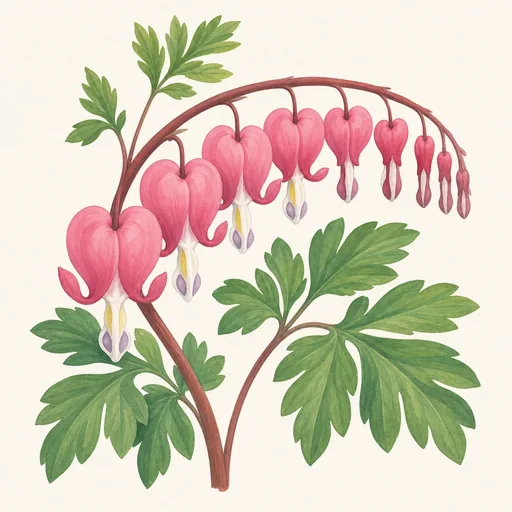
Bleeding Heart
Lamprocapnos spectabilis · Papaveraceae
- Plant outFrom 4 weeks before the last frost until the last frostMar 13 – Apr 16
- Plant in autumn4–6 weeks before the first autumn frostSep 13 – Oct 3
- Space60–90 cm (2–3 ft) apart
Description
Bleeding heart is a herbaceous perennial prized for its graceful, arching stems and rows of dangling, heart-shaped flowers. Its best-known form has rosy-pink outer petals and white inner petals that protrude beneath each bloom, creating the appearance of a tiny drop. White-flowered cultivars are also popular. The finely divided, soft green leaves form a bushy mound that provides a delicate backdrop for the flowers.
Plants typically reach 60–90 cm (2–3 ft) tall and bloom in spring to early summer, depending on the climate. After flowering, the foliage often turns yellow and dies back, especially during hot or dry weather. This is normal summer dormancy, not necessarily a sign that the plant has died. Marking its position can help prevent accidental digging once the leaves disappear.
Bleeding heart grows best in partial shade, in fertile, well-drained soil that stays evenly moist during active growth. It appreciates shelter from strong afternoon sun and drying winds. A layer of mulch helps keep its roots cool, but persistently waterlogged soil can cause problems. In cooler climates it may tolerate more sun if the soil remains moist. It suits woodland gardens, shaded borders, and planting beneath deciduous trees, where it receives spring light before the canopy fills in.
Established clumps can live for many years with little disturbance. Plants may be propagated by careful division while dormant or from seed, although seedlings can take time to flower. The stems are somewhat brittle, so choose a spot where they will not be brushed or knocked frequently. All parts should be treated as toxic if eaten, and handling the plant may irritate sensitive skin. Despite its fragile appearance, it is generally hardy in temperate gardens when given suitable shade and moisture.
Growing Conditions
60–90 cm (2–3 ft) tall, 60–90 cm (2–3 ft) wide
- Smallest
- Largest
Part shade
Tolerates part sun, full shade
Moderate
Keep evenly moist, not soggy.
Ideal 10–24 °C (50–75 °F)
Survives down to −40 °C (−40 °F).
acidic to neutral
Where it Grows
Planting
When to Plant
Plant bleeding heart (Lamprocapnos spectabilis) in early spring, while the plant is dormant or just beginning to grow. The soil should be workable rather than frozen or waterlogged. This is usually the best time to plant bare roots: they can establish before warm weather arrives. Nursery-grown plants can also go in after the last hard frost, although established bleeding hearts tolerate cold well.
Early fall is another good option, especially for container-grown plants. Plant at least four to six weeks before the ground freezes so roots have time to settle in. In regions with hot summers, favor spring or fall over summer: heat and drying soil make establishment harder. Choose a cool, cloudy day if possible, and water promptly after planting. Bleeding heart often dies back and becomes dormant in summer, so the disappearance of its foliage is not a sign that it needs replanting. Mark the spot to avoid disturbing its roots later.
How to Plant
Choose a spot with morning sun and afternoon shade, or light, dappled shade. In cool climates, bleeding heart can take more sun if its soil stays moist. Give it fertile, well-drained soil that holds some moisture; avoid places where water stands after rain. Mix compost into the planting area, but do not add a heavy layer of fertilizer. Allow about 2 to 3 feet (60 to 90 cm) between plants so their arching stems have room to spread.
For a container-grown plant, dig a hole about twice as wide as the pot and no deeper than its root ball. Ease the plant out, gently loosen tightly circling roots, and set it at the same depth it grew in the pot. For a dormant bare root, spread the roots outward with the growing buds facing up, and cover the crown with about 1 inch (2.5 cm) of soil. Backfill gently and water thoroughly to settle the soil.
Keep the soil evenly moist, not soggy, while the plant establishes. Add a thin layer of mulch to conserve moisture, leaving a gap around the crown. Avoid digging near the plant after it goes dormant, since its roots can be damaged.
Planting Calendar
- Plant outdoors: from 4 weeks before the last frost until the last frost
- Autumn planting: 4–6 weeks before the first autumn frost
- Plant out: Mar 13 – Apr 16
- Autumn planting: Sep 13 – Oct 3
Care
Care Calendar
- Mulch · Mar 27 – Apr 30
Apply a thin layer of compost or leaf mulch, keeping it clear of the crown. - Protect · Mar 27 – Apr 30
Cover emerging shoots if a hard freeze is forecast. - Prune · Jun 5 – Aug 6
Cut stems to the ground only after the foliage has yellowed naturally.
Watering
Keep the soil evenly moist while bleeding heart (Lamprocapnos spectabilis) is actively growing, especially during spring flowering. Water deeply when the top inch of soil begins to dry; rainfall may provide enough moisture in cool weather. Newly planted bleeding hearts need more frequent checks until their roots establish. Aim water at the soil rather than the leaves, and make sure excess water can drain away: persistently soggy soil can rot the fleshy roots. A layer of mulch helps keep moisture more consistent. In hot weather, the foliage may yellow and the plant may go dormant. Once it has died back, reduce watering rather than trying to keep the leaves green. Do not let the root area become completely parched for long periods, particularly during the plant’s first year or in a container. Check container soil more often than garden soil, because pots dry faster.
Pruning
Remove faded flower stems if you want a tidier plant, cutting them near their base with clean pruners. Deadheading is optional: it may prevent seedlings, but it will not reliably make the classic bleeding heart bloom again. Leave healthy foliage in place after flowering so it can replenish the roots. As temperatures rise, the leaves often yellow and die back naturally, sometimes by midsummer. Once the foliage is fully yellow or dry, cut it to the ground and clear it away. Avoid cutting green leaves back simply because the flowers have finished. Mark the plant’s location after it disappears; otherwise, it is easy to mistake the empty space for a planting spot and damage the dormant roots. Wear gloves when handling the plant, as its sap can irritate skin. Discard any diseased foliage rather than leaving it around the crown.
Weeding
Keep the area around bleeding heart free of weeds, particularly in spring when the plant is emerging and competing for moisture and nutrients. Pull weeds by hand while the soil is slightly damp, when their roots release more easily. Work gently near the crown: bleeding heart has fleshy roots that can be damaged by deep hoeing or vigorous digging. Remove perennial weeds, including their roots, before planting if possible, because they are harder to extract once the bleeding heart is established. Check the bed again after the plant goes dormant in summer. Its disappearance leaves an open patch where weeds can take hold, and digging there can disturb the dormant plant. A thin layer of organic mulch helps suppress new weeds, but inspect regularly and pull any that grow through it before they set seed. Avoid applying herbicide to weeds close to the plant’s crown or foliage.
Mulching
Spread about 2–3 inches of shredded leaves, leaf mold, or another loose organic mulch over the soil around bleeding heart. Mulch helps the root area stay cool and evenly moist, suppresses weeds, and gradually adds organic matter as it breaks down. Apply it in spring after shoots appear, or renew an existing layer if it has thinned. Keep mulch a few inches away from the crown and emerging stems so moisture does not remain trapped against them. Do not bury the crown beneath a thick mound. In summer, mulch helps protect the roots after the foliage dies back, but the soil must still drain well; mulch cannot correct a waterlogged site. Check the layer occasionally and loosen or replace it if it becomes matted. When adding mulch in fall, remember where the dormant plant sits and avoid scraping or digging into its roots.
Fertilizing
Bleeding heart generally needs little supplemental fertilizer in soil enriched with organic matter. In early spring, top-dress around the plant with a thin layer of finished compost, taking care not to cover the crown or damage emerging shoots. If growth has been weak and the soil is poor, apply a balanced, slow-release fertilizer at the label rate as growth begins, then water it in. Do not assume yellowing foliage in summer signals a nutrient deficiency: natural dormancy is common after flowering, especially in heat. Avoid heavy applications of high-nitrogen fertilizer, which can encourage soft leafy growth without improving flowering. Do not fertilize after the plant has gone dormant. If it grows in a container, its limited soil may need more frequent replenishment; use a modest dose of balanced fertilizer while it is actively growing, following the product directions. Keep fertilizer off stems and leaves.
Pest Management
Inspect new shoots and leaves periodically for aphids, slugs, and snails. Aphids can often be dislodged with a gentle stream of water; repeat as needed, or use insecticidal soap according to its label if an infestation persists. Hand-pick slugs and snails in the evening, and reduce their hiding places near vulnerable spring shoots. Avoid broad-spectrum insecticides when possible, since they can kill insects that help control aphids. Good drainage and space for air circulation also help prevent problems in damp sites. If a stem suddenly wilts, check the soil before treating for pests: waterlogged roots and natural summer dormancy can both affect the plant’s appearance. Remove badly damaged or diseased foliage with clean tools, but leave healthy leaves in place until they die back naturally. Bleeding heart is toxic if eaten, so keep children and pets from chewing any part of the plant.
Growing in Containers
Grows well in a pot of at least 15 litres (4.0 US gallons), with drainage holes. Best kept outdoors.
Propagation
By division
- Divide established clumps in early spring or early fall.
- Lift the clump carefully to avoid breaking its brittle roots.
- Separate it into sections with roots and growing buds.
- Replant the sections promptly at their original depth.
- Water them well.
From seed
- Collect seed when the pods ripen.
- Sow fresh seed in pots outdoors in fall.
- Cover the seed lightly with compost.
- Keep the pots moist and exposed to winter cold.
- Transplant seedlings once they are large enough to handle.
From cuttings
- Take sections of fleshy root while the plant is dormant.
- Cut the roots into pieces about 2–3 inches long.
- Lay the pieces horizontally in moist potting mix.
- Cover them lightly and keep them cool and moist.
- Pot up new plants after shoots and roots develop.
Companion Plants
Good neighbors
- Hostas: Their expanding leaves fill the gap left when bleeding heart goes dormant in summer.
- Ferns: They share bleeding heart’s preference for moist, shaded soil and provide foliage after it fades.
- Astilbes: They thrive in similar moist, partly shaded conditions and flower after bleeding heart’s spring display.
Common Problems
- Yellowing leaves
- Sticky residue on leaves
- Black sooty coating
- Curled or cupped leaves
Aphids are small, soft-bodied insects that feed by piercing plants and drawing out sap. The group includes many…
- Holes in leaves
- Slime trails
- Stems chewed or cut through
Slugs and snails are soft-bodied mollusks that feed on many garden plants. Snails carry a visible shell; most slugs…
- Yellowing leaves
- Wilting
- Stunted growth
- Leaves dropping
Root rot is a general name for the decay of plant roots, not a single disease with one scientific name. It can result…
- Yellowing and dieback: Bleeding heart often goes dormant after flowering, especially in summer heat. This is normal.
- Leaf scorch: Hot afternoon sun or dry soil can brown the foliage early.
- Root or crown rot: Poorly drained, waterlogged soil can cause stems to wilt and collapse.
- Slugs and snails: These may chew holes in tender spring growth.
- Aphids and fungal leaf spots: Aphids can gather on new shoots; damp, crowded foliage can develop spots.
Varieties
Its white heart-shaped blooms brighten a shaded border.
- white flowers
- arching stems
Bright yellow spring foliage contrasts with its pink blooms.
- golden foliage
- pink flowers
Deep red-and-white flowers hang from dark stems.
- red flowers
- dark stems
It pairs white blooms with bright yellow spring foliage.
- white flowers
- golden foliage
Red-and-white blooms stand out against golden foliage.
- red flowers
- golden foliage
More about varieties
- ‘Alba’: A classic white-flowered form with green foliage.
- ‘Gold Heart’: Pink-and-white flowers stand out against golden-yellow foliage.
- ‘Valentine’: Deep red-and-white flowers grow on dark stems.
- ‘White Gold’: White flowers pair with bright yellow foliage.
Fun Facts
- Each dangling flower resembles a little heart with a white drop beneath it.
- Bleeding heart is now classified as Lamprocapnos spectabilis; many older books call it Dicentra spectabilis.
- Despite its delicate appearance, it is a hardy perennial that can return for many years.
- Its summer disappearance can make room for later-growing plants in the same garden bed.
- All parts of the plant are toxic if eaten and can irritate skin.
Notice an error or have a question about Bleeding Heart? Contact us