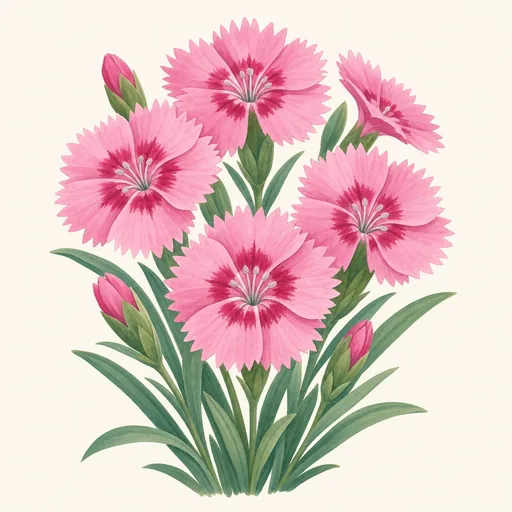
Dianthus
Dianthus · Caryophyllaceae
- Start indoors8–10 weeks before the last frostJan 30 – Feb 19
- Sow outdoorsFrom the last frost until 2 weeks afterApr 10 – Apr 30
- Plant outFrom the last frost until 2 weeks afterApr 10 – Apr 30
- Plant in autumn6–8 weeks before the first autumn frostAug 30 – Sep 19
- Space20–30 cm (8–12 in) apart
- Bloom90–120 days after plantingJul 9 – Sep 18
Description
Dianthus is a genus of flowering plants in the carnation family (Caryophyllaceae). It includes carnations, garden pinks, and sweet Williams. Most species are native to Europe and Asia, with some occurring in North Africa. Depending on the species, they grow as compact annuals, biennials, or perennials. Plants typically form clumps of narrow, opposite, blue-green to gray-green leaves. Slender stems carry single flowers or small clusters above the foliage, from a few inches tall in rock-garden varieties to about two feet in taller carnations and sweet Williams.
Single flowers generally have five petals with fringed or notched edges, giving many pinks their delicate, lacy appearance. Double-flowered cultivars have additional petals. Colors include white, pink, red, and purple, sometimes with contrasting centers or patterned markings. Many varieties have a spicy, clove-like fragrance, though scent varies by species and cultivar. Blooming often begins in late spring or early summer; some cultivated selections flower again if spent blooms are removed. Bees and butterflies visit the flowers, and carnations are widely grown for cut stems.
In gardens, Dianthus generally performs best in full sun and well-drained soil. Good air circulation and moderate watering help prevent crown rot and fungal problems, particularly in humid conditions. Many perennial pinks tolerate dry spells once established, but hardiness differs among species and cultivars. Removing faded flowers can prolong the display, while trimming untidy growth helps compact types retain their shape. Plants can be propagated from seed, cuttings, or division, depending on the variety. Gardeners use low-growing kinds as edging or in containers and rock gardens; taller types fit mixed borders and cutting beds. Their tidy foliage and vivid flowers also make them useful in small spaces.
Growing Conditions
15–60 cm (6–24 in) tall, 20–45 cm (8–18 in) wide
- Smallest
- Largest
Full sun, 4+ hours
Tolerates part sun
Moderate
Keep evenly moist, not soggy.
Ideal 10–24 °C (50–75 °F)
Survives down to −34 °C (−29 °F).
pH 6.5–8 · neutral to alkaline
Where it Grows
Planting
When to Plant
The right planting time depends on the type of Dianthus and your climate. Plant hardy perennial Dianthus in early spring, once the soil is workable, or in early autumn, allowing about six weeks for roots to establish before the ground freezes. In regions with mild winters, autumn planting often gives perennials a head start before summer heat. Set out annual types after the last expected spring frost, unless the plant label says they tolerate an earlier planting. You can start Dianthus seeds indoors about six to eight weeks before the last frost, then harden off the seedlings before moving them outside. For direct sowing, follow the seed packet’s temperature guidance; spring sowing after frost is a reliable choice for many types. Avoid transplanting during hot, dry weather. If you are unsure whether your Dianthus is an annual, biennial, or perennial, check its species or cultivar label before choosing a date.
How to Plant
Choose a site with at least six hours of direct sun and soil that drains freely. Dianthus dislikes roots sitting in wet ground, especially over winter. If your soil is heavy clay, improve drainage or use a raised bed or container with drainage holes. Most types grow well in neutral to slightly alkaline soil; avoid adding lime unless a soil test indicates it is needed.
For a nursery plant, dig a hole about as deep as its root ball and somewhat wider. Gently loosen any circling roots, set the plant at the same depth it grew in its pot, and backfill without burying the crown, where stems meet roots. Space plants according to their mature width on the label; many compact varieties need roughly 6–12 inches (15–30 cm), while larger types need more room for airflow. Water thoroughly after planting. Keep the soil lightly moist while the plant establishes, then water when the upper soil begins to dry. If you mulch, leave a gap around the crown.
For seeds, use a fine, moist seed-starting mix and follow the packet’s sowing-depth instructions; some Dianthus seeds need light to germinate. Keep seedlings bright and well ventilated, and harden off indoor-grown plants gradually before transplanting.
Growth Timeline
- Germination 7–14 days
- Seedlings indoors 6–11 weeks
- Growing in the garden 90–120 days
- In bloom 6–12 weeks
Planting Calendar
- Start seeds indoors: 8–10 weeks before the last frost
- Sow outdoors: from the last frost until 2 weeks after
- Plant outdoors: from the last frost until 2 weeks after
- Autumn planting: 6–8 weeks before the first autumn frost
- Germination: 7–14 days
- Start indoors: Jan 30 – Feb 19
- Sow outdoors: Apr 10 – Apr 30
- Plant out: Apr 10 – Apr 30
- Autumn planting: Aug 30 – Sep 19
- Bloom: Jul 9 – Sep 18
Care
Care Calendar
- Divide · Mar 20 – Apr 30
Divide crowded perennial clumps every few years and replant with the crowns above soil level. - Prune · May 22 – Jul 9
After the main flush, trim spent flower stems while leaving the leafy growth. - Deadhead · Jul 5 – Oct 17
Remove faded flowers regularly to encourage further blooms.
Watering
Water newly planted dianthus regularly until its roots are established, keeping the soil lightly moist rather than soggy. Once established, most garden dianthus tolerate short dry spells and need supplemental water mainly during prolonged heat or drought. Check the soil before watering: if the upper few centimetres are dry, water deeply at the base, then let excess moisture drain away. Plants in containers dry out faster and may need more frequent checks, especially in summer. Avoid a fixed schedule if rain or cool weather has kept the soil moist. Good drainage is essential because consistently wet soil can cause crown and root rot. Water in the morning when possible, and direct water onto the soil rather than repeatedly wetting the leaves and flowers. Do not assume a wilted plant needs more water; check for soggy soil first, since damaged roots can also cause wilting.
Pruning
Remove spent flowers regularly if you want to keep the plant tidy and encourage further blooms. Pinch or cut each faded flower stem back to a set of healthy leaves rather than leaving bare stalks. For many perennial pinks, a light trim after the main flowering flush helps maintain a compact shape and may encourage a smaller second flush. Cut back roughly a third of the leafy growth if the plant has become straggly, but avoid cutting hard into old, leafless, woody stems, which may not regrow. Remove dead or diseased foliage whenever you notice it, using clean tools. Some dianthus, including Sweet William, are often grown as biennials; do not expect pruning to make an aging plant perennial. If you want seeds or self-sown plants, leave a few healthy flower heads to mature instead of deadheading them all.
Weeding
Keep the area around dianthus free of weeds, especially while plants are young. Weeds compete for light, water and nutrients, and dense growth around the base can reduce air circulation. Pull small weeds by hand when the soil is slightly damp, taking care not to disturb dianthus roots or the plant’s crown. Use a hand tool sparingly: shallow cultivation is safer than digging close to established clumps. Remove perennial weeds with as much of their root system as possible before planting, since they are harder to extract later without damaging the dianthus. Inspect beds regularly during the growing season so seedlings can be removed before they set seed. In containers, pull weeds promptly and check that unwanted plants are not blocking drainage holes. A thin, suitable mulch can suppress new weeds, but it should not be piled against the dianthus stems.
Mulching
Mulch can help limit weeds and moderate soil moisture, but apply it carefully around dianthus. These plants generally prefer well-drained conditions, and a thick layer of moisture-holding organic mulch against their stems can encourage crown rot. If mulching a bed, spread a thin layer between plants and leave a clear gap around each crown. Fine gravel or grit is often a useful surface mulch for dianthus in suitable garden soil because it keeps the crown relatively dry and helps prevent soil from splashing onto the foliage. Gravel on the surface will not, however, fix poorly draining soil underneath. In cold areas, a light winter mulch may help protect roots where freeze–thaw cycles are a problem; keep it off the crown and remove any soggy material in spring. Check beneath mulch occasionally for slugs and for soil that remains too wet.
Fertilizing
Dianthus usually flowers best without heavy feeding. Before planting, improve very poor soil with a modest amount of compost, while preserving good drainage. For established plants in garden soil, a light application of a balanced, slow-release fertilizer in spring is generally enough if growth is weak. Follow the product label rather than applying extra fertilizer to force more blooms. Too much nitrogen can produce soft, leafy growth with fewer flowers and may make plants more vulnerable to pests or disease. Container-grown dianthus has a smaller supply of nutrients and may benefit from occasional feeding during active growth with a diluted, balanced liquid fertilizer, following its label. Water dry soil before applying liquid feed to avoid stressing roots. If plants grow well and flower freely, additional fertilizer is unnecessary. Do not keep feeding heavily late in the season merely to stimulate new growth.
Pest Management
Check dianthus regularly, including the undersides of leaves and developing buds. Aphids may cluster on tender growth, while thrips can mark flowers; slugs and snails may damage young plants, and spider mites can become troublesome in hot, dry conditions. Remove small infestations by hand or rinse aphids off with water directed away from the crown. For persistent insects, use a product labelled for the pest and plant, following its directions; avoid spraying open flowers when pollinators are visiting. Encourage good airflow by spacing plants appropriately and removing dead material. Well-drained soil and careful watering are important defenses against crown and root rot. If leaves develop spots or rust-like pustules, remove affected material, avoid overhead watering and dispose of diseased debris rather than leaving it in the bed. Severely rotted plants are unlikely to recover and should be removed.
Harvesting
For cut flowers, harvest dianthus stems in the cool of the morning, when the plants are well hydrated. Choose flowers that are open or beginning to open, depending on how you plan to display them. Cut with clean, sharp snips, place stems promptly in clean water and remove any leaves that would sit below the waterline. Recut the stems and change vase water regularly to help flowers last. Dianthus petals can also be used as an edible garnish, but harvest them only from correctly identified, pesticide-free plants grown for that purpose—not from florist flowers or plants treated with unsuitable chemicals. Wash the petals gently and remove the pale base if it tastes bitter. To collect seed, leave selected flower heads on the plant until their capsules dry, then gather them before seeds spill. Seeds from hybrid cultivars may not produce plants like the parent.
Growing in Containers
Grows well in a pot of at least 3 litres (0.8 US gallons), with drainage holes. Best kept outdoors.
Propagation
From seed
- Sow seeds in seed-starting mix in spring.
- Cover lightly and keep the mix moist.
- Place in bright light after germination.
- Transplant outdoors after frost danger has passed.
From cuttings
- Take short, nonflowering shoots in early summer.
- Remove leaves from the lower half.
- Insert the stems into moist, free-draining rooting mix.
- Keep in bright indirect light until rooted.
- Pot up or plant out the rooted cuttings.
By division
- Lift an established clump in spring or early autumn.
- Separate it into sections with roots and healthy shoots.
- Replant the sections at their original depth.
- Water them in.
Companion Plants
Good neighbors
- Lavender: Both are commonly grown in sunny, well-drained borders and dislike persistently wet soil.
- Creeping thyme: Both suit sunny rock gardens with sharply drained soil.
Common Problems
- Yellowing leaves
- Sticky residue on leaves
- Black sooty coating
- Curled or cupped leaves
Aphids are small, soft-bodied insects that feed by piercing plants and drawing out sap. The group includes many…
- Orange or rust-colored spots
- Spots on leaves
- Yellowing leaves
- Leaves dropping
Rust is a group of plant diseases caused by fungi in the order Pucciniales, not a single species. Different rust fungi…
- Fuzzy gray mold
- Spots on leaves
- Wilting
- Soft or rotting stems
Gray mold, also called Botrytis blight, is a fungal disease caused most commonly by Botrytis cinerea. It affects many…
- Yellowing leaves
- Wilting
- Stunted growth
- Leaves dropping
Fusarium wilt is a soilborne fungal disease that affects many garden crops and ornamentals, including tomatoes, beans…
- Crown and root rot: Often follows waterlogged soil or poor drainage.
- Powdery mildew, rust, and leaf spot: More likely when foliage stays damp or plants are crowded.
- Aphids, thrips, and spider mites: Can damage leaves and flowers, especially during warm, dry weather.
- Slugs and snails: May chew young plants and tender growth.
- Sparse flowering: Too much shade or nitrogen-rich fertilizer can encourage leafy growth instead of blooms.
Varieties
This low-growing perennial forms blue-green mats and blooms heavily in late spring.
- fragrant
- drought tolerant
- magenta flowers
Its narrow blue-green leaves form a spreading mat beneath fringed flowers.
- fragrant
- spreading
- pale pink flowers
This compact selection can flower again after its main spring display.
- compact
- magenta flowers
- reblooming
Often grown as a biennial, it bears dark leaves and clusters of deep red flowers.
- dark foliage
- deep red flowers
Usually grown as an annual, it produces bright flower clusters through warm weather.
- heat tolerant
- bright pink flowers
- long blooming
This hybrid produces fragrant red flower clusters over an extended season.
- fragrant
- red flowers
- long blooming
More about varieties
- Carnation (Dianthus caryophyllus): Grown for large, often fragrant flowers and widely used as a cut flower.
- Sweet William (Dianthus barbatus): Produces dense clusters of small flowers; often grown as a biennial.
- Chinese pink (Dianthus chinensis): A compact plant with colorful, often patterned blooms.
- Garden pink (Dianthus plumarius): Known for fringed petals and a spicy, clove-like scent.
- Maiden pink (Dianthus deltoides): A low-growing species useful at the front of borders or in rock gardens.
Health Benefits
Dianthus is best known for ornamental and sensory uses, not for proven medical benefits. The clove-like fragrance of some pinks and carnations can make a garden or bouquet pleasant and relaxing, but claims that the scent treats anxiety or other conditions are not well established.
Petals from some Dianthus, particularly carnations, are used in small amounts to decorate food or flavor drinks. Use only flowers positively identified as edible and grown without pesticides intended for ornamental plants. Remove the bitter white base of carnation petals, and try a small amount first if you are prone to plant allergies.
In traditional Chinese medicine, the aerial parts of Dianthus superbus and Dianthus chinensis are known as qu mai. They have traditionally been used to promote urination and menstrual flow. These are traditional uses, not evidence that the plants safely or effectively treat urinary or menstrual conditions; good-quality human research is limited. Medicinal use should not be confused with eating a few petals as a garnish. Avoid medicinal Dianthus preparations during pregnancy, and consult a healthcare professional before using them, especially if you take medication or have a kidney or urinary condition.
Fun Facts
- The name Dianthus comes from Greek words commonly translated as “divine flower.”
- Many garden pinks have petals with notched edges that look as though they were cut with pinking shears.
- Despite its name, Sweet William can flower in red, white, purple, and mixed colors—not just pink.
- Carnations are traditionally associated with the month of January as a birth flower.
Notice an error or have a question about Dianthus? Contact us