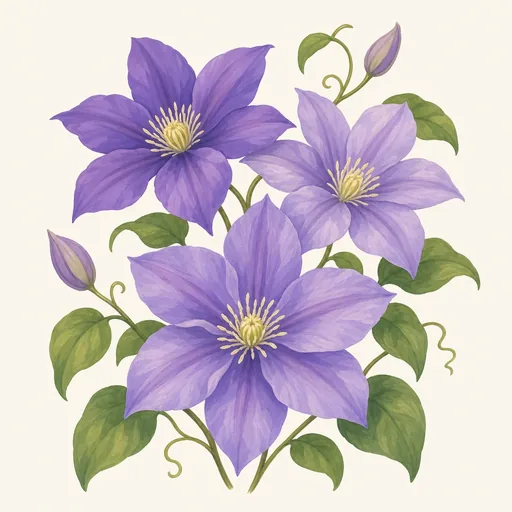
Clematis
Clematis · Ranunculaceae
- Plant outFrom 4 weeks before to 4 weeks after the last frostMar 13 – May 14
- Plant in autumn6–8 weeks before the first autumn frostAug 30 – Sep 19
- Space0.9–1.5 m (3–5 ft) apart
Description
Clematis is a diverse genus of flowering vines belonging to the buttercup family (Ranunculaceae). It encompasses about 300 species, many of which are popular among gardeners for their stunning flowers and vigorous growth. These perennial climbers are native to various regions across Europe, Asia, and North America, adapting well to a range of climates.
Clematis plants are characterized by their climbing habit, which they achieve through twining leaf stalks, allowing them to scale trellises, arbors, and fences. They produce an impressive array of flowers in various shapes, sizes, and colors, including deep purples, vibrant reds, soft blues, and whites. Blooms can be single or double and often appear from late spring to early fall, depending on the species.
The plant’s growth requirements vary, but most clematis prefer well-drained soil and thrive in full sun to partial shade. They generally need a support structure to climb but can also be grown as ground cover for low-growing varieties. Pruning is crucial for maintaining healthy growth and abundant flowering, with different species requiring distinct pruning techniques.
Clematis is also appreciated for its ability to attract pollinators like bees and butterflies. It offers year-round interest, thanks to its lush foliage and striking blooms. With proper care, clematis can establish itself and bloom year after year, making it a cherished addition to any garden or landscape.
Growing Conditions
1.8–3.6 m (6–12 ft) tall, 0.9–1.8 m (3–6 ft) wide
- Smallest
- Largest
Full sun, 4+ hours
Tolerates part sun, part shade
Moderate
Keep evenly moist, not soggy.
Ideal 15–26 °C (59–79 °F)
Survives down to −34 °C (−29 °F).
neutral to alkaline
Where it Grows
Planting
When to Plant
Clematis is a beautiful climbing plant known for its stunning flowers and vigorous growth. Knowing when to plant clematis is crucial for ensuring a healthy start and maximizing flowering potential.
1. Understanding the Seasons
- Spring Planting: The most common time to plant clematis is in early spring. As a general rule, aim to plant after the last frost date for your area, which typically occurs between late March and early May, depending on your climate.
- Fall Planting: In milder climates, you can also consider planting clematis in the fall, about six weeks before your first expected frost. This allows the plant to establish roots before winter.
2. Local Climate Considerations
- Hardiness Zones: Different clematis varieties have varying hardiness, ranging from USDA Zones 3 to 9. Knowing your zone helps you select the most suitable variety and planting time.
- Frost Dates: Research your local average last frost date in spring and first frost date in autumn. This information is key in determining the best planting window.
3. Soil Temperature
- Temperature Checks: Soil temperature should ideally be between 60°F to 70°F (15°C to 21°C) for optimal root growth. You can check soil temperature using a soil thermometer to ensure it is warm enough when you intend to plant.
4. Choosing the Right Type of Clematis
- Variety Matters: Different clematis species may have slightly different needs regarding planting time. For instance, early-flowering varieties might benefit from spring planting to encourage quicker growth.
- Container Growth: If planting a clematis in a container, the planting time is less critical. You can plant as long as the soil is workable and conditions aren’t frozen or overly wet.
5. Signs for Planting
- Establishment of Active Growth: Look for new growth emerging from the base of the plant, indicating that it's ready to be planted.
- Healthy Roots: Choose a clematis with a healthy root system. A vigorous root ball is a good indication of readiness.
By keeping these factors in mind, you can determine the perfect time to plant your clematis, enhancing your chances of enjoying its vibrant blooms all season long. Always remember to provide adequate support and choose a location with the right amount of sun and well-draining soil for optimal growth.
How to Plant
Planting a clematis requires careful preparation to ensure robust growth and flowering. Begin by selecting a sunny location, as clematis thrive in full sun but appreciate some afternoon shade. Choose a well-draining soil rich in organic matter, ideally with a slightly alkaline pH.
Start the process about 4-6 weeks before the last frost. Dig a hole that is twice the width of the root ball and about 12-18 inches deep. Gently loosen the roots before placing the plant into the hole. Position the clematis so that the crown (where the stems meet the roots) is a couple of inches below soil level. This encourages new shoots to emerge from the base, promoting a fuller plant.
Backfill the hole with the original soil, being careful to eliminate air pockets. Water thoroughly to settle the soil. After planting, apply a layer of mulch around the base to conserve moisture and suppress weeds. Provide a trellis or support close to the plant to guide growth; clematis are climbing plants that need vertical space. Regular watering and fertilizing during the growing season will help your clematis flourish. With proper care, you can enjoy the vibrant blooms these plants are known for.
Planting Calendar
- Plant outdoors: from 4 weeks before to 4 weeks after the last frost
- Autumn planting: 6–8 weeks before the first autumn frost
- Plant out: Mar 13 – May 14
- Autumn planting: Aug 30 – Sep 19
Care
Care Calendar
- Prune · Feb 13 – Apr 2
In late winter, lightly trim group 2 clematis to strong buds and cut group 3 stems back hard. - Prune · Apr 24 – Jul 9
Trim group 1 clematis only if needed, just after it finishes flowering. - Stake · Mar 13 – Apr 30
Tie new stems loosely to a trellis until they can grip it. - Feed · Mar 27 – Apr 30
Apply a balanced fertilizer as new growth begins, following the label rate. - Mulch · Apr 10 – May 14
Spread mulch over the root area to retain moisture, keeping it clear of the stems.
Watering
Watering Clematis plants effectively is crucial for their health and blooming success. These climbing beauties prefer consistently moist, well-drained soil. Begin by watering deeply, letting the water penetrate about 12 inches to encourage deep root growth. Aim to water the plant once or twice a week, depending on weather conditions—more frequently in hot, dry spells and less during cool, damp periods.
Mulching around the base of the plant helps retain moisture and keeps the roots cool. Ensure that the leaves do not get waterlogged to prevent fungal diseases; watering at the plant base is ideal. It's also beneficial to check the soil moisture regularly, as Clematis plants can be sensitive to both drought and excess water. Implementing this strategy will promote vigorous growth and an abundance of stunning flowers throughout the blooming season.
Pruning
Pruning clematis is essential for promoting healthy growth and vibrant blooms, but the strategy varies depending on the specific type of clematis. There are three main pruning groups:
-
Group 1: These clematis bloom in early spring and do not require heavy pruning. Only remove dead or damaged wood after flowering.
-
Group 2: These varieties blossom on old and new wood. They should be pruned in late winter or early spring, cutting back the previous year’s growth to just above healthy buds while preserving some old growth for spring blooms.
-
Group 3: Blooming primarily on new wood, these clematis should be pruned back hard in late winter, cutting back to about 12 inches above the ground.
Always use sharp, clean pruning shears to prevent damage or disease, and aim to prune just above a set of healthy buds for the best results.
Weeding
Weeding around a Clematis plant is essential for its health and growth, as weeds can compete for nutrients and moisture. The best strategy involves several key steps:
-
Timing: Tackle weeds during their early growth stage when they are easier to remove. Late spring or early summer is typically ideal.
-
Hand Pulling: Use your hands or a weeding tool to gently pull weeds, ensuring you remove the entire root to prevent regrowth. Be cautious not to disturb the Clematis roots.
-
Mulching: Apply a layer of organic mulch around the base of the plant after weeding. Mulch helps suppress weed growth, retains soil moisture, and maintains a stable temperature for the roots.
-
Regular Maintenance: Check the area around the Clematis regularly and remove any new weeds promptly to prevent them from establishing.
By following this strategy, you can help ensure your Clematis remains healthy and vigorous.
Mulching
Mulching a Clematis plant is essential for promoting healthy growth and protecting its root system. The best strategy involves using organic mulch, such as shredded bark, straw, or wood chips, to create a protective layer around the base of the plant. Apply a 2-3 inch layer of mulch, ensuring it is placed at least a few inches away from the stem to prevent rot.
Timing is crucial; mulch should be applied in early spring after the ground has thawed but before the plants start to grow actively. This helps retain moisture during warmer months, suppress weeds, and moderate soil temperature. Additionally, regularly monitor the mulch layer, replenishing it as needed throughout the growing season.
Remember that Clematis generally prefers well-drained soil, so avoid excessive mulching that might hinder water drainage. Proper mulch application will not only enhance the plant's resilience but also contribute to its overall vigor and blooming capabilities.
Fertilizing
Fertilizing Clematis plants effectively requires a balanced approach to ensure their vigorous growth and abundant blooms. The best strategy begins in early spring as new growth emerges. Choose a slow-release, balanced fertilizer, such as one with an N-P-K ratio of 10-10-10, or opt for a higher phosphorus option (like 5-10-5) to promote flowering.
Apply the fertilizer around the base of the plant, avoiding direct contact with the stems to prevent burn. Water the area well afterward to help the nutrients penetrate the soil. Generally, two feedings per growing season—once in spring and again after the first bloom—are sufficient. Additionally, incorporating organic matter like compost can enhance soil fertility and structure, promoting healthy root systems. Remember not to over-fertilize, as this can lead to lush foliage with fewer flowers.
Growing in Containers
Grows well in a pot of at least 30 litres (7.9 US gallons), with drainage holes. Best kept outdoors.
Propagation
From cuttings
- Take nonflowering stem cuttings in late spring or early summer.
- Cut each piece just below a leaf joint.
- Remove leaves that would sit in the potting mix.
- Insert the cuttings into moist, free-draining mix.
- Keep them humid and in bright, indirect light until rooted.
By layering
- Choose a flexible stem in spring or summer.
- Pin a section with a leaf joint to the soil, leaving the tip exposed.
- Cover the pinned joint with soil and keep it moist.
- Once roots form, cut the new plant from the parent and replant it.
From seed
- Collect ripe seed from a species clematis; hybrids may not come true from seed.
- Sow the seed in a pot of free-draining mix and cover it lightly.
- Keep the pot moist and outdoors through winter.
- Pot up seedlings once they are large enough to handle.
Companion Plants
Good neighbors
- Climbing roses: Clematis can twine through a climbing rose, providing flowers at another height or season.
- Hostas: Hosta foliage can shade the soil around clematis roots while leaving the vine room to climb.
Common Problems
- Yellowing leaves
- Sticky residue on leaves
- Black sooty coating
- Curled or cupped leaves
Aphids are small, soft-bodied insects that feed by piercing plants and drawing out sap. The group includes many…
- Spots on leaves
- Yellowing leaves
- Leaves dropping
Fungal leaf spot is a general name for diseases caused by many different fungi, not a single species. These fungi…
- White powdery coating
- Yellowing leaves
- Curled or cupped leaves
- Distorted new growth
Powdery mildew is a group of fungal diseases, not a single species. Different fungi infect different hosts, including…
- Holes in leaves
- Slime trails
- Stems chewed or cut through
Slugs and snails are soft-bodied mollusks that feed on many garden plants. Snails carry a visible shell; most slugs…
Varieties
A classic climber that flowers on new growth and can be cut back hard in late winter.
- purple flowers
- vigorous
- summer blooming
Its pale pink flowers have darker central bars and may be followed by a smaller second flush.
- pink striped flowers
- reblooming
This widely grown cultivar bears large, rich violet-purple flowers.
- deep purple flowers
- reblooming
Its large white flowers have contrasting dark anthers.
- white flowers
- large blooms
This vigorous cultivar produces rosy-red flowers on new growth.
- red-pink flowers
- summer blooming
It produces many smaller, deep violet flowers in summer.
- violet flowers
- abundant blooms
Its distinctive upward-facing, pink flowers open on new growth.
- pink flowers
- tulip-shaped blooms
This large climber flowers on older stems and needs space to spread.
- pale pink flowers
- vigorous
- spring blooming
More about varieties
Clematis is a beloved flowering vine that is prized for its stunning blooms, diverse growth habits, and ability to thrive in a variety of gardening conditions. With over 300 species and numerous hybrids, gardeners can find clematis in almost every color and bloom form. Below are some of the most common varieties of clematis, categorized by their flowering characteristics and growth habits.
1. Large-Flowered Clematis (Group 2) These varieties bloom in late spring to early summer and often feature large, showy flowers that can be single or double.
-
Clematis 'Nelly Moser': Known for its large, pink blooms with raspberry-red stripes, this variety is an early bloomer that can sometimes produce a second flush of flowers in late summer.
-
Clematis 'The President': Produces deep violet to purple blooms with a rich fragrance, this hardy variety is suitable for a range of climates and often attracts pollinators.
2. Early-Flowering Clematis (Group 1) These clematis typically bloom on old wood and showcase flowers in early spring.
-
Clematis montana: A vigorous growing variety that produces masses of small, fragrant white or pink flowers in early spring. It's great for covering fences and walls.
-
Clematis 'Alba Plena': This variety features double white flowers that bloom in late spring, adding elegance and charm to any garden.
3. Late-Flowering Clematis (Group 3) These varieties bloom on new wood and typically flower in summer to fall, making them a great choice for extending the blooming season.
-
Clematis 'Jackmanii': A popular purplish-blue hybrid that blooms from summer to fall. Its lush growth and abundant flowers make it a favorite among gardeners.
-
Clematis 'Sweet Autumn' (Clematis paniculata): This variety is known for its fragrant white flowers that appear in late summer and fall, often attracting bees and butterflies.
4. Herbaceous Clematis Unlike the woody vines, these clematis varieties are herbaceous and die back to the ground in winter.
-
Clematis ‘Crispa’: This shorter cultivar features nodding, bell-shaped flowers with a unique texture that are purple and green. Ideal for smaller spaces or containers.
-
Clematis 'Coco': A compact variety that blooms in pink and is suitable for containers or smaller garden spaces, bringing charm to any setting.
Final Thoughts When selecting clematis varieties for your garden, consider factors such as bloom time, color, growth habit, and the hardiness zone of your area. Many clematis thrive in full sun, although a few prefer partial shade, so it’s essential to research each variety’s specific needs. With the right selection and care, clematis can provide vibrant color and enchanting fragrance throughout the growing season.
Health Benefits
Clematis is primarily known for its ornamental beauty, characterized by striking flowers that add visual appeal to gardens. However, it also holds a place in traditional herbal medicine, particularly in certain cultures. While modern scientific research on the health applications of clematis is limited, it has been used historically for various wellness purposes.
-
Anti-inflammatory Properties: Some species of clematis have been noted for their anti-inflammatory effects. Traditionally, extracts from the plant have been utilized to alleviate conditions like arthritis or rheumatism, where inflammation plays a significant role.
-
Cough Suppression: Certain folk remedies have included clematis in herbal preparations aimed at suppressing coughs and easing respiratory ailments. The plant is believed to have expectorant properties, which may help in clearing congestion.
-
Skin Treatments: Recognized in traditional herbal practices, clematis extracts are used topically for skin irritations. They may assist in soothing rashes or minor skin conditions.
-
Stress Relief: The beauty of clematis flowers, especially in gardens, promotes relaxation and mental well-being, contributing to overall wellness by providing a calming outdoor space.
While these applications exist, caution is advised, as clematis can be toxic if ingested in large quantities. Always consult with a healthcare professional before using any plant medicinally.
Fun Facts
-
Diverse Species: Clematis boasts over 300 species and countless hybrids, characterized by a wide range of flower shapes, sizes, and colors. They can bloom in shades of white, pink, blue, purple, and even deep red.
-
Climbing Versatility: Known as "the queen of climbers," clematis is an excellent choice for trellises, arbors, and fences. Some varieties can climb over 20 feet, making them ideal for creating vertical gardens or covering unsightly structures.
-
Symbolism: In the language of flowers, clematis represents mental beauty and ingenuity. In various cultures, it’s often associated with the idea of love, especially in wedding bouquets.
-
Seasonal Blooming: Clematis produces flowers in two distinct types of blooming cycles: early and late season flowering. Early bloomers like 'Clematis montana' flower in spring, while late bloomers such as 'Jackmanii' showcase their blooms in summer and early fall.
-
Attracts Pollinators: The star-like flowers of clematis are not just visually appealing; they are also a magnet for pollinators such as bees and butterflies, playing an important role in supporting local ecosystems.
These intriguing attributes make clematis a beloved choice among gardeners looking to add beauty and interest to their landscapes.
Notice an error or have a question about Clematis? Contact us