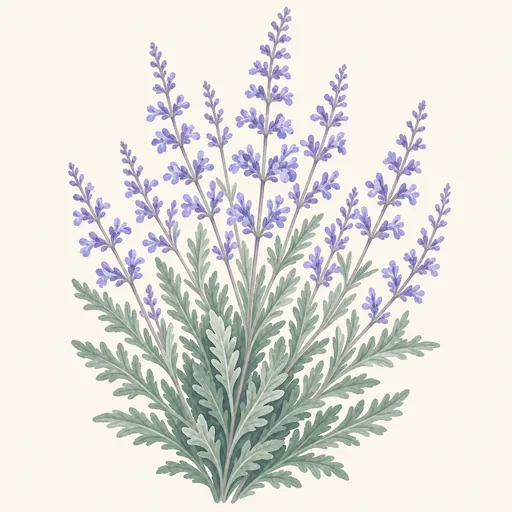
Russian Sage
Perovskia atriplicifolia · Lamiaceae
- Plant outFrom the last frost until 4 weeks afterApr 10 – May 14
- Plant in autumn6–8 weeks before the first autumn frostAug 30 – Sep 19
- Space60–90 cm (2–3 ft) apart
Description
Russian sage is a woody-based perennial grown for its airy clouds of blue-violet flowers and silvery foliage. Although its common name suggests otherwise, it is not a true sage of the culinary kind. It belongs to the mint family, and its leaves release a strong, sage-like scent when brushed or crushed.
The plant forms an open, upright clump, typically reaching 60–120 cm (2–4 ft) tall and about as wide. Its slender, pale stems carry finely divided, gray-green leaves. From midsummer into autumn, tiny tubular flowers appear along branching spikes, giving the whole plant a soft, hazy blue appearance. The blooms attract bees and other pollinators, while the stems often remain attractive after the flowers fade.
Russian sage grows best in full sun and well-drained soil. Once established, it tolerates drought and heat, making it useful in dry borders, gravel gardens, and plantings where irrigation is limited. Rich soil, excess fertilizer, or too much shade can encourage weak, floppy growth. It dislikes persistently wet ground, especially in winter. Space plants so air can circulate around them, and water new plantings regularly until their roots are established.
In colder climates, gardeners generally leave the stems standing over winter and cut them back in early spring, when new growth becomes visible. Avoid cutting into parts that show no living buds unless the stems are clearly dead. Russian sage pairs well with ornamental grasses and other sun-loving plants. Its long flowering period, light texture, and modest water needs make it a popular choice for low-maintenance gardens. Some cultivars stay more compact than the typical plant, so checking a variety’s mature size helps when planning a border. Despite its delicate look, it can be a sturdy plant in the right conditions.
Growing Conditions
0.6–1.2 m (2–4 ft) tall, 0.6–1.2 m (2–4 ft) wide
- Smallest
- Largest
Full sun, 6+ hours
Tolerates part sun
Low
Let the soil dry out between waterings.
Ideal 18–30 °C (64–86 °F)
Survives down to −34 °C (−29 °F).
neutral to alkaline
Where it Grows
Planting
When to Plant
Plant Russian sage in spring after the last frost, once the soil is workable and beginning to warm. This gives its roots a full growing season to establish before winter and is the safest choice where winters are cold. Early fall is another good planting time: aim to plant at least six to eight weeks before the ground usually freezes, so roots can grow while temperatures are mild. In regions with hot summers and relatively mild winters, fall planting often spares a new plant the stress of summer heat. If you must plant in summer, choose a cooler spell and be prepared to water regularly while it establishes. Avoid planting into frozen, waterlogged, or persistently cold soil. Check your local average last-frost and first-freeze dates rather than relying on a calendar month; the right window varies considerably by region. Container-grown plants can be planted throughout the growing season when conditions are suitable.
How to Plant
Choose a spot with full sun—at least six hours of direct light daily—and soil that drains quickly. Russian sage grows best in relatively lean soil; rich soil, heavy fertilizer, and frequent watering can encourage floppy growth. If your soil stays wet after rain, use a raised bed or another better-drained site rather than planting into a soggy hole.
Space plants according to the cultivar’s mature width, generally about 2 to 3 feet apart for standard varieties; compact cultivars may need less room. Dig a hole about twice as wide as the root ball but no deeper. Remove the plant from its pot, gently loosen any circling roots, and set it so the top of the root ball is level with the surrounding soil. Backfill with the soil you removed, firm it lightly, and water thoroughly to settle the roots.
During the first growing season, water deeply when the upper few inches of soil have dried; let the soil drain between waterings. Established plants usually need little supplemental water except during prolonged drought. A thin layer of gravel or other mulch can help suppress weeds, but keep it away from the stems. Do not bury the crown or add fertilizer at planting.
Planting Calendar
- Plant outdoors: from the last frost until 4 weeks after
- Autumn planting: 6–8 weeks before the first autumn frost
- Plant out: Apr 10 – May 14
- Autumn planting: Aug 30 – Sep 19
Care
Care Calendar
- Prune · Mar 13 – Apr 30
In late winter or early spring, cut old stems back to about 6–12 inches as new growth appears. - Mulch · Apr 10 – May 14
Apply a thin layer of gravel around the plant, leaving the crown uncovered.
Watering
Water new Russian sage plants deeply after planting, then water when the upper few inches of soil dry out during their first growing season. Once established, plants are drought-tolerant and usually need supplemental water only during prolonged hot, dry spells. When you do water, soak the soil around the roots rather than giving frequent light sprinkles. Let it dry between waterings; constantly damp soil can cause root or crown rot. Water at soil level if possible, and check container-grown plants more often because pots dry out faster. Reduce watering as growth slows in autumn. Good drainage matters more to Russian sage than a rigid watering schedule.
Pruning
Leave the stems standing through winter, particularly in cold climates, where they help protect the crown. In late winter or early spring, before vigorous new growth begins, cut stems back to about 6–12 inches (15–30 cm) above the ground. Look for swelling buds or fresh shoots near the base and avoid cutting into them. Remove dead or broken stems, and use clean, sharp pruners. If the plant becomes floppy, lightly trim soft growth in late spring or early summer to encourage branching, but expect flowering to start later. Avoid heavy pruning late in the season: tender new growth may not harden before frost.
Weeding
Keep the area around young Russian sage plants clear of weeds so their roots do not have to compete for water and light while becoming established. Pull weeds when the soil is slightly moist, taking care not to disturb the plant’s crown or roots. A hand tool can help remove taprooted weeds, but work shallowly near the plant. Check regularly in spring, when annual weeds grow quickly, and remove them before they set seed. Established Russian sage generally needs less attention because its spreading, upright growth shades some of the nearby soil. Keep enough open space around each plant for air to circulate; overcrowding and damp conditions are more troublesome than an occasional small weed.
Mulching
In well-drained soil, a thin layer of gravel or small stone can suppress weeds without holding excess moisture against Russian sage. Spread it roughly 1–2 inches (2.5–5 cm) deep over the surrounding soil, leaving a gap around the woody crown and stems. If you use an organic mulch, apply it sparingly and keep it pulled back from the plant; a thick, damp layer can contribute to crown rot. Mulch can be useful around new plants while they establish, but it should never compensate for poorly drained soil. Check the layer occasionally and clear away fallen leaves or other debris that stays wet around the base.
Fertilizing
Russian sage usually flowers well without fertilizer, especially in ordinary garden soil. Excess nutrients, particularly nitrogen, can produce lush, weak stems that flop and flower less effectively. Do not feed on a routine schedule. If a plant grows poorly, first check sunlight, drainage, and watering: it needs full sun and soil that does not remain wet. A soil test can show whether a nutrient deficiency needs correction. If the soil is exceptionally poor, a light application of compost around the plant in spring is generally enough; keep it away from the crown. Avoid heavy applications of manure or high-nitrogen fertilizer.
Pest Management
Russian sage has few serious insect problems. Inspect plants occasionally for distorted new growth, clusters of aphids, or fine webbing and stippled leaves that may indicate spider mites, particularly during hot, dry weather. A strong spray of water can dislodge aphids; repeat as needed while protecting nearby flowers and beneficial insects. Healthy, well-spaced plants are less likely to develop persistent problems. The more significant risk is often root or crown rot in wet soil. Prevent it by providing good drainage, allowing the soil to dry between waterings, and keeping mulch away from the crown. If stems suddenly wilt while the soil is wet, investigate drainage rather than watering more.
Harvesting
Russian sage is grown mainly for its flowers and foliage, not as a food crop. To use it in arrangements, cut flowering stems once the small blooms have opened, preferably in the morning after dew has dried. Use clean pruners and take stems from different parts of the plant so it keeps an even shape. Leave plenty of flowers for bees and other pollinators. For dried arrangements, gather small bundles and hang them upside down in a dry, shaded place with good airflow, then store them away from moisture. Cutting stems during bloom may encourage some additional flowers, but avoid stripping or heavily cutting the plant late in the growing season.
Growing in Containers
Grows well in a pot of at least 20 litres (5.3 US gallons), with drainage holes. Best kept outdoors.
Propagation
From cuttings
- Take 4- to 6-inch cuttings from healthy new growth in late spring or early summer.
- Remove the lower leaves.
- Insert the cuttings into a moist, free-draining propagation mix.
- Keep them in bright, indirect light until roots form.
- Pot up rooted cuttings before planting them outside.
By division
- Divide an established plant in early spring as new growth begins.
- Dig up the root clump and shake off loose soil.
- Cut the clump into sections, each with roots and growing shoots.
- Replant the sections promptly at their original depth.
- Water them in, then avoid keeping the soil soggy.
Companion Plants
Good neighbors
- Lavender: Both thrive in full sun and sharply drained soil with little irrigation once established.
- Purple coneflower: Both suit sunny, well-drained borders, and their summer flowers look good together.
- Autumn joy stonecrop: Both tolerate sunny, relatively dry sites and provide late-season color.
- Switchgrass: This ornamental grass shares Russian sage’s preference for sun and provides a contrasting upright form.
Common Problems
- Yellowing leaves
- Wilting
- Stunted growth
- Leaves dropping
Root rot is a general name for the decay of plant roots, not a single disease with one scientific name. It can result…
- Yellowing leaves
- Wilting
- Stunted growth
- Leaves dropping
Overwatering occurs when soil stays wet long enough to limit the oxygen available to plant roots. Roots need oxygen to…
- Flopping stems: Too much shade, rich soil, or excess fertilizer can make growth weak and sprawling. Grow it in full sun and avoid heavy feeding.
- Root rot: Wet, poorly drained soil is the main threat. Plant in well-drained ground and let the soil dry between waterings once established.
- Winter loss: Cold, soggy soil can damage roots. Also, wait until late spring before assuming a plant has died; Russian sage can be slow to leaf out.
- Occasional pests: Aphids or spider mites may appear, but serious pest problems are uncommon.
Varieties
A widely grown selection with airy flower spikes that typically reaches 3–5 feet.
- tall
- upright
- blue-violet flowers
A shorter selection suited to smaller borders and containers.
- compact
- upright
- blue flowers
Its dense, upright habit helps it hold its shape in the garden.
- compact
- sturdy stems
- lavender-blue flowers
This relatively short selection begins flowering earlier than many Russian sages.
- compact
- early blooming
- blue flowers
It forms a narrow, upright clump with aromatic foliage.
- upright
- sturdy stems
- blue flowers
Its small size makes it useful at the front of a sunny border.
- dwarf
- compact
- blue flowers
More about varieties
- ‘Blue Spire’: A vigorous, upright selection with abundant violet-blue flowers; allow room for its mature size.
- ‘Little Spire’: A more compact choice for smaller beds and borders.
- ‘Denim ’n Lace’: Has finely cut foliage, sturdy stems, and dense lavender-blue flowers.
- ‘Blue Jean Baby’: Compact and relatively early blooming, with a tidy habit.
Health Benefits
Russian sage is primarily an ornamental plant, not a well-established medicinal herb. Its leaves and flowers have been used in some traditional herbal preparations, including infusions for fever or digestive discomfort. These are folk uses, however, and there is not enough evidence from human studies to show that Russian sage treats those conditions or to establish a safe, effective dose.
Some laboratory studies of Russian sage extracts have examined potentially active compounds. Findings from a laboratory do not mean that a homemade tea has the same effects, or that it is safe to use as treatment. Russian sage (Salvia yangii, formerly Perovskia atriplicifolia) should also not be confused with culinary sage (Salvia officinalis); advice about one plant may not apply to the other.
Its most dependable wellness value is nonmedical. The aromatic foliage, long season of color, and visits from bees and other pollinators can make a garden pleasant to spend time in. If you are pregnant, nursing, taking medication, or considering Russian sage for a health condition, ask a qualified healthcare professional first. Do not use it in place of care for a fever or persistent symptoms.
Fun Facts
- Despite its common name, Russian sage is not the culinary sage used in cooking.
- Botanists now generally classify it as Salvia yangii; many plant labels still use its former name, Perovskia atriplicifolia.
- It is native to parts of Asia, rather than being exclusively—or even primarily—a Russian plant.
- Its silvery leaves release a strong scent when brushed or crushed.
- The colorful calyces can keep the flower spikes looking blue-purple after the tiny blossoms fade.
Notice an error or have a question about Russian Sage? Contact us