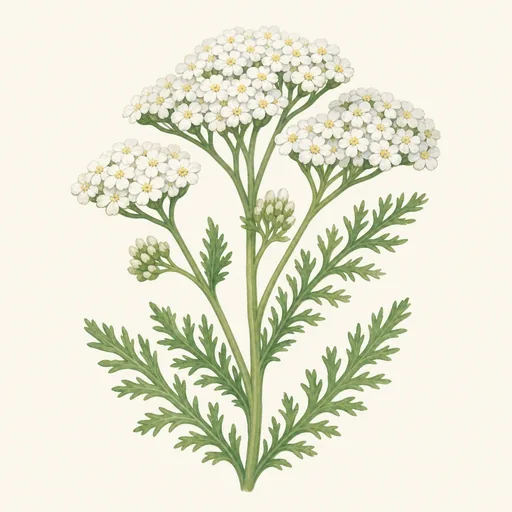
Yarrow
Achillea millefolium · Asteraceae
- Start indoors8–10 weeks before the last frostJan 30 – Feb 19
- Sow outdoorsFrom the last frost until 2 weeks afterApr 10 – Apr 30
- Plant outFrom the last frost until 2 weeks afterApr 10 – Apr 30
- Plant in autumn6–8 weeks before the first autumn frostAug 30 – Sep 19
- Space30–45 cm (12–18 in) apart
- Bloom90–150 days after plantingJul 9 – Oct 18
Description
Yarrow is a hardy flowering perennial recognized by its flat-topped clusters of tiny flowers and soft, finely divided leaves. Its species name, millefolium, means “a thousand leaves,” a reference to the foliage’s feathery appearance. The leaves are usually green or gray-green and have a distinctive, somewhat spicy scent when crushed. Upright stems typically reach 30–90 cm (1–3 ft) tall. Wild plants most often bear white or pale pink flowers, while cultivated varieties offer deeper pinks, reds, oranges, and other colors. Blooming generally begins in early summer and can continue into autumn, depending on the climate.
Native across much of the temperate Northern Hemisphere, yarrow grows in meadows, grasslands, roadsides, and other open places. It is also naturalized in parts of the Southern Hemisphere. In gardens, it performs best in full sun and well-drained soil. Once established, it tolerates dry conditions and relatively poor soil; excessive fertilizer or shade can produce weak, floppy stems. Its flower clusters attract bees, butterflies, hoverflies, and other beneficial insects. The blooms also work well as cut flowers and can be dried for arrangements.
Yarrow spreads through underground stems and by seed, so it may move beyond its allotted space, particularly in favorable conditions. Removing spent flowers limits self-seeding and may encourage further blooms. Established clumps can be divided in spring or autumn to control their size or make new plants. Although yarrow has a long history of traditional medicinal use, that history does not establish that it is safe or effective for treating a condition. Some people develop skin irritation after handling it, and anyone considering medicinal use should seek qualified advice, especially during pregnancy or when taking medication.
Growing Conditions
30–90 cm (1–3 ft) tall, 30–60 cm (12–24 in) wide
- Smallest
- Largest
Full sun, 6+ hours
Tolerates part sun
Low
Let the soil dry out between waterings.
Ideal 15–27 °C (59–81 °F)
Survives down to −40 °C (−40 °F).
pH 6–8 · acidic to neutral to alkaline
Where it Grows
Planting
When to Plant
Plant yarrow outdoors in spring after the last expected frost, once the soil is workable. Established plants tolerate cold, but young seedlings are easier to establish without a late freeze. To get a head start, sow seeds indoors 6–8 weeks before your last frost date and transplant the seedlings outside after hard frosts have passed. You can also sow seeds directly outdoors in spring, or in fall where winter conditions allow them to remain in place until germination in spring.
For nursery plants or divisions, early spring is ideal. Early fall is another good choice if you can plant at least 4–6 weeks before the ground freezes, giving roots time to grow. In hot climates, fall planting avoids the stress of establishing during peak summer heat. Choose a time when the soil is neither waterlogged nor frozen, and water new plants during dry spells while they establish.
How to Plant
Choose a spot with full sun—at least six hours of direct light daily—and soil that drains well. Yarrow grows well in relatively lean soil; rich soil or heavy feeding can make its stems floppy. If water stands after rain, improve drainage or plant in a raised bed rather than putting yarrow in soggy ground.
To grow from seed, press the tiny seeds onto the surface of moistened soil and leave them uncovered, or cover them only as directed on the seed packet: they need light to germinate. Keep the surface gently moist, not soaked, until seedlings emerge, usually within 10–21 days. Thin or transplant them to give each plant about 12–24 inches (30–60 cm) of space, depending on the variety.
For a nursery plant or division, dig a hole wide enough to spread the roots without bending them. Set the crown—the point where stems meet roots—at the same level it grew before. Fill in with soil, firm gently, and water thoroughly. Keep the soil moderately moist during establishment, then water mainly during prolonged dry weather. Avoid piling mulch against the crown.
Growth Timeline
- Germination 14–21 days
- Seedlings indoors 5–10 weeks
- Growing in the garden 90–150 days
- In bloom 8–12 weeks
Planting Calendar
- Start seeds indoors: 8–10 weeks before the last frost
- Sow outdoors: from the last frost until 2 weeks after
- Plant outdoors: from the last frost until 2 weeks after
- Autumn planting: 6–8 weeks before the first autumn frost
- Germination: 14–21 days
- Start indoors: Jan 30 – Feb 19
- Sow outdoors: Apr 10 – Apr 30
- Plant out: Apr 10 – Apr 30
- Autumn planting: Aug 30 – Sep 19
- Bloom: Jul 9 – Oct 18
Care
Care Calendar
- Prune · Feb 27 – Apr 16
Cut back old stems and foliage before new growth begins. - Divide · Mar 27 – May 14
Divide crowded clumps every three to four years to keep them vigorous. - Deadhead · May 22 – Aug 20
Remove spent flower heads to encourage more blooms.
Watering
Water newly planted yarrow thoroughly, then keep the soil lightly moist while its roots establish. Check the soil rather than watering on a fixed schedule: if the top inch or two is dry, water deeply and let excess water drain. Established yarrow is drought-tolerant and usually needs little irrigation beyond rainfall. During a prolonged hot, dry spell, give it an occasional deep watering rather than frequent light sprinkles. Plants in containers dry out faster and need more frequent checks, but their pots must have drainage holes. Avoid keeping the soil consistently wet; soggy conditions can cause root rot and weak growth. Water at the base when possible so foliage stays dry, especially where summers are humid. Wilting that persists into the cool of the evening may indicate a need for water, but check the soil first: wilting in wet soil can signal damaged roots, not drought.
Pruning
Deadhead spent flower clusters if you want a tidier plant, fewer self-sown seedlings, or a chance of a lighter second bloom. Cut each faded stem back to a leafy side shoot or the mound of basal leaves. For cut flowers, take stems while the flower heads are fresh, using clean, sharp snips. If stems become floppy or ragged after the first flush of flowering, you can cut the plant back by roughly one-third; fresh foliage may follow. Remove broken, diseased, or heavily mildewed growth and discard it rather than composting it if your compost pile does not heat thoroughly. In late winter or early spring, cut back old stems before new growth gets tall. Alternatively, leave dry seed heads standing through winter for texture and possible bird food. Avoid repeatedly shearing plants late in the season, when new growth may not have time to mature before frost.
Weeding
Keep the area around young yarrow free of weeds until its roots are established. Weed competition is most important at this stage, when fast-growing grasses and broadleaf weeds can shade the low foliage and take up water. Pull weeds after rain or light watering, when roots release more easily, and work carefully near yarrow’s shallow, spreading rhizomes. A narrow hand tool is useful for removing weeds without chopping through the clump. Once established, yarrow usually competes well, but inspect the planting periodically for persistent weeds growing through its stems. Also watch for yarrow seedlings where they are not wanted: its flower heads can set abundant seed, and some types spread by rhizomes. Deadhead before seeds mature to limit self-sowing, and lift unwanted seedlings or edge back spreading clumps while they are small. Remove weed roots rather than leaving them to regrow among the foliage.
Mulching
Apply a thin layer of mulch around newly planted yarrow to suppress weeds and reduce moisture loss while roots establish. About 1–2 inches of coarse, well-aged organic mulch is usually enough; leave a small clear space around the crown so stems do not sit against damp material. Do not pile mulch over the basal leaves. Once established, yarrow often needs little mulch, particularly in climates with regular rainfall. Its preference for well-drained, relatively lean soil means that a thick, moisture-holding layer can be counterproductive and may encourage rot or overly soft growth. In a dry, sunny bed, a light gravel mulch can help keep the crown drier and reduce weed germination, provided the underlying soil drains well. Top up mulch only as needed, rather than adding a new thick layer every year. Clear away any matted leaves that trap moisture against the plant.
Fertilizing
Yarrow generally performs best in modestly fertile, well-drained soil and seldom needs fertilizer. Rich soil and heavy feeding can produce tall, floppy stems with fewer flowers. At planting time, improve poorly drained soil through site choice or appropriate soil preparation rather than trying to compensate with fertilizer; yarrow will not thrive with wet roots. If plants grow steadily and bloom well, skip feeding entirely. Where soil is exceptionally poor and growth is weak, a light scattering of finished compost around the plant in spring is usually sufficient. Keep compost off the crown and water it in if conditions are dry. Avoid routine applications of high-nitrogen lawn fertilizer, which favor leafy growth over sturdy flowering stems. If yarrow in a container shows consistently weak growth despite adequate light, water, and drainage, a small amount of balanced fertilizer used according to its label may help. Do not feed to correct problems caused by shade or soggy soil.
Pest Management
Yarrow is usually trouble-free, and its flowers attract many beneficial insects. Check leaves and stems occasionally for aphids or spittlebugs; small numbers rarely require treatment. If aphids build up, dislodge them with a firm spray of water, supporting delicate stems as needed. Avoid broad-spectrum insecticides, which can harm pollinators and the insects that naturally control pests. Powdery mildew may appear as a white coating on leaves, especially where plants are crowded or air is humid. Thin or divide dense clumps, provide good air circulation, and remove badly affected foliage. Water at soil level when practical rather than wetting leaves late in the day. Yellowing, collapse, or rotting at the crown often points to poor drainage or excessive watering rather than an insect pest; correct the growing conditions and remove severely rotted plants. If a treatment is necessary, identify the problem first and follow the product label, applying it when pollinators are not visiting flowers.
Harvesting
For fresh arrangements, cut yarrow flower stems when the small flowers across each flat-topped cluster are open and the head has developed its color. Harvest in the cool of the morning after dew has dried, using clean snips, and place stems promptly in water. Strip leaves that would sit below the waterline. For dried flowers, choose sound, fully colored heads before they turn brown or begin shedding seed. Tie a few stems in a loose bundle and hang them upside down somewhere dry, dark, and well ventilated; handle the dried heads gently because they can become brittle. You can leave some flowers on the plant for pollinators and seed-eating wildlife. If collecting yarrow for any personal use, harvest only plants you have confidently identified and know have not been treated with unsuitable pesticides or contaminated by roadside runoff. Never gather wild plants unless collection is permitted and the population can support it.
Growing in Containers
Grows well in a pot of at least 10 litres (2.6 US gallons), with drainage holes. Best kept outdoors.
Propagation
From seed
- Surface-sow seeds in seed-starting mix in spring.
- Press them gently into the mix; do not bury them.
- Keep the mix lightly moist and provide bright light.
- Transplant seedlings outdoors after the last frost.
By division
- Dig up an established clump in spring or early autumn.
- Separate it into sections with roots and healthy shoots.
- Replant the sections at their original depth.
- Water them in and keep the soil lightly moist until established.
From cuttings
- Take short, nonflowering shoots in spring.
- Remove the lower leaves.
- Insert the shoots into moist, free-draining propagation mix.
- Keep them in bright, indirect light until rooted.
- Pot up or transplant the rooted cuttings.
Companion Plants
Good neighbors
- Tomatoes: Yarrow flowers attract hoverflies and other beneficial insects that help control aphids on tomatoes.
- Cabbage: Yarrow attracts parasitic wasps and other beneficial insects that prey on cabbage caterpillars.
Common Problems
- Yellowing leaves
- Sticky residue on leaves
- Black sooty coating
- Curled or cupped leaves
Aphids are small, soft-bodied insects that feed by piercing plants and drawing out sap. The group includes many…
- White powdery coating
- Yellowing leaves
- Curled or cupped leaves
- Distorted new growth
Powdery mildew is a group of fungal diseases, not a single species. Different fungi infect different hosts, including…
- Orange or rust-colored spots
- Spots on leaves
- Yellowing leaves
- Leaves dropping
Rust is a group of plant diseases caused by fungi in the order Pucciniales, not a single species. Different rust fungi…
- Yellowing leaves
- Wilting
- Stunted growth
- Leaves dropping
Root rot is a general name for the decay of plant roots, not a single disease with one scientific name. It can result…
- Powdery mildew: A white coating on leaves, especially where plants are crowded or air circulation is poor.
- Root rot: Can develop in persistently wet or poorly drained soil.
- Flopping stems: More likely in shade or overly rich soil.
- Aphids: Sometimes gather on tender new growth.
- Unwanted spreading: Some yarrows self-seed readily and can spread beyond their intended space.
Varieties
Its lemon-yellow flower clusters stand above finely cut, silvery leaves.
- yellow flowers
- silvery foliage
- compact
Its red flowers have yellow centers and fade toward pink.
- red flowers
- drought tolerant
It produces broad clusters of deep cerise-pink flowers.
- pink flowers
- upright
Its warm orange flower heads gradually fade to golden yellow.
- orange flowers
- changing color
This shorter selection offers yellow blooms and silvery leaves.
- yellow flowers
- compact
- silvery foliage
Its strawberry-red flower clusters have contrasting yellow centers.
- red flowers
- upright
More about varieties
- ‘Paprika’ (Achillea millefolium): Red flower clusters that often fade to pink.
- ‘Cerise Queen’ (A. millefolium): Deep pink to rosy-red flowers.
- ‘Terracotta’ (A. millefolium): Warm orange flowers that soften to peach and yellow.
- ‘Moonshine’ (Achillea hybrid): Bright yellow flowers above silvery foliage.
- ‘Coronation Gold’ (A. filipendulina): Tall stems topped with golden-yellow flower clusters.
Health Benefits
Yarrow has a long history of use in herbal teas and skin preparations. Traditionally, people drank tea made from its leaves and flowers for digestive discomfort, including bloating and mild cramps, and for menstrual cramps. It has also been applied to minor cuts; this historical use earned it a reputation as a wound herb. These are traditional uses, not established treatments. Laboratory research has found compounds in yarrow with anti-inflammatory and antimicrobial activity, but such findings do not show that yarrow reliably treats illness in people. Clinical evidence for its benefits remains limited.
If you use yarrow on the skin, clean the area first and stop if irritation develops. Do not use it in place of appropriate care for a deep, dirty, or infected wound. Yarrow can cause allergic reactions, particularly in people sensitive to plants in the daisy family, such as ragweed or chamomile. Avoid medicinal use during pregnancy; there is not enough safety information for breastfeeding. If you take medication—especially a blood thinner—or have a bleeding disorder, ask a healthcare professional before using yarrow medicinally. Herbal products can vary in strength and quality.
Fun Facts
- Yarrow’s genus, Achillea, refers to Achilles, who was said to use the plant to treat soldiers’ wounds.
- The name millefolium means “thousand-leaved,” describing its finely divided foliage.
- What looks like one flat flower cluster is made up of many small flower heads.
- Yarrow flowers attract pollinators and beneficial insects, including hoverflies.
Notice an error or have a question about Yarrow? Contact us