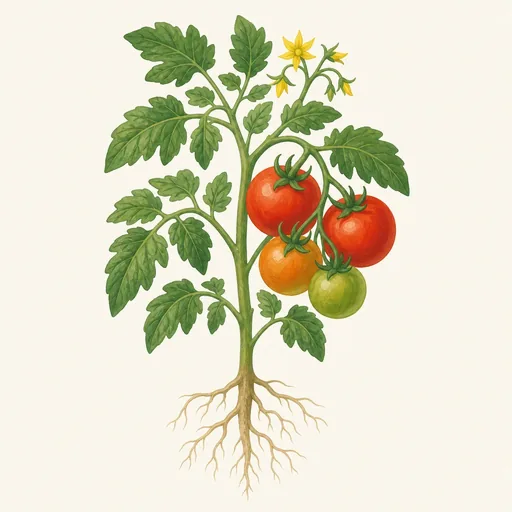
Tomato
Solanum lycopersicum · Solanaceae
- Start indoors6–8 weeks before the last frostFeb 13 – Mar 5
- Plant out1–3 weeks after the last frostApr 17 – May 7
- Space45–90 cm (1–3 ft) apart
- Harvest60–100 days after plantingJun 16 – Sep 5
Description
The tomato plant (Solanum lycopersicum) is a popular annual crop belonging to the nightshade family, Solanaceae. It is widely cultivated globally for its juicy, flavorful fruits, which are a staple in numerous cuisines. Tomato plants are versatile, growing well in various climates, although they thrive best in warm weather, requiring full sun and well-drained soil.
Typically, tomato plants can grow as compact bushes or sprawling vines, reaching heights between 1 to 10 feet depending on the variety. They exhibit a range of growth habits—determinate varieties grow to a certain height and set fruit all at once, while indeterminate types continue to grow and produce fruit throughout the growing season.
Leaves are compound and lobed, displaying a characteristic deep green color. Flowers are small, yellow, and star-shaped, with both male and female reproductive organs, allowing for self-pollination. Once pollinated, the flowers develop into the fruit, which can vary in size, shape, and color, including red, yellow, green, and purple.
Tomatoes are not only versatile in taste but also nutritious, packed with vitamins A and C, potassium, and beneficial antioxidants like lycopene, which is linked to various health benefits. For successful cultivation, gardeners should ensure consistent watering, support for taller varieties, and monitor for common pests and diseases. With proper care, tomato plants can produce an abundant harvest, making them a rewarding addition to any home garden.
Growing Conditions
0.6–2.4 m (2–8 ft) tall, 45–90 cm (1–3 ft) wide
- Smallest
- Largest
Full sun, 6+ hours
Tolerates part sun
Moderate
Keep evenly moist, not soggy.
Ideal 18–29 °C (64–84 °F)
Survives down to 1 °C (34 °F).
pH 6–7 · acidic to neutral
Where it Grows
Planting
When to Plant
Determining the right time to plant tomatoes is crucial for a successful crop. Tomatoes thrive in warm weather, and understanding their growth cycle can help you choose the optimal planting time.
Understanding Frost Dates
-
Last Frost Date: The most significant factor in planting tomatoes is the last expected frost in your area. Tomatoes are sensitive to frost, and exposure can severely damage or kill the plants. You can find your local last frost date through local gardening resources, extension services, or online gardening databases.
-
Soil Temperature: In addition to air temperature, soil temperature is essential. Tomatoes prefer soil temperatures between 60°F and 70°F (15°C to 21°C) for optimal growth. You can test soil temperatures using a soil thermometer.
General Guidelines for Planting
-
Seedlings Indoors: If you're starting tomatoes from seeds, it is recommended to sow them indoors 6 to 8 weeks before the last expected frost date. This allows your seedlings to establish before being transplanted outdoors.
-
Transplanting Outdoors: After the last frost date has passed and daytime temperatures are consistently above 70°F (21°C), it is safe to transplant your tomato seedlings outdoors. Acclimatize seedlings to outdoor conditions by hardening them off for about a week before planting. This gradual exposure helps them adjust to the outdoor environment.
Timing for Areas with Shorter Growing Seasons
If you live in a region with a shorter growing season, consider these tips:
-
Use Transplants: Purchasing young tomato plants from a nursery can give you a head start compared to sowing seeds.
-
Choose Early Varieties: Opt for early-ripening tomato varieties that mature faster, enabling you to harvest before the cooler weather sets in.
-
Extend the Season: Use row covers, cloches, or greenhouses to extend the growing season if you are concerned about cooler temperatures in the late spring or early fall.
By observing these signs and understanding the local climate, you can successfully time your tomato planting for the best results, leading to a bountiful harvest. Happy gardening!
How to Plant
Planting tomatoes successfully requires attention to their specific needs and conditions. First, choose the right time; tomatoes thrive in warm weather, so plant them outdoors after the last frost date, ideally when nighttime temperatures are consistently above 50°F (10°C).
Begin by selecting a sunny location in your garden, as tomatoes require at least 6-8 hours of direct sunlight each day. Prepare the soil by ensuring it is well-draining and rich in organic matter. Incorporate compost or aged manure to enhance fertility. Aim for a soil pH of around 6.0 to 6.8 for optimal growth.
When planting, space your tomato seedlings about 18-24 inches apart in rows that are 3 feet apart. Dig a hole deep enough to bury two-thirds of the stem of the tomato plant, which encourages rooting along the buried stems. Gently remove the plant from its pot without damaging the roots, place it in the hole, and backfill with soil, firming it gently around the base.
Water the plants thoroughly after planting, and subsequently keep the soil consistently moist but not soggy. Mulching around the base can help retain moisture and regulate temperature. Consider staking or providing cages as the plants grow to support their weight and promote good airflow, which reduces disease risk.
Growth Timeline
- Germination 5–10 days
- Seedlings indoors 6–10 weeks
- Growing in the garden 60–100 days
- Harvest 4–12 weeks
Planting Calendar
- Start seeds indoors: 6–8 weeks before the last frost
- Plant outdoors: 1–3 weeks after the last frost
- Germination: 5–10 days
- Start indoors: Feb 13 – Mar 5
- Plant out: Apr 17 – May 7
- Harvest: Jun 16 – Sep 5
Care
Care Calendar
- Stake · Apr 17 – Apr 30
Install a cage or stake when transplanting, before roots spread. - Mulch · Apr 24 – May 14
Once the soil has warmed, spread mulch around plants without touching the stems. - Prune · May 1 – Aug 6
On indeterminate varieties, remove selected side shoots while they are small; leave determinate varieties unpruned. - Feed · May 8 – Aug 6
Feed every few weeks during fruiting, following the fertilizer label.
Watering
When it comes to watering tomato plants, consistency and technique are key for optimal growth. The best strategy involves deep, infrequent watering to encourage robust root development. Begin by ensuring the soil is well-draining, as tomatoes are susceptible to root rot in overly wet conditions.
Water deeply once or twice a week, allowing the soil to dry out slightly between waterings. Aim for about 1-2 inches of water weekly, adjusting based on weather conditions—more during hot, dry spells and less during cooler, rainy periods.
It's best to water in the morning to reduce evaporation and fungal diseases. Avoid overhead watering, which can encourage leaf spot diseases; instead, direct the water at the base of the plant. Mulching can also help retain moisture and regulate soil temperature, making it an excellent companion technique for successful tomato plant care.
Pruning
Pruning tomato plants is essential for promoting healthy growth and maximizing fruit production. The best strategy involves several key steps. First, determine the variety: indeterminate tomatoes benefit most from pruning, while determinate types require minimal intervention.
Begin by removing suckers, the small shoots that grow between the main stem and branches. This prevents overcrowding and helps focus the plant's energy on fruit development. Use clean, sharp pruning shears to make precise cuts, reducing the risk of disease transmission.
Prune in stages, starting when the plants are young, and continue throughout the growing season. Remove yellow or diseased leaves to improve air circulation and prevent pests. Aim to create an open-center shape to allow sunlight to reach all parts of the plant. Finally, avoid over-pruning; maintain enough foliage for photosynthesis while encouraging good airflow around the fruit-bearing branches.
Weeding
Weeding is an essential practice for maintaining healthy tomato plants, as it reduces competition for nutrients and water. The best strategy for weeding around tomato plants involves a few key steps:
-
Timing: Weeds should be controlled early in the growing season when they are small and easier to manage. Regular checks once a week can help keep them in check.
-
Manual Removal: Hand-pulling is often the most effective method, especially for small weeds. Ensure you remove the entire root to prevent regrowth. It’s best to do this after watering, as the soil is softer and weeds are easier to pull.
-
Mulching: Apply a layer of mulch around the base of your tomato plants. Organic materials like straw or wood chips help suppress weeds, retain moisture, and improve soil health as they decompose.
-
Avoiding Disturbance: Be careful when weeding to avoid damaging the roots of the tomato plants. A hoe can also be used for larger areas but should be used gently.
By incorporating these methods, you can cultivate healthy tomato plants while minimizing weed competition.
Mulching
Mulching is a vital practice for growing healthy tomato plants, helping to maintain soil moisture, suppress weeds, and regulate soil temperature. The best strategy for mulching involves several key steps:
-
Timing: Apply mulch after the soil has warmed up in the spring, typically when seedlings are established and growing.
-
Material Selection: Use organic mulches such as straw, grass clippings, shredded leaves, or wood chips. Organic mulches not only suppress weeds but also enrich the soil as they decompose.
-
Application Depth: Spread a layer of mulch about 2 to 4 inches thick around the base of the tomato plant, being careful to avoid contact with the stem to prevent rot and disease.
-
Maintenance: Monitor the mulch throughout the growing season. Replenish as needed to maintain depth and ensure its effectiveness.
Utilizing these strategies will promote healthy tomato growth and improve your gardening success.
Fertilizing
Fertilizing tomato plants effectively is crucial for promoting healthy growth and bountiful fruit production. The best strategy involves a balanced approach that combines timing, nutrient selection, and method of application.
Start by using a balanced fertilizer (such as a 10-10-10 or 5-10-10 N-P-K ratio) at planting time to provide essential nutrients. This allows the plants to establish strong roots. Once the tomato plants begin to set fruit, switch to a fertilizer higher in phosphorus and potassium, which supports flowering and fruiting.
Apply fertilizer every 4-6 weeks during the growing season, ensuring the soil is moist to avoid burning the roots. Consider incorporating organic options like compost or well-rotted manure, which improve soil health while providing nutrients. Additionally, monitor plants for signs of nutrient deficiencies, adjusting your fertilization strategy accordingly to ensure optimal growth and yield.
Growing in Containers
Grows well in a pot of at least 20 litres (5.3 US gallons), with drainage holes. Best kept outdoors.
Propagation
From seed
- Sow seeds indoors 6 to 8 weeks before the last expected frost.
- Keep the seed-starting mix moist and warm.
- Give seedlings bright light.
- Harden off the seedlings gradually.
- Transplant outdoors after frost danger has passed and the soil has warmed.
From cuttings
- Cut a healthy, nonflowering side shoot.
- Remove the lower leaves.
- Place the stem in water or moist potting mix.
- Keep it in bright, indirect light until roots develop.
- Pot it up and acclimate it before planting outdoors.
Companion Plants
Good neighbors
- Basil: Basil can grow alongside tomatoes without competing heavily for space when both plants have room to mature.
- Lettuce: Lettuce can use the space between young tomato plants and benefit from their shade as the season warms.
- Sweet alyssum: Its flowers attract hoverflies and other beneficial insects that can help control aphids.
Keep apart from
- Potatoes: Potatoes and tomatoes share late blight and other diseases, so separating them can reduce the spread of infection.
- Corn: Corn earworms can also feed on tomato fruit, so nearby corn may harbor a shared pest.
Common Problems
- Dark sunken patch at the blossom end of fruit
- Rotting fruit
Blossom end rot is a noninfectious disorder of developing fruit, especially tomatoes and peppers, but also eggplants…
- Spots on leaves
- Yellowing leaves
- Leaves dropping
- Rotting fruit
Early blight is a fungal disease of tomatoes and potatoes. Despite its name, it can develop at any point in the…
- Spots on leaves
- Wilting
- Leaves dropping
- Soft or rotting stems
Late blight is a fast-spreading disease of tomatoes and potatoes caused by Phytophthora infestans, a water mold rather…
- Spots on leaves
- Yellowing leaves
- Leaves dropping
Septoria leaf spot is a fungal disease caused by species of Septoria. It affects many garden plants; the species…
- Holes in leaves
- Insects visible on the plant
- Stems chewed or cut through
The tomato hornworm is the caterpillar of a large sphinx moth. Despite its name, it also feeds on other plants in the…
Nutrition
Nutritional Composition (per 100g)
| Nutrient | Amount per 100g | % Daily Value* |
|---|---|---|
| Calories | 18 | 1% |
| Protein | 0.9g | 2% |
| Total Fat | 0.2g | 0% |
| Saturated Fat | 0.0g | 0% |
| Carbohydrates | 3.9g | 1% |
| Dietary Fiber | 1.2g | 5% |
| Sugars | 2.6g | - |
| Vitamin C | 13.7mg | 23% |
| Vitamin A | 833 IU | 17% |
| Potassium | 237mg | 7% |
| Folate (B9) | 15µg | 4% |
| Magnesium | 11mg | 3% |
| Calcium | 18mg | 2% |
| Iron | 0.2mg | 1% |
| Vitamin K | 7.9µg | 10% |
*Percentage values are based on a 2,000 calorie diet.
Varieties
Produces abundant small fruit on vigorous vines.
- hybrid
- orange fruit
- sweet
Bears long clusters of small red tomatoes.
- hybrid
- prolific
- sweet
Produces medium-sized red fruit relatively early in the season.
- hybrid
- early
Produces medium to large fruit on a compact, determinate plant.
- hybrid
- disease resistant
Produces large red tomatoes on an indeterminate vine.
- hybrid
- large fruit
- disease resistant
Its firm, oblong fruit is well suited to sauces.
- determinate
- meaty
Produces large, richly flavored fruit but ripens later than many hybrids.
- heirloom
- large fruit
Produces elongated fruit commonly used for sauces.
- heirloom
- meaty
More about varieties
Tomatoes, a staple in gardens and kitchens around the world, come in a wide array of varieties, each with unique characteristics in terms of size, shape, color, and taste. Here’s an overview of some of the common varieties of tomato plants, categorized for easier understanding:
1. Determinate Varieties These tomatoes grow to a certain height and then stop, producing all their fruit at once. This makes them ideal for canning or preserving.
- Roma: Also known as plum tomatoes, Roma tomatoes are meaty with fewer seeds, making them excellent for sauces and pastes.
- San Marzano: A popular variety for Italian cooking, these tomatoes are sweet and less acidic, ideal for sauce-making.
- Celebrity: A hybrid variety, Celebrity tomatoes are known for their disease resistance and reliability, producing medium-sized fruits.
2. Indeterminate Varieties These continue to grow and produce fruit throughout the growing season until killed by frost. They require staking or cages for support.
- Brandywine: A prized heirloom variety, Brandywine tomatoes are large, with a rich flavor and a beefsteak shape. They are often pink or yellow.
- Cherry Tomatoes: These bite-sized tomatoes come in various colors (red, yellow, and orange) and are known for their sweetness. Varieties include Sun Gold and Sweet 100.
- Green Zebra: This unique variety features green and yellow striped skin, with a tangy flavor that adds interest to salads.
3. Heirloom Varieties Heirloom tomatoes have been passed down through generations and often have unique flavors and characteristics.
- Cherokee Purple: Known for its dark, dusky color and rich flavor, this heirloom variety is favored by many gardeners for its complexity and sweetness.
- Black Krim: Originating from the Crimea, this variety produces dark-red to purplish fruits that are rich and slightly salty in flavor.
- German Johnson: A large beefsteak type with pinkish-red skin, this heirloom is known for its juicy flesh and outstanding taste.
4. Hybrid Varieties Hybrids are created by cross-pollinating two parent plants, leading to improved disease resistance and higher yields.
- Big Beef: This hybrid variety produces large, robust fruits with excellent flavor and is resistant to many common tomato diseases.
- Early Girl: As the name suggests, Early Girl tomatoes are among the first to ripen, making them a favorite for early-season gardeners.
5. Specialty Varieties Specialty tomatoes often have unique colors or flavors that set them apart.
- Yellow Pear: A small, pear-shaped, yellow tomato that is sweet and perfect for salads, garnishes, and snacking.
- San Marzano Redorta: A large variant of the traditional San Marzano, this tomato maintains that sweet flavor but with a heftier size, making it versatile for both cooking and salads.
Conclusion When selecting tomato varieties for your garden, consider the growing conditions, the intended use of the tomatoes, and your personal taste preferences. With such a diverse array of options, growing tomatoes can be an exciting and rewarding experience for amateur gardeners and hobbyists alike. Variety choice can greatly influence not only the garden's aesthetics but also the richness of flavors available for culinary pursuits.
Health Benefits
The tomato (Solanum lycopersicum) is not just a culinary staple but also a powerhouse of health benefits, making it a favorite among wellness enthusiasts. Rich in vital nutrients, tomatoes are particularly known for their high concentration of vitamins C and K, potassium, and folate.
One of the standout compounds in tomatoes is lycopene, a potent antioxidant that has been linked to various health benefits. Research suggests that lycopene may play a role in reducing the risk of certain cancers, particularly prostate cancer, by neutralizing free radicals and decreasing oxidative stress. Additionally, tomatoes can support heart health; their potassium content helps regulate blood pressure, while lycopene is associated with improved cholesterol levels.
Moreover, tomatoes contribute to skin health. The vitamins and antioxidants in tomatoes may help protect the skin from sun damage and improve its overall texture. Their hydration properties also aid skin elasticity. Furthermore, consuming tomatoes may enhance digestion due to their fiber content, promoting a healthy gut.
Incorporating tomatoes into a balanced diet—whether fresh, cooked, or in sauces—can thus support overall wellness and contribute to a healthier lifestyle.
Fun Facts
-
Botanical Classification: Though commonly treated as a vegetable in culinary contexts, tomatoes are botanically classified as fruits, specifically berries, because they develop from the ovary of a flower and contain seeds.
-
Varietal Diversity: There are over 10,000 different varieties of tomatoes worldwide, ranging in color from red, yellow, and green, to even purple and black, as well as differing in size and shape, from cherry tomatoes to beefsteaks.
-
Nutrient-Rich: Tomatoes are a great source of vitamins and minerals, particularly vitamin C, potassium, and lycopene, an antioxidant linked to numerous health benefits, including reduced risk of certain cancers and heart disease.
-
Heritage Species: The tomato is native to western South America and was first domesticated in Mexico around the 500 BCE, becoming a staple in many cuisines worldwide after being introduced to Europe in the 16th century.
-
Companion Planting: In the garden, tomatoes can be great companions for plants like basil, onions, and marigolds, which can help deter pests and improve growth, while avoiding being planted near crops like potatoes and cabbage that may compete for nutrients.
Notice an error or have a question about Tomato? Contact us