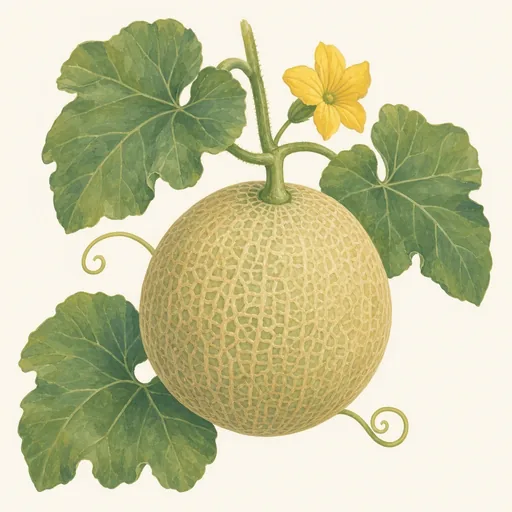
Cantaloupe
Cucumis melo · Cucurbitaceae
- Start indoors2–4 weeks before the last frostMar 13 – Apr 2
- Sow outdoors2–4 weeks after the last frostApr 24 – May 14
- Plant out2–4 weeks after the last frostApr 24 – May 14
- Space0.6–1.2 m (2–4 ft) apart
- Harvest75–100 days after plantingJul 8 – Sep 12
Description
Cantaloupe is a warm-season melon grown for its sweet, fragrant fruit. It belongs to the cucumber family, Cucurbitaceae, and grows on sprawling vines with broad, slightly rough leaves and curling tendrils. The fruits are usually round to oval, with juicy orange flesh and a central cavity full of seeds. In North America, “cantaloupe” commonly refers to melons with a tan, netted rind. European cantaloupes often have a smoother, ribbed rind. Both are forms of the same species, which also includes honeydew and other muskmelons.
Cantaloupe grows best in full sun and warm, well-drained soil. Seeds are usually sown after frost danger has passed and the soil has warmed. The vines need room to spread, although compact varieties suit smaller gardens. Consistent watering supports growth and fruit development; reducing watering slightly as fruits approach maturity can help prevent splitting. Flowers require pollination, usually by bees, to produce well-shaped fruit. Cold weather slows growth, and frost damages the plant.
A ripe netted cantaloupe typically develops a strong melon scent, a cream or golden background color beneath the netting, and a stem that separates easily from the fruit. Ripening signs vary by variety, so growers should check the seed packet as well. The flesh is eaten fresh in slices, salads, or chilled dishes. Cantaloupe provides water, vitamin C, and beta-carotene, which the body converts to vitamin A. Wash and scrub the rind before cutting: a knife can carry microbes from its surface into the flesh. Refrigerate cut fruit promptly. Unlike some other fruits, a cantaloupe may soften after harvest but will not become substantially sweeter, making harvest timing especially important.
Growing Conditions
30–60 cm (12–24 in) tall, 1.5–3 m (5–10 ft) wide
- Smallest
- Largest
Full sun, 6+ hours
Moderate
Keep evenly moist, not soggy.
Ideal 21–32 °C (70–90 °F)
Survives down to 1 °C (34 °F).
pH 6–7 · acidic to neutral
Where it Grows
Planting
When to Plant
Plant cantaloupe after the last spring frost, once the soil has warmed to at least 65°F (18°C); seeds germinate more reliably when the soil is around 70°F (21°C) or warmer. Wait until nights are generally above 50°F (10°C), since cold soil and chilly weather can slow growth or rot seeds. In many areas, this means sowing outdoors about two to three weeks after the average last frost date, but use actual conditions rather than the calendar alone. Cantaloupes need a long, warm growing season, often 80 to 100 frost-free days depending on the variety. If your season is short, start seeds indoors two to four weeks before you expect to plant outside. Grow them in individual biodegradable pots to minimize root disturbance, then transplant after the soil warms and frost risk has passed. Harden seedlings off gradually for about a week before setting them outside.
How to Plant
Choose a site with full sun—at least six to eight hours daily—and loose, fertile soil that drains well. Work compost into the bed before planting. If possible, check that the soil pH is roughly 6.0 to 7.0. Cantaloupe vines spread widely, so allow about 4 to 6 feet (1.2 to 1.8 m) between planting hills, with similar space between rows. Sow three or four seeds per hill, about 1 inch (2.5 cm) deep. Once the seedlings have several true leaves, thin to the strongest one or two plants per hill, cutting extras at soil level rather than pulling them. For transplants, plant at the same depth they grew in their pots, following the variety’s spacing guidance, and handle roots gently.
Water thoroughly after planting. Keep the soil evenly moist while plants establish, then aim for about 1 to 2 inches (2.5 to 5 cm) of water per week, adjusting for rainfall and heat. Water at the base of the vines to keep leaves dry. Add mulch after the soil is warm to help retain moisture and keep developing fruit off bare ground. If space is limited, grow vines on a sturdy trellis and support each fruit with a sling. Leave flowers accessible to pollinating insects.
Growth Timeline
- Germination 5–10 days
- Seedlings indoors 3–7 weeks
- Growing in the garden 75–100 days
- Harvest 2–4 weeks
Planting Calendar
- Start seeds indoors: 2–4 weeks before the last frost
- Sow outdoors: 2–4 weeks after the last frost
- Plant outdoors: 2–4 weeks after the last frost
- Germination: 5–10 days
- Start indoors: Mar 13 – Apr 2
- Sow outdoors: Apr 24 – May 14
- Plant out: Apr 24 – May 14
- Harvest: Jul 8 – Sep 12
Care
Care Calendar
- Protect · Apr 10 – May 7
Cover young plants on cold nights, and remove covers when flowers appear so pollinators can reach them. - Thin · Apr 24 – May 14
Thin seedlings to one or two strong plants per hill after true leaves appear. - Mulch · Apr 24 – May 21
Once the soil is warm, mulch around plants to retain moisture and keep fruit off bare soil. - Feed · May 8 – Jun 11
Side-dress when vines begin to run, using a balanced fertilizer without excess nitrogen.
Watering
Keep the soil evenly moist while cantaloupe vines are growing, flowering, and enlarging fruit. Aim for roughly 1–2 inches of water per week from rain and irrigation combined, adjusting for heat, soil type, and drainage. Water deeply rather than sprinkling lightly every day; the soil should be moist several inches down but never waterlogged. Drip irrigation or a soaker hose delivers water to the roots while keeping leaves dry, which can reduce leaf diseases. If you water by hand, do so near the base of the plant in the morning. Check soil beneath mulch before irrigating, since its surface can look dry while the root zone remains moist. Once fruit approaches ripeness, avoid overwatering: excess water can dilute flavor or cause splitting. Do not let vines wilt severely, however. Consistent moisture is especially important while young fruit is developing.
Pruning
Cantaloupe does not require routine pruning to produce fruit. Healthy leaves feed the developing melons and shade them from intense sun, so avoid removing large amounts of foliage. If vines crowd a path or neighboring plants, redirect them gently rather than cutting them back. You can remove a broken or clearly diseased leaf or stem, particularly where improved airflow will help foliage dry, but avoid handling wet vines and clean tools after cutting diseased growth. Discard diseased material rather than leaving it beside the plants. Some growers pinch vines to encourage branching or limit the number of fruit, but these practices are optional and may reduce yield if done too aggressively. Allow room for the vines at planting instead of relying on pruning to keep them small. If growing cantaloupe on a trellis, guide vines as they lengthen and support heavy fruit in slings; pruning alone will not support the melons.
Weeding
Keep the planting area free of weeds, especially while cantaloupe plants are young and before their vines cover the ground. Weeds compete for water and nutrients and can reduce airflow through the patch. Pull small weeds by hand or hoe them when they first appear, preferably while the soil is slightly moist. Work shallowly: cantaloupe has roots near the soil surface, and deep cultivation can damage them. As vines spread, lift or move them as little as possible; hand-pull weeds that emerge among the stems instead of dragging a hoe through the patch. Mulch can suppress later weeds, but remove established weeds before laying it down. Pay attention to the edges of the bed, where grasses can grow into the vines. Avoid letting weeds flower and set seed. Once the cantaloupe canopy fills in, its shade may slow new weeds, though occasional checks are still worthwhile.
Mulching
Mulch can help conserve soil moisture, suppress weeds, and keep developing cantaloupes off bare, muddy ground. In cool climates, black plastic mulch laid before planting can warm the soil and encourage early growth; place drip irrigation beneath it and secure its edges. Where summer heat is intense, organic mulch may be more suitable once the soil has warmed. Spread a layer of clean straw or other loose organic material around established plants, leaving a small gap at each stem so moisture does not collect against it. Avoid burying vines or piling mulch over the crown. Check beneath organic mulch occasionally for slugs and for soil moisture before watering. A dry pad of straw or a small board beneath a growing melon can reduce contact with wet soil, but check underneath for pests. At the end of the season, remove plastic mulch and dispose of badly diseased plant debris.
Fertilizing
Start with a soil test if possible, then follow its recommendations rather than fertilizing by habit. Cantaloupe grows best in fertile, well-drained soil, generally around pH 6.0–6.8. Before planting, mix well-rotted compost into the bed and add fertilizer only as needed. A balanced vegetable fertilizer can supply nutrients where a test indicates a deficiency; follow the product label and keep granules off stems and leaves. If growth is pale or slow, a modest side-dressing when vines begin to run may help. Water after applying dry fertilizer so nutrients move into the soil. Avoid repeated heavy applications of nitrogen, especially once plants are flowering: lush vines may develop at the expense of fruit and flavor. Do not use fresh manure close to harvest, since melons grow on the ground and their rinds can carry contamination. Container-grown plants may need more frequent, dilute feeding because nutrients wash out of the potting mix.
Pest Management
Inspect leaves, stems, flowers, and young fruit regularly so problems are caught early. Cucumber beetles can damage seedlings and spread bacterial wilt. Lightweight row covers can protect young plants, but remove them when flowering begins so bees can pollinate the flowers. Look beneath leaves for aphids and on stems and foliage for squash bugs; remove small infestations by hand or use a product labeled for the pest, following its directions. Avoid spraying open flowers or applying insecticides when bees are active. Give vines room for airflow, water at soil level, and remove badly diseased foliage to help limit leaf diseases such as powdery mildew. Rotate cucurbit crops to a different part of the garden for several years when space allows, and clear away crop debris after harvest. If a vine suddenly wilts or fruit develops soft spots, investigate promptly; the cause determines whether removing affected plants or fruit will help.
Harvesting
Harvest cantaloupe when the netting on the rind is pronounced, the background color has changed from green to tan or golden, and the fruit has a pleasant melon aroma. Most netted cantaloupes also reach “full slip”: a ripe melon detaches from its stem with a gentle lift or twist, leaving a clean, shallow scar. Do not pull hard on the vine to force an unripe fruit free. Check plants often as fruit nears maturity, because melons can ripen quickly in warm weather. Harvest dry fruit when possible and handle it gently to avoid bruising. Melons picked too early will soften after harvest but will not develop the same sweetness as fruit ripened on the vine. Before cutting, wash and scrub the rind under running water so the knife does not carry dirt onto the flesh. Refrigerate cut melon promptly and use it within a few days.
Growing in Containers
Grows well in a pot of at least 40 litres (11 US gallons), with drainage holes. Best kept outdoors.
Propagation
From seed
- Start seeds indoors in biodegradable pots 2–4 weeks before the last frost, or sow directly outdoors once the soil is warm.
- Sow seeds about 1 inch deep.
- Keep the soil evenly moist until seedlings emerge.
- Harden off indoor-grown seedlings before planting them outside.
- Transplant without disturbing the roots, or thin direct-sown seedlings to their final spacing.
Companion Plants
Good neighbors
- Borage: Its flowers attract bees that can help pollinate cantaloupe flowers.
- Nasturtiums: Their flowers attract pollinators to the melon patch.
Common Problems
- Holes in leaves
- Wilting
- Stunted growth
- Insects visible on the plant
Cucumber beetles are small leaf beetles that feed on cucumbers, melons, squash, pumpkins, and other cucurbits. In…
- Wilting
- Yellowing leaves
- Stunted growth
- Leaves dropping
Bacterial wilt is a soilborne disease that blocks water movement through a plant’s vascular tissue. The name commonly…
- White powdery coating
- Yellowing leaves
- Curled or cupped leaves
- Distorted new growth
Powdery mildew is a group of fungal diseases, not a single species. Different fungi infect different hosts, including…
- Yellowing leaves
- Spots on leaves
- Fuzzy gray mold
- Wilting
Downy mildew is a group of plant diseases caused by several species of oomycetes, or water molds, rather than one…
- Yellowing leaves
- Wilting
- Stunted growth
- Leaves dropping
Fusarium wilt is a soilborne fungal disease that affects many garden crops and ornamentals, including tomatoes, beans…
- Powdery mildew: White, powdery growth on leaves can reduce plant vigor.
- Downy mildew: Yellow leaf patches and dark growth underneath can spread quickly in humid weather.
- Cucumber beetles and bacterial wilt: Beetles damage plants and can transmit a disease that causes vines to wilt suddenly.
- Aphids: These sap-feeding insects can curl leaves and spread plant viruses.
- Poor pollination: Too few bee visits may produce small or misshapen fruit.
- Fruit rot: Melons resting on persistently wet soil are more likely to decay.
Varieties
Its short vines and small fruit suit gardens with limited space.
- heirloom
- compact
- early
A widely grown netted melon with resistance to several common melon diseases.
- hybrid
- disease resistant
It produces aromatic, sweet-fleshed melons in warm growing conditions.
- hybrid
- sweet
Its small, sweet melons are convenient for individual servings.
- hybrid
- disease resistant
- small fruit
This traditional variety produces large, heavily netted melons.
- heirloom
- large fruit
More about varieties
- Athena: A widely grown, netted melon valued for dependable yields and good shipping quality.
- Ambrosia: A sweet, aromatic melon with soft orange flesh.
- Hale’s Best Jumbo: A classic heirloom with heavily netted skin and orange flesh.
- Hearts of Gold: An old-fashioned, netted variety known for its sweet flavor.
- Sugar Cube: A compact-vined hybrid that produces small melons suited to limited space.
- Charentais: A small French cantaloupe with fragrant orange flesh and a relatively smooth, ribbed rind.
Health Benefits
Cantaloupe is commonly eaten as a fresh fruit and can be a refreshing way to add fruit to a meal or snack. Its high water content contributes to daily fluid intake, particularly in hot weather, though it does not replace drinking water. It provides vitamin C, which supports normal immune function and helps the body make collagen. Orange-fleshed cantaloupe also supplies beta-carotene, which the body can convert to vitamin A; vitamin A is important for normal vision and immune function. Cantaloupe provides potassium, a mineral involved in normal muscle and nerve function, as well as some dietary fiber.
Because it is naturally sweet, cantaloupe can be used in fruit salads, smoothies, or desserts in place of foods with added sugar. Eating the whole fruit rather than drinking its juice retains more fiber. These are nutritional benefits, not evidence that cantaloupe treats or prevents a particular disease. People who need to limit potassium or manage carbohydrate intake should consider their portion size and follow individual medical advice.
For safe preparation, wash the rind under running water and scrub it before cutting: a knife can transfer germs from the surface to the flesh. Refrigerate cut melon promptly, and discard it if left at room temperature for more than two hours, or one hour above 90°F (32°C).
Fun Facts
- Botanically, cantaloupe is a type of melon in the cucumber family, alongside squash and pumpkins.
- The netted melons often called cantaloupes in North America differ from the smoother, ribbed European cantaloupes.
- The name “cantaloupe” is associated with Cantalupo, a place in Italy.
- Many varieties signal ripeness by developing a sweet aroma and separating readily from the vine, known as “slipping.”
- A harvested cantaloupe may soften and become more aromatic, but it does not become sweeter because it no longer receives sugar from the vine.
Notice an error or have a question about Cantaloupe? Contact us