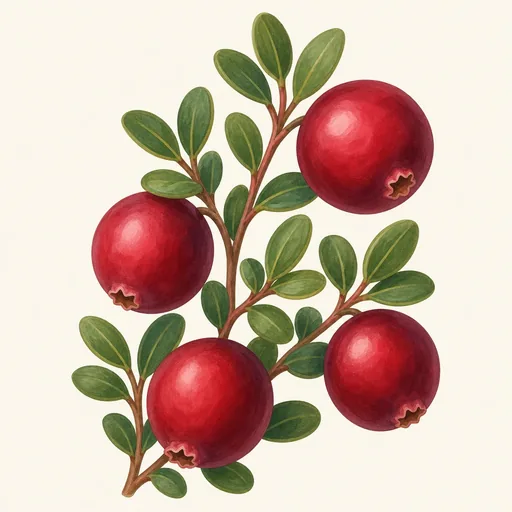
Cranberry
Vaccinium macrocarpon · Ericaceae
- Plant outFrom the last frost until 2 weeks afterApr 10 – Apr 30
- Space30–45 cm (12–18 in) apart
- HarvestAfter 2–3 years
Description
Cranberry is a low-growing, evergreen shrub in the heath family, Ericaceae, best known for its tart, red berries. Native to eastern North America, it spreads through slender, woody runners that can form dense mats. Short upright shoots grow from the runners and bear small, leathery leaves that remain on the plant through winter. In late spring to early summer, pink flowers with petals that curl backward appear; their shape resembles a crane’s head, giving the fruit its common name. Bees pollinate the flowers, and the berries ripen in autumn.
The round berries are firm, juicy, and intensely acidic. They are rarely eaten fresh in large quantities, but are widely used in sauces, juices, dried fruit, and baked goods, often with added sugar. Cranberries contain vitamin C and naturally occurring plant pigments called anthocyanins. The fruit has small air pockets, which help ripe berries float. This makes water harvesting possible: growers flood a bed, loosen the berries from the vines, and collect them from the water’s surface. Cranberries do not, however, grow underwater; the beds are normally drained during the growing season.
Cranberries need acidic soil, consistent moisture, and plenty of sunlight. Commercial beds are often built on sandy, peat-rich ground with carefully managed water levels. In a home garden, plants can be grown in an acidic raised bed or container, provided the soil stays moist but drains adequately. They generally need a cool winter to support normal growth and fruiting. The vines take time to establish, and a productive planting benefits from weed control and protection from late frosts during flowering. Although cranberry is associated with bogs, successful cultivation depends on managing both water and drainage rather than keeping the plants permanently flooded. Healthy plantings can produce fruit for many years with suitable care.
Growing Conditions
10–20 cm (4–8 in) tall, 0.6–1.2 m (2–4 ft) wide
- Smallest
- Largest
Full sun, 6+ hours
Tolerates part sun
High
Keep the soil consistently moist.
Ideal 16–25 °C (61–77 °F)
Survives down to −40 °C (−40 °F).
pH 4–5.5 · acidic
Where it Grows
Planting
When to Plant
Plant cranberries in early spring, once the ground has thawed and the soil can be worked. This gives new plants a full growing season to establish before winter. In areas with mild winters, early fall planting can also work if you allow at least six weeks before the ground freezes. Plant dormant bare-root stock or rooted cuttings in spring; container-grown plants can be planted later, but avoid periods of intense summer heat or drought.
Check the planting site as well as the calendar. Cranberries need full sun, consistently moist soil, and a very acidic growing medium, ideally around pH 4.0–5.5. Test and prepare the bed before your plants arrive; changing soil pH takes time. If the site is frozen, saturated from heavy rain, or not yet prepared, wait rather than putting plants into unsuitable soil. Keep purchased plants cool and their roots moist while waiting to plant.
How to Plant
Choose a sunny site where you can keep the soil evenly moist. Cranberries grow as low, spreading vines and do not need to be planted in a flooded bog. Prepare a dedicated bed with acidic, low-nutrient growing medium that holds moisture but drains well. Test the pH and aim for about 4.0–5.5. Where native soil is unsuitable, a shallow raised bed filled with an acidic mix, such as peat moss and sand, is often easier to manage. Avoid lime, manure, and ordinary compost, which can raise pH or add excess nutrients.
Space rooted plants about 12–18 inches apart so their runners can spread. Set each plant at the depth it grew in its pot or nursery bed, keeping the crown at the surface. Firm the medium gently around the roots and water thoroughly. If planting rooted cuttings, follow the supplier’s depth instructions and leave their growing tips above the surface. Mulch lightly with clean sand to help suppress weeds without burying the plants. Keep the bed consistently moist while the roots establish, especially during dry weather, but do not leave it waterlogged. Use rainwater if your tap water is strongly alkaline, and weed by hand until the vines form a dense mat.
Growth Timeline
- Establishing 2 years
- First harvest possible years 2–3
Planting Calendar
- Plant outdoors: from the last frost until 2 weeks after
- Plant out: Apr 10 – Apr 30
Care
Care Calendar
- Prune · Feb 27 – Apr 2
On established beds, thin crowded runners without cutting back the fruiting uprights. - Mulch · Mar 27 – Apr 30
Every two to three years, top-dress established beds with a thin layer of clean sand. - Feed · Apr 10 – May 14
Apply a light dose of fertilizer formulated for acid-loving plants. - Protect · Sep 13 – Oct 31
Net ripening berries if birds are taking the crop. - Protect · Oct 25 – Nov 28
In cold areas with little snow, cover plants with loose straw after the ground begins to freeze.
Watering
Keep cranberry soil consistently moist, especially while plants establish and while berries develop. Its shallow roots dry out quickly, but they also need air: aim for damp soil, not standing water. Check beneath the mulch and water when the surface begins to dry, applying enough to moisten the root zone. Sandy beds may need frequent watering during hot, windy weather; rainfall can make irrigation unnecessary at other times. Drip irrigation or gentle watering at soil level reduces splashing onto fruit and foliage. If possible, use rainwater or another low-mineral water source, since hard, alkaline water can gradually raise soil pH. Good drainage remains essential even though cranberries naturally grow in wet places. Commercial bogs are sometimes flooded for harvest or winter protection, but a home cranberry bed does not need routine flooding.
Pruning
Prune established cranberries to keep long, spreading runners from crowding the shorter, upright stems that bear flowers and fruit. In late winter or early spring, before new growth begins, trim runners that have grown beyond the bed and thin tangled patches lightly. You can also tidy stray runners after harvest. Leave plenty of healthy uprights: cutting them back heavily removes potential berries. Remove dead, broken, or diseased growth whenever you notice it, and clean tools between cuts if disease is suspected. Young plants generally need little pruning while they spread and fill the bed. Once the planting is dense, check it each year rather than following a rigid cutting schedule. The goal is an open, productive mat, not a closely clipped surface; severe pruning can reduce the next crop.
Weeding
Weed cranberries regularly, particularly while a new planting is filling in. Grasses and other vigorous weeds compete for water and nutrients and can quickly overtop the low-growing vines. Pull weeds when they are small and the soil is moist, taking care not to disturb the cranberries’ shallow roots or lift rooted runners. Hand-weeding is usually safer than hoeing within the planting. Remove perennial weeds, including their roots, before preparing a new bed; they are much harder to eliminate once cranberry vines have spread across it. Keep bed edges clear so weeds do not creep back in, and remove weed seed heads before they mature. A light mulch can suppress seedlings, but avoid burying the cranberry growth. Use herbicides only if their labels explicitly permit use around edible cranberries.
Mulching
A light layer of clean, weed-free sand can help a cranberry bed stay productive. Commercial growers periodically spread sand over dormant vines to encourage runner rooting and reduce some pest and disease problems. In a home bed, apply only a thin layer—roughly ¼ to ½ inch (6–12 mm)—and let the vine tips and fruiting uprights remain exposed. This is an occasional treatment, not a thick annual covering. Pine needles can be used sparingly around bed edges to discourage weeds and conserve moisture, but they will not reliably make unsuitable soil acidic. Avoid thick layers of bark, compost, or other rich organic mulch that smother low vines or introduce weeds. Whatever material you use, check that water can still reach the soil and that the shallow roots are not drying out beneath it.
Fertilizing
Cranberries need relatively little fertilizer. Begin with a soil test: they grow best in acidic soil, generally around pH 4.0–5.5, and fertilizer will not compensate for an unsuitable pH. If plants show poor growth and a test indicates a need for nutrients, use a small amount of fertilizer formulated for acid-loving plants, following the label for edible crops. Apply it in spring as growth begins, keeping concentrated granules off the foliage. Cranberries generally respond better to ammonium-based nitrogen than nitrate-based fertilizers, but too much nitrogen produces lush runners at the expense of fruit and can increase disease problems. Avoid routine applications of manure or large amounts of compost, which can add excessive nutrients and alter the bed. Recheck soil conditions before increasing the feeding rate.
Pest Management
Inspect vines, flowers, and berries regularly so problems are found early. Cranberry fruitworm larvae can damage developing fruit; remove suspect berries and fallen fruit promptly rather than leaving them in the bed. Watch for leaf-chewing caterpillars and signs of disease such as dying uprights or soft, rotting berries. Thin crowded growth gently, avoid overhead watering when practical, and harvest ripe fruit promptly to limit conditions that favor fruit rots. Keep weeds down and protect pollinating bees, which are important for fruit set. If damage is significant, identify the pest or disease before treating it; similar symptoms can have different causes. Choose a control specifically labeled for cranberries and follow its timing and harvest restrictions. Do not spray insecticides on open flowers or when bees are foraging. Birds and small mammals may also take berries; netting can protect a small bed.
Harvesting
Harvest cranberries in autumn when the berries have developed their full red color and feel firm. In many areas this is from September into November, depending on the variety and weather. Taste or cut a few berries to check maturity; some varieties retain pale patches even when ready. Pick by hand from a home planting, lifting runners gently so you can see fruit without pulling up rooted vines. Collect berries before prolonged hard freezes damage them, and handle them carefully to avoid bruising. Sort the harvest and discard soft, shriveled, or moldy fruit. Refrigerate sound berries promptly, or freeze them for longer storage; wash them just before use. Commercial wet harvesting floats berries for collection, but flooding is unnecessary for a small garden bed. Cranberries are tart and are commonly cooked or sweetened.
Growing in Containers
Grows well in a pot of at least 20 litres (5.3 US gallons), with drainage holes. Best kept outdoors.
Propagation
From cuttings
- Take 4- to 6-inch stem cuttings in spring or early summer.
- Remove the leaves from the lower half of each cutting.
- Insert the cuttings into moist, acidic peat and sand.
- Keep them humid and in bright, indirect light until rooted.
- Transplant rooted cuttings into acidic soil.
By layering
- Choose a healthy runner in spring or summer.
- Pin a section of the runner against moist, acidic soil.
- Cover the pinned section lightly, leaving its tip exposed.
- Keep the soil moist until roots form.
- Cut the rooted section from the parent plant and replant it.
Companion Plants
Good neighbors
- Blueberry: Both need acidic soil, though blueberries should be spaced so they do not shade the cranberries.
- Lingonberry: Both grow well in acidic soil and can be grown together in an open, sunny bed.
Common Problems
- Spots on leaves
- Brown or crispy leaf edges
- Bleached or scorched patches
- Leaves dropping
Anthracnose is a name for several fungal diseases, not a single species. Depending on the plant, the cause may be a…
- Holes in leaves
- Insects visible on the plant
- Stems chewed or cut through
- Wilting
Caterpillars are the larval stage of butterflies and moths, not a single species. Many feed on garden plants, although…
- Brown or crispy leaf edges
- Wilting
- Bleached or scorched patches
- Leaves dropping
Frost damage is an injury caused when plant tissues become cold enough for ice to form or for cells to lose water to…
- Yellowing leaves
- Wilting
- Stunted growth
- Leaves dropping
Root rot is a general name for the decay of plant roots, not a single disease with one scientific name. It can result…
- Fruit rot, especially in warm, wet conditions or where air circulation is poor.
- Cranberry fruitworm larvae, which feed inside developing berries.
- Upright dieback, which causes flowering shoots to brown and die.
- Root stress or rot where beds drain poorly.
- Weeds, which compete with the low-growing vines and can be difficult to remove once established.
Varieties
A widely grown variety that produces large, firm berries.
- large berries
- productive
Its dark-red berries ripen relatively early.
- early
- dark red
This older variety ripens early and bears small, dark berries.
- early
- small berries
A traditional late-ripening variety whose firm berries store well.
- late
- good storage
This variety bears large berries on vigorous plants.
- large berries
- productive
More about varieties
- ‘Stevens’ — A widely grown, productive cultivar with large berries.
- ‘Ben Lear’ — An early-ripening cultivar known for its deep red fruit.
- ‘Early Black’ — An older cultivar prized for its early harvest and dark-colored berries.
- ‘Howes’ — A late-ripening cultivar valued for berries that store well.
- ‘Pilgrim’ — Produces large fruit and is often grown for processing.
Health Benefits
Cranberries are best known for their possible role in preventing some urinary tract infections (UTIs). Research suggests that cranberry products may modestly reduce repeat UTIs in some people, particularly women who have frequent infections. Cranberries contain compounds called proanthocyanidins that can make it harder for certain bacteria to stick to the urinary tract. They do not treat an existing UTI: symptoms such as painful urination, fever, or back pain need appropriate medical advice and, when indicated, treatment.
Whole cranberries provide fiber and vitamin C, as well as other plant compounds. Unsweetened cranberry juice contains some of those compounds but little fiber; many cranberry drinks also contain substantial added sugar. Evidence for other proposed benefits, such as improved heart or oral health, is less certain and does not establish cranberry products as treatments for those conditions.
If you want to try cranberry products for UTI prevention, keep in mind that juices and supplements vary in their ingredients and strength. Large amounts can cause stomach upset. People taking warfarin should ask a clinician before using cranberry products regularly because of a possible interaction. Those prone to kidney stones should also seek advice before using concentrated cranberry products. Cranberries can be part of a varied diet, but they are not a substitute for medical care.
Fun Facts
- Cranberry vines are perennial evergreens native to North America.
- Cranberry beds are not usually underwater year-round. Growers commonly flood them for harvest or winter protection.
- Berries float because they contain small air spaces, making wet harvesting possible.
- The name “cranberry” is linked to the flower’s resemblance to a crane’s head and beak.
- Bees help pollinate cranberry flowers.
Notice an error or have a question about Cranberry? Contact us