Loquat
Eriobotrya japonica · Rosaceae
- Plant outFrom the last frost until 4 weeks afterApr 10 – May 14
- Plant in autumn6–8 weeks before the first autumn frostAug 30 – Sep 19
- Space4.5–6 m (15–20 ft) apart
- HarvestAfter 2–5 years
Description
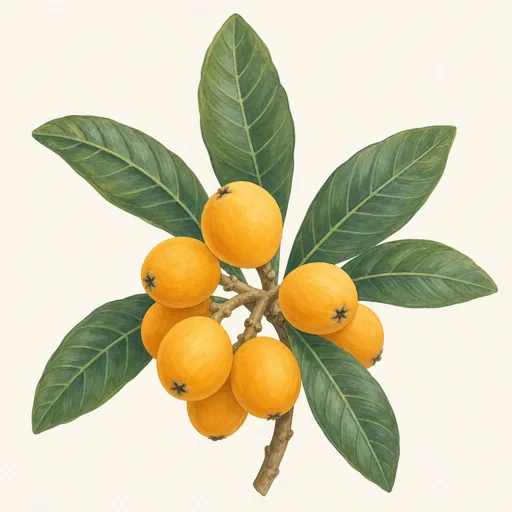
Loquat is an evergreen tree or large shrub grown for its sweet-tart fruit and its ornamental foliage. Although its scientific name refers to Japan, it is native to southeastern China and has been cultivated in Japan for centuries. Garden trees are often 3–10 m tall, with a rounded crown and large, leathery, dark green leaves. The leaves have prominent veins and softly hairy undersides. Clusters of small, fragrant, cream-colored flowers appear in autumn or winter, making loquat unusual among fruit trees: it flowers and sets fruit during the cooler part of the year. The fruit generally ripens in spring.
Loquats are small, round to pear-shaped fruits with thin yellow to orange skin. Their juicy flesh may be white, yellow, or orange, depending on the cultivar, and tastes mildly sweet with a refreshing acidity. Each fruit usually contains one or more large, glossy brown seeds. The ripe fruit is eaten fresh or made into jam, jelly, compote, or syrup. Remove the seeds before eating or processing the fruit; they are not eaten.
Loquat grows best in full sun, well-drained soil, and climates with mild winters. Established trees tolerate some drought, but regular watering while fruits develop improves the crop. Flowers and young fruits are vulnerable to frost, so a tree may survive a cold spell yet produce little fruit that year. In cooler areas, a sheltered site against a warm wall can help. Trees grown from seed may take years to bear fruit and do not reliably match the parent. Named cultivars, usually grafted, are a better choice when fruit quality and predictable harvests matter. Ripe loquats bruise easily and keep only briefly, so they are usually picked when fully colored and eaten or preserved soon afterward.
Growing Conditions
3–8 m (10–26 ft) tall, 3–6 m (10–20 ft) wide
- Smallest
- Largest
Full sun, 6+ hours
Tolerates part sun
Moderate
Keep evenly moist, not soggy.
Ideal 15–30 °C (59–86 °F)
Survives down to −12 °C (10 °F).
pH 6–7.5 · acidic to neutral
Where it Grows
Planting
When to Plant
Plant loquat when temperatures are mild and the soil is workable, giving its roots time to establish before stressful weather. In regions with mild winters, autumn is often ideal: the tree can develop roots through the cooler, wetter months before summer heat arrives. Late winter to early spring also works where hard freezes are uncommon. If your area gets frost, wait until spring after the last expected freeze; a newly planted tree is more vulnerable to cold than an established one. Avoid planting during summer heat waves or when the ground is frozen or waterlogged. Container-grown loquats can be planted at other times if you can water them reliably, but mild weather makes establishment easier. Consider the local climate before choosing a spot: loquats may survive temperatures that damage their autumn or winter flowers, so a sheltered location is especially valuable if you hope to harvest fruit.
How to Plant
Choose a sunny site with well-drained soil and room for the tree’s mature canopy; full sun generally gives the best fruit production. Keep it away from buildings and overhead wires, and avoid low spots where cold air or water collects. For predictable fruit quality, choose a named, grafted variety rather than a seed-grown tree. Water the container before planting, then dig a hole about twice as wide as the root ball but no deeper. Remove the tree from its pot and gently loosen any circling roots. Set it so the top of the root ball sits level with, or slightly above, the surrounding soil; keep any graft union above ground. Backfill with the soil you removed, firm it lightly, and water thoroughly to settle it. Do not bury the trunk or fill the hole mainly with compost. Spread a 2–3-inch (5–8 cm) layer of mulch over the root area, leaving a gap around the trunk. Water deeply whenever the upper few inches of soil begin to dry during the first growing season, adjusting for rainfall and drainage. Stake only if the tree cannot stand securely on its own, and remove the support once it is stable.
Growth Timeline
- Establishing 2 years
- First harvest possible years 2–5
Planting Calendar
- Plant outdoors: from the last frost until 4 weeks after
- Autumn planting: 6–8 weeks before the first autumn frost
- Plant out: Apr 10 – May 14
- Autumn planting: Aug 30 – Sep 19
Care
Care Calendar
- Feed · Apr 10 – May 28
Apply a balanced fertilizer around the drip line in early spring. - Prune · May 8 – Jul 9
After harvest, remove dead wood and lightly thin crowded branches. - Protect · Oct 11 – Jan 23
Cover small trees on freezing nights to protect flowers and developing fruit. - Thin · Nov 22 – Jan 23
After fruit sets, leave one or two fruits per cluster for larger fruit.
Watering
Water newly planted loquats deeply whenever the upper few inches of soil begin to dry, rather than giving them a little water every day. During their first growing season, this may mean about once a week, more often in hot, sandy soil and less often after rain. Established trees tolerate some drought, but regular moisture during flowering, fruit development, and dry spells helps prevent fruit drop and poor fruit size. Loquats often flower in fall or winter and ripen in spring, so do not assume they need water only in summer. Apply water slowly over the root area, extending beyond the trunk, and let the soil drain between waterings. Reduce irrigation during cool, rainy periods. Avoid persistently soggy soil, which can damage roots, and keep sprinklers from repeatedly wetting the flowers and foliage.
Pruning
Prune loquat lightly to maintain a manageable height and an open canopy. The best time for routine pruning is just after harvest, before the tree begins forming its next crop of flower buds. Remove dead, damaged, crossing, or crowded branches, then shorten overly vigorous shoots if needed. Make cuts just outside a branch collar or above a healthy outward-facing shoot; avoid topping the tree or removing a large share of its canopy at once. Opening the canopy improves light and airflow and makes fruit easier to pick. Loquats can suffer from fire blight, which causes shoots to wilt and blacken. If it appears, prune infected wood during dry weather, cutting well below visible symptoms. Disinfect tools between cuts and dispose of infected material. Keep pruning tools sharp, and avoid heavy pruning that encourages tender, disease-prone growth.
Weeding
Keep grass and weeds out of the area around a young loquat so they do not compete with its roots for water and nutrients. Maintain a weed-free circle at least a few feet across, widening it as the tree grows. Pull weeds by hand when the soil is slightly moist, or cut them off at the surface if pulling might disturb nearby roots. Loquats have roots near the soil surface, so avoid deep hoeing, digging, or repeated cultivation under the canopy. A layer of organic mulch helps suppress new weeds, but remove established perennial weeds before spreading it. Check the area regularly, especially after rain, and pull new seedlings while they are small. If using an herbicide outside the mulched area, follow its label and keep spray away from the trunk, leaves, and any exposed roots.
Mulching
Spread 2–4 inches of organic mulch, such as wood chips or shredded leaves, over the soil beneath the loquat’s canopy. Extend it outward as the tree grows, ideally toward the drip line. Leave several inches of bare space around the trunk: mulch piled against bark holds moisture there and can encourage decay. Mulch reduces weed competition, limits evaporation, moderates soil temperature, and gradually adds organic matter as it breaks down. These benefits are especially useful for newly planted trees and in hot or dry weather. Water the soil before mulching if it is very dry, since mulch can slow the penetration of light rainfall. Top up the layer as it decomposes, but do not let it become excessively thick or bury exposed roots. In poorly drained sites, correct drainage problems rather than relying on mulch to manage moisture.
Fertilizing
Loquats growing well in reasonably fertile soil may need little supplemental fertilizer. If growth is weak or leaves are pale, first check watering, drainage, and soil conditions; a soil test can help identify an actual nutrient shortage. For a young tree that needs feeding, use a balanced fertilizer at the label rate in modest, divided applications during its active growing season. Established fruiting trees can receive a light application after harvest if needed. Spread fertilizer over the root area, not against the trunk, and water it in. Avoid excessive nitrogen: it promotes leafy growth at the expense of fruit and may increase tender growth susceptible to fire blight. Do not fertilize late enough to encourage soft growth before cold weather. Where alkaline soil causes yellowing between leaf veins, confirm the cause before using an appropriate iron or other micronutrient treatment.
Pest Management
Inspect leaves, shoots, flowers, and developing fruit regularly so problems are noticed early. Aphids and scale insects may cluster on new growth or stems; a strong water spray can dislodge aphids, while horticultural oil used according to its label can help control some scales. Avoid spraying open flowers when pollinators are active. In areas where fruit flies are a problem, promptly collect fallen fruit and use locally recommended traps or protective fruit bags. Birds may peck ripe fruit; secure netting carefully so wildlife cannot become entangled. Fire blight is a disease rather than an insect pest, but it is an important loquat problem: remove affected shoots during dry weather and avoid excess nitrogen and overhead watering. Identify a problem before treating it, and use pesticides only when needed and labeled for loquat in your area.
Harvesting
Harvest loquats when they are fully colored yellow to orange for their variety and feel slightly soft. Taste a fruit before picking a whole tree: pale or firm fruit is often tart, and loquats do not improve much in sweetness after harvest. Ripening is uneven, so check the tree every few days during the harvest period, usually in spring in many growing regions. Use clean pruning shears to cut individual fruits or small clusters, leaving a short stem when practical. Pulling can tear the thin skin or damage fruiting shoots. Handle fruit gently and place it in shallow containers to prevent bruising. Remove any damaged or spoiled fruit from the tree and ground. Loquats are highly perishable; eat or process them promptly, or refrigerate them for several days. Remove the large seeds before eating or cooking.
Growing in Containers
Grows well in a pot of at least 60 litres (16 US gallons), with drainage holes. Can be grown indoors as a houseplant.
Propagation
From seed
- Remove seeds from ripe fruit and wash off the pulp.
- Sow the fresh seeds in moist, well-draining potting mix.
- Keep the mix warm and lightly moist until seedlings emerge.
- Transplant the seedlings once they are large enough to handle.
By grafting
- Grow or obtain a healthy loquat seedling to use as rootstock.
- Take a healthy scion from the cultivar you want to propagate.
- Make matching cuts and align the scion and rootstock cambium.
- Wrap the graft firmly and protect it from drying out.
- Remove shoots that grow from below the graft union.
By layering
- Choose a healthy, flexible branch in spring.
- Remove a narrow ring of bark from the section to be rooted.
- Wrap the exposed section in moist sphagnum moss and plastic.
- Keep the moss moist until roots develop.
- Cut the rooted branch from the tree and pot it up.
Common Problems
- Wilting
- Bleached or scorched patches
- Flowers or buds dropping
- Rotting fruit
Fire blight is a bacterial disease of plants in the rose family, especially apple, pear, quince, and some ornamental…
- Brown or crispy leaf edges
- Wilting
- Bleached or scorched patches
- Leaves dropping
Frost damage is an injury caused when plant tissues become cold enough for ice to form or for cells to lose water to…
- Yellowing leaves
- Sticky residue on leaves
- Black sooty coating
- Stunted growth
Scale insects are small, sap-feeding insects that settle on garden and houseplants. Adults often look like bumps on…
- Yellowing leaves
- Sticky residue on leaves
- Black sooty coating
- Curled or cupped leaves
Aphids are small, soft-bodied insects that feed by piercing plants and drawing out sap. The group includes many…
- Spots on leaves
- Yellowing leaves
- Leaves dropping
Fungal leaf spot is a general name for diseases caused by many different fungi, not a single species. These fungi…
- Fire blight: Shoots and blossoms may blacken and die back, especially in warm, wet weather.
- Loquat scab: Dark, corky spots can develop on leaves and fruit.
- Fruit pests and birds: Fruit flies and birds may damage ripening fruit; promptly harvesting ripe fruit helps limit losses.
- Aphids and scale insects: These sap-feeding pests can weaken new growth and leave sticky honeydew.
- Frost damage: Cold weather during flowering or fruit development can sharply reduce the crop.
- Root rot: Poorly drained soil and overwatering can damage roots.
Varieties
Produces notably large, juicy fruit with orange flesh.
- large fruit
- sweet
Bears yellow fruit with pale flesh and a mildly tart flavor.
- juicy
- sweet-tart
Produces orange fruit with sweet, juicy flesh.
- sweet
- productive
Produces large fruit that ripens relatively late in the loquat season.
- large fruit
- late
Bears yellow fruit with sweet, white flesh.
- sweet
- pale flesh
Produces medium-to-large fruit with pale, juicy flesh.
- juicy
- sweet-tart
More about varieties
- ‘Big Jim’: Large, orange-fleshed fruit with a sweet-tart flavor.
- ‘Gold Nugget’: Orange fruit with a rich, sweet flavor; also sold as ‘Thales’.
- ‘Champagne’: Pale, creamy-white flesh with a mild, sweet flavor.
- ‘Vista White’: White-fleshed fruit valued for its sweetness.
- ‘Tanaka’: A Japanese variety with large, orange fruit that ripens relatively late.
Health Benefits
Loquat fruit is eaten fresh and used in jams, preserves, and desserts. Like many fruits, it can be part of a varied diet: it provides water and dietary fiber, along with potassium and small amounts of other vitamins and minerals. Orange-fleshed varieties contain carotenoids, including beta-carotene, which the body can convert to vitamin A. The amount of these nutrients varies with the variety and ripeness of the fruit.
Loquat leaves have a long history of use in herbal teas, particularly for coughs and throat discomfort in East Asian traditions. However, traditional use is not proof that a preparation treats illness. Laboratory studies have investigated compounds in loquat leaves, but good human evidence for specific medical benefits remains limited. Leaf tea should not replace proven care for a persistent cough or other symptoms, and anyone who is pregnant, takes medication, or has a medical condition should seek professional advice before using concentrated herbal preparations.
Eat the ripe flesh, but do not chew or eat the seeds. Loquat seeds contain cyanogenic compounds that can release cyanide when crushed or digested. Keep seeds away from children and pets. The fruit is a food, not a treatment for disease.
Fun Facts
- Loquat is in the rose family, alongside apples and pears.
- It often flowers in autumn or winter and bears fruit in spring—an unusual schedule for a fruit tree.
- Despite its scientific name, Eriobotrya japonica, loquat is native to China.
- Its fragrant flower clusters attract pollinators when relatively few trees are blooming.
- Loquat is sometimes called “Japanese plum,” but it is not a true plum.
Notice an error or have a question about Loquat? Contact us