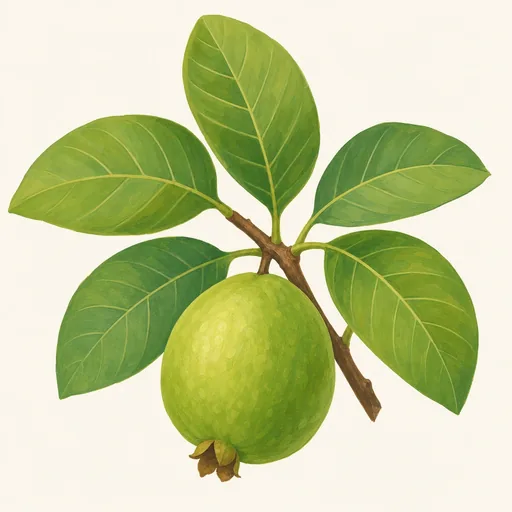
Guava
Psidium guajava · Myrtaceae
- Plant out1–4 weeks after the last frostApr 17 – May 14
- Space3–6 m (10–20 ft) apart
- HarvestAfter 2–4 years
Description
Guava is a small evergreen tree or spreading shrub in the myrtle family, grown chiefly for its fragrant, edible fruit. It usually reaches 3–10 m (10–33 ft) tall, though pruning can keep it smaller. Its smooth, mottled bark peels in thin flakes, and its opposite, oval leaves have prominent veins and release a distinctive scent when crushed. White flowers with numerous conspicuous stamens appear singly or in small clusters, often on new growth. The round to pear-shaped fruits vary widely by cultivar: their skin ripens from green to yellow, while the flesh may be white, cream, pink, or red. The pulp contains many small, hard, edible seeds. Guava tastes sweet to tart and is eaten fresh or made into juice, jam, jelly, and paste.
Originally from tropical America, common guava is now cultivated and naturalized across many warm parts of the world. It thrives in full sun and well-drained soil and tolerates a range of soil types, but regular watering during establishment and fruit development improves yields. Established trees tolerate short dry spells, whereas waterlogged ground and severe frost can injure or kill them. Young trees benefit from protection against cold winds. Guavas can grow from seed, but seedlings vary in fruit quality; grafting and air layering reproduce named varieties more reliably. Light pruning maintains a manageable canopy and encourages new fruiting shoots. Fruits are generally picked when they begin to change color and yield slightly to gentle pressure; they bruise easily and have a short shelf life at room temperature. Birds and fruit flies may damage ripening fruit, so gardeners sometimes use protective bags or nets. In favorable climates, the plant can flower and fruit more than once a year. Its fruit supplies vitamin C and dietary fiber, although sweetness, acidity, size, and aroma differ considerably among cultivars.
Growing Conditions
3–6 m (10–20 ft) tall, 3–6 m (10–20 ft) wide
- Smallest
- Largest
Full sun, 6+ hours
Tolerates part sun
Moderate
Keep evenly moist, not soggy.
Ideal 20–30 °C (68–86 °F)
Survives down to −4 °C (25 °F).
pH 5–7.5 · acidic to neutral
Where it Grows
Planting
When to Plant
Plant guava outdoors once frost danger has passed and the weather is reliably warm. In a climate with cool winters, late spring to early summer gives a young tree time to establish before temperatures fall again. Wait until the soil has warmed and nights are generally above 60°F (16°C); cold, wet soil slows rooting. In frost-free tropical areas, the start of the rainy season is often ideal, provided the planting site drains well. Avoid planting during a heat wave or a dry spell unless you can water regularly. A container-grown guava can be planted whenever conditions are warm and suitable, while a tree kept in a pot can be moved outdoors for the warm season and brought inside before frost. If your garden experiences regular freezes, plan to grow guava in a movable container rather than planting it permanently in the ground. Choose a time when you can check soil moisture frequently during the first several weeks.
How to Plant
Choose a sunny spot that receives at least six hours of direct light daily, with well-drained soil and room for the mature tree. Allow roughly 15–20 feet (4.5–6 m) between full-size guavas unless you intend to prune them regularly. For a container, choose one with drainage holes that is only a little larger than the root ball, and use a free-draining potting mix.
Water the nursery tree before planting. Dig a hole about twice as wide as the root ball but no deeper. Remove the pot, gently loosen roots circling its edges, and set the tree so the top of the root ball is level with or slightly above the surrounding soil. If the tree is grafted, keep the graft union above the soil. Backfill with the soil you removed, firm it lightly, and water thoroughly to settle it. Avoid putting fertilizer or a rich layer of compost directly in the planting hole; roots should grow into the surrounding soil.
Spread 2–3 inches (5–8 cm) of mulch over the root area, leaving a gap around the trunk. Keep the soil evenly moist, not waterlogged, while the tree establishes. Check it frequently in hot weather and water deeply when the upper soil begins to dry.
Growth Timeline
- Establishing 2 years
- First harvest possible years 2–4
Planting Calendar
- Plant outdoors: 1–4 weeks after the last frost
- Plant out: Apr 17 – May 14
Care
Care Calendar
- Prune · Apr 10 – May 14
Remove dead wood and lightly shorten crowded shoots to encourage new fruiting growth. - Mulch · Apr 10 – May 14
Apply mulch over the root area, keeping it clear of the trunk. - Feed · Apr 24 – Aug 6
Feed established trees periodically with a balanced fruit-tree fertilizer, following the label rate. - Protect · Oct 4 – Oct 31
Move container trees indoors before frost and cover in-ground trees during cold nights.
Watering
Water young guava trees regularly while their roots establish. Check the soil a few inches below the surface and water deeply when it begins to dry, rather than giving the tree a little water every day. An established tree tolerates short dry spells, but steady moisture is especially helpful during flowering, fruit development, and prolonged heat. Apply water over the root area, which extends beyond the trunk, and let the upper soil dry somewhat between waterings. Rainfall, soil type, and temperature should guide the schedule: sandy soil dries faster than clay, and trees in containers need more frequent checks. Avoid keeping the soil soggy, since poor drainage can damage roots. If fruit splits after rain or irrigation, aim for more consistent soil moisture rather than alternating severe dryness with heavy watering. Reduce irrigation during cool or rainy periods.
Pruning
Prune guava to keep its canopy open, manageable, and easy to harvest. Remove dead, damaged, diseased, and crossing branches whenever you notice them; disinfect tools after cutting diseased wood. Once the main crop has been picked, thin crowded growth and shorten overly long shoots to encourage branching. Guava commonly flowers and fruits on new growth, so moderate pruning can promote productive shoots, but hard pruning may delay the next crop. On a young tree, select a few well-spaced main branches to build a sturdy framework. On an established tree, remove vigorous upright shoots or suckers that crowd the canopy, and keep branches from resting on the ground. Make cuts just outside a branch collar or above a healthy bud, without leaving long stubs. Avoid removing too much foliage at once, particularly when strong sun could scorch newly exposed branches or fruit.
Weeding
Keep grass and weeds from competing with a young guava tree for water and nutrients. Maintain a clear area around the trunk, gradually extending it toward the canopy’s drip line as the tree grows. Pull weeds by hand when the soil is moist, or cut them at ground level before they set seed. Work carefully: guava has feeding roots near the soil surface, and deep hoeing or digging can injure them. A layer of organic mulch helps suppress new weeds, but check occasionally for perennial weeds pushing through it. If using a string trimmer or mower nearby, protect the trunk; cuts in the bark can weaken the tree and provide entry points for disease. Established trees cope better with some surrounding vegetation, but dense grass directly beneath the canopy can still compete for moisture. Keep any weed-control spray off the guava’s leaves, green bark, and exposed roots.
Mulching
Spread an organic mulch, such as wood chips, shredded leaves, or coarse compost, over the soil beneath the guava canopy. A layer about 5–10 cm (2–4 inches) deep helps conserve moisture, moderate soil temperature, and limit weed growth. Extend it outward as the tree grows, ideally toward the drip line, where many feeding roots take up water and nutrients. Leave a gap of about 10–15 cm (4–6 inches) around the trunk so the bark stays dry; mulch piled against it can encourage decay and shelter pests. Apply mulch after watering if the soil is dry, and replenish it as it decomposes. Avoid digging it into the soil, which can disturb shallow roots. In very wet conditions, use a thinner layer and check that water drains freely. Mulch supports good care, but it does not replace irrigation during a long dry spell.
Fertilizing
Start with a soil test if available; it can reveal nutrient needs and help prevent unnecessary fertilizer use. For a young guava tree, apply a modest amount of a balanced fruit-tree fertilizer during active growth, following the product’s directions for the tree’s size and age. Established trees can be fed in spring and, where the growing season is long, again after harvest or during active growth. Spread fertilizer evenly over the root area rather than piling it against the trunk, then water it in. Avoid heavy nitrogen applications: they can produce abundant leaves and shoots at the expense of flowers and fruit. Pale leaves or poor growth can have causes other than low fertilizer, including wet roots, drought, or unsuitable soil pH. Compost and decomposing mulch can contribute nutrients, but their nutrient content varies. Reduce or pause feeding when growth slows in cool weather.
Pest Management
Inspect leaves, shoots, and developing fruit regularly so problems are easier to catch early. Fruit flies can be a major guava pest: collect fallen or infested fruit promptly, dispose of it securely, and consider bagging young fruit with breathable bags where practical. Keep the canopy open with sensible pruning to improve airflow and make inspection easier. Aphids, scales, mealybugs, and whiteflies may gather on tender growth; a firm spray of water or carefully applied insecticidal soap can help with light infestations. Follow the label, especially around harvest, and avoid spraying when pollinators are visiting flowers. Remove diseased fruit and leaves, and avoid prolonged wet foliage where fungal diseases such as anthracnose are troublesome. Confirm the cause before using a pesticide, because damaged fruit or yellow leaves may result from weather or watering. Local extension advice can identify pests and suitable controls in your area.
Harvesting
Harvest guavas when they reach full size and their skin begins changing from dark green to a lighter green or yellow, depending on the variety. Ripe fruit usually becomes fragrant and yields slightly to gentle pressure. Check trees often during the harvest period: fruit can soften quickly and may attract insects or fall if left too long. Hold the fruit carefully and twist it free, or clip the stem with clean pruners to avoid bruising nearby fruit and branches. For immediate eating, choose aromatic, slightly soft guavas; for transport or a few days’ storage, pick mature fruit while it is still firm and let it ripen at room temperature. Refrigerate ripe fruit and use it within several days for the best quality. Discard fruit with obvious pest damage or decay, and collect fallen fruit to reduce pest breeding sites. Handle the harvest gently, as guavas bruise easily.
Growing in Containers
Grows well in a pot of at least 40 litres (11 US gallons), with drainage holes. Can be grown indoors as a houseplant.
Propagation
From seed
- Remove seeds from a ripe guava and rinse off the pulp.
- Soak the seeds in warm water for 24 hours.
- Sow in moist seed-starting mix and keep warm.
- Transplant seedlings after they develop several true leaves.
From cuttings
- Take a healthy, semi-hardwood cutting with several nodes.
- Remove the lower leaves and dip the cut end in rooting hormone.
- Insert it into a moist, free-draining rooting mix.
- Keep it warm and humid until roots form.
By layering
- Select a healthy branch for air layering.
- Remove a narrow ring of bark below a node.
- Wrap the exposed area with moist sphagnum moss and seal it in plastic.
- Cut the branch below the new roots and pot it up.
Common Problems
- Spots on leaves
- Brown or crispy leaf edges
- Bleached or scorched patches
- Leaves dropping
Anthracnose is a name for several fungal diseases, not a single species. Depending on the plant, the cause may be a…
- Cracked or split fruit
Fruit cracking is a physiological disorder in which the skin of a developing or ripening fruit splits as the flesh…
- Galls or swellings
- Stunted growth
- Yellowing leaves
- Wilting
Root-knot nematodes are microscopic roundworms that live in soil and feed inside plant roots. Several species in the…
- Yellowing leaves
- Sticky residue on leaves
- Black sooty coating
- Stunted growth
Scale insects are small, sap-feeding insects that settle on garden and houseplants. Adults often look like bumps on…
- Fruit flies can lay eggs in ripening fruit, leaving it soft or damaged.
- Anthracnose and other fungal diseases can cause dark spots and fruit rot, especially in humid weather.
- Scale insects and mealybugs suck sap and may leave sticky honeydew on leaves and stems.
- Poorly drained soil can cause root rot; young trees are also vulnerable to frost.
Varieties
Produces large, sweet fruit with pale flesh.
- large fruit
- sweet
- white flesh
Bears fragrant fruit with pink flesh.
- pink flesh
- aromatic
A popular selection grown for its sweet, pink-fleshed fruit.
- pink flesh
- sweet
Produces fragrant fruit with soft, cream-colored flesh.
- creamy flesh
- aromatic
Its large, crisp fruit is often eaten while still firm.
- large fruit
- crisp flesh
Combines ornamental reddish foliage with pink-fleshed fruit.
- reddish foliage
- pink flesh
More about varieties
- ‘Allahabad Safeda’ — An Indian cultivar known for its pale flesh and sweet flavor.
- ‘Lucknow 49’ (‘Sardar’) — A productive cultivar with pale flesh, widely grown in India.
- ‘Ruby Supreme’ — A pink-fleshed guava with a strong aroma.
- ‘Mexican Cream’ — A small, yellow-skinned fruit with creamy white flesh.
- ‘Tropical White’ — A white-fleshed cultivar often eaten fresh.
Health Benefits
Guava is eaten fresh and used in juices, preserves, and other foods. The fruit is a good source of vitamin C, which helps the body make collagen and supports normal immune function. It also supplies dietary fiber, especially when the edible skin and seeds are eaten. Fiber supports regular bowel movements and can help make a meal more filling. Guava contains potassium and plant compounds such as carotenoids and polyphenols; the amounts vary with the variety and ripeness of the fruit.
Guava leaves are traditionally brewed as tea for digestive complaints, particularly diarrhea. Some small studies of guava-leaf preparations have investigated possible effects on blood sugar and digestion, but the evidence is not strong enough to establish them as treatments. A cup of leaf tea or a serving of fruit should not replace prescribed medicine or care for persistent symptoms.
Whole fruit generally offers more fiber than strained guava juice. Sweetened juices, nectars, and jams can contain substantial added sugar, so they are not nutritionally equivalent to fresh fruit. Wash fruit before eating it, and introduce large servings gradually if you are not used to fiber-rich foods.
Fun Facts
- Guava belongs to the myrtle family, along with cloves and allspice.
- Its distinctive fragrance often becomes strongest as the fruit ripens.
- Depending on the cultivar, the flesh may be white, yellow, pink, or red.
- Guava seeds are edible, though some people prefer to strain them out of drinks and sauces.
- In warm climates, a tree may flower and fruit more than once a year.
Notice an error or have a question about Guava? Contact us