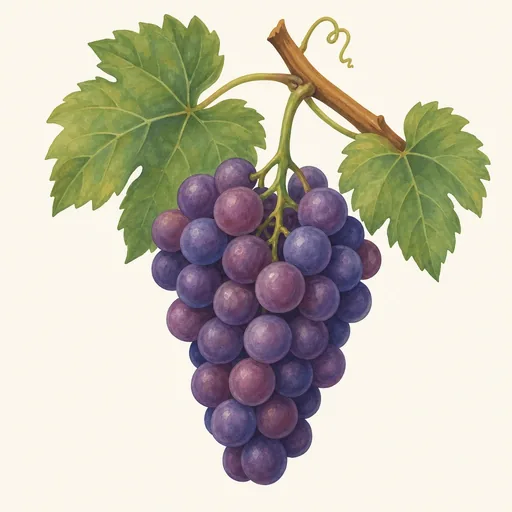
Grapes
Vitis vinifera · Vitaceae
- Plant outFrom 4 weeks before the last frost until the last frostMar 13 – Apr 16
- Space1.8–3 m (6–10 ft) apart
- HarvestAfter 2–3 years
Description
Grapes are small, round fruits that grow in clusters on woody vines. They come in various colors, including green, red, black, and yellow, and are known for their sweet or tart flavor. Grapes are rich in vitamins, minerals, and antioxidants, making them a popular fruit for fresh consumption as well as for making wine, juice, and raisins.
Growing Conditions
2–4 m (7–13 ft) tall, 1.8–3 m (6–10 ft) wide
- Smallest
- Largest
Full sun, 6+ hours
Moderate
Keep evenly moist, not soggy.
Ideal 18–30 °C (64–86 °F)
Survives down to −34 °C (−29 °F).
pH 5.5–7 · acidic to neutral
Where it Grows
Planting
When to Plant
Grapes are typically planted in early spring after the last frost has passed.
How to Plant
- Choose a well-drained site with full sun.
- Prepare the soil by tilling and adding compost.
- Space the plants about 6-8 feet apart.
- Dig a hole twice the width of the root ball and place the plant.
- Water thoroughly after planting.
Growth Timeline
- Establishing 2 years
- First harvest possible years 2–3
Planting Calendar
- Plant outdoors: from 4 weeks before the last frost until the last frost
- Plant out: Mar 13 – Apr 16
Care
Care Calendar
- Prune · Feb 13 – Apr 2
While dormant, remove most of last year's growth and retain fruiting canes or spurs on the established framework. - Stake · Mar 27 – May 28
Tie retained canes and new shoots to a sturdy trellis as they grow. - Mulch · Apr 10 – May 14
Spread mulch around the vine, keeping it clear of the trunk. - Thin · May 1 – Jun 11
Remove crowded or poorly placed shoots to improve light and airflow.
Watering
- Grapes require consistent moisture, especially during fruit development. Water deeply once a week.
Weeding
- Regularly remove weeds around the base of the plants to prevent competition for nutrients.
Mulching
- Apply a layer of organic mulch to help retain soil moisture and suppress weeds.
Fertilizing
- Use a balanced fertilizer yearly in early spring to support growth.
Thinning
- Thin clusters of grapes during growth to enhance air circulation and improve fruit size.
Pest Management
- Monitor for common pests like aphids and grape berry moth. Use organic insecticidal soap if necessary.
Harvesting
- Grapes are ready to harvest when they are fully colored and taste sweet. Check sugar levels using a refractometer.
Growing in Containers
Grows well in a pot of at least 50 litres (13 US gallons), with drainage holes. Best kept outdoors.
Propagation
From cuttings
- Take pencil-thick cuttings from dormant, healthy one-year-old canes.
- Cut each piece with three or four buds, keeping track of which end is the bottom.
- Plant the bottom end in moist, well-drained propagation mix, leaving one or two buds above the surface.
- Keep the mix moist and transplant after roots and new growth develop.
By layering
- Choose a healthy, flexible cane in spring.
- Bend a section to the ground and bury part of it, leaving the tip exposed.
- Pin the buried section in place and keep the soil moist.
- After roots form, cut the new plant from the parent vine and transplant it.
Companion Plants
Good neighbors
- Clover: Used as a vineyard groundcover, clover supports beneficial insects and adds nitrogen when its growth is managed to limit competition with the vines.
- Sweet alyssum: Its flowers attract hoverflies and other beneficial insects when planted near grapevines.
Common Problems
- White powdery coating
- Yellowing leaves
- Curled or cupped leaves
- Distorted new growth
Powdery mildew is a group of fungal diseases, not a single species. Different fungi infect different hosts, including…
- Yellowing leaves
- Spots on leaves
- Fuzzy gray mold
- Wilting
Downy mildew is a group of plant diseases caused by several species of oomycetes, or water molds, rather than one…
- Fuzzy gray mold
- Spots on leaves
- Wilting
- Soft or rotting stems
Gray mold, also called Botrytis blight, is a fungal disease caused most commonly by Botrytis cinerea. It affects many…
- Holes in leaves
- Insects visible on the plant
- Wilting
The Japanese beetle is an introduced scarab beetle that feeds on many garden plants, including roses, grapes, beans…
- Holes in leaves
- Stems chewed or cut through
- Flowers or buds dropping
Birds are a class of animals, not a single pest species. In gardens, their effects depend on the species, season, and…
- Powdery Mildew: Fungal disease that appears as a white powder on leaves.
- Botrytis Bunch Rot: Fungal infection that affects fruit in wet conditions.
Nutrition
Nutritional Benefits
- Rich in vitamins C and K
- High in antioxidants
- May promote heart health and support digestion
Nutritional Composition (per 100g)
| Nutrient | Amount |
|---|---|
| Calories | 69 |
| Protein | 0.72g |
| Carbohydrates | 18.1g |
| Fiber | 0.9g |
| Sugars | 15.48g |
| Fat | 0.16g |
| Vitamin C | 10.8mg |
| Vitamin K | 14.6mcg |
| Potassium | 191mg |
Varieties
This classic blue grape is popular for juice and jelly.
- seeded
- vigorous
- slip-skin
This sweet grape is often used for fresh eating and juice.
- seeded
- green-gold
- slip-skin
Its sweet, small berries suit fresh eating.
- early
- green
- seedless
This sweet table grape is a choice for colder regions.
- pink
- seedless
- cold hardy
It produces slip-skin berries with an American-grape flavor.
- blue
- seedless
- disease resistant
Its small, sweet berries ripen in compact clusters.
- red
- seedless
- cold hardy
This small-berried table grape is suited to short growing seasons.
- early
- red
- very cold hardy
It produces crisp table grapes where summers are warm and the growing season is long.
- red
- seedless
- warm-climate
More about varieties
- Concord: Sweet and juicy; often used for juice and jelly.
- Thompson Seedless: Green and seedless; popular for eating fresh and raisins.
- Cabernet Sauvignon: Dark-skinned; used primarily for wine production.
- Chardonnay: Versatile; used for both still and sparkling wines.
Health Benefits
- May lower the risk of heart disease.
- Contain resveratrol, which may have anti-aging properties.
- Help improve blood circulation.
Fun Facts
- Grapes can be fermented to produce wine, a practice dating back thousands of years.
- There are over 8,000 grape varieties cultivated worldwide.
- The largest grape production countries include China, the United States, and Turkey.
Notice an error or have a question about Grapes? Contact us