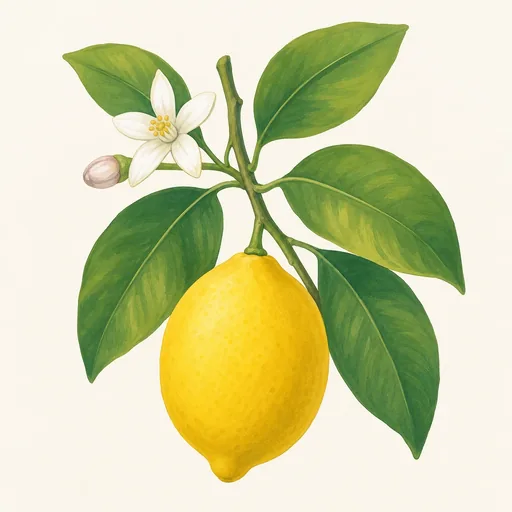
Lemon
Citrus × limon · Rutaceae
- Plant out2–4 weeks after the last frostApr 24 – May 14
- Space3–6 m (10–20 ft) apart
- HarvestAfter 1–3 years
Description
The lemon is the yellow, acidic fruit of an evergreen citrus tree. A typical fruit is oval, with a small point at one end, a fragrant rind, a layer of white pith, and juicy flesh divided into segments. Most cultivated lemons are strongly sour because their juice contains citric acid. The rind holds aromatic oils that give lemon zest its distinctive scent and flavor.
Lemon trees usually grow about 3–6 m tall, although pruning can keep them smaller. They have glossy green leaves, often-thorny branches, and white flowers that may be purple on the outside. Flowers and fruit can appear at different stages on the same tree, especially in warm climates. Common varieties include ‘Eureka’ and ‘Lisbon’; ‘Meyer’ is a sweeter, less acidic type commonly sold as a lemon.
Lemons grow best in full sun and well-drained soil. They need regular water while establishing and during dry periods, but waterlogged roots can cause problems. Trees are sensitive to hard frost, so gardeners in colder regions often grow them in containers and move them into shelter for winter. Commercial trees are generally propagated by grafting a chosen variety onto a suitable rootstock; seedlings may differ from their parent and take years to bear fruit.
The fruit is used for juice, zest, preserves, drinks, and seasoning. Its acidity helps balance rich or sweet foods and can slow browning in cut produce. Choose lemons that feel heavy for their size and have firm, unbroken skin. They can be kept briefly at room temperature or refrigerated for longer storage. Wash the rind before using the zest, especially if the fruit has been handled or coated after harvest. Lemon trees are grown across many subtropical and Mediterranean regions, as well as in suitably sheltered home gardens.
Growing Conditions
3–6 m (10–20 ft) tall, 3–5 m (10–16 ft) wide
- Smallest
- Largest
Full sun, 6+ hours
Tolerates part sun
Moderate
Keep evenly moist, not soggy.
Ideal 18–30 °C (64–86 °F)
Survives down to −5 °C (23 °F).
pH 5.5–7 · acidic to neutral
Where it Grows
Planting
When to Plant
Plant a lemon tree outdoors in spring, after the last frost, when the soil has warmed and the tree has a growing season to establish roots. In regions with mild, nearly frost-free winters and very hot summers, early autumn is also suitable: cooler weather reduces transplant stress while the soil remains warm. Avoid planting immediately before a frost, during a heatwave, or when the ground is waterlogged. Lemon trees are frost-sensitive, so permanent outdoor planting is best reserved for climates where freezing temperatures are uncommon. In colder areas, grow one in a container and move it to a bright, protected place before frost is forecast. Container-grown trees can be potted at other times of year, but spring is usually easiest because increasing light supports new growth. Whenever you plant, choose a period when you can check soil moisture regularly for the first several weeks.
How to Plant
Choose a sunny, sheltered site with well-drained soil and room for the tree’s mature canopy. Lemon trees need at least six hours of direct sun daily; more is generally better. If drainage is poor, use a raised bed or a container rather than planting in a soggy spot.
Water the tree in its nursery pot, then dig a hole about twice as wide as the root ball but no deeper. Remove the pot, gently loosen any tightly circling roots, and set the tree so the top of the root ball sits level with or slightly above the surrounding soil. Keep the graft union, if present, above the soil. Backfill with the soil you removed, firm gently, and water thoroughly. Do not bury the trunk or fill the planting hole with rich compost instead of native soil.
For a container, choose one with drainage holes, only modestly larger than the root ball, and fill it with a free-draining potting mix suitable for citrus. Plant at the same depth as in the nursery pot. Water until excess drains away. Outdoors, spread 5–8 cm (2–3 inches) of mulch over the root area, keeping it away from the trunk. Keep the soil evenly moist, not soggy, while roots establish.
Growth Timeline
- Establishing 1 year
- First harvest possible years 1–3
Planting Calendar
- Plant outdoors: 2–4 weeks after the last frost
- Plant out: Apr 24 – May 14
Care
Care Calendar
- Prune · Apr 10 – May 14
Remove dead or crossing branches after frost danger has passed. - Repot · Apr 10 – May 28
Repot container trees when rootbound, using a free-draining potting mix. - Feed · Apr 24 – Sep 3
Feed with a citrus fertilizer as directed on the label during active growth. - Protect · Sep 27 – Oct 24
Move potted trees indoors before freezing weather or protect outdoor trees from frost.
Watering
Water lemon trees deeply, then let the upper few inches of soil begin to dry before watering again. Check the soil rather than following a fixed schedule: heat, wind, rainfall, soil type, and tree size all change how quickly it dries. Newly planted trees need more frequent checks while their roots establish; established trees usually need less frequent but deeper watering. Apply water over the root area, not just beside the trunk, and make sure it soaks in rather than running off. For a potted lemon, water until excess drains from the bottom, then empty any saucer so the roots do not sit in water. Reduce watering during cool, slow-growing periods, but do not let the root ball dry out completely. Persistent sogginess can cause root problems, while prolonged drought can lead to leaf drop and poor fruit development. Yellow leaves alone do not diagnose either problem, so check soil moisture first.
Pruning
Prune lemon trees lightly to maintain an open, manageable shape and remove dead, broken, diseased, or crossing branches. Make clean cuts just outside a branch collar; avoid leaving stubs or cutting flush against the trunk. Remove shoots that grow from below the graft union, as these come from the rootstock rather than the fruiting variety. If low branches interfere with access or touch the ground, shorten or remove them gradually. Major pruning is rarely necessary and can reduce the next crop or expose previously shaded bark and fruit to sunburn. Where frost occurs, wait until the danger has passed before making substantial cuts; freeze damage is easier to assess after new growth begins. Clean tools between cuts when removing diseased wood. For a container tree, trim selectively to keep its canopy in proportion to the pot, rather than repeatedly shearing all new growth.
Weeding
Keep grass and weeds out of the area beneath a lemon tree, especially while it is young. They compete with its shallow feeder roots for water and nutrients and can make it harder to judge when the soil needs watering. Pull weeds by hand while the soil is moist, taking care not to disturb the roots. For established grass, remove small sections gradually rather than digging deeply around the trunk. A mulch layer can help suppress new weeds, but check it occasionally and pull any plants that grow through. Avoid string trimmers and mowers close to the trunk: bark damage can seriously harm a citrus tree. If using an herbicide nearby, follow the label and shield the lemon tree from spray drift; contact with leaves, green bark, or exposed roots may cause injury. In pots, remove weeds promptly before their roots become tangled with the lemon's roots.
Mulching
Spread about 2–3 inches (5–8 cm) of coarse organic mulch, such as wood chips, over the soil beneath the canopy. Extend it farther as the tree grows, but leave a clear gap of at least several inches around the trunk and graft union. Mulch conserves moisture, moderates soil temperature, and limits weeds without requiring cultivation around shallow citrus roots. Keep the layer loose rather than piling it into a mound, and top it up as it decomposes. If water runs off a dry mulch layer, water slowly enough to wet the soil underneath. In wet climates or poorly drained soil, use a thinner layer and check that the soil is not staying saturated. For container-grown lemons, a light surface mulch may help slow drying, but it should not obscure the soil so completely that you cannot check its moisture. Never let mulch press against the trunk.
Fertilizing
Feed lemons with a fertilizer labeled for citrus, following its directions for the tree's size and whether it grows in the ground or a container. Citrus needs nitrogen for healthy growth, along with other nutrients; applying more than the label recommends can damage roots and encourage leafy growth at the expense of fruit. Divide the annual amount into several applications during the active growing season instead of giving it all at once. In climates with winter frost, avoid feeding late in the season, when tender new growth could be damaged by cold. Water after applying granular fertilizer and keep it off the trunk. Potted trees may need more frequent, smaller feedings because watering washes nutrients from the mix. If leaves show persistent yellowing, first check drainage, watering, and soil pH; iron or other micronutrient deficiencies can resemble general underfeeding. Use a soil test or local extension advice before making large adjustments.
Pest Management
Inspect new shoots and the undersides of leaves regularly. Aphids, scale insects, mealybugs, and mites can occur on lemons; ants tending honeydew-producing insects may make infestations worse. Small outbreaks can often be managed by washing pests off with water, removing badly infested shoots, or using horticultural oil or insecticidal soap according to the label. Cover the affected surfaces thoroughly, but avoid spraying in extreme heat or when the product could harm visiting pollinators. Leaf-miner trails in young leaves are usually cosmetic on established trees; protect vigorous young trees if damage is severe, using locally recommended methods. Good drainage and careful watering help prevent root problems, while removing fallen or rotting fruit reduces opportunities for pests. Identify a pest before treating it, since local citrus pests and permitted controls vary. If a tree develops widespread blotchy yellowing, misshapen fruit, or rapid decline, seek local extension advice rather than repeatedly spraying.
Harvesting
Harvest lemons when they have reached the size and color typical of their variety and feel firm and heavy for their size. Most are picked when predominantly yellow, though a ripe lemon can retain some green, particularly in warm conditions. Fruit left on the tree may continue to color and soften, but citrus does not become sweeter after picking. Taste one fruit if you are unsure whether a crop is ready. Rather than pulling, twist ripe fruit gently or clip its stem with clean pruners, leaving a short stem to avoid tearing the rind. Handle lemons carefully: punctures and bruises shorten storage life. Trees may flower and fruit in more than one flush, so check regularly instead of expecting one harvest date. Remove damaged or decaying fruit. Store sound lemons in the refrigerator if you will not use them soon, and wash them before use.
Growing in Containers
Grows well in a pot of at least 40 litres (11 US gallons), with drainage holes. Can be grown indoors as a houseplant.
Propagation
From seed
- Remove seeds from a ripe lemon and rinse off the pulp.
- Sow the seeds promptly in moist seed-starting mix.
- Keep the mix warm and lightly moist until seedlings emerge.
- Pot up the seedlings when they have several leaves; expect fruiting to take years, if it occurs.
From cuttings
- Take a healthy, nonflowering stem cutting in spring or summer.
- Remove the lower leaves and dip the cut end in rooting hormone.
- Insert the cutting into a moist, free-draining rooting mix.
- Keep it warm, humid, and in bright indirect light until it roots.
By grafting
- Obtain healthy lemon budwood and a compatible citrus rootstock.
- Cut a T-shaped slit in the rootstock bark when it slips readily.
- Insert a lemon bud beneath the bark and wrap the union.
- After the bud takes, cut back the rootstock above it and remove rootstock shoots.
By layering
- Choose a healthy, pencil-thick branch.
- Remove a narrow ring of bark below a node.
- Wrap the exposed area with moist sphagnum moss and seal it with plastic.
- Once roots form in the moss, cut below them and pot the new plant.
Companion Plants
Good neighbors
- Sweet alyssum: Its flowers attract hoverflies and other beneficial insects that prey on citrus aphids.
Common Problems
- Yellowing leaves
- Sticky residue on leaves
- Black sooty coating
- Curled or cupped leaves
Aphids are small, soft-bodied insects that feed by piercing plants and drawing out sap. The group includes many…
- Winding tunnels in leaves
- Spots on leaves
- Leaves dropping
Leaf miners are the larvae of several kinds of flies, moths, beetles, and sawflies, rather than a single species with…
- Yellowing leaves
- Sticky residue on leaves
- Black sooty coating
- Stunted growth
Scale insects are small, sap-feeding insects that settle on garden and houseplants. Adults often look like bumps on…
- Yellowing leaves
- Wilting
- Stunted growth
- Leaves dropping
Root rot is a general name for the decay of plant roots, not a single disease with one scientific name. It can result…
- Brown or crispy leaf edges
- Wilting
- Bleached or scorched patches
- Leaves dropping
Frost damage is an injury caused when plant tissues become cold enough for ice to form or for cells to lose water to…
- Yellowing leaves: Often caused by overwatering, poor drainage, or a nutrient deficiency.
- Root rot: Develops in waterlogged soil and may cause wilting and leaf drop.
- Citrus pests: Aphids, scale insects, spider mites, and citrus leafminers can damage leaves and weaken the tree.
- Citrus diseases: Citrus canker causes raised lesions; citrus greening can cause blotchy leaves, misshapen fruit, and tree decline.
- Cold damage: Frost can injure leaves, blossoms, and developing fruit.
Varieties
A common supermarket-type lemon that can flower and fruit through much of the year in warm climates.
- classic tart fruit
- nearly thornless
- repeat bearing
A productive, cold-tolerant-for-a-lemon variety that usually has a strong winter-to-spring crop.
- classic tart fruit
- vigorous
- thorny
This widely grown lemon hybrid produces thin-skinned, fragrant fruit on a relatively small tree.
- compact
- less acidic
- container friendly
Often grown in pots, it bears unusually large, thick-rinded fruit.
- very large fruit
- thorny
- container friendly
Its striped young fruit and colorful leaves make it especially popular as an ornamental edible tree.
- variegated foliage
- pink flesh
- ornamental
More about varieties
- Eureka: A common supermarket lemon that bears fruit over much of the year in suitable climates.
- Lisbon: A vigorous, thorny variety with tart fruit; it generally tolerates cold better than Eureka.
- Meyer: A lemon hybrid with sweeter, less acidic fruit and a thin peel; popular for growing in containers.
- Ponderosa: A lemon hybrid known for its exceptionally large, thick-rinded fruit.
Health Benefits
Lemons are valued mainly as a flavorful way to add vitamin C to the diet. Vitamin C supports normal immune function, helps the body make collagen for skin and other tissues, and improves absorption of iron from plant foods. Lemon juice can therefore be useful on meals containing beans, lentils, or leafy greens.
Adding lemon to water may make plain water more appealing, which can help people drink enough fluids. The benefit comes primarily from hydration, not from any special “detox” effect. Lemon juice also contains citrate. For some people prone to certain kidney stones, adequate fluid intake and dietary citrate may help reduce stone formation, but lemon water is not a substitute for individualized medical advice or treatment.
Lemons contain small amounts of plant compounds, including flavonoids, but evidence does not show that eating lemons cures disease. They are most useful as part of a varied diet: juice and zest add flavor to foods without relying solely on salt or sugar. Lemon juice is acidic, so frequent sipping can wear down tooth enamel. Drinking it with meals or rinsing afterward with plain water can reduce exposure. It may also aggravate heartburn in people who are sensitive to acidic foods.
Fun Facts
- Lemon trees are evergreen and can carry flowers and fruit at the same time.
- A lemon can be mature while still green; cooler temperatures help its peel turn yellow.
- Meyer lemons are hybrids rather than true lemons.
- The fragrant yellow outer peel, called zest, contains aromatic oils used in cooking.
- Lemon flowers are often white inside with pink or purple on the outside of the petals.
Notice an error or have a question about Lemon? Contact us