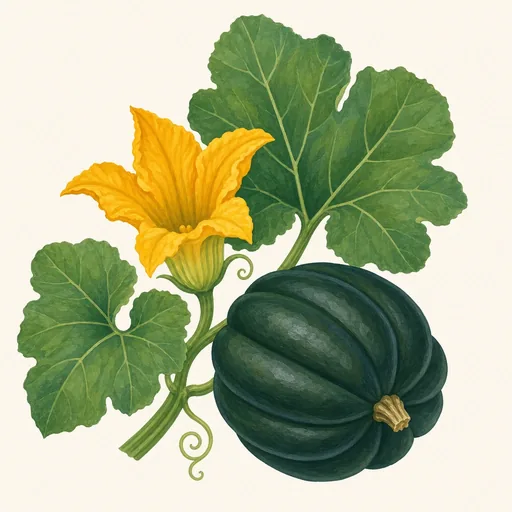
Acorn Squash
Cucurbita pepo · Cucurbitaceae
- Start indoors2–4 weeks before the last frostMar 13 – Apr 2
- Sow outdoors1–3 weeks after the last frostApr 17 – May 7
- Plant out1–3 weeks after the last frostApr 17 – May 7
- Space0.9–1.8 m (3–6 ft) apart
- Harvest80–100 days after plantingJul 6 – Sep 5
Description
Acorn squash, a popular winter squash variety, is known for its unique acorn shape, dark green skin, and sweet, orange flesh. Scientifically classified as Cucurbita pepo, it belongs to the Cucurbitaceae family, which includes other squashes, pumpkins, and cucumbers.
The plant typically grows as a sprawling vine, featuring broad, lobed leaves that can measure up to 12 inches across. The vines can stretch several feet, making them ideal for garden plots with ample space. Acorn squash does well in warm climates and is sensitive to frost, so it’s best to sow seeds directly outdoors after the last frost date or start them indoors a few weeks prior.
Acorn squash plants require full sun and well-drained, fertile soil. They thrive in soil enriched with organic matter, such as compost, which promotes healthy growth. Regular watering is essential, particularly during dry spells, but overwatering should be avoided to prevent root rot.
The plants produce small, yellow flowers that attract pollinators, particularly bees. Female flowers develop into the squash, which can be harvested when they are firm and the skin is hard. Typically, the squash reaches maturity about 75 to 100 days after sowing.
When harvested, acorn squash can be stored in a cool, dry place for several months. It is versatile in cooking, suitable for roasting, baking, or using in soups, and is valued for its nutritional content, being rich in vitamins A and C, fiber, and potassium.
Growing Conditions
30–60 cm (12–24 in) tall, 1.2–2.4 m (4–8 ft) wide
- Smallest
- Largest
Full sun, 6+ hours
Moderate
Keep evenly moist, not soggy.
Ideal 18–30 °C (64–86 °F)
Survives down to 0 °C (32 °F).
pH 6–7 · acidic to neutral
Where it Grows
Planting
When to Plant
Acorn squash (Cucurbita pepo) is a popular variety of winter squash known for its distinctive ribbed exterior and sweet, nutty flavor. Successful cultivation of acorn squash requires understanding the optimal planting times and conditions to ensure a bountiful harvest.
Ideal Planting Time
-
Frost-Free Dates: Acorn squash is sensitive to frost. As a general rule, you should plant acorn squash when the danger of frost has passed. This is typically in late spring, about 2 to 4 weeks after the last expected frost date in your area.
-
Soil Temperature: The ideal soil temperature for planting acorn squash is between 70°F to 95°F (21°C to 35°C). Before planting, it's wise to check the soil temperature using a soil thermometer. If the soil is still cool, it can hinder germination and lead to weak plants.
Planting Considerations
-
Growing Zones: Acorn squash thrives in USDA hardiness zones 3-10. Knowing your zone can help you determine the best time to plant and the growing conditions that will be most favorable.
-
Transplant vs. Direct Sow: Acorn squash can be started indoors 2-4 weeks before the last frost date and then transplanted outside, or it can be directly sown into the garden once the soil has warmed up. If starting seeds indoors, ensure you harden off the seedlings before transferring them outside to minimize shock.
-
Spacing: When planting, space your seeds about 2-3 feet apart in rows that are approximately 3 feet apart. This allows enough room for the vines to spread, which is important for air circulation and sunlight exposure.
Soil Preparation
-
Nutrient-Rich Soil: Acorn squash prefers well-draining, fertile soil. Before planting, enrich your soil with compost or well-rotted manure to enhance soil fertility.
-
pH Levels: Aim for a soil pH of 6.0 to 7.0, which is ideal for acorn squash. A soil test can help determine if amendments are needed.
Conclusion
By understanding the proper timing and conditions for planting acorn squash, you can maximize your chances of a successful harvest. Remember to monitor local weather conditions and soil temperatures, and prepare your garden bed well in advance to provide your plants with the best start possible. Happy gardening!
How to Plant
Planting Acorn Squash: A Guide for Garden Enthusiasts
Acorn squash (Cucurbita pepo) is a delightful winter squash known for its unique shape and sweet, nutty flavor. Planting this vegetable correctly ensures a bountiful harvest.
Timing: Acorn squash should be planted after the last frost date in your area, typically from late spring to early summer when the soil temperature reaches at least 60°F (15°C).
Location: Choose a sunny spot in your garden. Acorn squash thrives in well-drained soil enriched with organic matter. A soil pH of 6.0 to 6.8 is ideal.
Planting Seeds: You can start seeds indoors about 3-4 weeks before the last frost or directly sow them in the garden. When planting directly, create hills about 3-4 feet apart, with 3-4 seeds per hill. Plant seeds 1 inch deep. Once seedlings emerge, thin them out to 2-3 strong plants per hill.
Watering and Care: Water regularly, ensuring the soil remains consistently moist but not waterlogged. Mulching can help retain moisture and suppress weeds. As the plants grow, support them with trellises if needed.
By following these steps, you can enjoy a bountiful harvest of acorn squash in the fall!
Growth Timeline
- Germination 5–10 days
- Seedlings indoors 2–6 weeks
- Growing in the garden 80–100 days
- Harvest 2–4 weeks
Planting Calendar
- Start seeds indoors: 2–4 weeks before the last frost
- Sow outdoors: 1–3 weeks after the last frost
- Plant outdoors: 1–3 weeks after the last frost
- Germination: 5–10 days
- Start indoors: Mar 13 – Apr 2
- Sow outdoors: Apr 17 – May 7
- Plant out: Apr 17 – May 7
- Harvest: Jul 6 – Sep 5
Care
Care Calendar
- Thin · Apr 24 – May 14
Thin seedlings to one strong plant per planting spot. - Mulch · May 1 – May 28
Apply straw or other organic mulch once the soil has warmed. - Feed · May 15 – Jun 18
Side-dress lightly when vines begin flowering, keeping fertilizer off the stems.
Watering
When watering acorn squash plants, the best strategy is to provide consistent moisture while avoiding waterlogging. Acorn squash thrives in well-drained soil; therefore, it is essential to water deeply but infrequently. Aim for about 1 to 1.5 inches of water per week, adjusting based on rainfall and temperature fluctuations.
Soil moisture is vital, especially during flowering and fruit-setting phases; this is when the plants require the most water. Use a soaker hose or drip irrigation to deliver water directly to the root zone, which helps prevent overhead moisture that can encourage fungal diseases. Water in the morning to allow the soil surface to dry during the day, reducing the risk of disease, and check the soil moisture regularly. Mulching around the plants can help retain soil moisture and regulate temperature, further enhancing the health and vigor of your acorn squash.
Pruning
Pruning acorn squash (Cucurbita pepo) strategically enhances plant health and fruit production. Begin by ensuring that your plant has sufficient space and airflow, which minimizes disease risk. As the plant grows, focus on removing any dead, damaged, or diseased leaves and stems. This not only improves aesthetics but also directs energy toward fruit development.
In mid-summer, selectively trim back some of the main vines, especially those that have stopped producing flowers or fruit, to encourage further growth and redirect nutrients to more productive parts of the plant. While pruning, limit your cuts to about one-third of the plant to avoid stress. Be cautious not to prune any flowering or fruit-bearing stems, as they are vital for your harvest. Regularly monitor the growth and adjust your pruning strategy based on the plant’s overall health and fruiting progress. Proper pruning will lead to a healthier plant and a bountiful harvest of nutritious acorn squash.
Weeding
Weeding around Acorn Squash (Cucurbita pepo) plants is crucial for promoting healthy growth and maximizing yields. The best strategy involves a combination of prevention and manual weeding techniques.
Begin with mulch: Apply a layer of organic mulch, such as straw or wood chips, around the plants to suppress weed growth, retain moisture, and maintain soil temperature. It also helps to reduce soil erosion.
Regular inspection is vital. Check the area around the squash plants weekly to catch weeds early, before they establish. Hand-pulling is the preferred method for weeding around Acorn Squash, as it minimizes root disturbances. It’s best to pull weeds when the soil is moist, making them easier to uproot.
Consider using a hoe for larger infestations but be cautious; squash plants have shallow roots that can be damaged. Always weed carefully, focusing on the areas closest to your plants to ensure their health and productivity.
Mulching
Mulching is an essential practice for growing Acorn Squash, providing benefits such as moisture retention, temperature regulation, and weed suppression. The best strategy involves applying an organic mulch, such as straw, shredded leaves, or a mix of grass clippings, around the base of the plant. Start by waiting until the soil has warmed up in the early summer, as Acorn Squash prefers warm conditions.
Apply a 2-4 inch layer of mulch, ensuring that it is kept away from the stems to prevent rot. This barrier not only conserves moisture by reducing evaporation but also helps maintain a stable soil temperature. Additionally, keep an eye on the mulch to ensure it doesn’t decompose too quickly; replenish as needed throughout the growing season. This approach will help foster a healthy growing environment for your Acorn Squash, leading to a bountiful harvest.
Fertilizing
Fertilizing acorn squash effectively requires a balanced approach to ensure robust growth and fruit production. Start by applying a well-rounded, slow-release fertilizer rich in nitrogen, phosphorus, and potassium at planting time. A typical ratio might be 10-10-10 or 5-10-10, promoting strong leaf development and flowering.
During the growing season, you can supplement with a nitrogen-rich fertilizer, especially when the plants are actively growing, but be cautious not to over-fertilize, as this can lead to excessive foliage and reduced fruit quality. Consider side-dressing with compost or well-rotted manure when the plants are around 6 inches tall and again when they begin to flower.
Water the plants thoroughly after fertilizer application to help nutrients penetrate the soil. Regular monitoring of the plant's growth can guide adjustments in fertilization, ensuring they thrive and produce an abundant harvest of flavorful acorn squash.
Growing in Containers
Grows well in a pot of at least 50 litres (13 US gallons), with drainage holes. Best kept outdoors.
Propagation
From seed
- Wait until frost danger has passed and soil is at least 70°F (21°C).
- Sow seeds about 1 inch deep in fertile, well-drained soil.
- Space planting sites 3–4 feet apart.
- Keep the soil evenly moist until seedlings emerge.
- Thin seedlings to leave one or two strong plants per site.
Companion Plants
Good neighbors
- Corn: Corn and squash are traditionally grown together in Three Sisters gardens, where squash vines cover the ground between corn stalks.
- Pole beans: Pole beans are a traditional Three Sisters companion that can climb nearby corn while squash spreads below.
- Nasturtiums: Nasturtium flowers attract pollinators that can visit squash blossoms.
Common Problems
- Yellowing leaves
- Pale speckles or stippling
- Wilting
- Stunted growth
Squash bugs are sap-feeding insects that attack squash, pumpkins, and other cucurbits. Adults and nymphs pierce plant…
- Wilting
- Yellowing leaves
- Stunted growth
- Stems chewed or cut through
The squash vine borer is a clearwing moth whose caterpillars tunnel inside squash stems. It primarily attacks summer…
- Holes in leaves
- Wilting
- Stunted growth
- Insects visible on the plant
Cucumber beetles are small leaf beetles that feed on cucumbers, melons, squash, pumpkins, and other cucurbits. In…
- White powdery coating
- Yellowing leaves
- Curled or cupped leaves
- Distorted new growth
Powdery mildew is a group of fungal diseases, not a single species. Different fungi infect different hosts, including…
- Flowers or buds dropping
- Distorted new growth
Poor pollination occurs when too little viable pollen reaches a flower’s receptive stigma, or when pollen fails to…
Nutrition
Nutritional Composition (per 100g)
| Nutrient | Amount per 100g | % Daily Value |
|---|---|---|
| Calories | 40 | 2% |
| Protein | 1g | 2% |
| Total Fat | 0.1g | 0% |
| Saturated Fat | 0g | 0% |
| Carbohydrates | 10g | 3% |
| Dietary Fiber | 1.2g | 5% |
| Sugars | 2g | - |
| Vitamin A | 83µg | 9% |
| Vitamin C | 21mg | 23% |
| Calcium | 18mg | 2% |
| Iron | 0.5mg | 3% |
| Potassium | 348mg | 7% |
| Magnesium | 18mg | 4% |
Varieties
A classic dark-green acorn squash with orange flesh.
- heirloom
- vining
Its bush habit suits gardens with limited space.
- compact
- early
It produces small squash suited to individual servings.
- compact
- small fruit
Its fruit ripens to a distinctive golden-yellow color.
- golden skin
- vining
This bush variety is bred for resistance to powdery mildew.
- compact
- powdery mildew resistant
Its cream-and-green patterned fruit is both edible and ornamental.
- striped fruit
- sweet flesh
More about varieties
Acorn squash (Cucurbita pepo) is a popular winter squash known for its distinctive acorn shape, smooth skin, and rich flavor. It is typically harvested in the fall and is appreciated for its versatility in cooking, nutritional benefits, and long storage capabilities. Here are some common varieties of acorn squash that you might consider growing in your home garden:
1. Table Queen
- Description: This is one of the most traditional varieties of acorn squash. Table Queen features a dark green skin with deep ribs and a sweet, flavorful orange flesh. It is known for its excellent storage qualities, allowing it to last several months when kept in a cool, dry place.
- Taste Profile: Sweet and nutty, making it a favorite for baking and roasting.
2. Honey Bear
- Description: Honey Bear is a smaller acorn squash variety, typically averaging 1-2 pounds. It has a smooth, dark green skin and is known for its sweet flavor and creamy texture. This variety is ideal for small families or individual servings.
- Taste Profile: Extremely sweet, excellent for pureeing and in desserts.
3. Green Acorn
- Description: The classic green acorn squash, this variety has a somewhat bumpy skin and is larger than some of its counterparts. Green acorn squash is hardy and can be stored well through the winter months.
- Taste Profile: Slightly milder flavor, often enhanced with spices like cinnamon or nutmeg when cooked.
4. Sunshine
- Description: A more recent addition to the acorn squash family, Sunshine features bright yellow skin and a sweeter taste overall. Its vibrant color makes it an attractive choice for fall decorations as well as culinary use.
- Taste Profile: Sweeter than traditional green varieties, it lends itself well to sweeter dishes and salads.
5. Turk’s Turban
- Description: Although technically not an acorn squash, Turk’s Turban is often grouped with them due to its similar shape and culinary uses. This variety has a unique, multi-colored exterior and a sweet, rich flesh.
- Taste Profile: Slightly more complex flavor, often used in soups and spiced dishes.
6. Sweet Dumpling
- Description: Another variety often associated with acorn squashes, Sweet Dumpling is small, round, and features a white skin with green stripes. It is known for its delectable sweetness and tender flesh, making it suitable for various recipes.
- Taste Profile: Remarkably sweet and ideal for roasting or stuffing.
Conclusion These varieties of acorn squash offer a range of flavors, sizes, and colors, making them fantastic choices for any amateur gardener. Whether you’re looking to fill your dinner table with delicious seasonal dishes or add visual interest to your garden with diverse squash, each type has its unique appeal. Be sure to consider your climate, garden space, and personal flavor preferences when selecting which varieties to grow. Enjoy experimenting with different recipes and discovering the delightful versatility of acorn squash!
Health Benefits
Acorn squash (Cucurbita pepo) is not only a delightful culinary ingredient but also offers numerous health benefits, making it a popular choice among health-conscious individuals. Rich in vitamins A and C, acorn squash supports immune function and skin health. Vitamin A, in particular, is crucial for maintaining good vision and overall cellular health.
The high dietary fiber content in acorn squash promotes digestive health by encouraging regular bowel movements and preventing constipation. Fiber also aids in blood sugar regulation, making this vegetable a suitable option for those managing diabetes.
Additionally, acorn squash is low in calories and contains valuable antioxidants, such as beta-carotene, which combat oxidative stress and inflammation in the body. This can contribute to a lowered risk of chronic diseases, including heart disease and certain cancers.
Moreover, the presence of potassium in acorn squash helps regulate blood pressure levels, promoting cardiovascular health. Its carbohydrate content provides a wholesome source of energy, making it an excellent addition to a balanced diet. These attributes combine to position acorn squash as a nutritious, versatile plant that can support various health and wellness goals for amateur gardeners and home cooks alike.
Fun Facts
-
Shape and Color Variation: Acorn squash is named for its unique shape that resembles an acorn. It typically boasts a dark green exterior, but varieties can also display shades of orange and pale green, adding visual interest to gardens and tables alike.
-
Nutritional Powerhouse: Rich in vitamins A and C, fiber, and potassium, acorn squash is not just a tasty autumn vegetable; it's also packed with nutrients that support eye health, boost the immune system, and promote digestive health.
-
Culinary Versatility: Acorn squash can be prepared in various ways—roasted, steamed, or pureed. Its sweet, nutty flavor makes it a fantastic addition to soups, salads, and even desserts, showcasing its culinary flexibility.
-
Frost Sensitivity: As a warm-season crop, acorn squash is sensitive to frost. It's best to plant it outdoors only after the danger of frost has passed to ensure a successful harvest.
-
Harvest Season: Typically harvested in late summer to early fall, acorn squash is usually ready to pick when its skin hardens and turns a deep color. The squash can last for several months if stored in a cool, dry place, making it a great choice for fall and winter meals.
These intriguing aspects of acorn squash highlight its appeal as both a garden staple and a nutritious vegetable in the kitchen.
Notice an error or have a question about Acorn Squash? Contact us