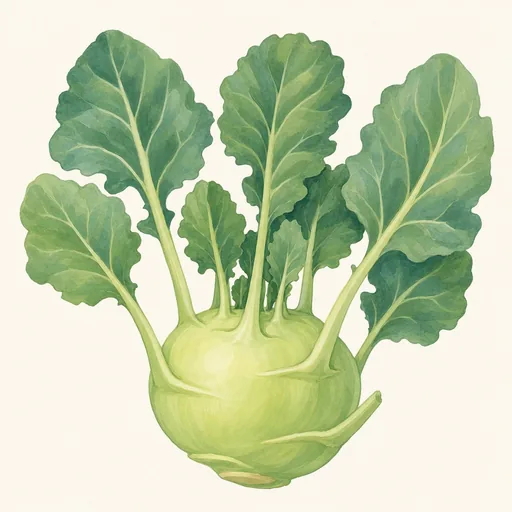
Kohlrabi
Brassica oleracea var. gongylodes · Brassicaceae
- Start indoors4–6 weeks before the last frostFeb 27 – Mar 19
- Sow outdoors2–6 weeks before the last frostFeb 27 – Apr 2
- Plant out2–4 weeks before the last frostMar 13 – Apr 2
- Plant in autumn8–10 weeks before the first autumn frostAug 16 – Sep 5
- Space15–25 cm (6–10 in) apart
- Harvest45–65 days after plantingApr 27 – Jun 27
Description
Kohlrabi, also known as turnip cabbage, is a member of the Brassica oleracea species, which includes relatives like cabbage, broccoli, and Brussels sprouts. Characterized by its unique bulbous stem that swells above the ground, this biennial plant is cultivated primarily as an annual vegetable for its crunchy stem, which can be green or purple in color. The edible part of kohlrabi resembles a turnip, hence its name, but it’s more closely related to the cabbage family.
Kohlrabi thrives in cooler climates and is typically grown in the spring or fall. It prefers well-drained, fertile soil enriched with organic matter and thrives in full sun. The growing period usually lasts about 50 to 70 days, depending on the variety. Regular watering and consistent moisture are essential to prevent the stems from becoming tough and woody.
The flavor of kohlrabi is mild and mildly sweet, often described as a cross between a radish and a cabbage. It can be eaten raw, sliced into salads, or cooked in various dishes. The leaves are also edible and can be used similarly to kale or collards.
While relatively low in calories, kohlrabi is rich in vitamins C and K, as well as fiber, making it a nutritious addition to the garden and your diet. Pests like aphids and cabbage worms may pose challenges, but proper care and crop rotation can help mitigate these issues. This hardy vegetable is not only versatile in the kitchen but also a fun and rewarding plant to grow for amateur gardeners.
Growing Conditions
25–45 cm (10–18 in) tall, 25–40 cm (10–16 in) wide
- Smallest
- Largest
Full sun, 6+ hours
Tolerates part sun
Moderate
Keep evenly moist, not soggy.
Ideal 10–24 °C (50–75 °F)
Survives down to −7 °C (19 °F).
pH 6–7.5 · neutral
Where it Grows
Planting
When to Plant
When to Plant Kohlrabi: Timing for Success
Kohlrabi (Brassica oleracea var. gongylodes), a unique member of the cabbage family, is known for its crunchy, bulbous stem which can be enjoyed both raw and cooked. To achieve a bountiful harvest, understanding the right planting time is crucial.
1. Understanding Your Climate Zone: Kohlrabi thrives in cooler temperatures, making it a prime candidate for spring and fall planting. Ideally, it prefers temperatures between 60°F and 70°F (15°C to 21°C). Knowing your USDA Hardiness Zone can help you determine the best planting window for your region.
2. Spring Planting: For spring planting, sow kohlrabi seeds indoors 4 to 6 weeks before the last expected frost date in your area. Transplant the young seedlings outdoors 2 to 4 weeks before this frost date. Direct sowing is also an option; wait until the soil temperature reaches about 45°F (7°C) to ensure optimal germination.
3. Fall Planting: In areas with mild autumns, kohlrabi can be planted for a fall harvest. Start seeds indoors in mid to late summer or sow directly outdoors about 8 to 10 weeks before the first expected frost. This timing allows the kohlrabi to mature in cooler weather, enhancing its flavor.
4. Signs of Maturity: Keep a close eye on the plants as they grow. Kohlrabi is typically ready to harvest 50 to 65 days after planting. Harvest when the stem bulbs are 3 to 4 inches in diameter for the best texture and taste, before they become woody or tough.
5. General Tips:
- Use a soil thermometer to check soil temperature before planting.
- Keep kohlrabi well-watered, especially during dry spells, but avoid waterlogging.
- Apply a balanced fertilizer to ensure robust growth.
By following these guidelines, you can ensure that your kohlrabi plants are sown at the right time for a delicious and healthy harvest!
How to Plant
Kohlrabi, a member of the brassica family, is known for its unique bulbous stem and crisp texture, making it a favorite in many gardens. To plant kohlrabi successfully, timing and soil preparation are key.
Timing: Kohlrabi thrives in cooler weather, making early spring or late summer the ideal times for planting. In temperate zones, aim to sow seeds indoors 4-6 weeks before the last frost or directly outdoors 2-4 weeks before the last frost date.
Soil Preparation: Choose a well-drained location with rich, loamy soil, ideally with a pH range of 6.0 to 6.8. Prior to planting, amend the soil with organic matter, such as compost, to enhance nutrient content and moisture retention.
Planting: Sow seeds ½ inch deep and spaced about 12 inches apart for the best results, as kohlrabi needs room for its bulb to develop. If starting indoors, transplant seedlings outdoors once they've developed their first true leaves and when the nighttime temperatures are consistently above 50°F.
Care: Ensure consistent moisture, avoiding both drought and waterlogging. Fertilize lightly with a balanced organic fertilizer to promote healthy growth.
With these steps, you can enjoy fresh and delicious kohlrabi from your garden!
Growth Timeline
- Germination 5–10 days
- Seedlings indoors -10–21 days
- Growing in the garden 45–65 days
- Harvest 1–3 weeks
Planting Calendar
- Start seeds indoors: 4–6 weeks before the last frost
- Sow outdoors: 2–6 weeks before the last frost
- Plant outdoors: 2–4 weeks before the last frost
- Autumn planting: 8–10 weeks before the first autumn frost
- Germination: 5–10 days
- Start indoors: Feb 27 – Mar 19
- Sow outdoors: Feb 27 – Apr 2
- Plant out: Mar 13 – Apr 2
- Autumn planting: Aug 16 – Sep 5
- Harvest: Apr 27 – Jun 27
Care
Care Calendar
- Thin · Mar 13 – Apr 23
Thin spring seedlings to the spacing on the seed packet so the swollen stems have room to grow. - Thin · Aug 16 – Sep 19
Thin autumn seedlings promptly to prevent crowding. - Mulch · Apr 10 – May 14
Apply a light layer of mulch once seedlings are established to keep soil evenly moist. - Mulch · Aug 30 – Oct 3
Mulch around autumn plants to conserve moisture during stem growth.
Watering
Effective watering is crucial for the successful cultivation of kohlrabi, a unique member of the cabbage family that thrives in well-draining, consistently moist soil. The best strategy involves a deep watering regimen, where you provide water directly to the root zone rather than a light surface sprinkle. This encourages deep root growth, vital for the plant's stability and nutrient uptake.
Water kohlrabi regularly, aiming for about 1 to 1.5 inches of moisture per week, adjusting for local weather conditions. It's essential to monitor the soil; use your finger to check moisture levels below the surface. Water when the top inch of soil feels dry. Avoid overhead watering to reduce the risk of fungal diseases. Mulching can help retain soil moisture and suppress weeds, providing a more stable environment for your kohlrabi to thrive. Remember, consistency is key for optimal growth and bulb development.
Pruning
Kohlrabi, a member of the Brassica family, benefits from strategic pruning to promote healthy growth and maximize yield. The best strategy for pruning involves monitoring plant development, ideally during the early stages of growth. Begin by removing any yellowing or dead leaves at the base of the plant to improve air circulation and reduce disease risk. As the kohlrabi bulb develops, it's essential to thin out crowded seedlings to ensure that each plant has enough space to grow, ideally 6 to 8 inches apart. Additionally, consider cutting the lower leaves that are shading the bulb to encourage even sun exposure, which aids in bulb sizing. Pruning should be done with clean, sharp scissors to prevent injury and infection. This approach not only enhances airflow but also helps in directing the plant's energy toward bulbing, resulting in a healthier and more productive kohlrabi harvest.
Weeding
Weeding is essential for the successful cultivation of Kohlrabi (Brassica oleracea var. gongylodes), as it helps prevent competition for nutrients, water, and light. A good strategy involves several steps:
-
Mulching: Applying a layer of organic mulch—such as straw or wood chips—around the base of the Kohlrabi can suppress weed growth, retain moisture, and improve soil quality.
-
Hand Weeding: Regularly inspect your garden and manually remove weeds by hand, ensuring you pull them out by the roots to prevent regrowth. This is best done after a rain, when soil is softer.
-
Cultivation: Use a hoe or cultivator to loosen the soil around the plants, which can uproot young weeds. Be cautious not to damage the shallow roots of the Kohlrabi.
-
Timing: Weeding should be performed frequently, especially when weeds are small, as they compete most aggressively with young Kohlrabi plants. Regular monitoring is key to keeping the garden healthy.
Mulching
Mulching is an effective technique for growing kohlrabi, helping to maintain moisture, suppress weeds, and regulate soil temperature. The best strategy involves the following steps:
-
Timing: Apply mulch shortly after planting or when the seedlings have established, ideally 2-4 weeks post-planting.
-
Material Selection: Use organic materials such as straw, grass clippings, shredded leaves, or wood chips, as these break down and enrich the soil. Aim for a thickness of about 2-3 inches to effectively block light and inhibit weed growth.
-
Application: Gently spread the mulch around the base of the kohlrabi, leaving a few inches of space around the stem to prevent rot.
-
Monitoring: Regularly check moisture levels under the mulch, as organic materials may require replenishing every few months to maintain effectiveness.
By following these steps, you’ll promote healthier kohlrabi plants and improve overall garden conditions.
Fertilizing
Fertilizing kohlrabi requires a balanced approach to ensure optimal growth and development. Start by enriching the soil with organic matter, such as compost or well-rotted manure, prior to planting. This practice improves soil structure and provides essential nutrients.
Once the plants are established, apply a balanced, slow-release fertilizer, such as a 10-10-10 NPK blend, about two to four weeks after transplanting or when seedlings are around 4 to 6 inches tall. It’s best to follow the manufacturer's instructions for application rates.
As kohlrabi is a nitrogen-loving crop, consider a side-dressing of nitrogen-rich fertilizer (like blood meal or fish emulsion) midway through the growing season to promote healthy leaf growth and bulb development. Ensure you water gently after fertilization to aid nutrient absorption, and keep an eye on the plants for signs of nutrient deficiency, such as yellowing leaves, adjusting your fertilization strategy as needed.
Growing in Containers
Grows well in a pot of at least 10 litres (2.6 US gallons), with drainage holes. Best kept outdoors.
Propagation
From seed
- Sow seeds directly outdoors in early spring or for a fall crop.
- Plant seeds about 1/2 inch (1 cm) deep in moist soil.
- Keep the soil evenly moist until seedlings emerge.
- Thin seedlings to about 4–6 inches (10–15 cm) apart.
Companion Plants
Good neighbors
- Lettuce: Lettuce grows between young kohlrabi plants and can be harvested before the kohlrabi needs the space.
- Onions: Onions grow upright and take up little space beside kohlrabi.
Keep apart from
- Cabbage: Cabbage shares kohlrabi's pests and diseases, including clubroot, so growing them together concentrates susceptible plants.
Common Problems
- Yellowing leaves
- Sticky residue on leaves
- Black sooty coating
- Curled or cupped leaves
Aphids are small, soft-bodied insects that feed by piercing plants and drawing out sap. The group includes many…
- Holes in leaves
- Insects visible on the plant
- Stunted growth
“Cabbage worms” commonly refers to the larvae of the cabbage white butterfly, Pieris rapae, also called the imported…
- Galls or swellings
- Wilting
- Stunted growth
- Yellowing leaves
Clubroot is a soilborne disease of cabbage-family plants, including cabbage, broccoli, cauliflower, kale, Brussels…
- Holes in leaves
- Stunted growth
- Wilting
Flea beetles are a group of small leaf beetles named for their ability to jump when disturbed. Most adults are about…
- Flowering too early (bolting)
Bolting is the premature switch from leafy or root growth to producing a flower stalk and seeds. It is a normal part…
Nutrition
Nutritional Composition (per 100g)
| Nutrient | Amount per 100g | % Daily Value |
|---|---|---|
| Calories | 27 | 1% |
| Protein | 1.7 g | 3% |
| Total Fat | 0.1 g | 0% |
| Carbohydrates | 6.2 g | 2% |
| Dietary Fiber | 3.6 g | 14% |
| Sugars | 2.6 g | - |
| Vitamin C | 62 mg | 69% |
| Vitamin K | 0.4 mcg | <1% |
| Potassium | 425 mg | 9% |
| Calcium | 24 mg | 2% |
| Iron | 0.8 mg | 4% |
Varieties
A traditional pale green variety best harvested while its swollen stem is small and tender.
- heirloom
- early
Its purple skin contrasts with crisp white flesh.
- heirloom
- early
A fast-maturing choice for a short cool-season growing window.
- early
- compact
This purple hybrid produces tender, mildly flavored swollen stems.
- early
- tender
Its unusually large stems remain tender when given enough time and space to grow.
- large
- tender
This slow-growing variety can reach a large size without becoming as woody as typical kohlrabi.
- large
- heirloom
More about varieties
Kohlrabi, a member of the Brassica family, is a popular vegetable with a unique bulbous stem that can be enjoyed raw or cooked. It comes in several varieties, each exhibiting distinct characteristics in terms of flavor, texture, and color. Here’s a closer look at some of the common varieties of kohlrabi:
1. Green Kohlrabi
- Description: This variety typically has a pale green skin and a mild, sweet flavor. It is one of the most commonly grown types.
- Uses: Green kohlrabi can be eaten raw in salads, grated for slaws, or cooked in stir-fries or soups.
2. Purple Kohlrabi (or Purple Vienna)
- Description: This variety features a striking purple skin, with a similar flavor and texture to its green counterpart. The vibrant color makes it visually appealing in dishes.
- Uses: It can be eaten raw, pickled, or roasted, and its color adds visual interest to salads and garnishes.
3. White Kohlrabi (or White Vienna)
- Description: This variety has a pale white or creamy skin and is known for its crisp texture and mild flavor.
- Uses: White kohlrabi is versatile and can be used in a variety of culinary applications, including raw preparations, steaming, and baking.
4. Leafy Kohlrabi (or Kohlrabi Greens)
- Description: While not a variety of the bulb itself, many kohlrabi plants produce edible green leaves that are nutritious and flavorful.
- Uses: The leaves can be sautéed, added to soups, or used in salads, offering a peppery taste similar to kale or collards.
5. Triumph Kohlrabi
- Description: This hybrid variety is known for producing larger bulbs and has a flat, globe-like shape. It offers excellent disease resistance.
- Uses: Triumph kohlrabi is a great choice for storage and can be used in various culinary dishes, maintaining its flavor and texture.
6. Early White Vienna
- Description: This early-maturing variety produces small to medium-sized bulbs with a tender consistency and light flavor.
- Uses: Ideal for home gardens, it can be harvested early to enjoy as baby kohlrabi or allowed to mature for larger sizes.
Conclusion
When choosing a variety of kohlrabi to grow, consider the flavor preferences, intended culinary uses, and growing conditions in your garden. Each variety adds its own unique twist to your recipes, making kohlrabi a versatile and nutritious addition to the vegetable garden. With its rapid growth and adaptability, kohlrabi is an excellent choice for both novice and experienced gardeners alike.
Health Benefits
Kohlrabi, a member of the brassica family, is not only a unique and versatile vegetable but also offers several health benefits that contribute to overall wellness. One of its most notable attributes is its low-calorie count combined with high nutritional content; it is rich in vitamins C and K, both vital for immune function and blood clotting respectively.
The high fiber content in kohlrabi aids digestion, promoting gut health and preventing constipation. This allows for better nutrient absorption and helps maintain a healthy weight. Additionally, the vegetable is packed with antioxidants that combat oxidative stress and inflammation, potentially lowering the risk of chronic diseases.
Moreover, kohlrabi's potassium content supports heart health by helping to manage blood pressure levels. It also contains compounds that may assist in detoxification processes within the body. Eating kohlrabi can bolster bone health due to its mineral profile, particularly calcium and magnesium.
Lastly, this cruciferous vegetable has been studied for potential anticancer properties, as many members of the brassica family are known for containing glucosinolates, which may inhibit the growth of cancer cells. Including kohlrabi in a balanced diet can thus offer diverse health benefits while enhancing meals with its crunchy texture and mild, sweet flavor.
Fun Facts
-
Unique Shape and Taste: Kohlrabi, often referred to as "turnip cabbage," is known for its distinctive bulbous shape that resembles a swollen stem. Its taste is a delightful combination of mild sweetness and a crunch akin to broccoli stems, making it a versatile addition to salads and slaws.
-
Two Types and Colors: This vegetable comes in both green and purple varieties. While the taste remains similar, the purple kohlrabi tends to be slightly sweeter and is often favored for its vibrant color, which adds visual appeal to dishes.
-
Rich Nutritional Profile: Kohlrabi is low in calories and high in fiber, making it a fantastic choice for health-conscious eaters. It’s packed with vitamins C and K, potassium, and other essential nutrients, promoting a balanced diet and supporting immune health.
-
Quick Growing Cycle: Kohlrabi is a fast-growing vegetable, typically ready for harvest in just 6 to 10 weeks after planting. This makes it an excellent option for gardeners looking to enjoy fresh produce in a short time frame.
-
Versatile Culinary Uses: While often used raw in salads or as a crunchy snack, kohlrabi can also be roasted, boiled, or stir-fried. Its versatility allows it to be integrated into a variety of cuisines, complementing both savory and sweet dishes.
Notice an error or have a question about Kohlrabi? Contact us