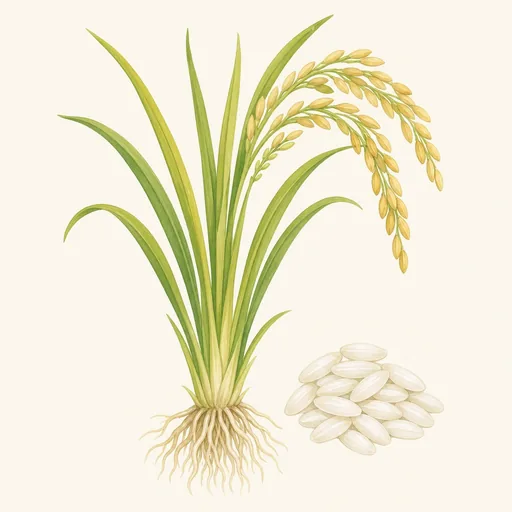
White Rice
Oryza sativa · Poaceae
- Start indoors4–6 weeks before the last frostFeb 27 – Mar 19
- Sow outdoors3–6 weeks after the last frostMay 1 – May 28
- Plant out2–4 weeks after the last frostApr 24 – May 14
- Space15–25 cm (6–10 in) apart
- Harvest100–150 days after plantingAug 2 – Oct 25
Description
The White Rice plant, scientifically known as Oryza sativa, is a staple food crop predominantly cultivated in warm and humid regions across the globe. It is a member of the Poaceae family, which includes grasses. The plant typically grows to a height of about 3 to 5 feet.
The rice plant has a distinctive structure, featuring long, narrow leaves that can reach lengths of 12 to 24 inches. These leaves are generally green but can vary slightly in shade due to environmental factors. Rice plants develop a fibrous root system that helps them adapt to different soil types, though they thrive best in flooded or wetland conditions, known as paddy fields.
The flowering part of the rice plant is called the inflorescence or panicle, which contains numerous spikelets that produce grains. Once pollination occurs, these spikelets develop into the rice grains that are harvested. When harvested, the grains are typically hulled to remove the outer husk, resulting in the white rice that is commonly consumed.
Rice cultivation requires careful management of water, soil nutrients, and pest control, making it a labor-intensive process. It is a versatile crop, adaptable to several growing conditions, and can be cultivated in different systems, such as traditional flooded fields, rain-fed areas, and dry land.
Globally, rice is one of the most significant sources of calories for many populations, particularly in Asian countries. Due to its importance, numerous varieties of rice exist, each adapted to specific climates and cooking preferences, making it a vital crop for food security and cultural significance.
Growing Conditions
0.6–1.5 m (2–5 ft) tall, 20–40 cm (8–16 in) wide
- Smallest
- Largest
Full sun, 6+ hours
High
Keep the soil consistently moist.
Ideal 20–35 °C (68–95 °F)
Survives down to 0 °C (32 °F).
pH 5.5–7 · acidic to neutral
Where it Grows
Planting
When to Plant
When considering when to plant white rice (Oryza sativa), it's essential to understand its growing conditions and seasonal requirements. Rice is a warm-season crop that thrives in warm, humid environments. Here are several key factors to consider when determining the best time to plant rice:
1. Climate Considerations:
- Temperature: Rice prefers temperatures of about 70°F to 100°F (21°C to 38°C) during the growing season. It is sensitive to frost; therefore, it’s crucial to plant after the last frost date in your area.
- Rainfall: Rice requires a significant amount of water throughout its growth cycle. Clear, well-distributed rainfall during the growing season is ideal. Wet seasons are particularly favorable in tropical and subtropical regions.
2. Soil Preparation:
- Ensure soil is warm enough to encourage seed germination, typically above 65°F (18°C). Preparing the soil a few weeks before your expected planting date ensures that conditions are favorable when you do plant.
3. Growing Cycle:
- Rice has a growing cycle that typically ranges from 90 to 180 days, depending on the variety and the specific conditions of your region. Early-maturing varieties may be planted earlier, while those that take longer should be planted as soon as conditions are suitable.
4. Local Guidelines:
- It can be helpful to consult local agricultural extension services or gardening clubs for specific planting times in your region. They often provide valuable localized information regarding when to plant rice based on regional climate patterns.
5. Direct Sowing vs. Transplanting:
- Rice can be directly sown into flooded fields or can be transplanted from seedbeds. If transplanting, begin planting seedlings a few weeks before the expected last frost, especially in cooler climates.
Conclusion: In summary, the best time to plant white rice is after the danger of frost has passed and once soil temperatures are warm enough for germination. Consider local climatic conditions, rainfall patterns, and the specific variety of rice being planted. By aligning your planting schedule with these factors, you can maximize your chances of a successful rice harvest. Be sure to monitor weather conditions leading up to your planting date for optimal results.
How to Plant
Planting white rice involves several critical steps to ensure a successful crop. First, select a suitable variety of white rice, keeping in mind your climate and cooking preferences. Ideally, rice is planted in warm conditions with temperatures between 70°F and 95°F (21°C to 35°C).
Preparing the Soil: Choose a location with well-draining soil, ideally in a low-lying area that can hold water. Loamy or clay soil is preferred for rice cultivation. Before planting, enrich the soil with well-rotted compost or fertilizer to improve fertility.
Water Management: Rice cultivation typically involves flooding the fields. This can be achieved by creating shallow puddles or using a raised bed system to ensure proper water control. Make sure to have a reliable water source for irrigation.
Planting: Rice seeds can be started indoors or directly sown in the field. If starting indoors, use seedling trays. For direct sowing, plant seeds in flooded fields about 1 inch deep, spaced about 6 inches apart.
Maintenance: Maintain the water level at around 2-4 inches above the soil surface during the growing season. Weeds can be controlled through manual weeding or by maintaining adequate water levels.
In summary, successful white rice cultivation requires careful attention to soil, water management, and proper planting techniques.
Growth Timeline
- Germination 5–10 days
- Seedlings indoors 5–9 weeks
- Growing in the garden 100–150 days
- Harvest 1–2 weeks
Planting Calendar
- Start seeds indoors: 4–6 weeks before the last frost
- Sow outdoors: 3–6 weeks after the last frost
- Plant outdoors: 2–4 weeks after the last frost
- Germination: 5–10 days
- Start indoors: Feb 27 – Mar 19
- Sow outdoors: May 1 – May 28
- Plant out: Apr 24 – May 14
- Harvest: Aug 2 – Oct 25
Care
Care Calendar
- Feed · Apr 24 – May 14
Work a balanced fertilizer into the soil before sowing or transplanting into warm soil. - Thin · May 8 – May 28
Thin direct-sown seedlings so remaining plants have room to grow. - Mulch · May 8 – May 28
Mulch upland rice after seedlings establish to conserve moisture and suppress weeds.
Watering
Watering white rice plants, or Oryza sativa, is crucial for successful cultivation. These plants thrive in consistently moist environments, often requiring flooded fields or paddies during their growth cycle. The best strategy involves maintaining a shallow layer of standing water, typically around 4 to 6 inches deep, during the early to mid-growing stages. This keeps the roots well-saturated and suppresses weed growth.
As the plants mature, gradually reduce water levels to allow the soil to dry slightly before heading, which helps to promote stronger root systems and prevent disease. Throughout the growing season, it's important to monitor rainfall and adjust supplemental irrigation accordingly. Overwatering can lead to anaerobic conditions, while underwatering may stress the plants, leading to reduced yields. Thus, regular checks on soil moisture and careful management of water levels are essential for a healthy white rice harvest.
Pruning
Pruning a White Rice plant (Oryza sativa) is essential for maintaining healthy growth and maximizing yield. Since rice is typically grown in paddies, traditional pruning methods may not apply as they do for terrestrial plants. Instead, focus on proper management techniques during the growth cycle. Begin by removing any weeds around the plant to reduce competition for nutrients and light. As the plants mature, thin out overcrowded seedlings to ensure adequate space for each plant to thrive, ideally allowing about 4 to 6 inches between them.
If you notice any signs of disease or pest infestations, promptly remove affected leaves to prevent spread. Additionally, cutting down plants once they reach maturity is crucial; this is typically done during harvest time. When harvesting, cut the stalks at the base to allow for a clean finish, which can help with future plantings in subsequent seasons.
Weeding
Weeding around White Rice plants requires a careful approach to avoid damaging the delicate roots and foliage. The best strategy involves regular monitoring of the rice field to identify weed growth early. Manual weeding is often preferred, especially in the initial stages of plant growth, as this minimizes soil disturbance and the risk of uprooting rice seedlings. Hand-pulling or using a hoe to remove weeds works effectively, particularly when the weeds are small and have not yet established a deep root system.
Timing is crucial; weeding should be done when the soil is moist, making it easier to remove weeds without stressing the rice plants. Maintaining a layer of mulch can also help suppress weed growth in rice paddies, while applying water management techniques helps to drown out many shallow-rooted weeds. Lastly, promoting soil health and encouraging competitive rice plants can naturally reduce weed pressure over time.
Mulching
Mulching a White Rice plant is essential for moisture retention, weed suppression, and temperature regulation. The best strategy involves using organic materials, such as straw, grass clippings, or rice hulls, which not only conserve soil moisture but also enrich the soil as they decompose.
Start by preparing the area around the rice plants, ensuring the soil is free of weeds and debris. Apply a layer of mulch around the base of the plants, about 2 to 4 inches thick, taking care not to touch the plant stems directly to prevent rot. The mulch should be spread evenly, extending to the rice plant's drip line to maximize its benefits.
Regularly monitor the mulch, adding more as it breaks down or gets washed away, especially during rainy seasons. This proactive approach enhances soil health while providing a favorable microenvironment for the rice plants to thrive.
Fertilizing
Fertilizing a White Rice plant requires careful attention to nutrient balance to promote healthy growth and optimal yields. A rice field typically benefits from a combination of nitrogen, phosphorus, and potassium (N-P-K). Initially, incorporate a well-balanced fertilizer at planting, ensuring it has a higher nitrogen content to support vigorous vegetative growth. The recommended rate is often around 120-150 kg of nitrogen per hectare, applied in splits.
After germination and during the tillering stage, a second dose of nitrogen can be applied to boost growth. Additionally, monitor the soil's nutrient levels through soil tests and adjust the fertilizer regimen accordingly. Also, ensure proper water management as waterlogged conditions can affect nutrient uptake. Organic amendments, such as compost or green manure, can enhance soil fertility over time while benefiting the rice plant’s health. Regular monitoring of plant health will guide further fertilization needs throughout the growing season.
Growing in Containers
Grows well in a pot of at least 10 litres (2.6 US gallons), with drainage holes. Best kept outdoors.
Propagation
From seed
- Obtain viable, unhulled rice seed; polished white rice will not sprout.
- Soak the seed in water for about 24 hours.
- Sow shallowly in warm, consistently wet soil.
- Keep the soil wet as seedlings grow.
- Transplant seedlings into their growing bed once established, if started in a nursery tray.
Companion Plants
Good neighbors
- Azolla (water fern): Grown alongside flooded rice, azolla helps suppress weeds and adds nitrogen as it decomposes.
Common Problems
- Holes in leaves
- Stems chewed or cut through
- Flowers or buds dropping
Birds are a class of animals, not a single pest species. In gardens, their effects depend on the species, season, and…
- Wilting
- Stunted growth
- Leaves dropping
- Stems chewed or cut through
Borers are the larvae of various moths, beetles, flies, and other insects that feed inside plant tissue. “Borers” is a…
- Spots on leaves
- Yellowing leaves
- Leaves dropping
Fungal leaf spot is a general name for diseases caused by many different fungi, not a single species. These fungi…
- Galls or swellings
- Stunted growth
- Yellowing leaves
- Wilting
Root-knot nematodes are microscopic roundworms that live in soil and feed inside plant roots. Several species in the…
Nutrition
Nutritional Composition (per 100g)
| Nutrient | Amount | % Daily Value |
|---|---|---|
| Calories | 130 kcal | 6% |
| Carbohydrates | 28 g | 9% |
| Protein | 2.7 g | 5% |
| Total Fat | 0.3 g | 0% |
| Saturated Fat | 0.1 g | 0% |
| Trans Fat | 0 g | 0% |
| Cholesterol | 0 mg | 0% |
| Fiber | 0.6 g | 2% |
| Sugars | 0 g | 0% |
| Calcium | 3 mg | 0% |
| Iron | 1 mg | 6% |
| Potassium | 26 mg | 1% |
| Magnesium | 12 mg | 3% |
| Phosphorus | 43 mg | 4% |
| Vitamin B6 | 0.1 mg | 5% |
| Thiamin (B1) | 0.16 mg | 13% |
| Niacin (B3) | 0.4 mg | 3% |
| Folate | 58 mcg | 15% |
Varieties
An upland variety suited to gardeners growing rice without a flooded paddy.
- short-season
- cold-tolerant
A Japanese rice prized for its tender, slightly sticky cooked grains.
- short-grain
- premium eating quality
A historic Southern rice that needs a reliably warm growing season.
- heirloom
- long-grain
More about varieties
The White Rice plant, scientifically known as Oryza sativa, has various common varieties that are cultivated across different regions. Some of the main categories include:
-
Japonica Rice: This variety is predominantly grown in East Asia and is characterized by its short and round grains that tend to be stickier when cooked. Japonica rice varieties such as Koshihikari and Calrose are popular for their sweet flavor and texture.
-
Indica Rice: Grown primarily in tropical regions, Indica rice has long and slender grains that remain separate and fluffy when cooked. Varieties such as Basmati, Jasmine, and Long-Grain White Rice fall under this category, each known for distinct aromatic qualities and culinary uses.
-
Aromatic Rice: Certain varieties of rice, such as Basmati and Jasmine, are prized for their fragrant aroma and unique flavors. These are often used in gourmet dishes due to their ability to enhance the overall taste of a meal.
-
Glutinous Rice: Also known as sticky rice, this type of rice is often used in Asian desserts and dishes. Varieties like Thai Sticky Rice and Sweet Rice are celebrated for their gluey texture when cooked.
-
Specialty Varieties: Besides the main categories, there are numerous specialty varieties cultivated for unique qualities. These include red rice and black rice, which are known for their nutritional benefits and are often considered health food options.
Understanding these common varieties and their specific characteristics can help amateur gardeners and hobbyists choose the right type for their cultivation needs or culinary preferences, whether for personal use or in a small-scale farming setup. Each variety offers distinct growing requirements and flavor profiles, making it essential to consider local climate and soil conditions as part of the selection process.
Health Benefits
White rice, a staple in many diets worldwide, is often regarded for its versatility, but it also has notable health and wellness applications. Rich in carbohydrates, it serves as a quick source of energy, making it particularly beneficial for athletes or individuals needing an immediate energy boost. Its easily digestible nature makes white rice a gentle option for those recovering from digestive issues or illnesses.
While white rice has a lower fiber content compared to brown rice, it can be advantageous in certain dietary contexts, such as low-fiber diets recommended for people with conditions affecting the gastrointestinal tract. Furthermore, it's gluten-free, making white rice a suitable choice for those with celiac disease or gluten sensitivity.
White rice also provides essential nutrients, including some B vitamins and iron, which are integral to maintaining energy levels and overall metabolic health. In Asian cuisines, white rice often accompanies meals rich in vegetables and proteins, promoting a balanced diet. However, moderation is key, especially since consuming large quantities can contribute to a spike in blood sugar levels, emphasizing the importance of portion control in maintaining health.
Fun Facts
- White rice is a staple food for more than half of the world's population, providing a significant source of energy and nutrition.
- The process of milling white rice removes the husk, bran, and germ layers, which gives it a longer shelf life but also reduces its fiber and nutrient content compared to brown rice.
- White rice can be found in various forms, including short grain, medium grain, and long grain, each offering unique textures and culinary uses.
- It is often enriched with vitamins and minerals, such as iron and B vitamins, to help compensate for the nutrients lost during processing.
- In many cultures, white rice is associated with prosperity and is a common dish during festive celebrations and rituals.
Notice an error or have a question about White Rice? Contact us