Ground Cherry
Physalis pruinosa · Solanaceae
- Start indoors6–8 weeks before the last frostFeb 13 – Mar 5
- Sow outdoors1–3 weeks after the last frostApr 17 – May 7
- Plant out1–3 weeks after the last frostApr 17 – May 7
- Space60–90 cm (2–3 ft) apart
- Harvest70–90 days after plantingJun 26 – Aug 26
Description
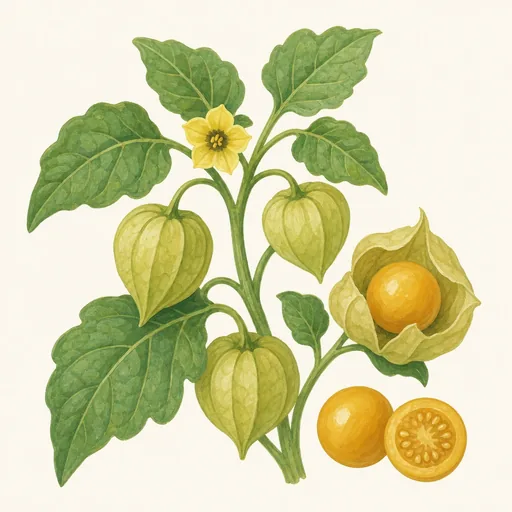
Ground cherry is a warm-season plant in the nightshade family, Solanaceae. It is related to tomatillos and tomatoes, but not to true cherries. Its branching, often low-growing stems bear softly hairy leaves and small, yellow flowers with darker markings near their centers. After pollination, each flower’s calyx enlarges into a papery, lanternlike husk enclosing a round berry. As the fruit ripens, the husk turns from green to tan and dries. Ripe fruits commonly fall to the ground, giving the plant its name.
The berries are usually golden yellow to orange and about the size of small marbles. Their sweet-tart flavor is often compared with pineapple, citrus, or tomato. Fully ripe berries can be eaten fresh or used in jams, pies, sauces, and preserves. Remove the husk before eating, and do not eat unripe fruit or other parts of the plant. The berries provide vitamin C, although their nutrient content varies with growing conditions.
Ground cherries grow best in full sun, well-drained soil, and warm weather. In climates with short growing seasons, start seeds indoors before the last frost, then transplant seedlings outdoors once frost danger has passed and the soil has warmed. Give the plants room to spread: their branches can sprawl across a bed. Mulch helps keep fallen fruit clean and makes it easier to find. Water regularly, but avoid waterlogged soil.
Harvest fruits after they drop, when their husks are dry and tan. Check beneath the plants frequently during the harvest season, since ripe berries can be hidden by foliage. Ground cherries are sensitive to frost and are usually grown as annual crops, though plants may self-seed where conditions allow.
Growing Conditions
30–90 cm (1–3 ft) tall, 60–90 cm (2–3 ft) wide
- Smallest
- Largest
Full sun, 6+ hours
Tolerates part sun
Moderate
Keep evenly moist, not soggy.
Ideal 18–29 °C (64–84 °F)
Survives down to 0 °C (32 °F).
pH 6–7.5 · acidic to neutral
Where it Grows
Planting
When to Plant
Plant ground cherries after the last spring frost, once the soil has warmed to at least 60°F (16°C) and nights are reliably mild. They are frost-sensitive, so a date on the calendar alone is not enough: check your local frost forecast before setting plants outdoors. For an earlier harvest, start seeds indoors about 6–8 weeks before your average last frost date. Keep seedlings warm and give them strong light. Harden them off gradually over 7–10 days before transplanting by increasing their time outdoors each day. If you prefer to sow directly in the garden, wait until frost danger has passed and the soil is warm; seeds germinate slowly in cold ground. Ground cherries need a long, warm season to ripen, so indoor starts are especially useful where summers are short. If a late frost threatens newly planted seedlings, cover them or bring container plants inside.
How to Plant
Choose a site with full sun—at least six hours of direct light—and well-drained soil. Mix in compost before planting, but avoid heavy applications of high-nitrogen fertilizer, which can encourage leafy growth at the expense of fruit. Start seeds about ¼ inch (6 mm) deep in seed-starting mix, keeping the mix moist but not soggy and warm until they sprout. If sowing outdoors, plant seeds at the same depth, then thin the seedlings to their final spacing.
Set hardened-off transplants into the garden at the same depth they grew in their pots. Space plants about 2–3 feet (60–90 cm) apart so their spreading branches have room and air can circulate. Water thoroughly after planting, then water regularly while the roots establish. Once the soil is warm, add a layer of mulch to conserve moisture and keep fallen fruit cleaner. A cage or short support can help contain the sprawling stems, although it is not essential. Because ground cherries are related to tomatoes, avoid planting them where tomatoes, peppers, potatoes, or other nightshades recently grew if those crops had disease problems. For containers, choose a large pot with drainage holes and use potting mix rather than garden soil.
Growth Timeline
- Germination 7–21 days
- Seedlings indoors 4–9 weeks
- Growing in the garden 70–90 days
- Harvest 6–10 weeks
Planting Calendar
- Start seeds indoors: 6–8 weeks before the last frost
- Sow outdoors: 1–3 weeks after the last frost
- Plant outdoors: 1–3 weeks after the last frost
- Germination: 7–21 days
- Start indoors: Feb 13 – Mar 5
- Sow outdoors: Apr 17 – May 7
- Plant out: Apr 17 – May 7
- Harvest: Jun 26 – Aug 26
Care
Care Calendar
- Protect · Apr 10 – Apr 30
Cover young plants if a late frost threatens. - Protect · Oct 11 – Oct 31
Cover plants on cold nights to extend the harvest. - Mulch · Apr 24 – May 14
Spread clean straw beneath the plants to keep fallen fruit off the soil.
Watering
Keep the soil evenly moist while ground cherries establish and while they flower and set fruit. Aim for about 1 inch (2.5 cm) of water per week from rain and irrigation, adjusting for heat, rainfall, and your soil. Water deeply at the base of the plant rather than sprinkling the leaves, then let the soil surface begin to dry before watering again. This encourages deeper roots without leaving them in soggy soil. Sandy soil and containers dry out faster and may need more frequent checks; heavy soil needs less frequent watering. A finger pushed a couple of inches into the soil is a useful guide: water when it feels dry at that depth. Try to avoid a cycle of severe drought followed by heavy watering, which stresses the plant and can reduce fruit quality. Ensure containers have drainage holes, and never leave them standing in water.
Pruning
Ground cherries generally need little pruning. Their branching, somewhat sprawling habit is normal, and removing large amounts of foliage can reduce the leaves that feed developing fruit. Early in the season, you can pinch a young plant’s growing tip to encourage branching, but this is optional. Remove broken stems and leaves that are badly diseased, using clean pruners; dispose of diseased material rather than leaving it beneath the plant. If growth becomes dense, selectively remove a few stems to improve airflow, especially in humid weather, without stripping the plant. A small cage or low support can keep branches from sprawling across paths, though many gardeners let plants spread over mulch. Avoid pruning just because stems touch the ground: ripe fruits naturally drop beneath the plant. Check under the canopy before cutting so you do not disturb fruit or accidentally remove productive branches.
Weeding
Keep the area around young ground cherries free of weeds, especially during the first few weeks after transplanting or emergence. Weeds compete for water, light, and nutrients before the plants have formed a broad canopy. Pull weeds by hand when the soil is slightly moist, or cultivate only the top layer of soil; deep hoeing can damage the plant’s roots. Remove weeds while they are small and before they set seed, paying particular attention to grasses and vigorous vines that can grow through the branches. Once the ground cherries spread, check beneath the foliage rather than assuming the bed is clear. Maintain an open space around each stem so air can circulate. Ground cherries may also self-seed from dropped fruit. If seedlings appear where you do not want them the following season, pull them while small. Mulch after weeding to slow new growth and make fallen fruit easier to find.
Mulching
After the soil has warmed and young plants are established, spread 2–3 inches (5–8 cm) of clean straw, shredded leaves, or another loose organic mulch around ground cherries. Leave a small gap around each stem to prevent damp material from resting against it. Mulch slows weed growth, helps the soil retain moisture, and reduces soil splashing onto leaves during rain. It is particularly useful for ground cherries because ripe fruit drops to the ground: a clean layer makes the husks easier to see and keeps fruit away from bare, wet soil. Check beneath the branches regularly so fallen fruit does not disappear into a thick layer. Replenish mulch if it thins during the season, but avoid piling on so much that it stays waterlogged. Use weed-free material; straw containing many grain seeds can create extra weeding work.
Fertilizing
Before planting, work a modest amount of finished compost into the bed if the soil is poor. Ground cherries usually grow and fruit well in reasonably fertile, well-drained soil without heavy feeding. If a soil test shows a deficiency, use its recommendations to choose a fertilizer and rate. Otherwise, avoid routinely applying high-nitrogen fertilizer: it can produce abundant leafy growth at the expense of flowers and fruit. In containers, nutrients wash out more quickly, so use a balanced fertilizer at the label rate during active growth if the potting mix does not contain a season-long fertilizer. Plants in the ground may benefit from a light side-dressing when flowering begins if growth is weak and the soil is low in nutrients. Keep fertilizer off the stems and foliage, water it in, and do not mistake damage from drought or waterlogged roots for a need to feed.
Pest Management
Inspect plants regularly, especially the undersides of leaves and tender new growth. Flea beetles can pepper leaves with small holes, aphids cluster on shoots, and hornworm caterpillars may rapidly strip foliage. Handpick large caterpillars. A firm spray of water can dislodge aphids; if an infestation persists, use an insecticidal soap labeled for edible crops, following its directions and avoiding sprays when pollinators are active. A lightweight row cover can protect young plants from flea beetles, but remove it when flowers open so pollinators can reach them. Clear weeds that shelter pests, allow room for airflow, and avoid wetting foliage late in the day. Remove badly diseased leaves and do not compost them unless your composting method reliably kills pathogens. Because ground cherries are in the nightshade family, rotating them away from tomatoes, peppers, potatoes, and eggplants can help reduce the buildup of shared soilborne problems.
Harvesting
Harvest ground cherries when the fruit is ripe and has dropped from the plant, usually inside a dry, papery husk. Check beneath the branches every day or two during peak production; mulch makes the fallen husks easier to spot and keeps them cleaner. Gently brush aside mulch rather than pulling fruit off the stems. Peel back a husk to check ripeness: fruit is typically yellow to golden and sweet-tart, though the exact color varies by variety. Discard fruit that is green, moldy, damaged, or unpleasantly bitter, and do not eat the husks or other plant parts. Collect sound fallen fruit promptly, especially after rain, to reduce spoilage and losses to animals. Keep the husks on clean, dry fruit for storage, and refrigerate it if you will not use it soon. Wash and remove the husks just before eating or cooking.
Growing in Containers
Grows well in a pot of at least 20 litres (5.3 US gallons), with drainage holes. Best kept outdoors.
Propagation
From seed
- Sow seeds indoors 6–8 weeks before the last expected frost.
- Cover seeds lightly with potting mix and keep them warm and moist.
- Give seedlings bright light once they sprout.
- Harden off seedlings gradually.
- Transplant outdoors after frost danger has passed and the soil has warmed.
Companion Plants
Good neighbors
- Basil: Flowering basil attracts pollinators and beneficial insects near ground cherries.
- Marigolds: Marigold flowers attract beneficial insects that may help control ground-cherry pests.
Keep apart from
- Potatoes: Both plants can host Colorado potato beetles, so growing them together may make the pest harder to manage.
Common Problems
- Yellowing leaves
- Sticky residue on leaves
- Black sooty coating
- Curled or cupped leaves
Aphids are small, soft-bodied insects that feed by piercing plants and drawing out sap. The group includes many…
- Holes in leaves
- Insects visible on the plant
- Stunted growth
The Colorado potato beetle is a leaf-eating beetle that attacks potatoes and other plants in the nightshade family…
- Holes in leaves
- Stunted growth
- Wilting
Flea beetles are a group of small leaf beetles named for their ability to jump when disturbed. Most adults are about…
- Holes in leaves
- Insects visible on the plant
- Stems chewed or cut through
The tomato hornworm is the caterpillar of a large sphinx moth. Despite its name, it also feeds on other plants in the…
- Flea beetles chew small holes in leaves, especially on young plants.
- Aphids cluster on tender growth and may leave sticky honeydew.
- Cutworms can sever seedlings at soil level.
- Fungal leaf spots and blights are more likely where foliage stays wet or plants are crowded.
- Fallen fruit can rot in persistently wet soil. Uncollected fruit may also self-seed heavily.
Varieties
A widely grown variety with small, golden fruit and a sweet-tart flavor.
- heirloom
- sweet
Produces abundant golden fruit with a sweet flavor.
- golden fruit
- productive
Its small fruit has a flavor often described as pineapple-like.
- fruity flavor
- sweet
An old variety grown for its sweet, tropical-tasting fruit.
- heirloom
- fruity flavor
More about varieties
- ‘Aunt Molly’s’ — a popular ground cherry with small, sweet-tart, golden fruit.
- ‘Cossack Pineapple’ — known for sweet fruit with a pineapple-like flavor.
- ‘Goldie’ — a productive selection with golden fruit and a sweet, fruity flavor.
Health Benefits
Ripe ground cherries are eaten mainly as fruit, not as a treatment for a particular condition. They provide fiber, which supports normal digestion, along with vitamin C and carotenoids. Vitamin C helps the body make collagen and supports normal immune function; some carotenoids can be converted to vitamin A, which is important for vision and other normal body functions. Exact nutrient levels vary by species, variety, ripeness, and growing conditions.
Ground cherries also contain plant compounds studied for antioxidant activity. Most research on these compounds has been done in laboratories or animals, often using different Physalis species or concentrated extracts. Eating the fruit has not been shown to prevent or cure disease, and it should not replace medical care. For everyday use, ripe ground cherries can add fruit and dietary variety to snacks, salads, and desserts.
Eat only fully ripe fruit, typically identified by its golden color and a dry, papery husk; ripe fruit often falls from the plant. Do not eat the leaves, stems, husks, or unripe fruit, which may contain harmful compounds. Wash fruit before eating, and discard any that is moldy or spoiled.
Fun Facts
- Each fruit grows inside its own papery husk, or calyx.
- Ripe fruit often drops to the ground, giving ground cherries their common name.
- Despite the name, ground cherries are relatives of tomatoes, not true cherries.
- A plant can produce many fruits over a long harvest period.
- Fallen fruit can sprout the following year if left in the garden.
Notice an error or have a question about Ground Cherry? Contact us