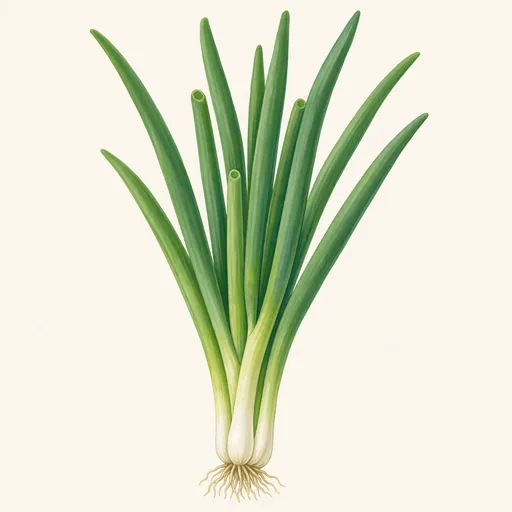
Scallion
Allium fistulosum · Amaryllidaceae
- Start indoors8–10 weeks before the last frostJan 30 – Feb 19
- Sow outdoors2–4 weeks before the last frostMar 13 – Apr 2
- Plant outFrom 2 weeks before to 2 weeks after the last frostMar 27 – Apr 30
- Plant in autumn8–10 weeks before the first autumn frostAug 16 – Sep 5
- Space5–10 cm (2–4 in) apart
- Harvest50–80 days after plantingMay 16 – Aug 9
Description
Scallion is a leafy onion grown for its slender white stems and hollow green leaves. It is commonly called a green onion or spring onion, though those names are also used for young plants of other onion species. Unlike a typical bulb onion, Allium fistulosum does not develop a large, rounded bulb. Its mild onion flavor makes both the white base and green tops useful raw or cooked. Chopped scallions are often added to salads, soups, stir-fries, noodles, and savory garnishes.
The plant grows in upright clumps, with leaves emerging from a short, pale base. It is a perennial, but gardeners often grow it as an annual and harvest it while the stems are tender. Established clumps can be divided to make new plants, or scallions can be started from seed. Several plants can grow close together, making them practical for small beds and containers. With regular watering and good light, new leaves continue to grow after a light cutting, although pulling the whole plant gives a larger single harvest.
Scallions grow best in fertile, well-drained soil and full sun, but they tolerate some light shade. They generally prefer cool to mild weather; heat and drought can slow growth and make the leaves tougher. Keep the soil evenly moist without leaving it waterlogged, and remove weeds that compete with the shallow roots. Plants may flower if left to mature, producing rounded clusters of small, pale blossoms that attract pollinators. Onion thrips, onion maggots, and fungal diseases can affect crops, especially where plants are crowded or conditions are persistently damp. Harvest stems when they reach a useful size, wash away soil trapped between the leaves, and refrigerate them promptly for the best texture and flavor.
Growing Conditions
30–60 cm (12–24 in) tall, 10–25 cm (4–10 in) wide
- Smallest
- Largest
Full sun, 4+ hours
Tolerates part sun
Moderate
Keep evenly moist, not soggy.
Ideal 13–24 °C (55–75 °F)
Survives down to −34 °C (−29 °F).
pH 6–7.5 · acidic to neutral
Where it Grows
Planting
When to Plant
Scallions are a cool-season crop. Direct-sow seeds outdoors in early spring as soon as the soil can be worked, typically 4–6 weeks before your last expected frost. Seeds germinate best in moderately warm soil, around 60–75°F (16–24°C), so they may emerge slowly during a cold spring. Established plants tolerate light frosts, but protect young seedlings if a hard freeze is forecast.
For a steady supply, sow another small batch every 2–3 weeks through spring. Pause during intense summer heat, which can slow growth and make it harder to keep seedbeds moist. Sow again in late summer or early fall, allowing about 8–10 weeks of growth before your first expected hard freeze. In mild-winter climates, fall plantings can often be harvested through winter. In regions with very hot summers and mild winters, fall through early spring is usually the easiest planting season.
How to Plant
Choose a spot with well-drained soil and at least six hours of sun daily; a little afternoon shade helps in hot climates. Loosen the top few inches of soil and mix in finished compost. Scallions have shallow roots, so avoid compacted ground and places where water stands. A container with drainage holes and at least 6–8 inches (15–20 cm) of soil also works well.
Sow seeds about ¼ inch (6 mm) deep in shallow furrows, then gently cover and water. Space rows about 12 inches (30 cm) apart, or use wider bands in a garden bed. Keep the surface consistently moist until seedlings emerge, usually within one to two weeks in suitable temperatures. Thin seedlings to roughly 1–2 inches (2.5–5 cm) apart; closer spacing yields slimmer scallions. If using nursery transplants, set them at the depth they were growing, cover the roots, and leave the green leaves above the soil.
Water whenever the top of the soil begins to dry, aiming for steady moisture without sogginess. Weed gently so you do not disturb the roots. A thin layer of mulch after the seedlings are established helps retain moisture. Harvest when the stems reach a useful size, often when they are about pencil-thick.
Growth Timeline
- Germination 7–14 days
- Seedlings indoors 4–11 weeks
- Growing in the garden 50–80 days
- Harvest 8–16 weeks
Planting Calendar
- Start seeds indoors: 8–10 weeks before the last frost
- Sow outdoors: 2–4 weeks before the last frost
- Plant outdoors: from 2 weeks before to 2 weeks after the last frost
- Autumn planting: 8–10 weeks before the first autumn frost
- Germination: 7–14 days
- Start indoors: Jan 30 – Feb 19
- Sow outdoors: Mar 13 – Apr 2
- Plant out: Mar 27 – Apr 30
- Autumn planting: Aug 16 – Sep 5
- Harvest: May 16 – Aug 9
Care
Care Calendar
- Thin · Mar 27 – May 14
Thin emerged seedlings to about 1 inch apart. - Feed · Apr 24 – Jun 25
Feed lightly with a balanced fertilizer if growth is slow. - Mulch · Apr 24 – May 28
Add a thin layer of mulch around established seedlings to retain moisture.
Watering
Keep the soil evenly moist while scallions establish and grow. Their shallow roots dry out quickly, especially in containers or sandy soil. Aim for about 1 inch (2.5 cm) of water per week from rain and irrigation combined, adjusting for heat, wind, and soil conditions. Water deeply enough to moisten the root zone rather than giving frequent, tiny sprinkles. If the top inch of soil feels dry, check whether the plants need water. Container-grown scallions may need checking daily in hot weather. Water at soil level when practical; consistently wet foliage can encourage disease. Avoid leaving the bed soggy, since poorly drained soil can damage roots. Uneven watering can slow growth and make the leaves less tender. As harvest approaches, continue watering normally rather than letting plants dry out.
Pruning
Scallions do not need routine pruning. Their green leaves make the energy needed for new growth, so cutting them back simply to keep plants short can reduce the harvest. Remove leaves that are yellow, broken, or visibly diseased, using clean scissors and taking care not to damage neighboring plants. If only a little greenery is needed for the kitchen, you can snip a few outer leaves and leave the rest of the plant growing. Do not repeatedly strip all the leaves from a plant if you want a strong, full scallion later. If flower stalks appear and you are growing scallions for tender leaves, harvest those plants promptly; flowering generally makes them less desirable to eat. Cutting a flower stalk will not reliably restore the same tender growth. Pulling whole plants is harvesting, not a pruning step.
Weeding
Weed scallion beds regularly, particularly when seedlings are small. Their narrow leaves cast little shade, and nearby weeds can quickly compete for moisture, nutrients, and light. Remove weeds while they are young, ideally after rain or watering has softened the soil. Pull by hand close to scallion stems so that you do not uproot the crop along with the weeds. If you use a hoe, work only at the surface: scallion roots are shallow and easily damaged. Keep paths and bed edges tidy to reduce the number of weeds that set seed nearby. A thin layer of suitable mulch can suppress new seedlings, but it will not replace early hand-weeding. Avoid letting large weeds mature among the plants; removing their roots later can disturb several scallions at once. Check containers too, since weeds can establish there.
Mulching
After scallion seedlings are established and the bed has been weeded, apply a light layer of clean straw, shredded leaves, or another loose organic mulch. About 1–2 inches (2.5–5 cm) is usually enough to help conserve moisture and limit weed germination. Keep mulch slightly away from the stems rather than packing it around their bases. A heavy, soggy layer can hold too much moisture against the plants, while coarse material may be difficult to place around closely spaced seedlings. In cool spring weather, wait until the soil has begun to warm before adding a thick layer; mulch slows warming as well as drying. Check beneath it occasionally to make sure the soil is moist but not waterlogged. Replenish the layer if it breaks down or blows away, and remove weeds that grow through it before they become established.
Fertilizing
Scallions grow best in fertile, well-drained soil. Before planting, mix in finished compost or apply a balanced fertilizer according to its label and, if available, a soil test. Because the crop is grown mainly for leaves, adequate nitrogen helps produce steady green growth, but excess fertilizer is unnecessary and can harm plants. In a bed that has already been amended, scallions may need little additional feeding during a short growing season. If growth is pale or slow and watering and light are adequate, a modest side-dressing of nitrogen fertilizer or a diluted liquid feed can help. Keep granular fertilizer off the leaves and water it in. Container plants may need occasional light feeding because nutrients wash out with watering. Avoid fresh manure around a crop that may be eaten raw, and follow the product label rather than applying fertilizer on a fixed schedule regardless of plant condition.
Pest Management
Inspect leaves and the bases of scallions regularly so problems are noticed early. Thrips can leave pale, silvery streaks on leaves; small numbers are often manageable, but badly damaged foliage should be removed. Onion maggots and, in regions where they occur, allium leafminers can damage roots or tunnel in leaves. Remove severely affected plants and dispose of them rather than leaving them in the bed. Rotate allium crops when possible, clear away crop debris, and avoid planting into soil where an allium crop recently suffered serious pest damage. A fine insect-exclusion cover, secured at the edges before pests arrive, can prevent egg-laying; remove it if access is needed for weeding or harvest. Avoid keeping foliage wet for long periods and provide good drainage to reduce disease problems. Identify the pest before using any treatment, and use only products labeled for edible allium crops, following harvest-interval directions.
Harvesting
Harvest scallions whenever they are large enough for the kitchen, often when the stems are roughly pencil-thick and the leaves are about 6–12 inches (15–30 cm) tall. Timing varies with variety, weather, and whether they were grown from seed or sets. For whole scallions, loosen the soil gently and pull the plants, or lift them with a hand fork if the ground is firm. Harvesting every other plant can thin a crowded row and give the remaining scallions more room to grow. Remove damaged outer leaves and roots, then wash the plants before use. For a small ongoing harvest, snip a few green leaves from established plants and allow the centers to keep growing; regrowth depends on good growing conditions. Do not leave plants indefinitely if you want mild, tender stems, as older plants can become tougher or begin to flower. Refrigerate harvested scallions promptly.
Growing in Containers
Grows well in a pot of at least 3 litres (0.8 US gallons), with drainage holes. Best kept outdoors.
Propagation
From seed
- Sow seeds shallowly in moist soil.
- Keep the soil evenly moist until seedlings emerge.
- Thin seedlings to the spacing on the seed packet.
- Harvest young, or leave plants to form clumps.
By division
- Lift an established clump of bunching scallions.
- Separate it into sections with roots and shoots.
- Replant the sections at their original depth.
- Water them thoroughly.
Companion Plants
Good neighbors
- Carrots: Gardeners commonly interplant them because scallion foliage may make carrots harder for carrot rust flies to locate.
- Lettuce: Lettuce fits between rows of upright scallions without much competition for space.
Keep apart from
- Beans: Traditional companion-planting advice keeps alliums away from beans because they may inhibit bean growth.
- Peas: Traditional companion-planting advice keeps alliums away from peas because they may inhibit pea growth.
Common Problems
- Yellowing leaves
- Wilting
- Stunted growth
- Seedlings collapse at soil level
Onion fly is a small gray fly whose larvae, often called onion maggots, feed on onions and related alliums, including…
- Pale speckles or stippling
- Spots on leaves
- Curled or cupped leaves
- Distorted new growth
Thrips are tiny, slender insects in the order Thysanoptera. Many species feed on garden plants, including vegetables…
- Yellowing leaves
- Spots on leaves
- Fuzzy gray mold
- Wilting
Downy mildew is a group of plant diseases caused by several species of oomycetes, or water molds, rather than one…
- Orange or rust-colored spots
- Spots on leaves
- Yellowing leaves
- Leaves dropping
Rust is a group of plant diseases caused by fungi in the order Pucciniales, not a single species. Different rust fungi…
- Winding tunnels in leaves
- Spots on leaves
- Leaves dropping
Leaf miners are the larvae of several kinds of flies, moths, beetles, and sawflies, rather than a single species with…
- Thrips: Tiny insects that leave silvery streaks on leaves, especially in hot, dry weather.
- Onion maggots: Larvae feed on roots and stem bases, causing seedlings to wilt or die.
- Downy mildew and purple blotch: Fungal-like and fungal diseases that cause discolored leaf patches, particularly when foliage stays damp.
- White rot: A serious soil-borne disease that causes yellowing and root decay; it can persist in soil for years.
- Waterlogged soil: Poor drainage can rot roots and stunt growth.
Varieties
A widely grown variety with white stems and tender green tops.
- early
- mild
Forms clumps that can overwinter and regrow in suitable climates.
- cold tolerant
- perennial
Produces long, straight white shanks, especially when soil is hilled around the stems.
- long white stems
- upright
Grows straight, slender stalks that are easy to bunch.
- uniform
- upright
Can be hilled with soil to produce longer blanched stems.
- long white stems
- mild
More about varieties
- Evergreen Hardy White: A cold-tolerant bunching onion that can be harvested over a long season.
- White Lisbon: A quick-growing scallion often grown as an annual for its mild, white stems.
- Tokyo Long White: A bunching onion with long white shanks, especially when soil is mounded around the stems.
- Ishikura Long White: Produces long, slender white stems and little to no bulb.
- Red Beard: A bunching onion with red-purple lower stems that add color to dishes.
Health Benefits
Scallions are a low-calorie way to add onion flavor, color, and texture to meals. Both their white bases and green leaves are edible, and the green leaves provide vitamin K, which supports normal blood clotting and bone health. Scallions also supply some vitamin C and folate, though the amounts you get depend on the portion eaten. Like other alliums, they contain sulfur compounds and plant pigments that researchers study for possible health effects. Eating scallions as part of a varied diet is reasonable, but there is no good basis for treating them as a cure or relying on them to prevent disease.
Their strong flavor can help make vegetables, beans, eggs, and soups appealing without much added salt. Use them raw for a sharper taste or cook them briefly for a milder one. Wash scallions well, including between the leaves, because soil can lodge there. Anyone taking warfarin should keep their intake of vitamin-K-containing foods reasonably consistent and ask their clinician about major dietary changes. People with an onion allergy should avoid scallions; those who are sensitive to onions may find that scallions also cause digestive discomfort.
Fun Facts
- “Scallion” and “green onion” are often used interchangeably; both names may refer to young bulb onions or to bunching onions.
- Unlike bulb onions, bunching onions (Allium fistulosum) generally do not form a large round bulb.
- A scallion’s white base and hollow green leaves are both edible.
- Roots left on a cut base can produce new green leaves in water, though planting it in soil supports longer-term growth.
- If allowed to flower, bunching onions produce rounded clusters of small blossoms that attract pollinators.
Notice an error or have a question about Scallion? Contact us