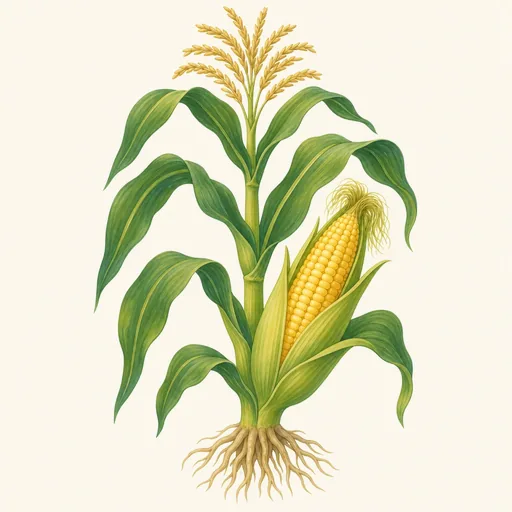
Sweet Corn
Zea mays var. saccharata · Poaceae
- Sow outdoors1–3 weeks after the last frostApr 17 – May 7
- Space20–30 cm (8–12 in) apart
- Harvest60–100 days after plantingJun 16 – Sep 5
Description
Sweet corn is a cultivated form of maize grown for its tender, sugary kernels, which are eaten while immature. It is an annual grass with an upright stem, long, arching leaves, and a dense root system. Depending on the variety, plants commonly reach 1.5–2.5 meters tall. Each plant bears a tassel of male flowers at the top and usually one or two usable ears lower on the stem. The ears are wrapped in husks and topped with fine silks; each silk connects to a potential kernel. Kernels may be yellow, white, or bicolored.
Unlike field corn, sweet corn is harvested at the milk stage, when the kernels are plump and release a milky liquid if pierced. Its sweetness comes from genetic traits that slow the conversion of sugar to starch. Varieties are often described as standard sugary, sugar-enhanced, or supersweet; they differ in sweetness, texture, and how well they retain their flavor after picking. Ears are commonly boiled, steamed, grilled, or cut from the cob for other dishes.
Sweet corn grows best in full sun, fertile, well-drained soil, and warm weather. Seeds are usually sown directly after the soil has warmed and frost danger has passed. Plants need consistent moisture, especially when tassels and silks appear and the ears fill. Because corn relies on wind to move pollen from tassels to silks, planting several short rows in a block generally gives better-pollinated ears than planting one long row. Some varieties should be separated from other types of corn to prevent cross-pollination from affecting kernel quality. Depending on the variety and conditions, ears are generally ready about 60–100 days after sowing. Harvest when silks have turned brown and the kernels are full, then refrigerate promptly to preserve sweetness.
Growing Conditions
1.5–2.5 m (5–8 ft) tall, 30–45 cm (12–18 in) wide
- Smallest
- Largest
Full sun, 6+ hours
Moderate
Keep evenly moist, not soggy.
Ideal 18–30 °C (64–86 °F)
Survives down to 0 °C (32 °F).
pH 5.8–7 · acidic to neutral
Where it Grows
Planting
When to Plant
Plant sweet corn after the last spring frost, once the soil has warmed and is no longer soggy. Standard sweet corn germinates reliably when soil temperature reaches at least 60°F (16°C); supersweet varieties generally need 65–70°F (18–21°C). Check the soil temperature about 2 inches deep in the morning for several days rather than relying only on the calendar. Planting into cold, wet soil can cause seeds to rot or emerge unevenly. If a late frost is forecast, wait: young corn plants are vulnerable to freezing.
Choose a variety whose stated days to maturity fit the frost-free season in your area, allowing a little extra time because cool weather slows growth. For a longer harvest, sow small blocks every 10–14 days, stopping early enough for the final planting to mature before fall frost. If growing different sweet corn types, check their pollination-isolation requirements before choosing planting dates.
How to Plant
Direct-sow sweet corn in a sunny spot with well-drained soil; it grows best with at least 6–8 hours of direct sun daily. Work compost into the soil before planting, and use a soil test to guide fertilizer additions. Corn needs ample nitrogen as it grows.
Plant seeds about 1 inch deep in cooler spring soil or up to 2 inches deep in warm, light soil. Space seeds 8–12 inches apart in rows 24–36 inches apart, or sow more closely and thin seedlings to that spacing. Plant at least four short rows together in a block rather than one long row. Corn is wind-pollinated, and a block gives pollen a better chance of reaching the silks on neighboring plants. If space is limited, hand-pollination may help with poorly filled ears.
Water gently after sowing and keep the seedbed evenly moist until seedlings emerge. Afterward, aim for roughly 1 inch of water per week, adjusting for rainfall and heat; consistent moisture is especially important when tassels and silks appear. Weed carefully while plants are young, since their roots are shallow. If growing supersweet corn near other corn types, follow the seed packet’s advice on separating them by distance or flowering time to protect eating quality.
Growth Timeline
- Germination 7–14 days
- Growing 60–100 days
- Harvest 1–2 weeks
Planting Calendar
- Sow outdoors: 1–3 weeks after the last frost
- Germination: 7–14 days
- Sow outdoors: Apr 17 – May 7
- Harvest: Jun 16 – Sep 5
Care
Care Calendar
- Thin · Apr 24 – May 21
Thin seedlings to the spacing on the seed packet once they have several leaves. - Mulch · May 1 – May 28
Apply mulch after the soil warms to conserve moisture and suppress weeds. - Feed · May 8 – Jun 25
Side-dress with nitrogen-rich fertilizer when plants are knee-high and again before tassels appear if growth is pale. - Protect · Jun 12 – Aug 6
Use fencing or netting where birds or raccoons damage ripening ears.
Watering
Keep the soil consistently moist, especially from tassel emergence through silk formation and ear filling. Sweet corn generally needs about 1–1½ inches of water per week from rain or irrigation, and may need more during hot, dry weather. Water deeply enough to moisten the root zone rather than giving frequent light sprinkles. Drip irrigation or a soaker hose delivers water efficiently and keeps foliage drier. Check the soil a few inches below the surface: if it feels dry, water. Drought during pollination can leave ears with missing kernels, while irregular watering during ear filling can reduce ear size and quality. Young plants need steady moisture too, but avoid keeping the soil waterlogged, which restricts root growth. If using overhead sprinklers, water early in the day so leaves dry promptly. A layer of mulch can help maintain even moisture between waterings.
Weeding
Keep the planting free of weeds while corn is young. Weeds compete for water, nutrients, and light, and are easiest to remove before they become established. Hoe or hand-pull them regularly, taking care not to disturb corn’s shallow feeder roots. Cultivate only the top inch or two of soil, especially once plants are growing vigorously. Pull weeds close to corn stalks by hand rather than working a hoe against the stems. A shallow layer of mulch between rows can suppress new seedlings after the soil has warmed. If the bases of plants become exposed, gently draw a little loose soil around them while weeding; do not bury leaves or deeply mound over the roots. As corn grows tall, its canopy shades many weeds, but continue removing any that rise above the crop or are about to set seed. Avoid letting weedy borders provide cover for pests.
Mulching
After the soil has warmed and young plants are established, spread 2–3 inches of clean straw, shredded leaves, or another weed-free organic mulch between rows and around the plants. Leave a small gap around each stalk so mulch does not stay damp against the stem. Mulch slows evaporation, reduces weed germination, and helps keep soil moisture steadier during tasseling and ear development. It can also reduce soil splashing onto lower leaves. Do not apply a thick layer too early in spring: cool soil can delay germination and growth. Replenish the layer if it thins during the season, but avoid piling material over the shallow roots or lower leaves. Water the soil before mulching if it is dry. At season’s end, healthy organic mulch can be composted or incorporated into a future bed; remove plant debris that shows significant disease rather than leaving it in place.
Fertilizing
Sweet corn uses substantial nutrients, especially nitrogen. Start with a soil test when possible and follow its recommendations for lime, phosphorus, and potassium. Before planting, work mature compost into the bed and apply a balanced fertilizer at the label rate if the soil needs it. Once plants are about knee-high, side-dress with a nitrogen fertilizer, placing it several inches from the stalks, lightly working it into the soil, and watering afterward. On sandy soils or where growth is pale and slow, a second modest application before tassels emerge may help. Avoid putting fertilizer directly against stems or using more than the label recommends: excess nitrogen can encourage leafy growth, waste nutrients, and leach into groundwater. Yellowing of older leaves can indicate nitrogen deficiency, but drought or waterlogged soil can cause similar symptoms. Keep moisture consistent so roots can take up available nutrients.
Pest Management
Inspect plants regularly, including the undersides of leaves, developing tassels, and fresh silks. Corn earworm is a common pest: its larvae enter through the silk end of an ear, where sprays become ineffective once they are inside. In areas with repeated damage, choose locally recommended resistant varieties or ask a local extension service about properly timed controls while silks are fresh. Hand-remove visible caterpillars on small plantings. Cutworms can sever young seedlings; clear weedy debris before planting and check the soil around damaged plants. Aphids may collect on tassels and silks, but natural predators often limit them; avoid broad-spectrum insecticides unless damage warrants treatment. For raccoons and deer, install a sturdy fence before ears ripen, checking it regularly. Rotate planting sites when practical and remove badly infested crop residue after harvest. Follow product labels exactly if using any pesticide.
Harvesting
Begin checking ears roughly 18–24 days after silks first appear, allowing for variation with variety and weather. An ear is usually ready when its silks are brown and dry, it feels full to the tip, and a kernel pierced with a fingernail releases a milky liquid. Clear liquid means it needs more time; thick, doughy contents indicate it is past its best eating stage. Check an ear discreetly by peeling back a small section of husk, then close it if the kernels are not ready. To pick, hold the stalk with one hand and pull the ear downward with a firm twist. Harvest in the cool morning if possible. Sweetness declines after picking, particularly in standard sweet-corn varieties, so cook promptly or refrigerate ears in their husks and use them soon. Check the planting daily as ears mature; they can pass peak quality quickly in hot weather.
Growing in Containers
Not well suited to growing in pots.
Propagation
From seed
- Wait until the soil has warmed to at least 60°F (16°C).
- Sow seeds directly in a sunny bed, about 1 inch (2.5 cm) deep.
- Plant in a block of several short rows to improve wind pollination.
- Space plants about 8–12 inches (20–30 cm) apart.
- Keep the soil evenly moist while seeds germinate.
Companion Plants
Good neighbors
- Pole beans: In the traditional Three Sisters planting, beans climb established corn stalks and add nitrogen to the soil.
- Squash: Squash vines cover the ground beneath corn, helping suppress weeds and conserve soil moisture.
Keep apart from
- Popcorn: Nearby popcorn can cross-pollinate sweet corn, producing kernels with poorer eating quality.
Common Problems
- Yellowing leaves
- Sticky residue on leaves
- Black sooty coating
- Curled or cupped leaves
Aphids are small, soft-bodied insects that feed by piercing plants and drawing out sap. The group includes many…
- Holes in leaves
- Stems chewed or cut through
- Flowers or buds dropping
Birds are a class of animals, not a single pest species. In gardens, their effects depend on the species, season, and…
- Holes in leaves
- Insects visible on the plant
- Stems chewed or cut through
- Wilting
Caterpillars are the larval stage of butterflies and moths, not a single species. Many feed on garden plants, although…
- Stems chewed or cut through
- Seedlings collapse at soil level
- Wilting
- Holes in leaves
Cutworms are caterpillars of several noctuid moth species, not a single species. They are named for their habit of…
- Flowers or buds dropping
- Distorted new growth
Poor pollination occurs when too little viable pollen reaches a flower’s receptive stigma, or when pollen fails to…
- Poorly filled ears: Incomplete pollination, often because too few plants were grown together or hot, dry weather disrupted silking.
- Corn earworms and fall armyworms: Caterpillars feed on developing ears and kernels.
- Corn smut and leaf diseases: Smut forms swollen galls; rust and leaf blights can damage foliage.
- Water or nutrient stress: Drought and insufficient nitrogen can stunt plants and reduce ear size.
- Wildlife damage: Raccoons and birds may eat ears as they ripen.
Varieties
A classic yellow corn with good flavor when picked and eaten promptly.
- heirloom
- open-pollinated
A popular white corn that needs a relatively long growing season.
- white kernels
- late
Its early ears suit gardens with a shorter warm season.
- early
- short-season
Its yellow-and-white kernels stay sweet longer after picking than standard sweet corn.
- bicolor
- sweet
It produces large ears of tender yellow kernels.
- sweet
- tender
Its synergistic kernels offer a sweet flavor and a tender texture.
- sweet
- tender
More about varieties
- Golden Bantam: An heirloom with yellow kernels and traditional sweet-corn flavor.
- Silver Queen: A white-kernel variety valued for its tender, sweet ears.
- Ambrosia: A bicolor, sugar-enhanced variety with tender kernels.
- How Sweet It Is: A white supersweet variety that retains sweetness relatively well after harvest.
- Honey Select: A yellow synergistic variety known for sweet, tender kernels.
Health Benefits
Sweet corn is mainly enjoyed as a nutritious food, not used as a medicine. A cooked ear provides carbohydrate for energy along with fiber, which supports normal digestion and helps make a meal satisfying. It also supplies modest amounts of nutrients such as folate, thiamin, and potassium. Yellow sweet corn contains carotenoids, including lutein and zeaxanthin. These compounds are found in the eye’s macula, and diets that include carotenoid-rich foods are associated with eye health; eating corn alone has not been shown to prevent eye disease.
Corn is naturally gluten-free, making plain sweet corn an option for people avoiding gluten. Prepared corn dishes may contain gluten-containing ingredients, however, so check labels or recipes when necessary. Because sweet corn is a starchy vegetable, people who monitor carbohydrate intake, including some people with diabetes, may want to account for their portion and pair it with protein and other vegetables.
Steaming, boiling briefly, or grilling corn can make it enjoyable without much added fat. Butter, salt, and sugary sauces can substantially change the nutritional profile. There is no good evidence that sweet corn treats a medical condition, and it should not replace a varied diet or medical care.
Fun Facts
- Each kernel develops from a flower with its own strand of silk; pollen must reach that silk for the kernel to form.
- Corn is wind-pollinated, which is why gardeners usually grow it in blocks rather than a single long row.
- Sweet corn’s sweetness comes from inherited traits that limit the conversion of sugar to starch in the kernels.
- Ears usually have an even number of kernel rows.
- Refrigerating freshly picked ears helps preserve their sweetness.
Notice an error or have a question about Sweet Corn? Contact us