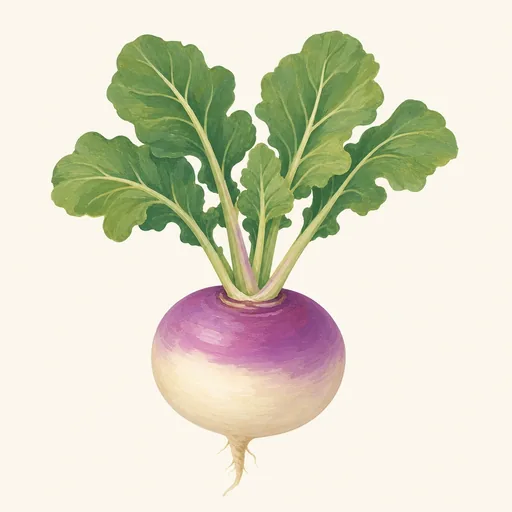
Turnip
Brassica rapa · Brassicaceae
- Sow outdoors2–4 weeks before the last frostMar 13 – Apr 2
- Plant in autumn6–10 weeks before the first autumn frostAug 16 – Sep 19
- Space10–15 cm (4–6 in) apart
- Harvest35–60 days after plantingApr 17 – Jun 22
Description
The turnip (Brassica rapa subsp. rapa) is a biennial root vegetable belonging to the Brassicaceae family, which includes other familiar crops like cabbage, broccoli, and kale. Primarily grown as an annual, it’s cultivated for its edible roots and green leaves.
Turnips typically have a round, bulbous root, which can range in color from white to yellow or purple, depending on the variety. The flesh is usually white or cream-colored and has a mildly sweet, slightly peppery flavor. When harvested young, turnips are tender and can be eaten raw or cooked. Mature turnips, characterized by a larger, more fibrous texture, are often best suited for cooking or mashing.
As a cool-season crop, turnips thrive in temperatures between 50°F to 75°F (10°C to 24°C). They can be sown directly in the garden as early as spring or late summer for a fall harvest. Turnips prefer well-drained, fertile soil and benefit from a pH level between 6.0 and 7.0. They are relatively low-maintenance and can be direct seeded or transplanted. Additionally, turnip greens, the leafy tops of the plant, are also edible and nutritious, often prepared similarly to collard greens or spinach.
Turnips are known for their fast growth, typically maturing within 30 to 60 days, making them a popular choice for beginner gardeners. They are also beneficial as a cover crop, helping to improve soil health and prevent erosion. Overall, turnips are a versatile and resilient addition to any garden, providing both nutritious roots and greens.
Growing Conditions
30–60 cm (12–24 in) tall, 20–35 cm (8–14 in) wide
- Smallest
- Largest
Full sun, 4+ hours
Tolerates part sun
Moderate
Keep evenly moist, not soggy.
Ideal 10–20 °C (50–68 °F)
Survives down to −7 °C (19 °F).
pH 6–7.5 · acidic to neutral
Where it Grows
Planting
When to Plant
Turnips (Brassica rapa) are a versatile root vegetable that can be enjoyed in a variety of culinary dishes. Knowing when to plant turnips is crucial for successful growth and a bountiful harvest. Here are key considerations for timing your planting.
Growing Seasons
Turnips are typically grown in two main seasons: spring and fall. They thrive in cooler temperatures, making them an ideal crop for temperate climates.
1. Spring Planting: For spring planting, you should aim to sow turnips about 2 to 4 weeks before the last expected frost date in your area. Turnips can tolerate some frost, which can enhance their flavor. In many regions, this means planting in early to mid-April.
2. Fall Planting: Fall planting should occur approximately 10 to 12 weeks before the first expected frost date. This allows the turnips to mature in cooler weather, leading to sweet and tender roots. In most areas, August is often the right month to start planting for a fall harvest.
Soil Temperature
Turnips prefer soil temperatures between 50°F and 85°F (10°C to 29°C). You can check the soil temperature with a soil thermometer to ensure it is within the optimal range. If temperatures are too high, turnips may bolt (go to seed) prematurely, while very low temperatures can hinder germination.
Seed Depth
When planting turnip seeds, they should be sown about 1/4 to 1/2 inch deep. If you're in a particularly cool area, covering the seeds with a light mulch can help maintain even soil temperatures and moisture.
Direct Sowing
Turnips are best sown directly into the garden rather than starting indoors and transplanting. They have a relatively quick maturity time, typically around 30 to 60 days from sowing to harvest, depending on the variety.
Successive Planting
To ensure a continuous harvest, consider planting turnips in succession every 2 to 3 weeks until mid-summer for spring crops, and every few weeks until late summer for fall plots. This will give you a supply of fresh turnips throughout the season.
Conclusion
Timing your turnip planting is essential for achieving a successful crop. By understanding the growing seasons, soil temperature, and direct sowing techniques, you can ensure that your turnips flourish in your garden. Happy planting!
How to Plant
Planting Turnips: A Step-by-Step Guide
Turnips (Brassica rapa) are a versatile root vegetable that thrives in cooler temperatures. Here’s how to successfully plant them in your garden.
1. Timing: Turnips can be planted in early spring or late summer for a fall crop. They prefer temperatures between 50°F and 70°F (10°C to 21°C).
2. Soil Preparation: Choose a well-draining location with loamy, nutrient-rich soil. Turnips thrive in slightly acidic to neutral pH (6.0 to 7.0). Amend your soil with organic matter like compost to improve fertility.
3. Sowing Seeds: Directly sow turnip seeds about ¼ to ½ inch deep, spacing them 2 to 4 inches apart. Rows should be spaced about 12 to 18 inches apart. For continuous harvest, consider sowing seeds every 2 to 3 weeks.
4. Watering: Keep the soil consistently moist but not waterlogged. Water the plants regularly, especially during dry spells, to encourage robust growth.
5. Thinning: Once seedlings emerge and are about 2 inches tall, thin them to allow for sufficient spacing (6 to 8 inches apart). This helps prevent overcrowding, ensuring the roots develop properly.
With the right care, you can enjoy a bountiful harvest of turnips within 60 to 90 days!
Growth Timeline
- Germination 3–10 days
- Growing 35–60 days
- Harvest 2–4 weeks
Planting Calendar
- Sow outdoors: 2–4 weeks before the last frost
- Autumn planting: 6–10 weeks before the first autumn frost
- Germination: 3–10 days
- Sow outdoors: Mar 13 – Apr 2
- Autumn planting: Aug 16 – Sep 19
- Harvest: Apr 17 – Jun 22
Care
Care Calendar
- Thin · Mar 20 – Apr 30
Thin spring seedlings to about 4 inches apart for good-sized roots. - Thin · Aug 23 – Sep 26
Thin late-summer seedlings to about 4 inches apart for an autumn crop. - Mulch · Oct 25 – Nov 21
Cover autumn roots with straw if you plan to harvest them after the soil begins to freeze.
Watering
Watering turnip plants effectively is crucial for ensuring their robust growth and optimal yield. The best strategy involves consistent moisture while avoiding waterlogging. Turnips prefer well-drained, loamy soil that retains some moisture without becoming soggy.
Aim to provide about an inch of water per week, either from rainfall or supplemental irrigation. During hot, dry spells, you may need to increase this amount. Water the plants deeply to encourage strong root development, allowing the top inch of soil to dry out before the next watering.
Morning is the ideal time for watering, as it minimizes evaporation and helps prevent fungal diseases. Use a soaker hose or drip irrigation to target the soil directly, conserving water and reducing wet foliage, which can promote pests and diseases. Regularly check soil moisture levels, as turnips are sensitive to both drought and overwatering.
Pruning
Pruning Turnip plants is not a common practice like with some other vegetables, but selective pruning can encourage healthier growth and better yields. The best strategy starts with monitoring the plants for overcrowded or diseased leaves. Remove any yellowing or wilting leaves to promote airflow and direct energy toward the healthy parts of the plant. Prune lower leaves carefully to prevent soil-borne diseases and to ensure that developing turnips receive adequate sunlight. If the plants are overcrowded, you can thin them by uprooting a few individuals to create more space. This not only helps in the growth of remaining turnips but also minimizes competition for nutrients. Ideally, you should perform pruning in the early morning to reduce stress on the plant and allow it to recover throughout the day. Regular maintenance, including monitoring for pests and diseases, will keep your Turnip plants healthy and productive.
Weeding
Weeding around turnip plants is essential to ensure they flourish without competition for nutrients, water, and light. The best strategy involves a combination of preventive measures and direct weeding techniques.
Start with a thorough site preparation before planting, utilizing mulch to suppress weeds. Organic mulch, such as straw or grass clippings, can help retain soil moisture and inhibit weed growth.
Once the turnips are growing, monitor the area regularly. Hand-weeding is often the most effective approach for small gardens, as it allows for precision without disturbing the turnip roots. Be sure to weed when the soil is moist to make pulling easier.
Avoid using herbicides, as many are not safe for edible crops. If necessary, employ shallow hoeing to remove weeds, taking care not to disturb the turnip roots. Regular maintenance will keep weeds at bay and promote healthy turnip growth.
Mulching
Mulching is an essential practice for growing healthy turnip plants, as it helps retain soil moisture, suppress weeds, and regulate soil temperature. The best strategy for mulching turnips includes the following steps:
-
Timing: Apply mulch after the soil has warmed but before weeds appear, typically a few weeks post-planting.
-
Material Selection: Use organic materials like straw, shredded leaves, or grass clippings. These help retain moisture while enriching the soil as they decompose.
-
Layer Thickness: Aim for a mulch layer of about 2-4 inches thick, ensuring it is not so dense that it restricts water penetration.
-
Placement: Keep the mulch a couple of inches away from the turnip stems to prevent rot and promote healthy air circulation.
-
Maintenance: Regularly check and replenish the mulch as it decomposes or is displaced by wind and rain.
By following this mulching strategy, gardeners can promote vibrant turnip growth and improve overall garden health.
Fertilizing
Fertilizing turnip plants effectively is crucial for promoting healthy growth and maximizing yield. Start by conducting a soil test to assess nutrient levels; turnips thrive in well-draining, loamy soil with a pH of 6.0 to 7.0. A balanced fertilizer, such as a 10-10-10 or an organic option like compost or well-rotted manure, provides essential nutrients.
Incorporate fertilizer into the soil before planting, ensuring that the nutrients are evenly distributed. When the plants are about 4 inches tall, apply a side dressing of nitrogen-rich fertilizer to encourage leafy growth, but avoid excessive nitrogen, which can lead to hollow roots.
Water thoroughly after fertilizing to help nutrients penetrate the soil. Reassess growth during the growing season; a second application may be needed if plants appear to lack vigor. Remember that turnips are sensitive to over-fertilization, which can hinder their development.
Growing in Containers
Grows well in a pot of at least 10 litres (2.6 US gallons), with drainage holes. Best kept outdoors.
Propagation
From seed
- Sow seeds directly outdoors in spring or late summer.
- Plant seeds about ½ inch deep in loose soil.
- Keep the soil evenly moist until seedlings emerge.
- Thin seedlings to about 4–6 inches apart.
Companion Plants
Good neighbors
- Peas: Trellised peas and turnips are compatible cool-season crops that can share a bed without taking up the same growing space.
- Onions: Onions' narrow, upright leaves make them a practical intercrop with turnips, and they do not share the same major pests.
Keep apart from
- Cabbage: Cabbage and turnips are closely related and can harbor the same pests and diseases, including flea beetles and clubroot.
Common Problems
- Holes in leaves
- Stunted growth
- Wilting
Flea beetles are a group of small leaf beetles named for their ability to jump when disturbed. Most adults are about…
- Galls or swellings
- Wilting
- Stunted growth
- Yellowing leaves
Clubroot is a soilborne disease of cabbage-family plants, including cabbage, broccoli, cauliflower, kale, Brussels…
- Holes in leaves
- Insects visible on the plant
- Stunted growth
“Cabbage worms” commonly refers to the larvae of the cabbage white butterfly, Pieris rapae, also called the imported…
- Yellowing leaves
- Sticky residue on leaves
- Black sooty coating
- Curled or cupped leaves
Aphids are small, soft-bodied insects that feed by piercing plants and drawing out sap. The group includes many…
- Yellowing leaves
- Spots on leaves
- Fuzzy gray mold
- Wilting
Downy mildew is a group of plant diseases caused by several species of oomycetes, or water molds, rather than one…
Nutrition
Nutritional Composition (per 100g)
| Nutrient | Amount per 100g | % Daily Value |
|---|---|---|
| Calories | 28 | 1% |
| Protein | 1.0 g | 2% |
| Fat | 0.1 g | 0% |
| Carbohydrates | 6.2 g | 2% |
| Dietary Fiber | 1.8 g | 7% |
| Sugars | 3.8 g | - |
| Vitamin C | 21 mg | 35% |
| Calcium | 50 mg | 5% |
| Iron | 0.8 mg | 4% |
| Potassium | 191 mg | 5% |
| Magnesium | 15 mg | 4% |
| Phosphorus | 29 mg | 3% |
Varieties
This familiar turnip produces round white roots with purple shoulders.
- heirloom
- purple-topped
- good for storage
Harvest its small white roots young for eating raw or lightly cooked.
- early
- tender
- sweet
This fast-growing variety makes smooth white roots suited to an early harvest.
- hybrid
- early
- white
Its round golden roots have yellow flesh and a mild flavor.
- heirloom
- yellow-fleshed
- mild
Grow this variety for its leaves rather than its small, undeveloped roots.
- heirloom
- leafy
- grown for greens
More about varieties
Common Varieties of the Turnip Plant
Turnips (Brassica rapa subsp. rapa) are biennial root vegetables that are cultivated primarily for their edible roots and leafy greens. These hardy plants have a long history of cultivation and offer a variety of types, each with distinct characteristics in terms of size, color, and flavor. Below, we explore some of the most common varieties of turnips, which can be categorized based on their color and intended use:
-
White Turnip
- Description: White turnips are perhaps the most recognizable variety. They typically have smooth skin, which is white or pale yellow, and a slightly sweet, mild flavor.
- Common Examples: 'Hakurei' and 'White Globe' are notable white turnip varieties. Hakurei is particularly prized for its crisp texture and sweetness, making it a favorite for fresh eating.
-
Purple Top Turnip
- Description: Known for its striking appearance, the Purple Top turnip has a white bulb on the bottom, with a purplish top. This variety has a robust flavor and is often used in cooking and as animal feed.
- Common Examples: 'Purple Top White Globe' is a prominently cultivated variety that combines both ornamental and culinary appeal.
-
Golden Turnip (or Yellow Turnip)
- Description: Golden turnips typically have a yellowish skin and flesh. Their flavor is slightly sweeter compared to white and purple-top varieties, contributing to their popularity in various cuisines.
- Common Examples: 'Golden Ball' and 'Yellow Purple Top' are two popular golden turnip varieties that can add a colorful touch to your garden.
-
Japanese Turnip
- Description: These turnips are generally smaller, more delicate, and often have a sweeter flavor than their European counterparts. They are frequently used in Asian cuisine.
- Common Examples: Varieties like 'Tokyo Cross' and 'Hakurei' feature tender greens and mild roots, perfect for salads and quick cooking methods.
-
Greens (Turnip Greens) Varieties
- Description: Though often considered exclusively for their roots, many turnip varieties also produce highly nutritious greens that can be harvested at the same time as the roots.
- Common Greens: 'Seven Top' is a variety cultivated primarily for its leaves, which are used in salads and cooked dishes.
In choosing varieties for your garden, consider the space available, growing season, and intended culinary uses. Each type of turnip boasts unique flavor profiles, textures, and growing requirements, making them a versatile addition to both small and large scales of gardening.
Health Benefits
Turnips (Brassica rapa) are root vegetables that have been celebrated for their nutritional benefits and culinary versatility. Rich in vitamins, minerals, and antioxidants, they provide a variety of health applications that can support overall wellness.
Nutrient-Rich Profile: Turnips are low in calories but high in essential nutrients such as vitamin C, vitamin K, and folate. Vitamin C is known for its role in boosting the immune system, while vitamin K is crucial for bone health and blood clotting. This makes turnips a great addition to a health-conscious diet.
Digestive Health: The fiber content in turnips aids in digestion by promoting regular bowel movements and supporting gut health. A fiber-rich diet can prevent constipation and may reduce the risk of developing gastrointestinal disorders.
Anti-Inflammatory Properties: Turnips contain glucosinolates, compounds that may have anti-inflammatory effects. Regular consumption can potentially reduce chronic inflammation, a precursor to various health issues, including heart disease.
Weight Management: Due to their low calorie count and high fiber, turnips can be an excellent food for those looking to lose or maintain weight. They provide satiety while contributing minimal calories to meals.
Incorporating turnips into your diet can support a balanced, health-preserving lifestyle.
Fun Facts
-
Ancient Origins: Turnips have been cultivated for thousands of years, with their history tracing back to ancient civilizations in Europe and Asia. They were a staple food before the introduction of the potato.
-
Nutritional Powerhouse: Turnips are low in calories yet high in essential nutrients, including vitamins C and K, fiber, and antioxidants. This makes them a healthy addition to various dishes.
-
Dual Purpose: Both the turnip root and the greens (known as turnip tops) are edible. The greens can be sautéed or used in salads, while the roots are often mashed, roasted, or added to soups.
-
Cool-Weather Crop: Turnips thrive in cooler climates and can be planted in early spring or late summer. They actually taste sweeter after a frost, as the cold conditions enhance their natural sugars.
-
Garden Companion: Turnips make great companions in the garden. They can help deter pests like aphids and beetles, making them a beneficial addition to a diverse vegetable garden.
Notice an error or have a question about Turnip? Contact us