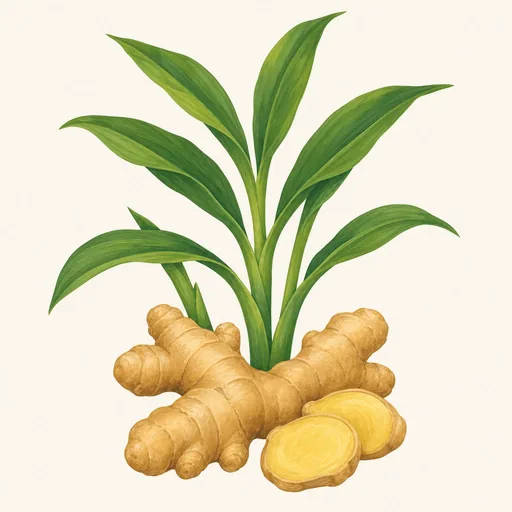
Ginger
Zingiber officinale · Zingiberaceae
- Plant out2–4 weeks after the last frostApr 24 – May 14
- Space20–30 cm (8–12 in) apart
- Harvest120–180 days after plantingAug 22 – Oct 25
Description
Ginger (Zingiber officinale) is a widely cultivated flowering plant belonging to the Zingiberaceae family, which also includes turmeric and cardamom. Native to Southeast Asia, ginger is renowned for its aromatic rhizome, often used as a spice, flavoring, and in traditional medicine. The plant typically reaches heights of 3 to 4 feet and features tall, narrow, lance-shaped green leaves that can grow up to 12 inches long.
Ginger plants produce yellow, green, or white flower spikes, though they are less commonly cultivated for their flowers. The part of the plant most often harvested and used is the underground stem or rhizome, which has a pungent, spicy flavor and a warm, zesty aroma. Fresh ginger can be used in cooking, baking, beverages, and herbal remedies, while dried ginger is commonly found in powdered form as a spice.
Ginger thrives in tropical to subtropical climates, preferring well-drained, loamy or sandy soil rich in organic matter. It requires partial shade and frequent watering to maintain soil moisture. This perennial plant can be grown indoors or outdoors, making it accessible to home gardeners. Planting is typically done in spring when the rhizomes are divided into pieces, each containing at least one eye (bud) for sprouting.
Due to its numerous health benefits, including anti-inflammatory properties and digestive aid, ginger has gained popularity in herbal medicine. The plant is relatively low-maintenance, making it a rewarding addition to an amateur gardener's collection. With care, ginger can thrive and produce a bountiful harvest.
Growing Conditions
0.6–1.2 m (2–4 ft) tall, 30–60 cm (12–24 in) wide
- Smallest
- Largest
Part shade, 2+ hours
Tolerates part sun
Moderate
Keep evenly moist, not soggy.
Ideal 20–30 °C (68–86 °F)
Survives down to −6 °C (21 °F).
pH 5.5–6.5 · acidic to neutral
Where it Grows
Planting
When to Plant
Ginger (Zingiber officinale) is a tropical plant prized not only for its culinary uses but also for its medicinal properties. Knowing when to plant ginger is crucial to ensuring a healthy yield of this flavorful rhizome. Here are some key considerations for determining the optimal planting time for ginger.
Climate Considerations
Ginger thrives in warm, humid conditions, typically preferring temperatures between 70°F to 85°F (21°C to 29°C). In colder climates, it's important to wait until the danger of frost has passed, as frost can damage the plant. The ideal planting time is generally in the late spring to early summer, when the soil has warmed sufficiently.
Soil Temperature
The soil temperature is another critical factor to consider. Ginger roots prefer well-draining, loamy soil that is warm. Ideally, the soil temperature should hover around 70°F (21°C) at planting time. You can check the soil temperature with a soil thermometer or plant ginger when the soil feels warm to the touch.
Growing Season
For most growers, the ginger growing cycle lasts about 8 to 10 months, depending on the climate and variety. If you live in a region with a long growing season, you might be able to plant ginger in early spring. However, in shorter growing seasons, quick-growing varieties of ginger can be started indoors and transplanted outside once conditions improve.
Indoor vs. Outdoor Planting
If you're growing ginger indoors, you can plant it year-round as long as you provide the right conditions, such as warmth and humidity. For outdoor planting, the spring is the best time to sow ginger, ensuring that you mimic the warm, tropical conditions it thrives in.
Signs of Readiness
To determine if you're ready to plant, observe the conditions around you:
- The average nighttime temperatures consistently stay above 60°F (15°C).
- The soil is neither frozen nor overly wet.
- You can find healthy ginger rhizomes to plant, which should be firm and have visible eyes (the knobby growth points).
In conclusion, the ideal time to plant ginger relies heavily on the climate of your region, soil temperatures, and whether you are growing indoors or outdoors. Planting at the right time will set your ginger on the path to thrive and produce a bountiful crop. Happy gardening!
How to Plant
Planting ginger (Zingiber officinale) can be a rewarding endeavor for gardeners, as this versatile spice thrives in warm, humid conditions. Here’s a concise guide to establishing your ginger.
Choosing the Rhizome: Select a plump, healthy ginger root, ideally with visible growth buds (also known as “eyes”). Organic ginger is preferable as it is free from chemicals that may inhibit growth.
Preparing the Soil: Ginger prefers well-draining, loamy soil rich in organic matter. Incorporate compost or aged manure to enhance fertility. The soil pH should be slightly acidic, ranging from 5.5 to 6.5.
Planting: Cut the ginger rhizome into sections, ensuring each piece has at least one bud. Allow the cut edges to dry for a day to prevent rot. Plant the pieces 2-4 inches deep, with the buds facing upwards, spacing them about 12 inches apart.
Watering and Care: After planting, water the area gently but thoroughly. Ginger requires consistent moisture, so keep the soil damp but not soggy. Mulch can help retain moisture and suppress weeds. Keep the plants in partial to full shade and protect them from harsh winds.
With the right conditions and care, you can expect to harvest ginger within 8 to 10 months!
Growth Timeline
- Growing in the garden 120–180 days
- Harvest 4–8 weeks
Planting Calendar
- Plant outdoors: 2–4 weeks after the last frost
- Plant out: Apr 24 – May 14
- Harvest: Aug 22 – Oct 25
Care
Care Calendar
- Mulch · Apr 24 – May 28
Apply a thin layer of organic mulch once the soil is warm to retain moisture. - Feed · May 8 – Aug 6
Feed lightly every few weeks during active growth. - Lift and store · Oct 11 – Oct 31
Dig rhizomes before frost and save firm pieces for replanting.
Watering
Proper watering is essential for the health of a ginger plant (Zingiber officinale). The best strategy involves maintaining consistently moist, but not soggy, soil. Begin by choosing a well-draining potting mix, ideally one that retains some moisture. Water the plant when the top inch of soil feels dry to the touch. During the growing season (spring and summer), ginger typically requires more frequent watering, so check moisture levels regularly.
In contrast, reduce watering during the dormant period in fall and winter, allowing the soil to dry out slightly between waterings. To ensure adequate drainage, use pots with holes at the bottom and avoid letting the plant sit in standing water. Additionally, consider using a humidity tray or misting the leaves if the air is particularly dry, as ginger thrives in humid conditions. By following these guidelines, you’ll help your ginger plant flourish.
Pruning
Pruning ginger plants (Zingiber officinale) is essential for promoting healthy growth and maximizing yield. The best strategy involves several key steps.
Firstly, wait until the plant is well-established, typically during the late growing season, as ginger thrives in warm, humid conditions. Begin by removing any dead or yellowing leaves, which can harbor pests and diseases. Use clean, sharp pruning shears to make precise cuts.
Next, consider thinning the plant to improve air circulation, which helps reduce fungal issues. If the plant has multiple stems, prune back some of the weaker ones, allowing energy to channel into the stronger stems.
Finally, after the growing season, you may also trim back to the ground level if you plan to harvest the rhizomes, ensuring the plant is well-fed with compost to encourage robust regrowth. Regular pruning not only enhances the aesthetic appeal but also contributes to the overall health of the ginger plant.
Weeding
When managing weeds around ginger plants (Zingiber officinale), a strategic approach enhances both the health of your ginger and the ease of maintenance. Begin by using mulch, such as straw or wood chips, which suppresses weed growth while retaining soil moisture. This creates a barrier that reduces the need for weeding.
Manual removal of weeds is the next step, especially after rainfall when the soil is soft and weeds can be uprooted with minimal disturbance. It’s advisable to remove weeds by hand or with a hoe, ensuring not to disturb the ginger's rhizomes. Regular inspection is crucial; perform weeding every few weeks to prevent weeds from competing for nutrients and water.
Finally, ensure proper spacing when planting ginger, which can discourage weed growth by promoting air circulation. These strategies collectively help maintain a healthy growing environment for your ginger plant.
Mulching
Mulching is an essential practice for growing ginger (Zingiber officinale) successfully, as it helps retain moisture, suppresses weeds, and regulates soil temperature. The best strategy involves several key steps:
-
Choose the Right Material: Organic materials like straw, grass clippings, wood chips, or shredded leaves are ideal. They break down over time, enriching the soil.
-
Apply Layer Thickness: Spread a layer of mulch about 2 to 4 inches thick around the base of the ginger plant. Ensure it doesn’t touch the stems directly to prevent rot.
-
Replenish Regularly: As the material decomposes, replace it periodically to maintain the thickness and effectiveness of the mulch.
-
Monitor Moisture Levels: Although mulch retains moisture, occasionally check the soil moisture to ensure the ginger plants are adequately hydrated.
By following these steps, your ginger plants will thrive in a more stable environment.
Fertilizing
Fertilizing ginger (Zingiber officinale) effectively is crucial for promoting healthy growth and maximizing yield. Start with a balanced fertilizer that has an equal ratio of nitrogen, phosphorus, and potassium (like a 10-10-10 formula). Begin applying fertilizer about a month after planting, when shoots emerge.
Use a light feeding every 4-6 weeks to avoid over-fertilization, which can harm the plant. Incorporating organic options, such as well-rotted compost or aged manure, can also enhance soil fertility without risk of chemical build-up.
Ensure the soil remains well-drained, as ginger is susceptible to root rot. If cultivating in pots, use a mix specifically designed for tropical plants, and remember to provide extra nutrients during the active growing season (spring and summer) when the plant is most vigorous. Follow these guidelines, and you’ll encourage lush growth and a bountiful harvest.
Growing in Containers
Grows well in a pot of at least 15 litres (4.0 US gallons), with drainage holes. Can be grown indoors as a houseplant.
Propagation
From rhizomes
- Choose a firm, healthy ginger rhizome with visible buds.
- Cut it into pieces with at least one bud each.
- Let cut surfaces dry for a day or two.
- Plant the pieces shallowly with the buds facing upward.
- Keep the soil warm and evenly moist until shoots appear.
Companion Plants
Good neighbors
- Banana: Ginger is commonly grown beneath banana plants, whose leaves provide the partial shade it prefers.
- Coconut: Ginger is often grown beneath coconut palms, where the canopy provides filtered light.
Common Problems
- Wilting
- Yellowing leaves
- Stunted growth
- Leaves dropping
Bacterial wilt is a soilborne disease that blocks water movement through a plant’s vascular tissue. The name commonly…
- Yellowing leaves
- Wilting
- Stunted growth
- Leaves dropping
Root rot is a general name for the decay of plant roots, not a single disease with one scientific name. It can result…
- Galls or swellings
- Stunted growth
- Yellowing leaves
- Wilting
Root-knot nematodes are microscopic roundworms that live in soil and feed inside plant roots. Several species in the…
- Spots on leaves
- Yellowing leaves
- Leaves dropping
Fungal leaf spot is a general name for diseases caused by many different fungi, not a single species. These fungi…
- Brown or crispy leaf edges
- Wilting
- Bleached or scorched patches
- Leaves dropping
Frost damage is an injury caused when plant tissues become cold enough for ice to form or for cells to lose water to…
Nutrition
Nutritional Composition (per 100g)
| Nutrient | Amount per 100g | % Daily Value |
|---|---|---|
| Calories | 80 | 4% |
| Protein | 1.8 g | 4% |
| Total Fat | 0.8 g | 1% |
| Saturated Fat | 0.2 g | 1% |
| Carbohydrates | 17.8 g | 6% |
| Dietary Fiber | 2.0 g | 8% |
| Sugars | 1.7 g | 2% |
| Calcium | 18 mg | 2% |
| Iron | 0.6 mg | 3% |
| Magnesium | 43 mg | 11% |
| Phosphorus | 34 mg | 5% |
| Potassium | 415 mg | 12% |
| Zinc | 0.34 mg | 2% |
| Vitamin C | 5 mg | 6% |
| Vitamin B6 | 0.16 mg | 10% |
| Folate | 11 mcg | 3% |
Varieties
Ginger, scientifically known as Zingiber officinale, is a flowering plant belonging to the Zingiberaceae family. It is widely appreciated not just for its culinary uses, but also for its medicinal properties. Several varieties of ginger exist, each with unique characteristics, flavors, and uses. Below are some of the common varieties:
1. Common Ginger (Zingiber officinale)
The most widely recognized and used variety is the common ginger, which has a pungent flavor and is used in various culinary dishes, beverages, and traditional medicine. It is available in fresh, dried, ground, or powdered forms.
2. Baby Ginger (Young Ginger)
Baby ginger is harvested before it fully matures. It has a more tender texture and a milder flavor compared to mature ginger. This variety is often used in salads, pickles, and garnishes, providing a fresh, delicate kick.
3. Black Ginger (Kaempferia parviflora)
Also known as Thai black ginger or "Krachai," this type is valued for its medicinal properties and is often used in traditional Thai medicine. It has a unique earthy flavor and is sometimes used in herbal teas and supplements.
4. Red Ginger (Zingiber zerumbet)
Red ginger is distinguished by its vibrant red or pink flower spikes. While less common in culinary applications, it is often used ornamentally in gardens. The rhizome can be used in traditional herbal remedies.
5. Yellow Ginger (Zingiber officinale var. rubrum)
This variety is notable for its vibrant rhizome, which can range from orange to yellow in color. It is often used in Indian cooking, particularly in curries and spice blends, as it is known for its intense flavor.
6. Chinese Ginger (Zingiber officinale var. sinense)
Chinese ginger has its origins in East Asia and is slightly different in both flavor and aroma from the common variety. It’s popular in Chinese cuisine and is often used in stir-fries and soups.
7. Wild Ginger (Asarum canadense)
Though not a true ginger, wild ginger is often mentioned in the same context. It has a distinct flavor and is used more for its aromatic qualities in certain dishes. It is commonly found in North America and has traditional medicinal uses among indigenous cultures.
Conclusion
Growing different varieties of ginger can add an exciting array of flavors and benefits to your garden and your kitchen. Each variety has its unique traits, making them suitable for different culinary styles or ornamental purposes. When choosing which type to grow, consider your climate, garden space, and intended use, as each variety may have different care requirements and growth habits.
Health Benefits
Ginger (Zingiber officinale) is a popular spice with a long history of use in traditional medicine, recognized for its numerous health and wellness applications. One of the most well-known benefits of ginger is its ability to alleviate nausea and vomiting, particularly during pregnancy and after surgery. Consuming ginger tea or ginger ale can provide relief from motion sickness as well.
Additionally, ginger is celebrated for its anti-inflammatory properties, making it a natural remedy for reducing muscle pain and soreness after exercise. It is also thought to aid in digestion by stimulating the production of digestive enzymes, helping to alleviate bloating and indigestion.
Moreover, ginger may play a role in boosting the immune system, thanks to its antioxidant properties that combat oxidative stress. Including ginger in your diet may help lower blood sugar levels, potentially benefitting individuals with type 2 diabetes.
Lastly, many herbalists believe that ginger can support cardiovascular health by improving circulation and potentially lowering cholesterol levels. Its versatility makes it an excellent addition to various dishes, teas, and herbal remedies, appealing to those seeking natural wellness solutions.
Fun Facts
-
Ancient Roots: Ginger (Zingiber officinale) has been cultivated for over 5,000 years and was valued in ancient cultures for both its culinary and medicinal properties, with references found in ancient Chinese and Indian texts.
-
Diverse Varieties: While the common ginger root is what most people are familiar with, there are several varieties, including white ginger, yellow ginger, and black ginger, each having unique flavors and uses in cooking and herbal medicine.
-
Culinary Versatility: Ginger is used worldwide in various cuisines, ranging from fresh ginger in stir-fries and teas to powdered ginger in baked goods. It's a staple ingredient in dishes from Asian to Caribbean cultures, showcasing its global appeal.
-
Health Benefits: Known for its anti-inflammatory and antioxidant properties, ginger has been traditionally used to help alleviate nausea, improve digestion, and even reduce muscle pain after exercise.
-
Easy to Grow: Ginger can be easily grown at home in pots or gardens as long as conditions are warm and humid. It's often started from rhizomes (the root pieces), which can sprout new plants, making it a fun and rewarding project for hobbyists.
Notice an error or have a question about Ginger? Contact us