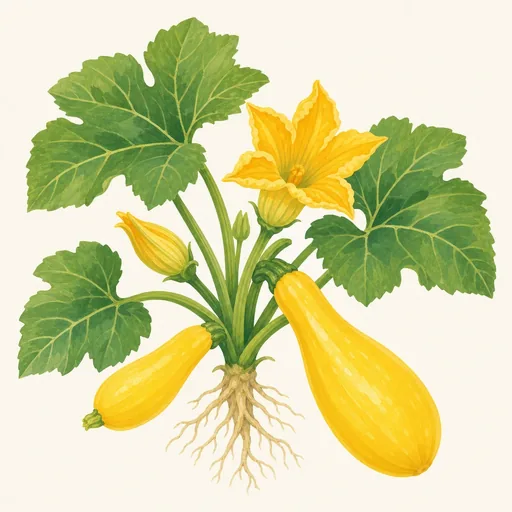
Yellow Squash
Cucurbita pepo · Cucurbitaceae
- Start indoors2–4 weeks before the last frostMar 13 – Apr 2
- Sow outdoors1–2 weeks after the last frostApr 17 – Apr 30
- Plant out1–3 weeks after the last frostApr 17 – May 7
- Plant in autumn10–12 weeks before the first autumn frostAug 2 – Aug 22
- Space60–90 cm (2–3 ft) apart
- Harvest45–60 days after plantingJun 1 – Jul 27
Description
Yellow squash is a warm-season summer squash grown for its tender, immature fruit. Common types include straightneck and crookneck squash, named for the shape of the stem end. The fruit has yellow skin, pale flesh, and soft, edible seeds. Unlike winter squash, it is harvested before its rind hardens and does not keep for long periods. Most plants form broad, leafy bushes, although their stems can spread across a substantial area of garden bed.
Yellow squash grows best in full sun, fertile, well-drained soil, and consistently warm weather. Seeds are usually sown directly outdoors after the last frost, once the soil has warmed. Plants need regular watering, particularly while flowering and developing fruit. They produce separate male and female flowers on the same plant; bees and other insects transfer pollen between them. Female flowers can be recognized by the tiny squash at their base. Inadequate pollination may cause young fruit to shrivel rather than develop.
Fruit is typically picked while small and tender, often around 10–20 cm long, depending on the variety. Frequent harvesting encourages continued production. Yellow squash can be eaten raw when young or cooked by sautéing, roasting, grilling, or adding it to soups. Its mild flavor works well with herbs, garlic, and other summer vegetables. The skin is normally left on, and the fruit provides water, fiber, and modest amounts of vitamin C and potassium.
Common problems include powdery mildew, aphids, cucumber beetles, and, in some regions, squash vine borers. Good spacing improves air circulation, while checking plants often makes it easier to spot pests and harvest fruit before it becomes oversized. Freshly picked squash is best stored in the refrigerator and used within several days.
Growing Conditions
45–90 cm (1–3 ft) tall, 0.6–1.2 m (2–4 ft) wide
- Smallest
- Largest
Full sun, 6+ hours
Moderate
Keep evenly moist, not soggy.
Ideal 18–30 °C (64–86 °F)
Survives down to 0 °C (32 °F).
pH 6–7 · acidic to neutral
Where it Grows
Planting
When to Plant
Plant yellow squash outdoors after your area’s last spring frost, once the soil has warmed to at least 60°F (16°C); seeds germinate more reliably at 70°F (21°C) or warmer. Choose a time when the forecast shows no frost and nights are generally above 50°F (10°C). A soil thermometer is more dependable than the calendar, especially in a cool or wet spring. Planting into cold soil can cause seeds to rot or germinate slowly.
For an earlier start, sow seeds indoors about two to three weeks before you expect to transplant them, then move the seedlings outside only after frost danger has passed. Harden them off gradually first. Yellow squash grows quickly and is usually ready to harvest about 45–60 days after sowing, depending on the variety and conditions. For a longer harvest, make another sowing two to three weeks later, provided it has enough warm, frost-free time to mature.
How to Plant
Choose a sunny spot that receives at least six to eight hours of direct light daily. Yellow squash grows best in fertile, well-drained soil. Work compost into the planting area before sowing, and water dry soil so it is evenly moist. Direct sowing is usually easiest because squash seedlings have delicate roots and grow rapidly.
Plant seeds about 1 inch (2.5 cm) deep. For compact bush varieties, place two or three seeds at each planting spot, with spots about 2–3 feet (60–90 cm) apart and rows about 3–4 feet (90–120 cm) apart. Once seedlings have their first true leaves, snip off the weaker ones, leaving one healthy plant per spot. Give sprawling varieties more room, following the seed packet’s spacing instructions. If using transplants, set them at the same depth they grew in their pots, handling the root balls gently.
Water after planting and keep the soil consistently moist during germination, not soggy. Once plants are growing, water deeply at soil level, aiming for roughly 1–2 inches (2.5–5 cm) of water per week, including rain. Add mulch after the soil has warmed to help conserve moisture and reduce weeds. Leave space for bees to reach the flowers: squash needs pollination to develop fruit.
Growth Timeline
- Germination 5–10 days
- Seedlings indoors 2–6 weeks
- Growing in the garden 45–60 days
- Harvest 6–10 weeks
Planting Calendar
- Start seeds indoors: 2–4 weeks before the last frost
- Sow outdoors: 1–2 weeks after the last frost
- Plant outdoors: 1–3 weeks after the last frost
- Autumn planting: 10–12 weeks before the first autumn frost
- Germination: 5–10 days
- Start indoors: Mar 13 – Apr 2
- Sow outdoors: Apr 17 – Apr 30
- Plant out: Apr 17 – May 7
- Autumn planting: Aug 2 – Aug 22
- Harvest: Jun 1 – Jul 27
Care
Care Calendar
- Thin · Apr 24 – May 14
Thin seedlings to one strong plant per planting spot. - Mulch · Apr 24 – May 21
Spread mulch around plants once the soil has warmed, keeping it off the stems. - Feed · May 8 – Jun 11
Side-dress with compost or a balanced fertilizer when flowering begins.
Watering
Keep the soil evenly moist, especially while plants are flowering and fruits are growing. Aim for about 1–2 inches of water per week from rain and irrigation combined, adjusting for heat, soil type, and how quickly the soil dries. Check moisture a few inches below the surface rather than watering on a fixed schedule. Water deeply at the base of the plant so moisture reaches the roots; drip irrigation or a soaker hose works well. If watering by hand, do it in the morning and try to keep the leaves dry. Avoid repeated cycles of very dry soil followed by heavy watering, which can stress plants and contribute to blossom-end rot. Mulch helps conserve moisture, but do not let the soil remain soggy. Yellow squash needs well-drained soil, and constantly wet roots can lead to poor growth or disease.
Pruning
Most bush-type yellow squash needs little pruning. Remove leaves that are dead, badly damaged, or heavily affected by disease, cutting their stalks with clean pruners rather than pulling them off. Dispose of diseased material away from the garden, and clean tools afterward to reduce the chance of spreading infection. If dense foliage is blocking airflow, a few older leaves may be removed, but leave plenty of healthy foliage: the plant needs it to feed developing fruit and protect fruit from sunscald. Do not routinely cut back the growing tip or remove large numbers of leaves. For vining varieties, guide the vines into available space instead of repeatedly trimming them. When working among plants, avoid bruising stems, which can provide an entry point for pests and disease. Harvesting fruit promptly is usually more useful than pruning for keeping a plant productive.
Weeding
Keep the bed free of weeds, particularly while squash plants are young. Weeds compete for water, nutrients, and sunlight, and a crowded planting can reduce airflow around the leaves. Pull small weeds by hand or hoe very shallowly when the soil is workable. Squash roots spread near the surface, so deep cultivation close to the plant can damage them. Remove weeds before they flower and set seed, and pay attention to the edges of the bed as well as the space between plants. Once squash foliage spreads, it will shade some weeds, but inspect beneath leaves regularly for new growth. A layer of organic mulch can suppress many seedlings and make remaining weeds easier to pull. Avoid piling pulled weeds against squash stems, especially if the weeds are flowering, seeding, or showing signs of disease.
Mulching
Once the soil has warmed and young plants are established, spread about 2–3 inches of clean straw, shredded leaves, or another loose organic mulch over the surrounding soil. Leave a few inches clear around each stem so the base of the plant does not stay damp. Mulch reduces evaporation, moderates soil-temperature swings, and helps keep weeds from establishing. It also limits soil splashing onto leaves and fruit during rain or watering. Add more mulch if the layer becomes thin, but avoid packing it tightly against the plant or covering leaves. In cool spring weather, wait to mulch until the soil has warmed, since an early, thick layer can slow warming. If using grass clippings, apply them in thin, dry layers so they do not form a wet mat. Continue checking soil moisture beneath the mulch; its surface may look dry while the soil below remains moist.
Fertilizing
Start with a soil test if possible, and follow its recommendations rather than fertilizing heavily by default. Before planting, work finished compost into the bed and, if needed, apply a balanced vegetable-garden fertilizer according to the package directions. Yellow squash grows best in fertile, well-drained soil, but excess nitrogen can produce lots of leaves at the expense of fruit. If plants are growing slowly or soil fertility is low, a modest side-dressing when flowering begins may help. Spread it on the soil a short distance from the stems, water it in, and avoid getting fertilizer on leaves. Do not assume every small or misshapen fruit signals a nutrient shortage: poor pollination or irregular watering may be responsible. Yellowing leaves can also have several causes. Check moisture, pests, and disease before adding more fertilizer, and never exceed the product’s recommended rate.
Pest Management
Inspect plants regularly, including the undersides of leaves and the bases of stems. Handpick squash bugs and remove their egg clusters when practical. Watch for squash vine borer activity where it occurs: a suddenly wilting plant and sawdust-like waste near the stem can be clues. Row covers can protect young plants from some insects, but remove them when flowers open so pollinators can reach the blooms, unless you plan to hand-pollinate. Give plants adequate spacing and water at soil level to help limit powdery mildew and other leaf diseases. Remove badly diseased leaves without stripping the plant. If fruit begins to form but then shrivels, poor pollination may be the cause rather than a pest. Use pesticides only when a pest is identified and treatment is warranted; follow the label exactly and avoid spraying open flowers or active pollinators.
Harvesting
Pick yellow squash while the skin is tender and glossy, before seeds become large and the rind hardens. Many straightneck and crookneck types taste best at roughly 4–8 inches long, though the ideal size depends on the variety. Check plants every day or two during warm weather: fruit can grow quickly, and frequent picking encourages the plant to keep producing. Use clean pruners or a knife to cut the fruit from the plant, leaving a short piece of stem attached. Do not twist or yank it off, as squash stems can be brittle. Gently move leaves aside to find fruit hidden near the base of the plant. Remove overgrown fruit if you find it; leaving mature squash on the plant can slow new production. Handle harvested squash carefully to avoid scratches, and refrigerate it promptly for best quality.
Growing in Containers
Grows well in a pot of at least 20 litres (5.3 US gallons), with drainage holes. Best kept outdoors.
Propagation
From seed
- Wait until frost danger has passed and the soil is warm.
- Sow seeds about 1 inch deep in a sunny, well-drained bed.
- Space plants according to the seed packet, allowing room for mature leaves.
- Keep the soil evenly moist until seedlings emerge.
- Thin crowded seedlings to the recommended spacing.
Companion Plants
Good neighbors
- Corn: In a traditional Three Sisters planting, squash covers the ground beneath corn, helping suppress weeds.
- Pole beans: In a Three Sisters planting, pole beans climb nearby corn while squash spreads across the ground.
- Borage: Its flowers attract bees that can pollinate squash blossoms.
Keep apart from
- Potatoes: Both crops need ample space and nutrients, so planting them close together can increase competition.
Common Problems
- Yellowing leaves
- Pale speckles or stippling
- Wilting
- Stunted growth
Squash bugs are sap-feeding insects that attack squash, pumpkins, and other cucurbits. Adults and nymphs pierce plant…
- Wilting
- Yellowing leaves
- Stunted growth
- Stems chewed or cut through
The squash vine borer is a clearwing moth whose caterpillars tunnel inside squash stems. It primarily attacks summer…
- White powdery coating
- Yellowing leaves
- Curled or cupped leaves
- Distorted new growth
Powdery mildew is a group of fungal diseases, not a single species. Different fungi infect different hosts, including…
- Holes in leaves
- Wilting
- Stunted growth
- Insects visible on the plant
Cucumber beetles are small leaf beetles that feed on cucumbers, melons, squash, pumpkins, and other cucurbits. In…
- Flowers or buds dropping
- Distorted new growth
Poor pollination occurs when too little viable pollen reaches a flower’s receptive stigma, or when pollen fails to…
- Squash vine borers tunnel into stems, causing vines to wilt suddenly.
- Squash bugs and cucumber beetles damage leaves and fruit; cucumber beetles can also spread bacterial wilt.
- Powdery mildew leaves a white coating on foliage, especially later in the season.
- Poor pollination can produce misshapen fruit or cause young squash to shrivel.
- Blossom-end rot causes a dark, sunken patch at the flower end, often following uneven watering.
Varieties
A classic yellow straightneck best picked while the skin is tender.
- heirloom
- productive
Produces curved yellow squash with a slightly bumpy skin.
- heirloom
- early
A fast-maturing crookneck that bears well with regular picking.
- early
- productive
Its slender yellow fruits have distinctive pale green tips.
- bicolored
- productive
Produces bright yellow, scalloped squash that is tender when picked small.
- compact
- scalloped
More about varieties
- Yellow crookneck: Curved neck and often bumpy skin; best picked young and tender.
- Yellow straightneck: Straight, smooth-to-slightly-bumpy fruit that is easy to slice.
- Early Prolific Straightneck: A widely grown straightneck cultivar known for early harvests.
- Zephyr: A summer squash with a yellow upper half and pale green blossom end.
- Sunburst: A yellow pattypan squash with a scalloped, saucer-like shape.
Health Benefits
Yellow squash is a low-calorie, water-rich vegetable that can add volume to meals without much saturated fat or sodium. It provides vitamin C, which supports normal immune function and helps the body make collagen. It also supplies some potassium, a mineral involved in normal muscle and nerve function and blood-pressure regulation. The skin contains dietary fiber, so eating the squash unpeeled can help increase fiber intake; wash it well first.
Yellow squash contains carotenoid pigments, including lutein and zeaxanthin, though amounts vary by variety and growing conditions. These compounds are associated with eye health, but eating squash should not be considered a treatment for an eye condition. Its mild flavor makes it an easy addition to a varied diet: try it roasted, sautéed, grilled, or added to soups. Cooking it with a little oil can help the body absorb fat-soluble carotenoids. Steaming or brief sautéing also avoids the large amounts of added fat sometimes used in fried squash.
For most people, yellow squash is simply a useful part of a balanced diet, not a medicine. Its nutritional benefits depend on the rest of the meal and on how it is prepared.
Fun Facts
- Botanically, squash is a fruit because it develops from a flower and contains seeds.
- Yellow summer squash is harvested while immature, before its rind hardens.
- Squash plants produce separate male and female flowers on the same plant.
- The blossoms are edible and are sometimes stuffed or cooked.
- Fruits can grow quickly in warm weather, so plants may need checking every day or two at peak harvest.
Notice an error or have a question about Yellow Squash? Contact us