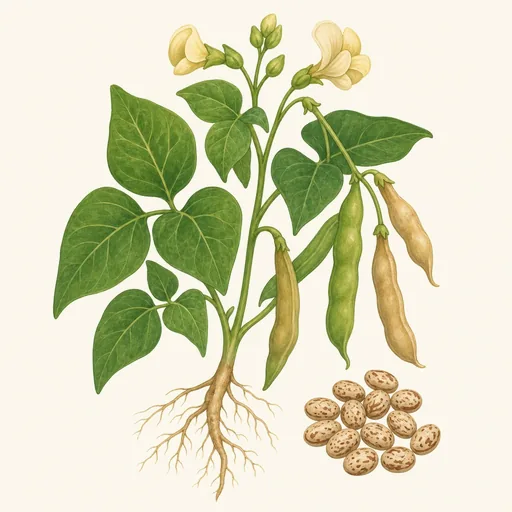
Tepary Bean
Phaseolus acutifolius · Fabaceae
- Sow outdoors1–3 weeks after the last frostApr 17 – May 7
- Space15–30 cm (6–12 in) apart
- Harvest60–90 days after plantingJun 16 – Aug 26
Description
The Tepary bean (Phaseolus acutifolius) is a drought-resistant legume native to the southwestern United States and northern Mexico. Unlike common beans, Tepary beans are adapted to arid environments, making them an ideal choice for low-water gardens. They thrive in sandy or well-drained soils and can withstand high temperatures, flourishing where many traditional crops fail.
Tepary beans are small, often oval-shaped, and come in various colors, including beige, brown, and black. The plants generally reach a height of 1 to 3 feet and feature distinctively narrow, pointed leaves. Depending on the variety, they can be bushy or more vining in growth habit. Tepary beans produce clusters of white to lavender flowers that develop into pods containing the beans, typically harvested when fully mature.
The beans are nutritionally rich, providing protein, fiber, and essential minerals, making them a valuable part of a healthy diet. They have a slightly nutty flavor and a creamy texture, which makes them a popular ingredient in various dishes.
Tepary beans are planted in late spring after the threat of frost has passed, and they prefer warm soil conditions for optimal germination. Once established, they require minimal care and can be directly sown into garden beds or containers. The plants are also beneficial for soil health, as they enrich the soil through nitrogen fixation. Overall, Tepary beans offer an excellent option for gardeners interested in sustainable and resilient crops.
Growing Conditions
0.3–1 m (1–3 ft) tall, 30–60 cm (12–24 in) wide
- Smallest
- Largest
Full sun, 6+ hours
Low
Let the soil dry out between waterings.
Ideal 21–35 °C (70–95 °F)
Survives down to 0 °C (32 °F).
neutral to alkaline
Where it Grows
Planting
When to Plant
Tepary beans (Phaseolus acutifolius) are a drought-resistant legume native to the southwestern United States and northern Mexico. They have a deep-root system and are well-suited for dry, hot climates, making them a great choice for gardeners in arid regions. Understanding when to plant Tepary beans is crucial for a successful harvest.
Ideal Planting Time
-
Soil Temperature: Tepary beans thrive in warm soil. The ideal soil temperature for planting is between 70°F to 85°F (21°C to 29°C). Before planting, use a soil thermometer to check the temperature, ensuring that it is warm enough for germination.
-
Frost-Free Period: It's crucial to plant Tepary beans after the last frost date in your region. These beans are not frost-tolerant and can be severely damaged by cold temperatures. In most areas, this means you should wait until late spring, typically between May and early June, depending on your local climate.
-
Climate Considerations: Tepary beans prefer hot climates and can be planted when temperatures begin to consistently remain above 70°F (21°C). If you are in a particularly warm area, such as the southwestern United States, you may be able to plant a bit earlier.
Soil Preparation Before planting, prepare the soil by ensuring it is well-drained and rich in organic matter. Tepary beans can tolerate poorer soils better than many other crops, but adding compost or well-rotted manure can enhance growth.
Seed Sowing
- Spacing: Plant seeds about 1-2 inches deep, spacing them 3-4 inches apart in rows that are approximately 2-3 feet apart. This spacing allows for good airflow and reduces competition for nutrients.
- Watering: After planting, water gently to avoid disturbing the seeds. Tepary beans are drought-tolerant, but adequate moisture during germination is essential.
Conclusion By understanding the proper timing for planting Tepary beans, alongside basic soil preparation and care, you can increase your chances of a thriving crop. Remember, the key is to wait for warm soil temperatures and ensure that the risk of frost has passed. With the right conditions, you can enjoy the unique flavors and benefits of this resilient legume.
How to Plant
Tepary beans (Phaseolus acutifolius) are a drought-tolerant legume native to the arid regions of North America, making them an excellent choice for gardeners in dry climates. Planting tepary beans requires attention to soil conditions and timing for optimal growth.
Soil Preparation and Location: Choose a sunny location with well-draining soil that has a pH between 6.0 and 7.5. Before planting, enrich the soil with compost or well-rotted manure to enhance fertility.
Planting Time: The best time to plant tepary beans is in late spring or early summer when soil temperatures reach at least 65°F (18°C). This timing aligns with their growth cycle and helps avoid frost damage.
Seeding: Sow seeds directly into the garden bed, placing them about 1 inch deep and 3 to 5 inches apart. Rows should be spaced 18 to 24 inches apart to allow adequate airflow and light penetration.
Watering and Maintenance: Once established, tepary beans require minimal watering due to their drought resilience. However, consistent moisture is essential during germination. Mulching can help retain soil moisture and control weeds.
Harvesting: Harvest when the pods are dry and brown, usually 70-90 days after planting. Remember that these beans can be used both for their pods and as dry seeds for storage.
Growth Timeline
- Germination 5–10 days
- Growing 60–90 days
- Harvest 1–3 weeks
Planting Calendar
- Sow outdoors: 1–3 weeks after the last frost
- Germination: 5–10 days
- Sow outdoors: Apr 17 – May 7
- Harvest: Jun 16 – Aug 26
Care
Care Calendar
- Stake · Apr 24 – May 21
Provide a trellis if growing a climbing strain. - Thin · May 8 – May 28
Thin seedlings to the spacing recommended on the seed packet. - Mulch · May 8 – Jun 4
Apply a light mulch once the soil has warmed to keep pods off damp ground.
Watering
Tepary beans (Phaseolus acutifolius) are well-adapted to arid environments and have a unique drought-resistant capability. The best strategy for watering them involves a balance that accommodates their need for moisture while respecting their natural resilience to dry conditions. When establishing Tepary beans, provide consistent moisture until the seedlings are well-rooted, usually within the first few weeks. Once established, allow the soil to dry out between watering, as overwatering can lead to root rot. Ideally, water the plants deeply but infrequently, promoting deep root growth. This approach encourages drought tolerance and enhances the plants' resilience to heat. During their flowering and pod-setting stages, monitor the soil moisture closely—if prolonged dry periods occur, supplemental watering may be necessary to ensure bean development, but always avoid soggy conditions. Overall, the key is to mimic their native environment, where they thrive with minimal intervention.
Pruning
Pruning Tepary Bean plants is crucial for maintaining healthy growth and maximizing yield. The best strategy begins in the early stages of the plant's development. Start by removing any dead or damaged leaves and stems to promote airflow and reduce the risk of disease. As the plant establishes, pinch off the tip of the main stem when it reaches about 12-18 inches tall. This encourages bushier growth and more branching, which can lead to increased flower and pod production.
Additionally, periodically remove any excessive lateral shoots to concentrate the plant's energy on producing viable pods. Be cautious not to over-prune, as this can stress the plant. Regularly assess for pest damage, ensuring a healthy environment by pruning away any infected areas. The timing and approach in pruning will vary, but consistent attention to the plant will yield a robust Tepary Bean harvest.
Weeding
Weeding around Tepary Bean plants is essential for their health and productivity, as these legumes thrive in well-drained soil with plenty of sunlight. A highly effective strategy involves a combination of manual and mulching techniques. Begin by hand-pulling weeds while they are small, as this is the most efficient method to reduce competition for nutrients and water. It is best to do this when the soil is moist, making it easier to uproot weeds without disturbing the Tepary Beans' roots.
Applying a layer of organic mulch, such as straw or wood chips, around the base of the plants after weeding can further suppress weed growth. This layer not only inhibits weed emergence but also retains soil moisture and improves soil health as it decomposes. Regular monitoring and reapplication of mulch or hand weeding as necessary will help maintain an ideal growing environment for your Tepary Beans.
Mulching
Mulching Tepary Bean plants effectively involves several key strategies that enhance moisture retention, suppress weeds, and regulate soil temperature. Begin by selecting organic mulch materials, such as straw, shredded leaves, or grass clippings, which improve soil fertility as they decompose. Apply a layer of mulch approximately 2 to 4 inches thick around the base of the plants, ensuring you keep the mulch a few inches away from the stems to prevent rot and pest issues. Timing is crucial; apply mulch after the soil has warmed up in spring but before the weeds establish. This not only promotes healthy growth but also conserves moisture during dry spells, which is essential for Tepary Beans as they thrive in arid conditions. Regularly check the mulch layer, replenishing as needed, especially after heavy rains or as it decomposes, to maintain its effectiveness throughout the growing season.
Fertilizing
Tepary Bean plants thrive in arid conditions, making them low-maintenance and well-suited for drought-prone areas. When fertilizing, it’s essential to focus on enhancing soil quality rather than overloading the plant with nutrients. A balanced approach involves incorporating organic matter such as well-decomposed compost or aged manure into the soil before planting. This enriches the soil with essential nutrients and improves water retention. During the growing season, lightly side-dressing the plants with a low-nitrogen fertilizer can provide additional nutrients without risking over-fertilization, which can be detrimental. Timing is crucial; apply the fertilizer when the plants are actively growing, typically in late spring or early summer. Regular monitoring of plant health will help determine if further nutrient adjustments are needed, but generally, Tepary Beans require minimal fertilization compared to other legumes, often benefiting from a simple, organic-based approach.
Growing in Containers
Grows well in a pot of at least 20 litres (5.3 US gallons), with drainage holes. Best kept outdoors.
Propagation
From seed
- Wait until frost has passed and the soil is warm.
- Sow seeds directly about 1 inch (2.5 cm) deep.
- Space seeds about 4 to 6 inches (10 to 15 cm) apart.
- Water to support germination, then water sparingly once plants are established.
Companion Plants
Good neighbors
- Corn: Tepary beans have traditionally been intercropped with corn, which provides some shade in hot growing conditions.
- Squash: Squash is a traditional intercrop whose spreading leaves shade the soil and help reduce moisture loss.
Common Problems
- Yellowing leaves
- Sticky residue on leaves
- Black sooty coating
- Curled or cupped leaves
Aphids are small, soft-bodied insects that feed by piercing plants and drawing out sap. The group includes many…
- Yellowing leaves
- Wilting
- Stunted growth
- Leaves dropping
Root rot is a general name for the decay of plant roots, not a single disease with one scientific name. It can result…
- Brown or crispy leaf edges
- Wilting
- Bleached or scorched patches
- Leaves dropping
Frost damage is an injury caused when plant tissues become cold enough for ice to form or for cells to lose water to…
Nutrition
Nutritional Composition (per 100g)
| Nutrient | Amount per 100g | % Daily Value |
|---|---|---|
| Calories | 337 kcal | 17% |
| Protein | 23.5 g | 47% |
| Total Fat | 1.7 g | 3% |
| Saturated Fat | 0.2 g | 1% |
| Carbohydrates | 60.1 g | 20% |
| Dietary Fiber | 17.5 g | 70% |
| Sugars | 2.5 g | - |
| Iron | 3.2 mg | 18% |
| Magnesium | 55 mg | 14% |
| Potassium | 860 mg | 24% |
| Calcium | 45 mg | 5% |
| Vitamin B6 | 0.2 mg | 10% |
| Folate | 402 µg | 101% |
| Zinc | 2.7 mg | 18% |
Varieties
A commonly sold white-seeded strain grown mainly for dry beans.
- white seeds
- drought tolerant
A commonly sold brown-seeded strain grown mainly for dry beans.
- brown seeds
- drought tolerant
More about varieties
The Tepary Bean (Phaseolus acutifolius) is a hardy legume native to the southwestern United States and Mexico, adapted to arid conditions. There are several common varieties of the Tepary Bean, each with unique characteristics and uses.
Among the most recognized are the "Black Tepary Bean," known for its rich flavor and nutritional content, often used in soups and stews. The "Brown Tepary Bean" is another popular variant, distinguished by its earthy taste and medium-sized seeds, which makes it suitable for a variety of traditional dishes. The "White Tepary Bean" is lighter in color and has a more delicate flavor, often preferred in salads and light side dishes.
There are also several regional varieties, including those cultivated by Indigenous peoples, which may have specific adaptations to local conditions. The diversity in color, size, and flavor profiles among these varieties makes the Tepary Bean a versatile choice for gardeners, especially those in drier climates, who can benefit from its drought resistance and low maintenance requirements. When selecting a variety, gardeners should consider their local growing conditions and intended culinary uses to optimize their growing experience.
Health Benefits
Tepary beans (Phaseolus acutifolius) are renowned for their impressive nutritional profile and offer several health benefits that contribute to overall wellness. Native to the arid regions of North America, these beans are exceptionally drought-resistant, making them not only environmentally friendly but also a sustainable food source.
Rich in protein, tepary beans provide an excellent alternative to animal products, making them valuable for vegetarian and vegan diets. They are also an abundant source of dietary fiber, which aids in digestion and helps regulate blood sugar levels, making them beneficial for those managing diabetes. The high fiber content can also promote a feeling of fullness, assisting in weight management.
Additionally, tepary beans are packed with essential vitamins and minerals, including folate, magnesium, and potassium. Folate is crucial for cell division and brain health, while magnesium supports muscle and nerve function. The antioxidant properties of tepary beans contribute to reducing inflammation and combatting oxidative stress, which can lower the risk of chronic diseases.
Incorporating tepary beans into a balanced diet can help improve heart health, support digestive wellness, and provide sustained energy, all of which enhance overall well-being.
Fun Facts
-
Tepary beans (Phaseolus acutifolius) are native to the arid regions of southwestern United States and Mexico, making them exceptionally drought-resistant compared to other bean varieties.
-
These beans were an important food source for Native American tribes, particularly in the Southwestern United States, who cultivated them for thousands of years.
-
Tepary beans come in various colors, including beige, brown, black, and even speckled patterns, offering both aesthetic and culinary diversity.
-
They are known for their high protein content and low glycemic index, making them a nutritious option for those seeking healthy plant-based protein sources.
-
Tepary beans have a distinct nutty flavor and a firm texture, which makes them a popular choice in various culinary dishes, from soups and stews to salads and sides.
Notice an error or have a question about Tepary Bean? Contact us