Chicory
Cichorium intybus · Asteraceae
- Sow outdoors2–4 weeks before the last frostMar 13 – Apr 2
- Plant in autumn8–12 weeks before the first autumn frostAug 2 – Sep 5
- Space20–30 cm (8–12 in) apart
- Harvest45–90 days after plantingApr 27 – Jul 22
Description
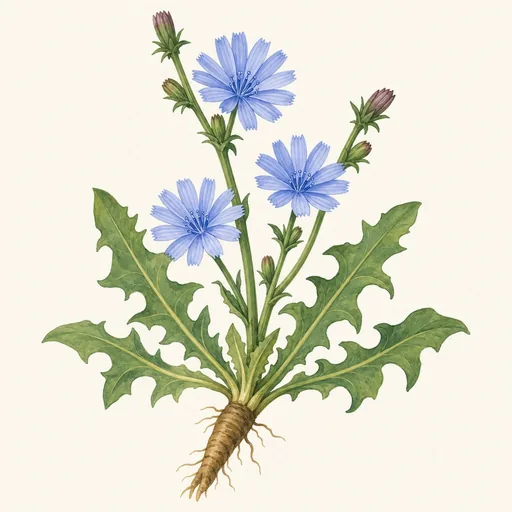
Chicory is a hardy, usually biennial or short-lived perennial herb grown as a vegetable for its leaves and roots. It forms a basal rosette of elongated, often toothed leaves and later sends up branched stems bearing blue, daisy-like flowers. Depending on the cultivar, the foliage may be green, red, or variegated, with a pleasantly bitter flavor that becomes stronger in hot weather or as leaves mature. Young leaves can be eaten raw in salads; older leaves are commonly sautéed, braised, or added to soups. Vegetable forms include red-leaved radicchio, sugarloaf chicory, and Belgian endive, also called witloof. Belgian endive is produced by first growing thick roots, then forcing them in darkness to make tightly packed, pale shoots called chicons. Chicory roots can also be roasted and ground as a coffee substitute or additive; they contain inulin, a dietary fiber.
Chicory grows best in full sun and fertile, well-drained soil with steady moisture. It tolerates cool weather and light frosts, and many leafy cultivars develop their best color and milder taste during autumn. Sow seeds directly, or start transplants where growing seasons are short, spacing plants to allow heads or roots to develop. Keep the bed weed-free and water regularly to prevent excessive bitterness and tough growth. Harvest loose leaves while young, cut mature heads when firm, or lift roots after a season of growth. Plants left to flower attract pollinating insects and can self-seed. Chicory is distinct from cultivated endive (Cichorium endivia), although their common names are sometimes used interchangeably.
Growing Conditions
0.3–1.5 m (1–5 ft) tall, 30–60 cm (12–24 in) wide
- Smallest
- Largest
Full sun, 4+ hours
Tolerates part sun
Moderate
Keep evenly moist, not soggy.
Ideal 10–24 °C (50–75 °F)
Survives down to −40 °C (−40 °F).
pH 6–7.5 · acidic to neutral to alkaline
Where it Grows
Planting
When to Plant
Plant chicory according to the crop you want and your local frost dates. For leaves, direct-sow outdoors in spring once the soil can be worked and has warmed to about 50°F (10°C). You can also sow in late summer for an autumn harvest, allowing roughly 8–12 weeks before your first expected hard frost. In mild-winter areas, an early-autumn sowing may provide leaves through winter. Hot weather can make leaves bitter and encourage plants to bolt, so a fall crop is often easier than a midsummer one. Radicchio varieties also form their best heads in cool weather; check the seed packet for their days to maturity and count backward from your expected autumn harvest. If growing chicory for roots or for winter forcing, sow in spring or early summer so the roots have about 3–4 months to develop before autumn harvest. Sow when the soil is moist, but not waterlogged.
How to Plant
Direct-sow chicory where it will grow, especially if you want straight, well-formed roots: its taproot does not transplant easily. Choose a site with full sun and well-drained soil; a little afternoon shade can help leaf crops in hot climates. Remove stones and loosen the soil at least 12 inches (30 cm) deep for root varieties. Work in well-rotted compost if the soil is poor, but avoid fresh manure, which can cause roots to fork.
Sow seeds about ¼ inch (6 mm) deep in rows 12–18 inches (30–45 cm) apart. Keep the surface evenly moist until seedlings emerge, usually within one to two weeks. Thin seedlings rather than leaving them crowded: allow about 6–8 inches (15–20 cm) between plants grown for loose leaves, and 10–12 inches (25–30 cm) for heading radicchio or large roots. Follow the seed packet if your variety specifies a different spacing.
Water regularly, especially while seedlings establish and during dry spells. A light mulch helps retain moisture and suppress weeds, but keep it clear of young stems. Harvest outer leaves as needed, or cut mature heads. For roots intended for forcing, lift them in autumn before the ground freezes, trim off the foliage, and store the roots cool until needed.
Growth Timeline
- Germination 5–14 days
- Growing 45–90 days
- Harvest 4–8 weeks
Planting Calendar
- Sow outdoors: 2–4 weeks before the last frost
- Autumn planting: 8–12 weeks before the first autumn frost
- Germination: 5–14 days
- Sow outdoors: Mar 13 – Apr 2
- Autumn planting: Aug 2 – Sep 5
- Harvest: Apr 27 – Jul 22
Care
Care Calendar
- Thin · Aug 2 – Sep 19
Thin autumn-sown seedlings to the spacing on the seed packet. - Mulch · Aug 30 – Oct 3
Apply a light mulch to keep the soil evenly moist. - Protect · Oct 25 – Nov 28
Cover autumn crops when hard freezes threaten.
Watering
Keep chicory evenly moist while seeds germinate and seedlings establish; dry soil can slow germination and stress young plants. Once established, water deeply when the top inch (2–3 cm) of soil feels dry rather than giving frequent light sprinkles. Aim for roughly 1 inch (2.5 cm) of water per week from rain and irrigation, adjusting for heat, soil type, and plant size. Consistent moisture is especially useful for tender salad leaves and developing radicchio heads: drought stress can make leaves tougher and more bitter or cause plants to bolt. Root chicory also needs moisture during early growth, but avoid waterlogged soil, which can damage the roots. Direct water at the soil instead of regularly wetting the foliage, particularly where leaf diseases are a problem. Containers dry out faster than garden beds, so check them more often. Ease back on watering during prolonged cool, wet weather.
Pruning
Chicory needs little routine pruning. For varieties grown for loose leaves, pick healthy outer leaves as needed and leave the central growing point intact so the plant can produce more. Remove yellowing, damaged, or diseased leaves promptly, and take them out of the garden rather than leaving them against the crown. If a plant sends up a flower stalk and you want to keep harvesting leaves, cut the stalk near its base while it is young. This may briefly prolong leaf production, but bolting leaves often become tougher and more bitter; replacing the plant is usually more effective. Do not cut back radicchio heads while they are forming. For chicory grown for roots, leave the foliage in place during the growing season because it feeds root development. At harvest, trim off the leaves as appropriate for storage or, with witloof chicory, later forcing.
Weeding
Keep the bed weed-free, especially while chicory seedlings are small. Weeds compete for light, water, and nutrients and can make it harder to spot slugs or developing leaf diseases. Prepare the bed before sowing by removing established weeds and their roots. After chicory emerges, pull weeds by hand or hoe them lightly when they are small and the soil surface is dry. Work shallowly near the plants: deep cultivation can damage chicory roots, including the taproots of varieties being grown for harvest. Thin crowded seedlings to the spacing recommended for your variety; this reduces competition and gives radicchio heads room to form. Check the bed regularly rather than waiting for weeds to set seed. Around mature plants, hand-pulling is safer than hoeing close to the crown. A modest layer of mulch can suppress new weeds once seedlings are established, but keep it clear of the crowns.
Mulching
After seedlings are established, spread a 1–2 inch (2–5 cm) layer of clean straw, shredded leaves, or another loose organic mulch around chicory. Mulch helps conserve soil moisture, limits weed germination, and reduces soil splashing onto leaves during rain or irrigation. It is particularly helpful during warm, dry periods, when more even moisture supports tender leaf growth. Keep mulch a little away from each plant’s crown so the crown does not stay damp. In beds with frequent slug problems, inspect beneath mulch and use a thinner layer if it is providing too much shelter. Avoid burying small seedlings or packing mulch tightly around forming radicchio heads. For a fall crop, mulch can help buffer changes in soil temperature, but it does not make leaves or roots immune to a hard freeze. Remove badly decayed or pest-infested material when tidying the bed.
Fertilizing
Grow chicory in reasonably fertile, well-drained soil. Before planting, mix in finished compost if the soil is low in organic matter; a soil test is the best guide to any additional fertilizer. Leaf chicories benefit from a steady nutrient supply. If growth is pale or slow in otherwise suitable conditions, apply a modest amount of balanced fertilizer according to its label, or side-dress lightly with compost after an early harvest. Avoid heavy nitrogen applications: they can encourage soft leafy growth and are especially unhelpful when the goal is a well-developed root rather than foliage. Overfeeding can also reduce the quality of radicchio heads. Do not place concentrated fertilizer against stems or young roots, and water after applying dry fertilizer as directed. In containers, nutrients wash out more readily; use a potting mix with nutrients and feed lightly as needed, following the product label rather than a fixed schedule.
Pest Management
Inspect chicory regularly, including leaf undersides and the base of each plant. Slugs and snails can chew seedlings and leaves; reduce hiding places, hand-pick them when active, or use a locally approved bait according to its label. Aphids often cluster on tender growth. A firm spray of water or removal of heavily infested leaves may control small outbreaks; encourage beneficial insects and avoid unnecessary broad-spectrum sprays. Use insect netting early where leaf-mining flies or other recurring insect pests are a problem, securing its edges so insects cannot get underneath. Watch for leaf spots, mildew, and rot, especially in crowded or persistently wet beds. Space plants adequately, water at soil level, and remove badly affected material. Rotate chicory and related crops when disease has been troublesome. If seedlings are cut off at ground level, check for cutworms and protect replacements with suitable collars.
Harvesting
Harvest according to the kind of chicory you planted. For loose-leaf types, pick young outer leaves once they are large enough to use, leaving the center to regrow; harvest promptly if plants begin to bolt. Cut radicchio when its head feels firm, usually in cool weather, by slicing it at the base. Head size, color, and days to maturity vary by cultivar. For root chicory, dig roots in autumn when mature, before the ground freezes hard. Loosen the soil with a fork and lift carefully to avoid breaking the taproots. Trim and clean roots according to whether they are intended for cooking, roasting, or forcing. Witloof chicory requires an additional forcing step: suitable harvested roots are replanted or held in a dark, cool environment to produce pale shoots. Consult the cultivar’s instructions for that process. Wash leafy harvests and refrigerate them promptly; quality is best when leaves are fresh.
Growing in Containers
Grows well in a pot of at least 15 litres (4.0 US gallons), with drainage holes. Best kept outdoors.
Propagation
From seed
- Sow seeds directly in prepared soil in spring or late summer.
- Cover seeds lightly with soil and water gently.
- Keep the soil moist until seedlings emerge.
- Thin seedlings to the spacing recommended for the variety.
Common Problems
- Yellowing leaves
- Sticky residue on leaves
- Black sooty coating
- Curled or cupped leaves
Aphids are small, soft-bodied insects that feed by piercing plants and drawing out sap. The group includes many…
- Flowering too early (bolting)
Bolting is the premature switch from leafy or root growth to producing a flower stalk and seeds. It is a normal part…
- Yellowing leaves
- Spots on leaves
- Fuzzy gray mold
- Wilting
Downy mildew is a group of plant diseases caused by several species of oomycetes, or water molds, rather than one…
- Holes in leaves
- Slime trails
- Stems chewed or cut through
Slugs and snails are soft-bodied mollusks that feed on many garden plants. Snails carry a visible shell; most slugs…
- Bolting: Heat and long days can trigger flowering, making salad leaves tougher and more bitter.
- Slugs and snails: They chew holes in young leaves, especially in damp conditions.
- Aphids: Colonies on tender growth can distort leaves.
- Leaf diseases: Powdery mildew and leaf spots may develop where plants are crowded or foliage stays wet.
- Root rot: Poorly drained soil can damage roots, particularly in varieties grown for harvest.
Varieties
Forms round heads with red leaves and white ribs.
- red heads
- cool-season
Produces upright, elongated heads best grown for cool-weather harvest.
- elongated heads
- red leaves
Makes tall, pale-centered heads for autumn harvest.
- green heads
- cold tolerant
Grow it for its leaves and the crisp shoots that form in the center.
- edible shoots
- bitter greens
Grow roots outdoors, then lift and force them in darkness for pale chicons.
- winter forcing
- pale chicons
Produces roots traditionally roasted for use as a coffee substitute.
- large roots
- roasting
More about varieties
- Radicchio: Red- or variegated-leaved chicory grown for its crisp, pleasantly bitter heads.
- Belgian endive (witloof): Grown first for its roots, then forced in darkness to produce pale, compact shoots.
- Catalogna: An Italian leaf chicory with long, narrow leaves; some types are grown for their tender shoots, called puntarelle.
- Sugarloaf: An upright, pale-green heading chicory with relatively mild inner leaves.
- Root chicory: Selected for large roots that can be roasted and ground as a coffee substitute or ingredient.
Health Benefits
Chicory has a long history as both a food and a traditional digestive herb. Its leaves provide fiber and nutrients, including vitamin K and carotenoids that the body can convert to vitamin A. Their bitter taste is one reason they are commonly eaten in salads or cooked dishes, although claims that chicory treats digestive disorders are not well established.
Chicory root is a commercial source of inulin, a soluble fiber added to some foods. Inulin acts as a prebiotic: it reaches the large intestine, where gut bacteria ferment it. Research suggests that chicory inulin can support regular bowel movements and influence the gut microbiome, but its effects vary by person and it should not be considered a treatment for disease. Larger amounts can cause gas, bloating, or cramps, particularly for people sensitive to fermentable carbohydrates.
Roasted chicory root is used to make a coffee-like drink. Chicory itself contains no caffeine, though blends with coffee do. People with allergies to plants in the daisy family may need to avoid chicory. Concentrated chicory supplements have less-established safety and benefits than chicory eaten as a food; anyone pregnant or managing a medical condition should seek medical advice before using them.
Fun Facts
- Chicory’s blue flowers often open in the morning and close later in the day.
- Although blue is most familiar, chicory flowers can also be pink or white.
- Belgian endive gets its pale color because its shoots are grown without light.
- Roasted chicory root has long been mixed with coffee or used in its place.
- Radicchio, Belgian endive, and root chicory are all forms of Cichorium intybus.
Notice an error or have a question about Chicory? Contact us